
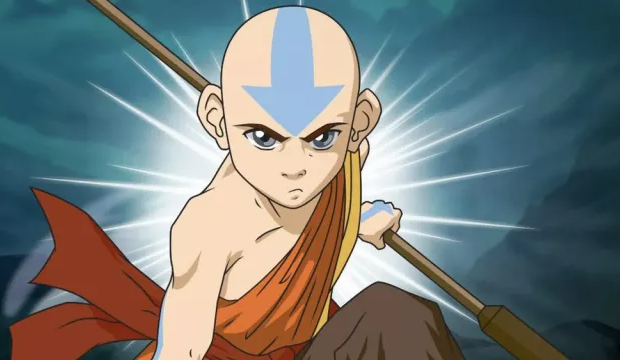
The world of the Four Nations is a masterpiece of world-building, blending profound philosophy with breathtaking action and a cast of characters that feel like old friends. Since its inception, Avatar: The Last Airbender has transcended its origins as an animated series to become a cornerstone of global storytelling. It is a tale of a young boy frozen in time, tasked with bringing balance to a world consumed by a century of war, but the layers of detail tucked into the animation go far deeper than most viewers realize.
To understand the series is to understand the meticulous craftsmanship of its creators, Michael Dante DiMartino and Bryan Konietzko. They didn’t just build a show; they built a cultural touchstone that treats its audience with immense respect, regardless of age. From the specific martial arts that define each bending style to the hidden spiritual symbolism woven into the background, the show remains a “go-to” resource for anyone looking to understand how to tell a truly evergreen story. Whether you are a lifelong fan or a newcomer just discovering the way of the elements, these ten revelations will change how you see the journey of the Avatar.
1. The Sci-Fi Origins: Aang Was Almost a Futuristic Robot
Long before the Air Nomads and the Fire Nation took their final forms, the concept for the show looked vastly different. In the very first sketches and pitches, the world was a futuristic, high-tech landscape rather than a world grounded in ancient cultural aesthetics. The character who would become Aang was originally envisioned as a “thousand-year-old survivor” from a high-tech civilization. In this early version, he wasn’t just a powerful bender; he was a boy who had been preserved in a sci-fi stasis pod, and he was accompanied by a robotic companion that eventually evolved into the lovable flying bison, Appa.
The decision to pivot from science fiction to high fantasy was a turning point that allowed the creators to ground the show in Asian and Indigenous cultures. This shift provided the “evergreen” quality the series is known for. By moving away from gadgets and spaceships and toward the elemental arts, the story gained a timeless, mythological weight. It allowed the creators to explore themes of nature, spirituality, and tradition that wouldn’t have resonated as deeply in a mechanical world.
2. The “Four Nations” Are Based on Specific Real-World Martial Arts
One of the reasons the bending in the show feels so visceral and grounded is that every movement is based on a real-world martial art style. The creators worked with Sifu Kisu, a martial arts consultant, to ensure that each nation’s bending reflected a distinct philosophy. This wasn’t just for flair; it was a way to communicate character and culture through physical movement.
| Element | Real-World Martial Art | Philosophical Core |
| Water | Tai Chi | Fluidity, redirecting energy |
| Earth | Hung Ga | Power, rootedness, stability |
| Fire | Northern Shaolin | Explosive energy, aggression |
| Air | Baguazhang | Circular motion, evasion |
Earthbending is particularly unique, as it occasionally utilizes Southern Praying Mantis for characters like Toph, emphasizing her unique sensory perspective. This level of detail ensures that even a silent scene of a character practicing their forms tells the viewer something about their discipline and mental state. It turns “magic” into a physical discipline that requires years of dedicated practice.
3. The Secret Fate of Zuko’s Mother, Ursa
For years, one of the biggest mysteries in the fandom was the whereabouts of Ursa, the mother of Zuko and Azula. In the series finale, Zuko confronts his imprisoned father, Ozai, demanding to know what happened to her. While the show ends on this cliffhanger, the answer is fully explored in the expanded lore of the graphic novels. Ursa’s story is a tragic tale of sacrifice; she brokered a deal to save Zuko’s life when Ozai was ordered to kill him by the previous Fire Lord, Azulon.
Ursa fled the Capital City and returned to her hometown, where she eventually chose to have her memories wiped by a spirit known as the Mother of Faces. She wanted to forget the pain of losing her children and the years of torment under Ozai. Eventually, Zuko finds her, and her memories are restored, leading to a bittersweet reconciliation. This subplot highlights the show’s willingness to deal with heavy themes like domestic trauma and the psychological cost of living under a tyrannical regime.
4. The Iconic “Cabbage Man” Was a Happy Accident
The “Cabbage Man” is perhaps the most beloved running gag in animation history, but he was never intended to be a recurring character. His first appearance in the city of Omashu was meant to be a one-off joke to show the collateral damage caused by the protagonists’ antics. However, the voice actor, James Sie, gave the character such a passionate, despairing delivery that the writers and fans fell in love with him.
The character became a symbol of the “average citizen” caught in the crossfire of the epic war. His constant misfortune served as a grounding element, reminding the audience that while Aang is saving the world, ordinary people are just trying to make a living. The gag eventually evolved into a larger piece of lore, with his descendants going on to found “Cabbage Corp,” a major industrial titan in the world’s technological future. It is a perfect example of how fan reception and creative spontaneity can shape a series.
5. Toph Was Originally Designed to Be a “Buff Man”
It is impossible to imagine the “Blind Bandit” as anyone other than the diminutive, sarcastic Toph Beifong, but her original character design was a large, muscular male character. This version of the character was intended to be a foil to Aang—a physically imposing teacher who would bully the young Avatar into learning earthbending. In fact, this original “buff” design was later parodied in the “Ember Island Players” episode, where a massive man plays Toph in a stage play.
The decision to change Toph to a young girl was a stroke of genius. It subverted the “tough guy” trope and created a much more interesting dynamic within Team Avatar. Toph’s strength comes from her “Seismic Sense,” a technique where she “sees” through the vibrations in the earth. By making her a young girl, the creators emphasized that true power doesn’t come from physical bulk, but from a deep, spiritual connection to one’s element and an unwavering sense of self.
6. The Heartbreaking Transition of Uncle Iroh’s Voice
Uncle Iroh is arguably the most beloved character in the series, serving as the moral compass for the entire show. However, there is a somber reality behind his voice. For the first two seasons, Iroh was voiced by the legendary Mako Iwamatsu. Tragically, Mako passed away during the production of the second season. This led to the casting of Greg Baldwin, who spent months studying Mako’s cadence and tone to ensure a seamless transition.
The episode “The Tales of Ba Sing Se” features a segment titled “The Tale of Iroh,” which ends with a dedication to Mako. The song Iroh sings, “Leaves from the Vine,” is a tribute to his late son, Lu Ten, but it also serves as a real-world farewell to the actor who gave the character his soul. The fact that the transition was so respectful and carefully handled is a testament to the production’s integrity. To this day, fans hold that sequence as one of the most emotional moments in television history.
7. Appa and Momo Were Originally One Character
The bond between Aang and his animal companions is a highlight of the series, but in the early development phases, Appa and Momo were a single entity. The creators wanted Aang to have a companion that was both a massive transport animal and a small, agile friend. Eventually, they realized that splitting these traits into two distinct creatures allowed for better storytelling and more varied interactions.
Appa, the six-legged flying bison, became the “heart” of the group—a loyal, powerful beast who represents Aang’s connection to his lost culture. Momo, the winged lemur, provided the comic relief and a sense of whimsy. Interestingly, the design of the flying bison was inspired by the Catbus from Studio Ghibli’s My Neighbor Totoro, a nod to the creators’ love for Japanese animation. The evolution of these characters shows how refining an idea can lead to two iconic designs instead of one cluttered one.
8. The Symbolism of the White Lotus Society
The Order of the White Lotus is a secret society that transcends national boundaries, composed of scholars and masters who believe in the beauty of all cultures. Their symbol, the White Lotus tile from the game Pai Sho, is hidden throughout the series long before the Order is officially revealed. The philosophy of the White Lotus is based on the idea that “the Four Nations are actually one people,” a radical notion in a world defined by a century of war.
This society represents the “enlightened” path, where knowledge is shared rather than hoarded. Members like King Bumi, Master Pakku, and Jeong Jeong show that even within the rigid structures of the Four Nations, there are those who seek a higher truth. The Order’s intervention in the liberation of Ba Sing Se remains one of the most triumphant moments of the series, proving that wisdom and cooperation are the ultimate weapons against tyranny.
9. The Deeper Meaning of the “Avatar State”
The Avatar State is often seen as a “superpower” or a “berserker mode,” but its mechanics are deeply rooted in Buddhist and Hindu philosophy. It is a defense mechanism that allows the current Avatar to tap into the collective knowledge and power of all their past lives. However, the show makes it clear that this power is a double-edged sword. While it makes the Avatar nearly invincible, if they are killed while in the Avatar State, the reincarnation cycle is broken forever.
The spiritual journey Aang undergoes with Guru Pathik to unlock his chakras (Earth, Water, Fire, Air, Sound, Light, and Thought) is a direct reference to real-world spiritual practices. It teaches that to master great power, one must first master their own internal blockages—fear, guilt, shame, grief, lies, illusion, and earthly attachment. This turns Aang’s journey from a simple quest for power into a profound journey of self-actualization and mental health awareness.
10. The Animation Was a Global Collaboration
While the show is often categorized as “Western animation,” it was a massive international collaboration that bridged the gap between American writing and Korean animation expertise. The series was animated primarily by JM Animation, DR Movie, and Moi Animation in South Korea. These studios brought a level of fluidity and detail to the action sequences that was unprecedented for an American television budget at the time.
The creators would send detailed storyboards and “keys” to Korea, and the animators there would bring the bending to life with a cinematic flair. This partnership allowed for a unique aesthetic that felt like a bridge between the “Saturday Morning Cartoon” style and high-end anime. It proved that cultural exchange behind the scenes could produce a result that felt authentic and universal, setting a blueprint for many modern animated hits that followed.
Further Reading
- The Search (Avatar: The Last Airbender) by Gene Luen Yang (Author) and Gurihiru (Artist)
- The Rise of Kyoshi (The Kyoshi Novels) by F.C. Yee
- Avatar: The Last Airbender – The Art of the Animated Series by Bryan Konietzko and Michael Dante DiMartino
- The Promise (Avatar: The Last Airbender) by Gene Luen Yang


Leave a Reply