
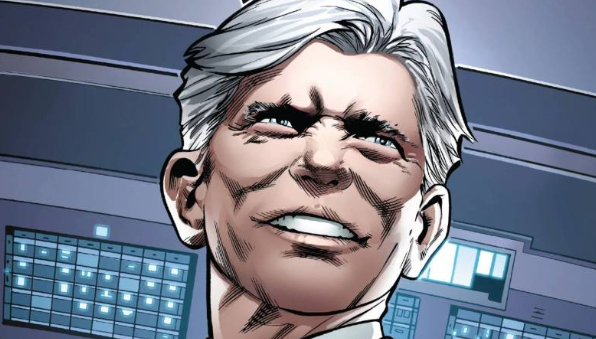
In the vast, colorful tapestry of the Marvel Universe, villains are often defined by their world-shaking superpowers. We see gods of mischief, masters of magnetism, and cosmic conquerors with the power to blink stars out of existence. However, some of the most terrifying antagonists are those who possess no special abilities at all, relying instead on the most dangerous weapon in human history: ideology. Enter William Stryker, a man whose shadow looms larger over the X-Men than almost any other foe.
Stryker represents a grounded, chillingly realistic brand of evil. He isn’t a mutant from a distant future or a scientist transformed by a lab accident; he is a man driven by a twisted sense of divine purpose. As a religious zealot and a former military officer, he views the existence of mutants not as a biological evolution, but as a literal affront to the creator. To understand the X-Men is to understand the prejudice they face, and no character embodies that systemic, institutionalized hatred more effectively than William Stryker. This article dives deep into the history, the philosophy, and the terrifying legacy of the man who turned faith into a frontline of war.
1. The Horrific Tragedy of His Origin Story
Long before he was a public figure, William Stryker was a military man—a sergeant and later a colonel who lived a disciplined, structured life. However, his descent into fanaticism began with a deeply personal tragedy that would define the rest of his existence. When his wife, Marcy, was pregnant, they were involved in a car accident in the desert. In the wreckage, Stryker was forced to deliver his own son. To his horror, the infant was born with obvious physical mutations.
Believing the child to be a monster and a sign of his own “sins,” Stryker committed an unthinkable act: he killed the newborn and then his wife before attempting to take his own life. When the car exploded and he survived, he interpreted his survival as a divine mandate. He believed that God had spared him specifically to act as an executioner for all “mutant-kind.” This moment transformed a grieving soldier into a holy warrior, creating a backstory that is as haunting as it is formative for his role as a primary X-Men antagonist.
2. The Architect of “God Loves, Man Kills”
If there is one story that defines William Stryker, it is the seminal graphic novel God Loves, Man Kills. This story is widely considered one of the greatest pieces of comic book literature ever produced because of its raw, unflinching look at bigotry. In this narrative, Stryker is introduced not as a costumed baddie, but as a charismatic televangelist. He uses the medium of television and the power of the pulpit to convince the masses that mutants are “soulless” and “demonic.”
The genius—and the horror—of Stryker in this story is his ability to use rhetoric to justify genocide. He doesn’t just want to kill mutants; he wants the world to agree that killing them is the “moral” thing to do. By framing the mutant struggle through the lens of religion, Stryker forced the X-Men into a philosophical battle they couldn’t simply punch their way out of. This storyline set the benchmark for how Marvel handles social issues, making Stryker the face of human intolerance.
3. Founder of the Paramilitary Cult Known as The Purifiers
Stryker is rarely a lone wolf; he is a leader who inspires fanatical devotion in others. To execute his vision of a mutant-free world, he founded The Purifiers. This group is essentially a paramilitary wing of his ministry, consisting of highly trained soldiers who believe they are doing “God’s work” by hunting and eliminating mutants. Unlike other henchmen groups that work for money or power, the Purifiers are driven by a terrifyingly pure conviction.
The Purifiers represent the intersection of religious extremism and military precision. They are often equipped with advanced technology, such as power-dampening fields and specialized weaponry designed specifically to counter mutant gifts. Throughout X-Men history, the Purifiers have been responsible for some of the most devastating attacks on mutant-kind, including the bombing of student buses and the infiltration of safe havens. Stryker’s ability to radicalize ordinary humans into cold-blooded killers is perhaps his most enduring and dangerous legacy.
4. A Villain Defined by Human Influence, Not Superpowers
In a universe where villains can warp reality, Stryker stands out because he is a “baseline” human. He has no healing factor, no super strength, and no telepathic abilities. This lack of powers is central to his character’s threat level. Because he is human, he represents the segment of society that fears and hates the X-Men. He is a symbol of the “status quo” gone wrong, making him far harder to defeat than a giant robot or an alien invader.
His power is purely systemic. He understands how to navigate political circles, how to manipulate public opinion, and how to utilize the legal system to oppress his enemies. When the X-Men fight Magneto, they are fighting a rival species; when they fight Stryker, they are fighting the very people they are sworn to protect. This creates a moral vacuum that often leaves the X-Men paralyzed, as harming a popular human religious leader would only serve to prove Stryker’s point that mutants are violent threats to society.
5. His Complicated Relationship with Weapon X
While he is most famous for his religious zealotry, many iterations of William Stryker across various media and comic continuities connect him to the Weapon X program. In these versions, Stryker is often reimagined as a high-ranking military official who views the mutant gene as a resource to be weaponized before it is discarded. This adds a layer of hypocrisy to his character: he hates mutants, yet he is willing to use their biology to create “perfect” soldiers.
This connection often brings him into direct conflict with Wolverine. While the religious version of Stryker views Logan as a demon, the military version of Stryker views Logan as a failed experiment or a piece of property that needs to be reclaimed. This dual nature of the character—part priest, part colonel—allows writers to explore different facets of human cruelty, from the spiritual to the scientific. Whether he is holding a Bible or a clipboard, his goal remains the same: the total subjugation of the mutant race.
6. The Use of “Scripture” as a Weapon
Stryker’s most effective tool is his ability to twist theology to fit his agenda. He frequently quotes (and misquotes) biblical passages to argue that mutants are not part of God’s plan. By labeling them as “abominations” or “serpents,” he strips them of their humanity in the eyes of his followers. This process of dehumanization is a classic tactic of real-world prejudice, and its inclusion in the comics makes the conflict feel disturbingly authentic.
By positioning himself as a moral authority, Stryker forces the X-Men—particularly those who are themselves religious, like Nightcrawler—into a crisis of faith. Nightcrawler, a devout Catholic, often serves as the perfect foil for Stryker. Their interactions highlight the difference between faith used as a source of comfort and love versus faith used as a justification for hate. Stryker’s “gospel” is one of exclusion, and his ability to weaponize the divine remains one of the most provocative elements of his character design.
7. He Has Been Resurrected via Techno-Organic Means
Even death cannot always stop a man as determined as William Stryker. In later story arcs, Stryker has been brought back to life through the use of techno-organic technology. This is a fascinating irony for the character; a man who spends his life preaching about the purity of the human soul and the “unnatural” state of mutants eventually becomes an undead, cybernetic hybrid.
During these resurrections, Stryker often merges with the consciousness of Sentinels or other anti-mutant AI like Bastion. This transformation represents the ultimate loss of his humanity. In his quest to destroy those he deemed “unnatural,” he became the most unnatural thing of all—a machine driven by a ghost of human hatred. These arcs shift his role from a charismatic leader to a physical juggernaut, capable of interfacing with global technology to coordinate mass strikes against mutant-kind.
8. His Philosophical Contrast to Magneto
To truly understand Stryker, one must look at him as the “Human Magneto.” While Magneto believes that mutants are the superior species and should rule over humans, Stryker believes that humans are the chosen species and should eliminate mutants. They are two sides of the same coin of supremacy. However, while Magneto’s trauma comes from being a victim of the Holocaust, Stryker’s trauma comes from a self-inflicted wound that he projected onto an entire race.
The X-Men are trapped in the middle of these two extremes. Stryker is essential to the X-Men mythos because he proves Magneto right in the eyes of many mutants. Every time Stryker attacks a mutant school or gives a hateful speech, more mutants are driven to join Magneto’s cause. In a way, Stryker is Magneto’s best recruiting tool, and Magneto’s violence is Stryker’s best justification. They feed off each other in a cycle of escalation that keeps the world of the X-Men in a perpetual state of tension.
9. A Master of Media Manipulation
Unlike many villains who hide in secret lairs, Stryker often operates in the bright lights of a television studio. He understands the power of the “optics.” He portrays himself as a soft-spoken, concerned citizen who only wants to “save” humanity. By presenting his hatred as “common sense” or “religious freedom,” he makes it palatable to a broad audience that might otherwise be repulsed by overt violence.
This makes him a particularly modern villain. He uses the tools of mass communication to spread his message, creating an echo chamber of fear. He often frames his anti-mutant rhetoric as a defense of “traditional” human values, a tactic that resonates with people who feel left behind by the rapid pace of change in a world filled with superheroes. Stryker doesn’t just fight the X-Men; he fights for the “hearts and minds” of the public, making him a master of the information war.
10. His Role as a Symbol of Institutional Bigotry
Ultimately, William Stryker is more than just a character; he is a symbol. He represents the systemic barriers that the X-Men face. While a villain like Apocalypse represents an external threat, Stryker represents an internal one—the rot within human society. He is the personification of the idea that the “real” monsters aren’t the ones with blue skin or wings, but the ones who look just like us and speak with authority.
His presence in the Marvel Universe ensures that the X-Men can never truly “win” just by winning a fight. Even if Stryker is defeated or imprisoned, the ideas he planted in the minds of the public persist. This is why he is an evergreen villain. As long as prejudice, fear of the “other,” and the manipulation of faith exist in the real world, William Stryker will remain a relevant and terrifying antagonist in the world of Marvel Comics.
Further Reading
- X-Men: God Loves, Man Kills by Chris Claremont and Brent Anderson
- X-Force: Angels and Demons by Craig Kyle and Christopher Yost
- X-Men: Second Coming by Various Authors
- Weapon X: The Draft – William Stryker by Frank Tieri
- 10 Things You Should Know About Cable – Marvel Comics

- X-Men ’97 – Full Story Recap – Season 1

- X-Men: The Animated Series 1992 – Full Story Recap – Season 5

- X-Men: The Animated Series 1995 – Full Story Recap – Season 4

- X-Men: The Animated Series 1994 – Full Story Recap – Season 3




