
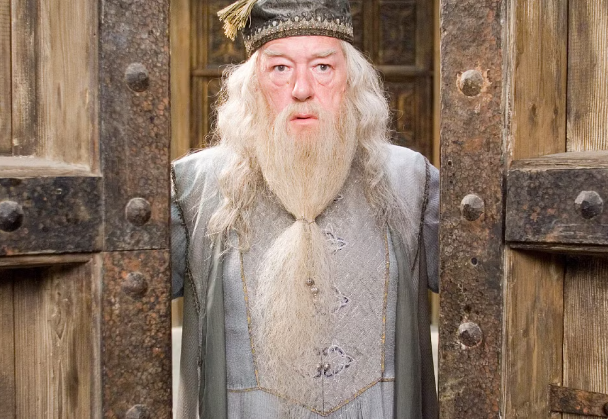
Albus Percival Wulfric Brian Dumbledore is far more than just a kindly old man with a penchant for lemon drops and knitting patterns. To the casual observer, he is the quintessential “wise mentor”—the silver-bearded patriarch of Hogwarts who offers cryptic advice and twinkling smiles. However, beneath that eccentric exterior lies one of the most complex, brilliant, and occasionally dangerous minds in the history of the Wizarding World. To understand Dumbledore is to understand the very nature of power, temptation, and the heavy burden of genius.
For a newcomer, Dumbledore serves as a lighthouse in a storm, providing safety and wisdom when the shadows of the Dark Arts begin to lengthen. Yet, as one delves deeper into the lore, the “Defeater of Grindelwald” is revealed to be a man haunted by his past and driven by a secret history that he kept hidden even from his closest allies. This guide peels back the layers of the Headmaster’s robes to reveal the ten fundamental truths that define his legacy. Whether you view him as a saint or a master manipulator, these insights are essential for any fan seeking to master the intricacies of the Harry Potter universe.
1. The Burden of a Broken Home
Before he was a living legend, Albus Dumbledore was a brilliant young man whose life was derailed by a series of domestic tragedies. Many fans do not realize that his father, Percival, died in Azkaban after attacking a group of Muggle boys—not out of random malice, but because they had traumatized his young daughter, Ariana. This event cast a long shadow over the Dumbledore name, forcing the family into a life of secrecy and shame in the village of Godric’s Hollow.
The true weight of his past, however, lies in his relationship with his sister. Ariana was left “damaged” by the Muggle attack, her magic turning inward and becoming explosive and uncontrollable. Albus, a young man with the world at his feet, found himself tethered to his home to care for her following their mother’s death. This resentment—the feeling of a genius being “trapped” by familial duty—is what ultimately made him vulnerable to the dangerous ideas of Gellert Grindelwald. To understand Dumbledore’s later humility, one must first recognize the arrogant, frustrated young man he once was, whose desire for glory led to the accidental death of his own sister during a three-way duel between Albus, his brother Aberforth, and Grindelwald.
2. The “Greater Good” and the Grindelwald Connection
The phrase “For the Greater Good” is often associated with dark wizards, but it was actually co-authored by Albus Dumbledore. During a whirlwind summer of intellectual romance and shared ambition, Albus and Gellert Grindelwald envisioned a new world order where wizards would rule over Muggles—not for cruelty, but for the “benefit” of all. This period reveals a Dumbledore who was dangerously susceptible to the allure of power and the belief that his superior intellect gave him the right to reshape society.
Dumbledore’s connection to Grindelwald was deeply personal and, as revealed in later lore, romantic in nature. This bond blinded him to Grindelwald’s growing fanatacism until it was far too late. The tragedy of their relationship is the defining moral pivot of Albus’s life. He spent the rest of his years atoning for that summer, developing a deep-seated fear of himself and his own capacity for power. This is why he consistently refused the position of Minister of Magic; he knew that he could not trust himself with the ultimate authority over others. When you see the elderly Dumbledore advocating for Muggle rights and kindness, you are seeing a man who is consciously rejecting the “Greater Good” philosophy of his youth.
3. The Academic Titan and the Twelve Uses of Dragon’s Blood
While he is best known as a headmaster, Dumbledore was primarily a world-class researcher and innovator. His contributions to the field of magic are vast and varied, ranging from alchemy to magical theory. He is famously credited with discovering the twelve uses of dragon’s blood—a feat of magical chemistry that revolutionized the wizarding world. His partnership with the legendary alchemist Nicolas Flamel led to breakthroughs that extended human life and explored the very limits of what magic could achieve.
Dumbledore’s brilliance wasn’t just in his power, but in his insatiable curiosity. He was a polymath who served as the Supreme Mugwump of the International Confederation of Wizards and the Chief Warlock of the Wizengamot. His academic prowess meant that he understood the “mechanics” of the world better than almost anyone else, which allowed him to foresee events that others missed. For a student at Hogwarts, Dumbledore wasn’t just the “boss”; he was the living embodiment of academic excellence. He proved that true power doesn’t come from a dark curse, but from a profound understanding of how the universe fits together, from the smallest charm to the most complex alchemical reaction.
4. The Legendary Duel and the Mastery of the Elder Wand
The most famous event in modern wizarding history is the duel between Dumbledore and Grindelwald. At the height of a global wizarding war, Dumbledore was forced to face his former friend to stop his reign of terror. This was not just a battle of spells, but a confrontation of two of the most powerful minds to ever walk the earth. Dumbledore emerged victorious, an act that effectively ended the war and solidified his reputation as the only wizard Lord Voldemort would ever truly fear.
As a direct result of this victory, Dumbledore became the master of the Elder Wand, one of the three legendary Deathly Hallows. For decades, he carried the most powerful wand in existence, using it to protect Hogwarts and maintain the balance of peace. However, unlike many who sought the wand for glory, Dumbledore used it as a tool of defense. He kept its true nature a secret, hoping that by dying undefeated, he could break the wand’s bloody cycle of history. His mastery of the Elder Wand is a testament to his restraint; he held the ultimate weapon in his hand for over half a century and never once used it to seek dominion or fame.
5. The Symbolism of Fawkes the Phoenix
Every great wizard has a companion, but Dumbledore’s choice of a phoenix, Fawkes, is deeply symbolic of his own character. Phoenixes are creatures of rebirth, loyalty, and healing. They possess the ability to carry immensely heavy loads and their tears have the power to heal even the most fatal wounds. Fawkes is not merely a pet; he is a reflection of Dumbledore’s philosophy that light can always be found in the darkness and that hope is the most powerful magic of all.
The presence of Fawkes also highlights Dumbledore’s unique connection to the concept of “rising from the ashes.” Just as the phoenix undergoes a “burning day” to be born anew, Dumbledore reinvented himself after the tragedies of his youth. Furthermore, the phoenix serves as a literal lifesaver for Harry Potter on multiple occasions, acting as an extension of Dumbledore’s protection when the Headmaster cannot be physically present. To know Dumbledore is to understand the “Phoenix Lament”—the hauntingly beautiful song that represents the profound grief and the enduring hope that Dumbledore carried within his soul throughout his long life.
6. The Master Strategist of the Long Game
Dumbledore is often criticized for being a “puppet master,” and there is a kernel of truth in that description. He was a master of the “long game,” planning the downfall of Lord Voldemort years, and even decades, in advance. He understood that Voldemort could not be defeated by traditional magical combat alone; it would require a complex series of events, sacrifices, and the slow unraveling of the Dark Lord’s soul fragments.
His strategy involved a level of secrecy that often frustrated his allies in the Order of the Phoenix. He shared only the barest minimum of information with anyone—including Harry—to ensure that the plan would not be compromised. This cold, calculating side of Dumbledore is most evident in his arrangement with Severus Snape. Dumbledore was willing to play a role that made him look vulnerable or even foolish to ensure that the ultimate victory was achieved. While his methods were often questioned, his foresight was nearly perfect. He operated on a level of “wizarding chess” where he was willing to sacrifice pieces (including himself) to protect the king—which, in his mind, was the future of the Wizarding World itself.
7. The Philosophy of the “Next Great Adventure”
Dumbledore’s view on mortality is perhaps his most “radical” trait. In a world where dark wizards like Voldemort would do anything to avoid the grave, Dumbledore famously remarked that “to the well-organized mind, death is but the next great adventure.” This perspective allowed him to live without the paralyzing fear that drove his enemies to madness. He viewed death not as an end, but as a transition—a philosophy that he consistently tried to instill in Harry.
This acceptance of death gave Dumbledore a unique kind of power. He was willing to walk into dangerous situations and eventually orchestrate his own end because he believed that the integrity of one’s soul was far more important than the survival of the body. His peaceful demeanor in the face of his impending demise at the hands of the curse on Marvolo Gaunt’s ring (which contained the Resurrection Stone) showcased his unwavering commitment to this belief. By refusing to fear the inevitable, Dumbledore became truly invincible in spirit, proving that the ultimate “mastery of death” is simply the willingness to greet it as an old friend.
8. The Flawed Mentor and the Weight of Love
One of the most humanizing aspects of Dumbledore is his admission that his greatest mistake was loving Harry too much. As a mentor, he was supposed to remain objective and prepare Harry for the inevitable battle with Voldemort. However, as the years passed, Dumbledore grew so fond of the boy that he began to shield him from the truth, delaying the reveal of the prophecy and the necessity of Harry’s sacrifice because he couldn’t bear to cause the boy more pain.
This “flaw” makes Dumbledore relatable. Despite his god-like intellect, he was still susceptible to the very human emotion of paternal love. His distance during Harry’s fifth year at school was an attempt to protect Harry from Voldemort’s mental intrusion, but it also showed Dumbledore’s struggle with the consequences of his own choices. He was a man trying to balance the fate of the world with the well-being of a child he had come to see as a son. This tension between his duty as a general and his heart as a mentor provides the series with its most poignant emotional stakes.
9. The Chief Warlock and the Political Outsider
Dumbledore held immense political power, yet he remained a perpetual outsider. He served as the Chief Warlock of the Wizengamot (the high court of law) and was frequently consulted by various Ministers of Magic. However, he had a profound distrust of bureaucracy and institutional power. He knew how easily the Ministry could be corrupted by fear or the desire for control, and he often operated outside the law when he felt the law was unjust.
This is why he founded the Order of the Phoenix—a private resistance group that could do what the Ministry could not or would not do. Dumbledore’s political philosophy was one of “calculated defiance.” He believed in the power of individual conscience over the edicts of a governing body. This often put him at odds with the establishment, leading to his temporary removal from his positions. Yet, he never wavered. He understood that true leadership isn’t about holding an office; it’s about holding the trust of the people and acting as a moral compass when the government loses its way.
10. The Legacy of Choice over Ability
If there is one sentence that summarizes Albus Dumbledore’s entire life and teaching, it is: “It is our choices, Harry, that show what we truly are, far more than our abilities.” Dumbledore was a man of immense ability, but he was defined by his choice to be humble, his choice to protect the weak, and his choice to value love over power. He spent his final years ensuring that Harry understood this fundamental truth, as it was the only weapon Harry had that Voldemort did not.
Dumbledore’s legacy is not found in the portraits at Hogwarts or the books in the library; it is found in the generation of witches and wizards he inspired to do what is “right” rather than what is “easy.” He proved that even the most flawed person can find redemption and that a life of service is the highest calling one can answer. Even after his death, his influence continued to guide the resistance, proving that a great man’s ideas are far more durable than his physical presence. Dumbledore remains the ultimate symbol of the fact that magic is not just about what you can do with a wand—it’s about what you choose to do with your heart.
Further Reading
- Harry Potter and the Deathly Hallows by J.K. Rowling (Essential for the backstory chapters)
- The Life and Lies of Albus Dumbledore by Rita Skeeter (A fictional but informative “in-universe” biography)
- Albus Dumbledore: The Biography by Anna-Marie McLemore (A scholarly exploration of his literary archetype)
- The Wisdom of Harry Potter: What Our Favorite Hero Teaches Us About Moral Choices by Edmund M. Kern




5 responses to “10 Things You Should Know About Albus Dumbledore – Harry Potter Lore”
[…] 10 Things You Should Know About Albus Dumbledore – Harry Potter Lore […]
[…] 10 Things You Should Know About Albus Dumbledore – Harry Potter Lore […]
[…] 10 Things You Should Know About Albus Dumbledore – Harry Potter Lore […]
[…] 10 Things You Should Know About Albus Dumbledore – Harry Potter Lore […]
[…] 10 Things You Should Know About Albus Dumbledore – Harry Potter Lore […]