
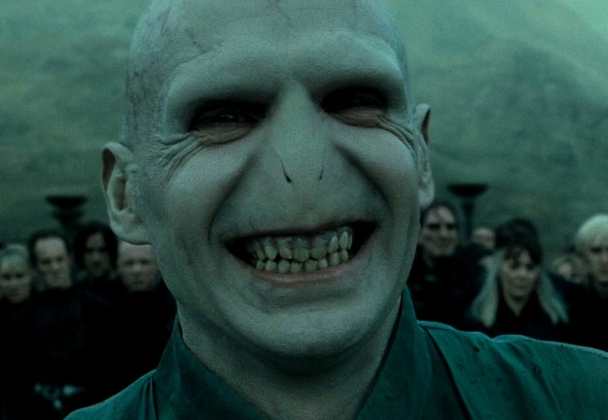
The Wizarding World is filled with wonders, from the majestic spires of Hogwarts to the bustling shops of Diagon Alley. Yet, every light casts a shadow, and no shadow is longer or more terrifying than that of Lord Voldemort. He is the ultimate antagonist, a figure of such profound evil that his very name was turned into a “Taboo” to track those brave enough to speak it. But beneath the pale, snake-like skin and the crimson eyes lies a complex history of tragedy, obsession, and a desperate, failed quest for immortality.
To understand the Boy Who Lived, one must first understand the Man Who Failed to Die. Voldemort is not merely a “bad guy” in a black cloak; he is a cautionary tale about the consequences of a life devoid of love and an ego unchecked by mortality. This article dives deep into the lore of Tom Marvolo Riddle, exploring the nuances of his heritage, his magical innovations, and the psychological fractures that led to his eventual downfall. Whether you are a first-year student just opening The Philosopher’s Stone or a veteran Auror, these ten insights provide the definitive guide to the Dark Lord’s reign of terror.
1. The Tragic and Twisted Origins of Tom Marvolo Riddle
The story of Lord Voldemort begins not with a bang, but with a desperate act of magical coercion. His mother, Merope Gaunt, was a descendant of Salazar Slytherin living in squalor. Infatuated with a handsome Muggle named Tom Riddle Senior, she used a Love Potion to ensnare him. This foundation of “artificial love” is crucial to understanding Voldemort’s character. When Merope eventually stopped administering the potion, hoping Riddle Senior had truly fallen for her, he fled, horrified by the deception.
Born in a cold London orphanage on New Year’s Eve, Tom Riddle Junior was left alone after his mother died in childbirth. Growing up without a single person to care for him, he never experienced the fundamental human bond of affection. J.K. Rowling has often noted that because he was conceived under the influence of a Love Potion, he was symbolically incapable of understanding love. This void in his soul became the vacuum that he filled with a thirst for power and a hatred for the “common” Muggles, represented by the father who abandoned him.
2. The Pure-Blood Obsession and the Gaunt Heritage
Despite his fanatical crusade for “Pure-Blood” supremacy, Voldemort himself was a Half-Blood. This hypocrisy is the cornerstone of his identity. He loathed his Muggle father so intensely that he murdered him, along with his grandparents, in the Riddle House at Little Hangleton. To distance himself from his “filthy” Muggle roots, he turned toward his mother’s side—the House of Gaunt. The Gaunts were a once-wealthy family that had devolved into poverty and madness due to generations of inbreeding to “preserve the bloodline.”
Voldemort took great pride in being the last remaining Heir of Slytherin. This heritage granted him the rare gift of Parseltongue, the ability to speak to snakes. He viewed this trait not just as a skill, but as a divine right to rule over others. By claiming his place as the descendant of one of the Hogwarts founders, he sought to validate his existence and justify his cruelty. His obsession with blood purity was, in reality, a projection of his own self-loathing regarding his mixed heritage.
3. The Science of the Soul: The Seven Horcruxes
Perhaps the most terrifying aspect of Voldemort’s magical prowess was his mastery of the Dark Arts, specifically the creation of Horcruxes. A Horcrux is an object in which a person has concealed part of their soul, allowing them to remain anchored to the living world even if their body is destroyed. To create one, the wizard must commit the most “supreme act of evil”—murder—which literally rips the soul apart. Voldemort was the only wizard known to have intentionally split his soul into seven pieces (though an eighth piece unknowingly resided in Harry Potter).
Voldemort’s choice of vessels for his soul reflected his immense vanity. He didn’t pick common items like old tin cans or pebbles; he sought out historical artifacts of great significance, such as Slytherin’s Locket, Ravenclaw’s Diadem, and Hufflepuff’s Cup. This need for grandeur was his undoing. By choosing objects with a “theatrical” history, he left a trail for Albus Dumbledore and Harry Potter to follow. Each Horcrux represented a piece of his humanity he was willing to discard in exchange for a hollow, everlasting existence.
4. The Transformation from Handsome Student to Monster
In his youth, Tom Riddle was described as exceptionally handsome, charming, and brilliant. He was a Prefect, Head Boy, and a favorite of almost every teacher except Albus Dumbledore. However, as he delved deeper into the Dark Arts and began the process of creating Horcruxes, his physical appearance began to reflect the corruption of his soul. Magic has a cost, and for Voldemort, the price was his humanity.
Each time he murdered and split his soul, he lost a bit of his human features. By the time he returned to ask Dumbledore for a teaching job years after graduation, his face had become waxy and distorted. After his “rebirth” in the graveyard of Little Hangleton, the transformation was complete: he possessed a flat nose with snake-like slits for nostrils, lipless mouth, and glowing red eyes. This physical devolution serves as a visual metaphor for the internal decay caused by the Dark Arts. He sacrificed his beauty and his personhood to become a creature of pure, terrifying power.
5. The Mastery of Parseltongue and the Connection to Nagini
While many wizards fear snakes, Voldemort shared a profound and eerie connection with them. As a Parselmouth, he could command serpents, a trait he discovered early in his childhood at the orphanage. This gift allowed him to control the Basilisk within the Chamber of Secrets during his time at Hogwarts, leading to the death of Moaning Myrtle. However, his most significant serpentine relationship was with Nagini.
Nagini was not just a pet; she was a Maledictus—a woman cursed to eventually turn into a beast forever—and eventually became one of Voldemort’s Horcruxes. Their bond was telepathic and symbiotic. Voldemort could possess her body, and he often used her to carry out assassinations or to sustain his weak, “proto-body” with her venom before his full resurrection. Nagini represented the only “closeness” Voldemort ever experienced, though it was a relationship built on utility and shared darkness rather than genuine companionship.
6. The Philosophy of Fear: Why He Chose the Name Voldemort
The name “Lord Voldemort” was not a title given to him; it was a self-constructed identity designed to inspire terror. Created as an anagram of his birth name—Tom Marvolo Riddle becomes I am Lord Voldemort—it served to bury the identity of the “common” boy he once was. In French, the name can be interpreted as “flight from death” (vol de mort), which perfectly encapsulates his singular obsession with avoiding mortality.
Voldemort understood the power of branding. By creating a name that people were too afraid to speak, he exerted psychological control over the entire Wizarding World. Fear of a name increases fear of the thing itself, and by turning his name into a weapon, he ensured that he was always present in the minds of his enemies, even when he was in hiding. This “Taboo” also served a tactical purpose: in the later years of the war, anyone who spoke his name was immediately tracked by Snatchers, effectively hunting down the members of the resistance who were brave enough to remain defiant.
7. The Death Eaters: A Hierarchy of Terror
Voldemort did not work alone, though he never viewed his followers as equals. His inner circle, known as the Death Eaters, was comprised of Pure-Blood supremacists, opportunists, and those too terrified to resist. Unlike the Order of the Phoenix, which was built on mutual respect and shared sacrifice, the Death Eaters were bound by fear and the “Dark Mark” branded into their forearms.
Voldemort used the Dark Mark as both a badge of “honor” and a leash. He could summon his followers by touching the mark on any one of their arms, causing the others to burn and signaling them to Disapparate to his side. He frequently used the Cruciatus Curse on his own subordinates to ensure loyalty. This leadership style meant that his followers were prone to desertion or betrayal the moment he appeared weak. Their loyalty was a fragile thing, built on the shifting sands of self-preservation rather than the solid rock of conviction.
8. The Prophecy and the Fatal Choice
One of the most pivotal moments in Voldemort’s life was his reaction to a prophecy made by Sybill Trelawney. The prophecy stated that a child born at the end of July, whose parents had thrice defied the Dark Lord, would have the power to vanquish him. Voldemort only heard part of the prophecy, and in his typical arrogance, he attempted to strike down the threat before it could grow.
There were two children who fit the description: Harry Potter (a Half-Blood) and Neville Longbottom (a Pure-Blood). In a move that reflected his own internal biases, Voldemort chose to hunt the Half-Blood, Harry, seeing more of himself in the boy. By doing so, he unintentionally “marked him as his equal.” In trying to prevent the prophecy, Voldemort actually set it in motion. His inability to understand the magic of a mother’s sacrifice—Lily Potter’s protection—resulted in his first downfall and the creation of the very hero destined to destroy him.
9. The Quest for the Elder Wand
Voldemort’s hunger for power was never satisfied. Even after achieving a form of immortality and assembling an army, he became obsessed with the Elder Wand, the most powerful wand in existence and one of the three Deathly Hallows. He believed that with this “Unbeatable Wand,” he could finally eliminate Harry Potter, whose own wand shared a twin core (Phoenix feather) with Voldemort’s original wand.
This quest highlighted Voldemort’s fundamental misunderstanding of wandlore. He believed that the wand’s loyalty was won through simple murder. He killed Severus Snape, believing Snape was the wand’s master after killing Dumbledore. However, the wand’s true master was Draco Malfoy (who had disarmed Dumbledore), and later Harry Potter (who had disarmed Draco). Voldemort’s reliance on brute force and his dismissal of “subtle” magic meant he was using a tool that would ultimately turn against him. He sought the Hallows not to become the “Master of Death” in a philosophical sense, but to become a god-like tyrant.
10. The Ultimate Downfall: Mortality and the Void
Lord Voldemort’s greatest fear was death. He viewed it as a “human weakness,” something to be conquered and humiliated. In the end, his refusal to accept mortality was his undoing. By the time of the Battle of Hogwarts, his soul was so fragmented and unstable that he was barely a man. When his final Horcruxes were destroyed, he was left as a single, fragile piece of soul within a mortal body.
When the Killing Curse he cast at Harry Potter backfired due to the Elder Wand’s true loyalty, Voldemort did not die a “great” or “magical” death. He died like any other man. Because he had shredded his soul into so many pieces, he was denied the ability to “move on” or even return as a ghost. His remains were forever trapped in the “limbo” state—a shriveled, infant-like creature seen by Harry in the King’s Cross vision—unable to find peace and unable to return to the world of the living. It is the ultimate irony: the man who wanted to live forever ended up in a state worse than death.
Further Reading
- Harry Potter and the Half-Blood Prince by J.K. Rowling (The definitive source for Voldemort’s backstory).
- The Psychology of Harry Potter: An Unauthorized Examination of the Boy Who Lived by Neil Mulholland.
- The Tales of Beedle the Bard by J.K. Rowling (For context on the Deathly Hallows and wizarding lore).
- The Lexicon: An Unauthorized Guide to Harry Potter Fiction and Related Materials by Steve Vander Ark.




2 responses to “10 Things You Should Know About Lord Voldemort – Harry Potter Lore”
[…] 10 Things You Should Know About Lord Voldemort – Harry Potter Lore […]
[…] a revolution. As Harry, Ron, and Hermione abandon their education to hunt down the fragments of Lord Voldemort’s soul, the film shifts genres entirely, moving from a magical fantasy into a gritty psychological […]