
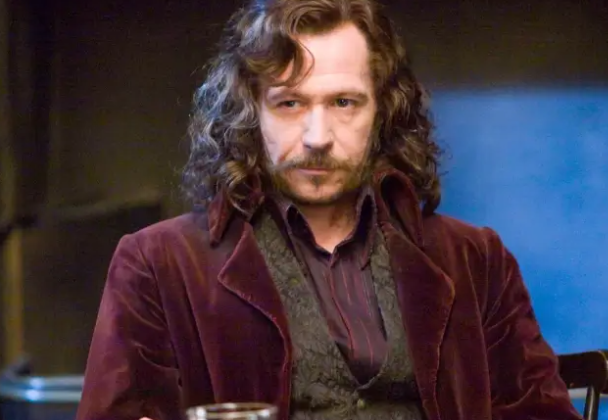
In the sprawling tapestry of the Wizarding World, few threads are as vibrant, tragic, or resilient as the life of Sirius Black. First introduced to readers as a gaunt, terrifying face on a “Wanted” poster, Sirius eventually transformed from a perceived villain into one of the most beloved figures in the Harry Potter canon. He is the ultimate “black sheep”—a man who rejected his family’s dark legacy to fight for the light, only to spend a decade and a half imprisoned for a crime he didn’t commit.
To understand Sirius Black is to understand the complexity of loyalty and the devastating weight of lost time. He wasn’t just Harry’s godfather; he was a bridge to a past that had been violently stolen. His story is a masterclass in character development, illustrating how trauma can stunt growth while leaving the core of a person’s bravery intact. This guide explores the depths of the man known as Padfoot, from his rebellious youth at Hogwarts to his final, defiant stand in the Department of Mysteries.
1. The Noble and Most Ancient House of Black Heritage
Sirius Black was born into one of the oldest and wealthiest Pure-Blood families in Britain. The Blacks were obsessed with the concept of “Toujours Pur” (Always Pure), a mantra that dictated their every move and social interaction. Growing up in the gloomy, magically-fortified townhouse at Number 12, Grimmauld Place, Sirius was surrounded by portraits of ancestors who loathed Muggles and “blood traitors” alike. His parents, Orion and Walburga, expected him to uphold these bigoted traditions and carry the mantle of his prestigious lineage.
However, Sirius was an anomaly from birth. While his younger brother, Regulus, followed the family path and eventually became a Death Eater, Sirius used his position to challenge every status quo. He plastered his bedroom walls with permanent-sticking charms featuring Muggle motorcycles and girls in bikinis—purely to annoy his mother. This fundamental rift between Sirius and his heritage is what defined his early years. He didn’t just disagree with his family; he waged a psychological war against their ideologies, eventually running away at the age of sixteen to live with the Potters, an act that resulted in his name being blasted off the family tapestry.
2. Breaking the Slytherin Streak at Hogwarts
When Sirius arrived at Hogwarts School of Witchcraft and Wizardry, his family assumed he would follow the centuries-old tradition of being sorted into Slytherin. Instead, the Sorting Hat barely touched his head before shouting “Gryffindor!” This was more than just a house placement; it was a declaration of independence. By joining the house of the brave, Sirius signaled that his values aligned with courage and chivalry rather than the cunning and ambition favored by his relatives.
Being the only Black in Gryffindor made him an instant target for his family’s vitriol, but it also paved the way for the most significant relationships of his life. It was here that he met James Potter, Remus Lupin, and Peter Pettigrew. These four boys formed an inseparable bond, calling themselves the “Marauders.” Sirius and James, both wealthy, talented, and slightly arrogant, became like brothers. This brotherhood provided Sirius with the emotional support system he never received at home, proving that family is often found through choice rather than blood.
3. The Incredible Feat of Becoming an Animagus
One of the most impressive displays of Sirius’s magical talent was his transformation into an Animagus. During their second year at Hogwarts, the Marauders discovered that their friend Remus Lupin was a werewolf. Rather than abandoning him, Sirius, James, and Peter spent years teaching themselves the highly advanced and dangerous magic required to transform into animals at will. By their fifth year, they succeeded, all without the knowledge of the school staff or the Ministry of Magic.
Sirius took the form of a massive, shaggy black dog, which earned him the nickname “Padfoot.” This form was specifically chosen because his size allowed him to help keep a transformed werewolf in check during the full moon. This selfless act of friendship highlighted Sirius’s immense loyalty and his willingness to break any law for the people he loved. As a dog, Sirius could roam the Hogwarts grounds undetected, providing Remus with companionship during his most painful hours. This mastery of transformation would later become the very key to his survival and eventual escape from the world’s most secure prison.
4. The Tragic Switch of the Secret Keeper
The greatest tragedy of Sirius Black’s life stems from a single, well-intentioned mistake. When Lord Voldemort began hunting the Potters, Albus Dumbledore suggested using the Fidelius Charm to hide them. Initially, Sirius was the obvious choice for Secret Keeper. However, Sirius, fearing that Voldemort would immediately suspect him, convinced James and Lily to use the “weak” and “unassuming” Peter Pettigrew as a decoy. Sirius believed this would be the ultimate bluff to keep his friends safe.
This plan backfired spectacularly. Pettigrew had already turned spy for Voldemort and immediately betrayed the Potters’ location. When Sirius arrived at Godric’s Hollow and found the house in ruins, his world shattered. He realized his “clever” plan had directly led to the deaths of his best friends. This guilt stayed with him for the rest of his life. In his grief-fueled pursuit of Pettigrew, he was cornered in a Muggle street. Peter staged his own death by blowing up the street—killing twelve Muggles in the process—and transformed into a rat, leaving Sirius to laugh hysterically in the face of his own ruin as the Aurors arrived.
5. Surviving the Dementors of Azkaban Without a Trial
For twelve years, Sirius Black was imprisoned in Azkaban, the wizarding prison located on a freezing island in the North Sea. He was never given a trial; the evidence against him seemed so overwhelming that the Minister for Magic, Barty Crouch Sr., sent him straight to the cells. Azkaban is guarded by Dementors, creatures that feed on human happiness, forcing prisoners to relive their worst memories until they either go mad or die.
Sirius survived because of a unique psychological loophole. Most prisoners lost their minds because they had nothing to hold onto. Sirius, however, had the knowledge of his own innocence. This wasn’t a “happy” thought—it was a cold, hard fact. Because it wasn’t a “happy” memory, the Dementors couldn’t drain it from him. It served as a mental anchor that kept his sanity intact. Furthermore, when the depression became too much to bear, he would transform into Padfoot. Since the emotions of a dog are less complex than those of a human, the Dementors were less effective at sensing him, allowing him to maintain enough clarity to eventually spot Peter Pettigrew in a newspaper photo and plot his escape.
6. The Psychological Prison of Number 12, Grimmauld Place
After his escape from Azkaban and the eventual return of Lord Voldemort, Sirius found himself a prisoner once again—this time in his own home. Because he was still a wanted fugitive, Dumbledore ordered him to stay hidden inside the Black family estate at Number 12, Grimmauld Place, which served as the headquarters for the Order of the Phoenix. For Sirius, this was a cruel irony. He was forced to live among the ghosts of a family he hated and the screeching portrait of his mother.
This period of his life showcased the “stunted growth” that occurs when a person is imprisoned during their formative years. In many ways, Sirius was still the twenty-one-year-old rebel who had been arrested, now trapped in a middle-aged body. His frustration at being “useless” to the Order led to bouts of depression and reckless behavior. He treated the house elf, Kreacher, with the same disdain he felt for the house itself, a mistake that would later have dire consequences. This era of his life is a poignant look at how being “safe” can feel like a different kind of incarceration when it is devoid of purpose.
7. The Two-Way Mirror and the Lost Connection
In an effort to stay connected with Harry while they were apart, Sirius gave him a unique magical gift: a small, square Two-Way Mirror. Sirius held the mate to the mirror, and the idea was that if Harry ever needed to talk, he could simply say Sirius’s name into the glass. It was a beautiful symbol of their bond—a way for a godfather to be there for his godson despite the distances and the dangers between them.
The tragedy of the mirror lies in Harry’s refusal to use it. Fearing that communication would lure Sirius out of hiding and into danger, Harry hid the mirror at the bottom of his trunk and forgot about it. It wasn’t until after Sirius’s death that Harry discovered the gift’s true power, leading to one of the most heartbreaking moments in the series. The mirror represents the “what ifs” of their relationship. Had Harry used it, he would have realized Sirius was safe at home, and he never would have been lured to the Department of Mysteries. Later, a shard of this mirror would play a crucial role in saving Harry’s life, proving that Sirius’s protection extended far beyond the grave.
8. The Brotherly Dynamic of His Role as a Godfather
While Sirius was legally and emotionally Harry’s godfather, their relationship was often more like that of older and younger brothers. Because Sirius had lost his entire twenties to Azkaban, he often looked at Harry and saw James. This led to a complicated dynamic where Sirius occasionally encouraged Harry to take risks that a more “traditional” parental figure might have discouraged. He was the one who told Harry that “the world isn’t split into good people and Death Eaters,” providing the boy with much-needed moral nuance.
Sirius offered Harry something no one else could: a direct link to his parents’ personalities. He told Harry stories of James’s bravery and Lily’s kindness, filling a void that the Dursleys had intentionally left open. However, this also meant that Sirius sometimes struggled to see Harry as an individual separate from James. This “sibling” energy made their bond incredibly tight and fiercely loyal, but it also placed a heavy burden on Harry, who often felt he had to live up to the legendary status of the Marauders to keep his godfather happy.
9. The Battle in the Department of Mysteries and the Veil
The end of Sirius Black’s journey took place in the depths of the Ministry of Magic, during a frantic rescue mission. Despite being told to stay behind, Sirius couldn’t bear to let Harry fight alone. He arrived at the Department of Mysteries and engaged in a fierce duel with his cousin, the fanatical Bellatrix Lestrange. Even in the heat of battle, Sirius remained defiant, taunting his cousin with the same bravado he had shown as a teenager at Hogwarts.
His death was not caused by a direct Killing Curse, but by a spell that knocked him backward through a mysterious, tattered black curtain known as “The Veil.” This ancient artifact, located in the Death Chamber, represents the barrier between the living and the dead. Once Sirius passed through it, he was gone instantly. There was no body to bury, which made the grief even harder for Harry to process. Sirius died exactly as he had lived: fighting for the people he loved, with a smirk on his face and a heart full of rebellion.
10. The Lasting Legacy of Padfoot
Though his life was cut short, Sirius Black’s legacy echoed through the remainder of the Second Wizarding War. He left all of his possessions—including the Black family home and Kreacher the house elf—to Harry. This inheritance finally gave Harry a sense of “home” and the resources he needed to eventually defeat Voldemort. More importantly, Sirius’s spirit returned one last time through the Resurrection Stone to walk Harry into the Forbidden Forest, promising him that dying was “quicker and easier than falling asleep.”
Sirius Black remains a fan-favorite because he represents the struggle for identity. He proved that you are not defined by your ancestors, your mistakes, or the labels society places upon you. He was a man who suffered immensely but never lost his capacity for love or his sense of justice. In the end, Sirius wasn’t just a fugitive or a prisoner; he was a Marauder, a loyal friend, and the father figure Harry Potter deserved. His story reminds us that even in the darkest of times, our choices—rather than our abilities or our bloodlines—show who we truly are.
Further Reading
- Harry Potter and the Prisoner of Azkaban by J.K. Rowling (The definitive introduction to Sirius Black).
- Harry Potter and the Order of the Phoenix by J.K. Rowling (Detailed exploration of Sirius’s adulthood and family history).
- The Psychology of Harry Potter by Neil Mulholland (Analysis of the effects of Azkaban and Sirius’s trauma).
- The Archive of Magic: The Film Wizardry of Fantastic Beasts: The Crimes of Grindelwald by Signe Bergstrom (Provides context on Pure-blood family trees).




3 responses to “10 Things You Should Know About Sirius Black – Harry Potter Lore”
[…] 10 Things You Should Know About Sirius Black – Harry Potter Lore […]
[…] 10 Things You Should Know About Sirius Black – Harry Potter Lore […]
[…] 10 Things You Should Know About Sirius Black – Harry Potter Lore […]