
Zap! Flash! Zing! Electricity is like magic, isn’t it? One moment a room is dark, and the next, with a flick of a switch, it’s bright as day! Your computer, your TV, your games console, and even the fridge that keeps your snacks cool – they all run on electricity. But have you ever stopped to wonder how electricity actually works? It’s not really magic, but it’s definitely super interesting!
Think of this guide as your secret map to understanding the incredible world of electricity. We’re going to break it down into tiny, easy-to-understand pieces, so you’ll know exactly what’s happening when you plug something in or switch on a light. Get ready to explore the amazing journey of tiny particles that bring power to our world!
Here are 10 amazing things that explain how electricity works:
1. The Tiny Secret of Atoms: Meet the Electron!
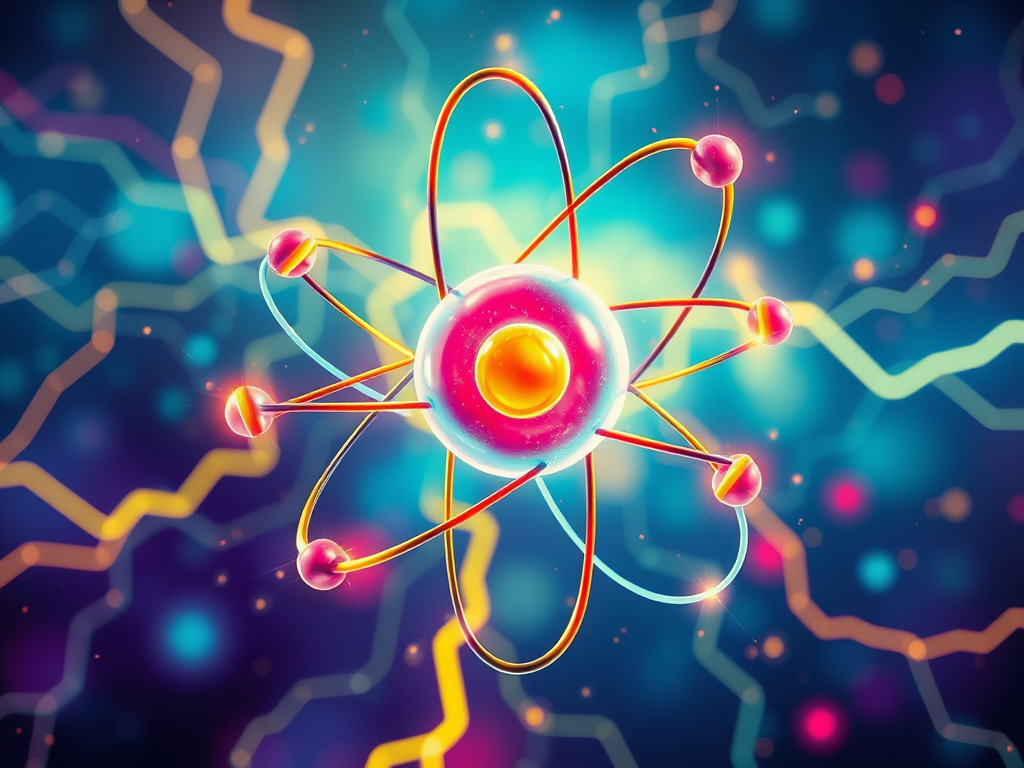
Ever wondered what everything around you is made of? Your chair, your desk, your snacks, even you? It’s all made of super-duper tiny things called atoms. Atoms are like the LEGO bricks of the universe. They are so small you can’t see them without incredibly powerful microscopes. Now, here’s the exciting part: atoms themselves are made of even tinier bits! In the center of an atom is something called the nucleus, which has particles called protons (with a positive charge) and neutrons (with no charge). Whizzing around the nucleus, like tiny planets around a sun, are particles called electrons. Electrons have a negative charge.
It’s these speedy little electrons that are the superstars of electricity. Think of an atom like a tiny solar system. The nucleus is the sun, and the electrons are the planets orbiting it. Some electrons, especially those in the outermost “orbits” of an atom, aren’t held on very tightly. They can be nudged or pushed out of their atom and start moving. When these electrons start moving from one atom to another in a specific direction, that’s the beginning of how electrons create electricity. Understanding these tiny, zippy particles is the first step to understanding the amazing power of electricity.
2. Electron Flow: The Electric Current Parade!
So, we know that electrons are tiny charged particles in atoms. But how does that make your TV turn on? It’s all about getting those electrons to move in an organized way. When electrons are pushed or pulled away from their atoms and start moving together in a single direction, this flow of electrons is called an electric current. Imagine a long line of people in a parade, all marching in the same direction. The electrons moving through a wire are just like that parade! This is a core part of basic electricity explained.
This “parade” of electrons doesn’t just happen on its own. Something needs to give them a reason to move. This is where things like batteries or power plants come in. They provide the “oomph” to get the electrons marching. The path they march along is usually a metal wire, like copper, because metals are good at letting electrons move freely. So, when you plug in a lamp, you’re essentially giving the electrons a path and a push to start their parade, and as they move through the lamp’s bulb, they create light. Understanding electric current is like understanding how this electron parade powers our world.
3. Voltage: The “Push” That Makes Electrons Move!
If electric current is the flow of electrons, then what gets them flowing in the first place? That’s where voltage comes in! Voltage is like the “push” or “pressure” that makes electrons move. Think about a water hose. If you just lay the hose on the ground, the water inside doesn’t really go anywhere. But if you connect it to a tap and turn the tap on, the water pressure from the tap pushes the water through the hose. Voltage is like that water pressure, but for electrons. It’s the force that gets the electric current going. This is a key concept in voltage and current for beginners.
A battery, for example, creates voltage. It has a positive end and a negative end. The negative end has a buildup of electrons, and they really want to get to the positive end, which has fewer electrons. When you connect a wire between these two ends (as part of a circuit), the voltage “pushes” the electrons from the negative end, through the wire, towards the positive end. The higher the voltage, the stronger the “push,” and the more current can potentially flow. So, when you see a battery labeled “9V” (9 volts), that’s a measure of how much electrical “push” it can provide.
4. Resistance: The “Slow Down” in Electricity’s Path!
Now, imagine our electron parade again, or the water flowing through a hose. What if the path gets narrow, or there are obstacles? The flow would slow down, right? In the world of electricity, this “slowing down” effect is called resistance. Resistance is a measure of how much a material tries to stop or resist the flow of electric current. Some materials have very low resistance, meaning they let electrons pass through easily. Other materials have high resistance, making it difficult for electrons to flow.
Think of trying to run. Running on a smooth, clear track is easy (low resistance). But trying to run through thick mud would be much harder (high resistance). Different materials act like different running surfaces for electrons. For example, copper wire has very low resistance, which is why it’s used in electrical cords – it lets the electric current flow easily. The filament in an old-fashioned light bulb, however, has very high resistance. As electrons are forced to push through this high-resistance material, they generate a lot of heat, which makes the filament glow and produce light! So, resistance isn’t always a bad thing; sometimes it’s exactly what we need to make things work. Understanding resistance is another important part of basic electricity explained.
5. Circuits: The Complete Pathway for Power!
For electricity to do its job, like lighting a bulb or powering your computer, the electrons need a complete, unbroken path to travel on. This complete path is called an electric circuit. Think of it like a racetrack for electrons. The electrons start at a power source (like a battery or a wall outlet), travel through the wires, pass through the device they are powering (like a light bulb or a motor), and then travel back to the power source. This round trip is crucial! If there’s a break anywhere in the path, it’s called an “open circuit,” and the electricity can’t flow. Flicking a light switch to “off” creates an open circuit.
When the path is complete and electrons can flow freely, it’s called a “closed circuit.” When you flick a light switch to “on,” you are closing the circuit, allowing the electric current to flow and the light to turn on. So, every electrical device you use is part of a circuit. Simple electric circuits usually have three main parts: a power source (like a battery), a load (the device using the electricity, like a bulb), and conductors (wires to connect everything). Without a complete circuit, those eager electrons have nowhere to go, and nothing gets powered!
6. Conductors: Electricity’s Superhighways!
Imagine you want to build a super-fast slide for electrons. What material would you use? You’d want something that lets them zip along with hardly any effort. Materials that allow electric current to flow through them very easily are called conductors. They are like the superhighways for electricity because they have very low resistance. Most metals, like copper, aluminum, gold, and silver, are excellent conductors. This is because their atoms have electrons that are not held very tightly and can easily move from one atom to another.
This is why the wires in your home and inside your gadgets are usually made of copper. Copper is a great conductor and isn’t too expensive. When you plug something in, the electric current (the flow of how electrons create electricity) travels efficiently through these copper wires to your device. Even the water in your tap can be a conductor, especially if it has minerals in it, which is one reason why it’s so important to keep electrical things away from water! Understanding conductors and insulators examples helps us use electricity safely and effectively. These materials are essential for making sure electricity gets where it needs to go.
7. Insulators: Keeping Electricity on the Right Track!
If conductors are the superhighways for electricity, then insulators are like the strong guardrails or fences that keep the electricity safely on its path. Insulators are materials that do not allow electric current to flow through them easily. They have very high resistance. Think of them as roadblocks for electrons. Materials like rubber, plastic, glass, wood, and air are good insulators. The electrons in the atoms of insulators are held very tightly and can’t move around easily.
Why are insulators so important? They keep us safe! The plastic coating around electrical wires is an insulator. It stops the electricity from escaping the wire and potentially shocking you or causing a short circuit if the wire touches something it shouldn’t. The handles of tools used by electricians are often made of insulating materials for the same reason. Insulators ensure that the electric current only goes where it’s supposed to go within the simple electric circuits of our devices. So, while conductors get the electricity moving, insulators play a crucial role in controlling it and keeping us safe. Knowing conductors and insulators examples is vital for basic electricity explained.
8. AC vs. DC: Two Ways for Electricity to Travel!
Did you know that electricity can flow in different ways? The two main types you’ll hear about are Direct Current (DC) and Alternating Current (AC). Understanding these is part of understanding electric current more deeply.
Direct Current (DC) is like a one-way street for electrons. The electrons flow steadily in one single direction. Think of water flowing continuously from one end of a pipe to the other. Batteries are a common source of DC power. The electricity that powers your toys, your flashlight, or your mobile phone (when it’s not plugged into the wall charger) is usually DC. The electrons move from the negative terminal of the battery, through the device, and to the positive terminal.
Alternating Current (AC) is a bit different. It’s like a super-fast two-way street where the electrons rapidly switch directions, moving back and forth. Imagine water in a pipe that sloshes quickly one way, then the other, over and over again. The electricity that comes out of the power outlets in your home is AC. Power plants generate AC electricity because it’s easier to send over long distances with less energy loss. Many devices you plug into the wall actually convert the AC power into DC power using a special component called an adapter (that little box on some power cords).
9. Magnets and Electricity: A Powerful Friendship!
Have you ever played with magnets? You know how they can stick to some metals and push or pull other magnets. Well, magnets and electricity are very closely related – they’re like best friends! In fact, you can use magnets to make electricity, and you can use electricity to make magnets. This amazing connection is fundamental to how electricity works on a large scale.
Most of the electricity we use from power plants is generated using magnets. Huge generators at power plants have giant magnets and big coils of wire. When either the magnet spins near the wire, or the wire spins near the magnet, it “excites” the electrons in the wire and makes them move. This creates an electric current! Think of it like a magical dance between the magnet and the wire that gets the electrons moving. This process is called electromagnetic induction. Similarly, when an electric current flows through a wire, it creates a magnetic field around the wire. This is the principle behind electromagnets, which are used in everything from scrapyard cranes that lift cars to the speakers in your headphones.
10. Staying Safe: Respecting Electricity’s Power!
Electricity is incredibly useful and powers so much of our modern world, from life-saving hospital equipment to the video games we love. But it’s also very powerful and needs to be treated with respect. Understanding electric current and voltage and current for beginners also means understanding how to be safe around it. Water and electricity are a dangerous mix because water can conduct electricity, so never touch electrical appliances or switches with wet hands or use them near water (like in the bathroom while you’re in the tub).
Never stick anything other than a proper plug into an electrical socket. Those sockets are direct lines to a powerful electric circuit. If you see a damaged electrical cord (like one that’s frayed or has wires showing), don’t touch it. Tell an adult immediately. Overloading a socket by plugging in too many things can also be dangerous and cause overheating or even a fire. Always follow safety instructions that come with electrical gadgets. By understanding the basics of how electricity works and following these simple safety rules, we can enjoy all the amazing benefits of electricity without any ouchies!
Electricity might seem complicated, but when you break it down, it’s all about tiny electrons on the move, following paths, and doing work for us. From the atoms themselves to the circuits that power our homes, it’s a fascinating journey of energy!
Further Reading
If you’re super charged up to learn even more about electricity, check out these books:
- “Electronics for Kids: Play with Simple Circuits and Experiment with Electricity!” by Oyvind Nydal Dahl
- “The Magic School Bus and the Electric Field Trip” by Joanna Cole and Bruce Degen
- “DK Eyewitness Books: Electricity“ by Steve Parker
- “How to Be an Engineer” by Carol Vorderman (often includes sections on basic electronics and circuits)
- “Gizmos & Gadgets: Creating Science Contraptions That Work (& Knowing Why)” by Jill Frankel Hauser (includes electricity-based projects)




Leave a Reply