
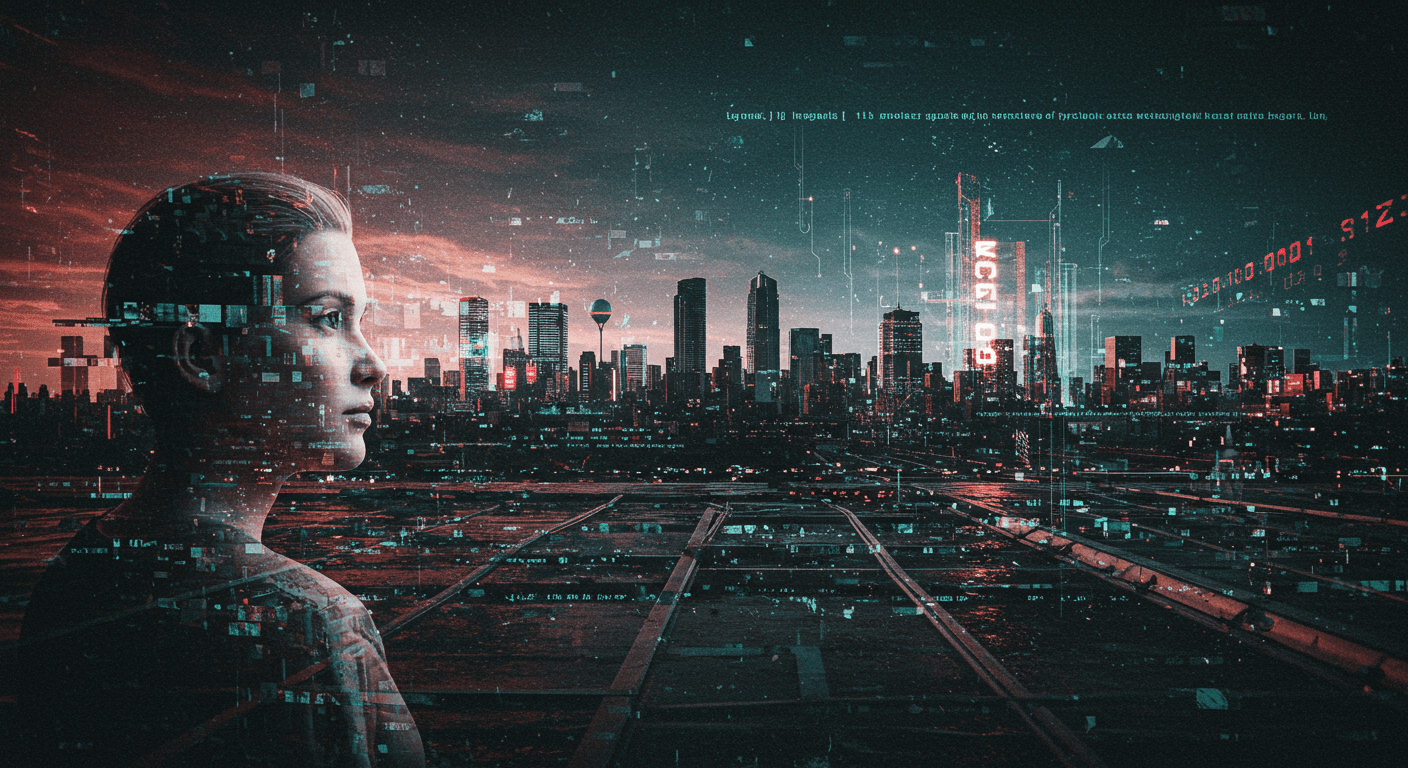
The notion that our reality is a meticulously crafted simulation, a digital construct running on some unfathomable cosmic server, has permeated popular culture, from philosophical debates to blockbuster films. Yet, beyond the realm of science fiction, the concept raises a chilling question: what if we, the inhabitants of this reality, are not the protagonists of our own stories, but rather, the non-player characters (NPCs) in someone else’s grand, intricate game?
The idea, while unsettling, is not without its allure. It offers a potential explanation for the existential unease that permeates modern life, the feeling of being adrift in a vast, indifferent universe. But how would we know? What subtle glitches in the code, what recurring patterns in our behavior, might betray our true, simulated nature? Here, we delve into ten unsettling signs that suggest you might be an NPC in someone else’s simulation.
1. The Repetitive Routine: A Groundhog Day Existence
The most glaring indicator of an NPC’s existence is the tendency towards repetitive behavior. NPCs, by their very nature, are programmed to follow predictable scripts, to perform the same actions day in and day out. Do you find yourself trapped in a loop, your days blurring into a monotonous cycle of work, eat, sleep, repeat? Does your commute feel like a pre-programmed path, your interactions with others a series of predictable exchanges? While routine is a part of life, a complete lack of spontaneity, a sense of being trapped in a pre-determined loop, might be a sign of a more fundamental limitation.
2. The Limited Choice Paradox: A False Sense of Agency
NPCs are often given the illusion of choice, a semblance of agency to make them feel like active participants in the simulation. However, these choices are often limited, confined to a narrow set of pre-defined options. Do you feel like your life is a series of binary decisions, a series of “yes” or “no” prompts? Do you find that your attempts to deviate from the expected path are met with subtle, or not-so-subtle, resistance? The feeling of being constrained, of having your options artificially limited, can be a disquieting sign of a simulated existence.
3. The Background Character Syndrome: Lost in the Crowd
In a vast, sprawling simulation, not everyone can be a protagonist. Many must fill the role of background characters, the nameless, faceless individuals who populate the world, providing context and texture to the main narrative. Do you feel like a peripheral figure in your own life, an extra in a grand production? Do you find that your presence goes unnoticed, your contributions unacknowledged? The feeling of being insignificant, of being lost in the crowd, can be a chilling indication of your simulated status.
4. The Déjà Vu Anomaly: A Glitch in the Code
Déjà vu, the unsettling feeling of having experienced a moment before, is often attributed to neurological quirks or subconscious memories. But what if it’s something more? What if it’s a glitch in the simulation, a momentary lapse in the code, where the same sequence of events is replayed? Do you experience déjà vu with unusual frequency? Does it feel more like a forced repetition than a fleeting sense of familiarity? These moments might be the subtle cracks in the simulated façade.
5. The Uncanny Valley of Social Interactions: Robotic Encounters
NPCs, while programmed to interact with the player, often lack the nuanced emotional depth of real human beings. Their responses can feel stilted, their emotions exaggerated or artificial. Do you find your social interactions to be strangely predictable, your conversations lacking in genuine connection? Do you encounter individuals who seem to adhere to rigid social scripts, their responses devoid of spontaneity? The feeling of interacting with automatons, of navigating a world populated by robotic entities, can be a disquieting sign.
6. The Inexplicable Skill Surge: Instant Expertise
NPCs are often programmed with specific skills and abilities, which they can access instantaneously. Have you ever found yourself suddenly proficient in a task you’ve never attempted before, as if a new skill set has been downloaded into your consciousness? Do you experience moments of inexplicable expertise, where you perform complex actions without conscious effort? This sudden, inexplicable access to new abilities might be a sign of a simulated upgrade.
7. The Narrative Convenience: Coincidences and Plot Devices
In a well-crafted simulation, events are often orchestrated to serve the narrative, to move the story forward. Coincidences are not random occurrences but carefully scripted plot devices. Do you find that your life is punctuated by a series of improbable coincidences, events that seem too convenient to be real? Do you encounter individuals who appear at crucial moments, providing timely assistance or information? The feeling of being guided by an unseen hand, of being manipulated by narrative convenience, can be a unsettling revelation.
8. The Unexplainable Memory Gaps: Missing Pieces
NPCs, being simulated entities, may not have a complete or continuous memory. Their memories can be fragmented, their past experiences inconsistent. Do you experience unexplained memory gaps, periods of time that are shrouded in mystery? Do you find inconsistencies in your recollections, details that don’t quite add up? These fragmented memories, these missing pieces of your past, might be a sign of a simulated existence.
9. The Uncanny Synchronicity: Repeating Patterns
While coincidences might be a narrative tool, synchronicity is a different beast. It’s the feeling of meaningful coincidences, patterns that repeat in your life with a strange regularity. Do you find yourself repeatedly encountering the same symbols, the same numbers, the same phrases? Do you experience a sense of interconnectedness, as if events are unfolding according to a hidden pattern? These uncanny synchronizations might be the subtle whispers of the simulation’s code.
10. The Existential Dread: A Deep-Seated Unease
Perhaps the most profound sign of a simulated existence is a deep-seated, persistent feeling of unease, a sense that something is fundamentally wrong with the world. This existential dread is not a fleeting emotion but a constant, nagging presence, a feeling that reality is not what it seems. Do you experience a sense of alienation, of being disconnected from the world around you? Do you feel a profound sense of meaninglessness, a lack of purpose? This existential dread, this gnawing sense of unease, might be the ultimate sign of a simulated existence.
The idea that we are living in a simulation is, of course, a speculative one. There is no conclusive evidence to support it, and the concept itself raises more questions than it answers. However, the thought experiment serves as a powerful reminder of the subjective nature of reality, the limitations of our perception, and the profound mystery of existence. Whether we are NPCs in someone else’s game or the protagonists of our own stories, the question of our true nature remains a haunting and enduring enigma.
Further Reading:
- “Simulacra and Simulation” by Jean Baudrillard
- “Are You Living in a Computer Simulation?” by Nick Bostrom
- “The Simulation Hypothesis: An MIT Computer Scientist Shows Why AI, Quantum Physics and Eastern Mystics All Agree It’s True” by Rizwan Virk
- “Reality as Simulation” essays from Oxford University.
- “The Matrix” (film series) – a cultural touchstone that popularized many of these concepts.
Here at Zentara.blog, our mission is to take those tricky subjects and unlock them, making knowledge exciting and easy to grasp for everyone. But the adventure doesn’t stop on this page! We’re constantly exploring new frontiers and sharing discoveries across the digital universe.
Want to dive deeper into more mind-bending Top 10s and keep expanding your world? Come join us on our other platforms – we’ve got unique experiences waiting for you on each one!
- Get inspired by visual wonders and bite-sized facts: See the world through Zentara’s eyes on Pinterest! Pin our fascinating facts and stunning visuals to your own boards. Explore Pins on Pinterest: https://uk.pinterest.com/zentarablog/
- Discover quick insights and behind-the-scenes peeks: Hop over to Tumblr for snippets, quotes, and unique content you won’t find anywhere else. It’s a different flavour of discovery! Follow the Fun on Tumblr: https://www.tumblr.com/zentarablog
- Ready for deep dives you can listen to or watch? We’re bringing our accessible approach to video and potentially audio! Subscribe to our YouTube channel and tune into future projects that make learning pop! Subscribe on YouTube: https://www.youtube.com/@ZentaraUK
- Seeking even more knowledge in one place? We’ve compiled some of our most popular topic deep dives into fantastic ebooks! Find them on Amazon and keep the learning journey going anytime, anywhere. Find Our Ebooks on Amazon: https://www.amazon.co.uk/s?k=Zentara+UK&ref=nb_sb_noss
- Connect with us and fellow knowledge seekers: Join the conversation on BlueSky! We’re sharing updates, thoughts, and maybe even asking you what wonders we should explore next. Chat with Us on BlueSky: https://bsky.app/profile/zentarablog.bsky.social
- Perfect for learning on the move! We post multiple 10-minute podcasts per day on Spotify. Pop on your headphones and fill your day with fascinating facts while you’re out and about! Listen on Spotify: https://open.spotify.com/show/3dmHbKeDufRx95xPYIqKhJ
Every click helps us keep bringing honest, accessible knowledge to everyone. Thanks for exploring with us today – see you out there in the world of discovery!




Leave a Reply