
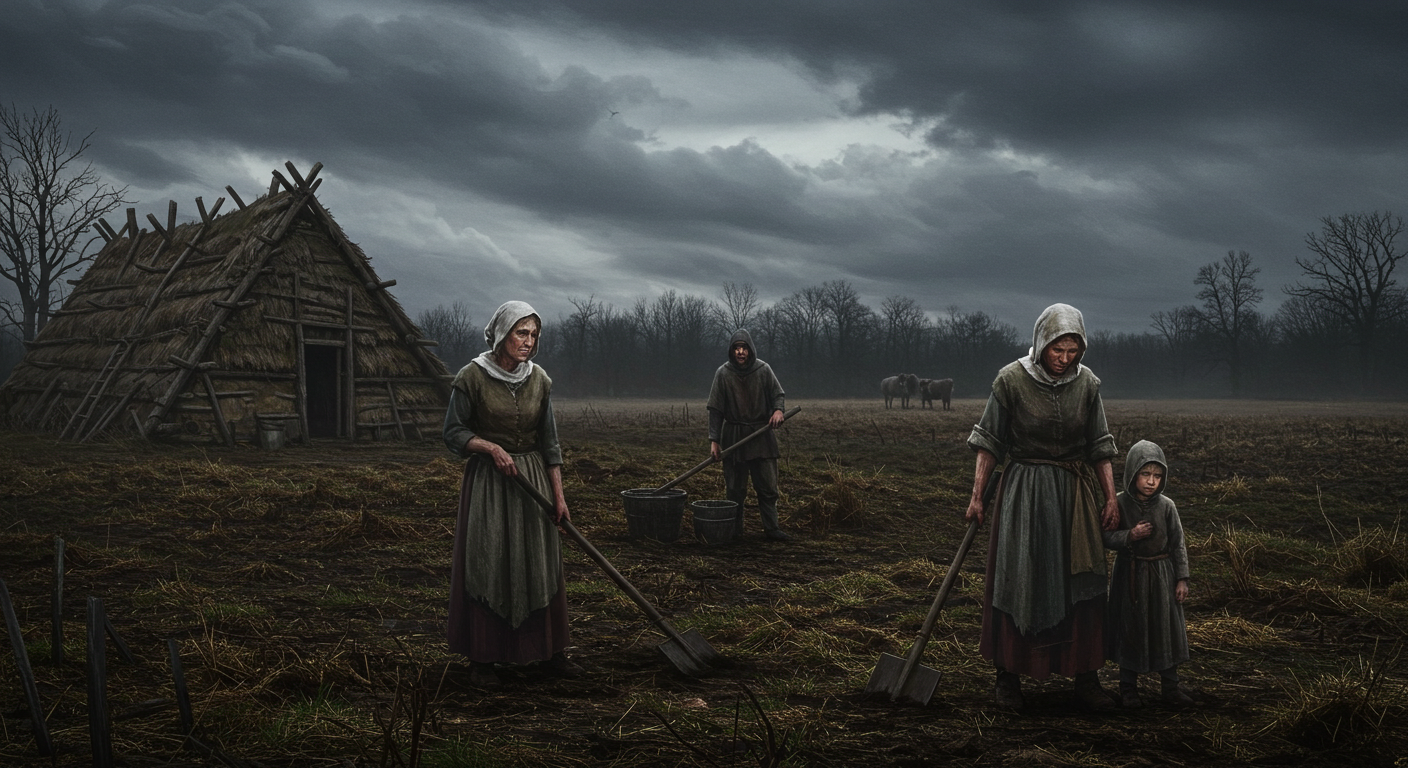
The romanticized image of medieval peasantry, often painted with rustic charm, obscures the harsh realities of daily life. Beyond the rigid structure of the feudal system, a tapestry of everyday struggles wove a constant thread of hardship through the lives of those who tilled the soil. These ten trials, etched in the annals of history and archaeology, illuminate the precarious existence of those who formed the bedrock of medieval society.
1. The Hunger’s Shadow: Subsistence and Scarcity:
The specter of hunger haunted the medieval peasant. Reliance on seasonal harvests, vulnerable to weather fluctuations and crop diseases, meant that a single failed harvest could plunge families into starvation. As historian Barbara Tuchman details in “A Distant Mirror,” the fragility of agricultural yields, combined with limited storage and transportation, created a constant threat of famine. The daily struggle to secure sustenance, often relying on meager rations and foraged foods, was a defining feature of peasant life. The constant worry for the next meal, and the vulnerability of the family’s food stores was a weight carried by every peasant.
2. The Labor’s Burden: Unrelenting Toil and Physical Strain:
Peasant life was synonymous with backbreaking labor. From dawn till dusk, individuals toiled in the fields, tending crops, tending livestock, and performing arduous tasks with rudimentary tools. The physical strain of manual labor, coupled with poor nutrition and limited medical care, took a heavy toll on their bodies. As archaeologist Roberta Gilchrist explores in “Medieval Life: Archaeology and the Life Courses,” skeletal remains reveal evidence of chronic injuries, degenerative diseases, and premature aging. The constant, unending physicality of life, and the toll it took on the body, was a reality of every peasant.
3. The Shelter’s Fragility: Primitive Housing and Harsh Conditions:
Peasant dwellings, typically simple wattle-and-daub huts with thatched roofs, offered little protection from the elements. These structures, often damp, cold, and poorly ventilated, provided minimal comfort and sanitation. As historian Christopher Dyer details in “An Everyday Life in the Middle Ages,” the lack of basic amenities, such as proper sanitation and heating, contributed to the spread of disease and discomfort. The fragility of these homes, and their inability to provide adequate shelter, added to the hardships of daily life.
4. The Disease’s Grip: Vulnerability to Epidemics and Illness:
Medieval peasants were highly vulnerable to disease, lacking access to effective medical care and living in unsanitary conditions. Epidemics, such as the Black Death, swept through communities, decimating populations and leaving behind a trail of grief. As historian John Kelly explores in “The Great Mortality,” the lack of understanding of disease transmission and the absence of effective treatments exacerbated the impact of epidemics. The constant threat of illness, and the lack of effective medical care, created a pervasive sense of vulnerability.
5. The Social Hierarchy’s Weight: Limited Mobility and Oppression:
The rigid social hierarchy of the feudal system confined peasants to a life of servitude, with limited opportunities for social mobility. They were bound to the land, subject to the whims of their lords, and burdened by heavy taxes and obligations. As historian Marc Bloch details in “Feudal Society,” the lack of personal freedom and the constant pressure to fulfill their feudal duties created a sense of oppression and resentment. The constant awareness of their place in the hierarchy, and the lack of opportunity to change it, weighed heavily on their lives.
6. The Violence’s Shadow: Warfare, Raids, and Local Disputes:
The medieval world was rife with violence, from large-scale wars to localized raids and disputes. Peasants were often caught in the crossfire, their lives and livelihoods disrupted by conflict. As historian Richard Abels explores in “Lordship and Military Obligation in Anglo-Saxon England,” the constant threat of violence, coupled with the lack of effective protection, created a sense of insecurity and fear. The threat of violence, and the disruption it caused to their lives, was a constant concern.
7. The Ignorance’s Burden: Limited Education and Superstition:
Medieval peasants had limited access to education, relying on oral traditions and folk beliefs to navigate their world. Superstition and fear of the unknown often played a significant role in their lives. As historian Peter Brown details in “The Rise of Western Christendom,” the lack of scientific understanding and the prevalence of superstition contributed to a sense of vulnerability and fear. The lack of education, and the reliance on superstition, limited their understanding of the world.
8. The Isolation’s Grip: Limited Travel and Localized Communities:
Medieval peasant communities were often isolated, with limited travel and interaction with the outside world. This isolation contributed to a sense of parochialism and limited exposure to new ideas and opportunities. As historian David Nicholas explores in “The Evolution of the Medieval World,” the lack of mobility and the localized nature of peasant life restricted their horizons and limited their opportunities. The isolation of their lives, and the lack of opportunity to travel, limited their world view.
9. The Family’s Strain: High Infant Mortality and Limited Resources:
Medieval peasant families faced high infant mortality rates, with many children dying before reaching adulthood. The burden of raising large families with limited resources placed a significant strain on their lives. As historian Carole Rawcliffe details in “Medicine for the Soul: A History of Care and Cure in Western Europe,” the high rate of infant death, and the constant worry for the children’s survival, added to the hardships of peasant life.
10. The Environmental Vulnerability: Dependence on Natural Cycles:
Medieval peasants were highly dependent on natural cycles, vulnerable to droughts, floods, and other environmental disasters. Their livelihoods, tied to the land, were at the mercy of the elements. As historian William Chester Jordan explores in “The Great Famine: Northern Europe in the Early Fourteenth Century,” the unpredictable nature of the environment created a constant sense of insecurity and vulnerability. The reliance on natural cycles, and the vulnerability to environmental disasters, shaped their lives.
Conclusion:
The daily struggles of medieval peasants, far from being romanticized, reveal a life of hardship and resilience. Beyond the feudal system’s framework, a tapestry of hunger, labor, disease, and social constraints wove a constant thread of adversity through their lives. These ten trials, etched in the historical record, offer a sobering glimpse into the precarious existence of those who formed the backbone of medieval society.
Further Reading:
- “A Distant Mirror” by Barbara Tuchman
- “Medieval Life: Archaeology and the Life Courses” by Roberta Gilchrist
- “An Everyday Life in the Middle Ages” by Christopher Dyer
- “The Great Mortality” by John Kelly
- “Feudal Society” by Marc Bloch
- “Lordship and Military Obligation in Anglo-Saxon England” by Richard Abels
- “The Rise of Western Christendom” by Peter Brown
- “The Evolution of the Medieval World” by David Nicholas
- “Medicine for the Soul: A History of Care and Cure in Western Europe” by Carole Rawcliffe
- “The Great Famine: Northern Europe in the Early Fourteenth Century” by William Chester Jordan




Leave a Reply