
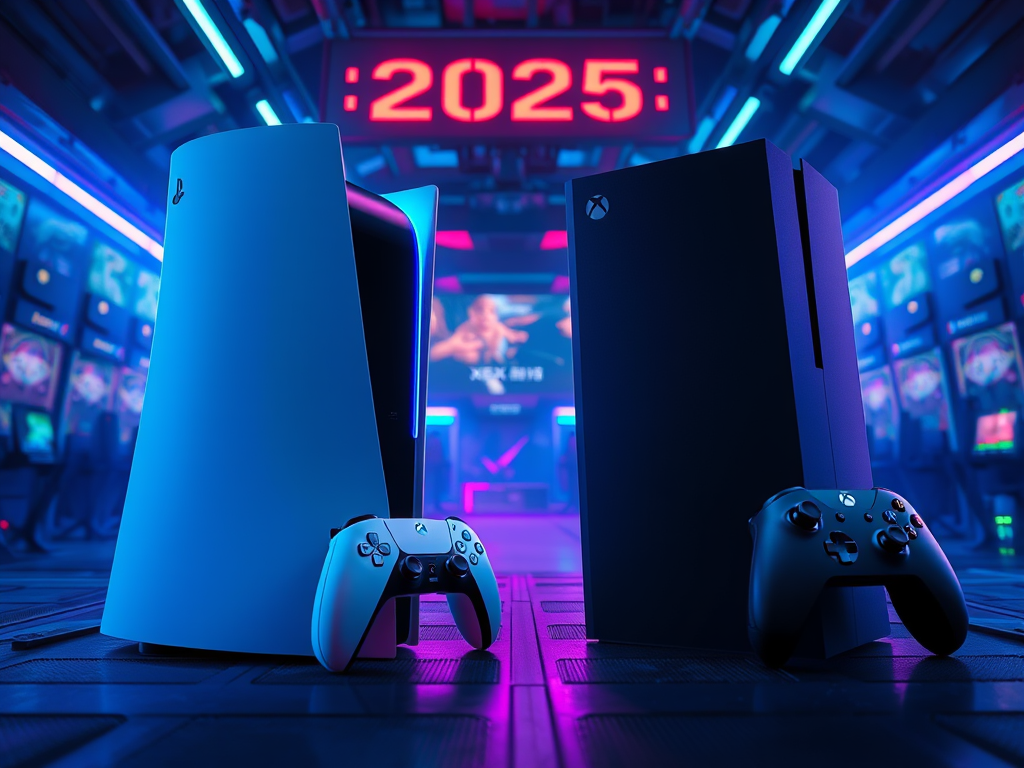
The console war, a perennial topic of discussion among gamers, continues to evolve with each passing year. As we move into 2025, the battle between Sony’s PlayStation 5 and Microsoft’s Xbox Series X remains a central narrative in the gaming landscape. Both consoles, launched in late 2020, represent significant leaps in hardware and gaming experiences, yet the question of which platform holds a definitive edge persists. This article will delve into the current state of this rivalry, examining key aspects such as performance, game libraries, subscription services, and future prospects to determine if a clear victor has emerged.
An Honest Look at the Steam Deck in 2025
A Look Back: The Launch and Early Years
The initial launch of the PlayStation 5 and Xbox Series X was marked by considerable hype and, unfortunately, significant supply chain issues due to the global pandemic. Both consoles promised a new era of gaming with custom-built solid-state drives (SSDs) for lightning-fast loading times, powerful processors and graphics cards enabling 4K resolution gaming at high frame rates, and innovative features like ray tracing for enhanced visual fidelity.
In the early years, the debate often centered on raw technical specifications. The Xbox Series X boasted slightly higher theoretical processing power with its 12 teraflops GPU compared to the PS5’s 10.28 teraflops. However, as many early cross-platform titles demonstrated, the real-world difference in graphical performance was often negligible, with both consoles delivering stunning visuals. The PS5, on the other hand, introduced the innovative DualSense controller with its haptic feedback and adaptive triggers, offering a unique layer of immersion that many developers embraced.
2025: Where Do We Stand?
As we move deeper into the console generation, the focus has shifted beyond mere specifications to the overall ecosystem and the value proposition each platform offers. Several factors contribute to the ongoing comparison in 2025:
Performance and Hardware
While the fundamental hardware of both consoles remains the same, developers have become increasingly adept at optimizing their games for each architecture. Both the PS5 and Xbox Series X consistently deliver smooth performance in demanding titles, often at 4K resolution and 60 frames per second. While some argue the Xbox Series X still holds a slight edge in raw power, this advantage rarely translates into a significant, noticeable difference in most games.
It’s worth noting the introduction of the PlayStation 5 Pro in late 2024. This mid-generation refresh offers enhanced processing and graphics capabilities, positioning it as the more powerful console on paper with a reported 16.7 teraflops GPU. However, the extent to which this increased power translates to truly game-changing experiences remains to be seen, as developers will need time to fully leverage its potential. Some sources suggest the PS5 Pro aims to deliver more consistent 4K at higher frame rates and improved ray tracing performance.
Game Library and Exclusives
The strength of a console often lies in its exclusive titles, and this remains a key battleground for the PS5 and Xbox Series X. Historically, Sony has been lauded for its strong first-party lineup of narrative-driven, critically acclaimed games. In 2025, this trend continues with titles like Marvel’s Spider-Man 2, Final Fantasy VII Rebirth, God of War Ragnarok, and Horizon Forbidden West being prime examples of high-quality exclusives that often sway purchasing decisions. Upcoming exclusives like Ghost of Yōtei and Death Stranding 2 further bolster the PS5’s offerings.
How the Commodore 64 Changed Everything
Microsoft, while having invested heavily in expanding its first-party studios, has arguably not achieved the same consistent level of impactful, system-selling exclusives. While titles like Starfield, Forza Motorsport, and Halo Infinite are significant, some critics argue they haven’t reached the same cultural zeitgeist as some of Sony’s flagship franchises. However, Microsoft’s strategy with Xbox Game Pass has significantly altered the landscape, offering day-one access to many of their first-party titles as part of the subscription service.
The discussion around exclusives is also evolving. There has been a notable shift in Microsoft’s strategy, with some previously Xbox-exclusive titles now being released on PlayStation platforms. This move aims to broaden the reach of their games and increase revenue, but it does diminish the exclusivity appeal of the Xbox ecosystem.
Subscription Services: A Paradigm Shift
Xbox Game Pass remains a standout offering in the gaming industry. For a monthly fee, subscribers gain access to a vast and rotating library of games, including all of Microsoft’s first-party releases on day one. This service provides immense value and has been a significant draw for many players. The addition of cloud gaming through Xbox Game Pass Ultimate further enhances its appeal, allowing users to play games on various devices.
PlayStation Plus, while also offering a tiered subscription service with a library of games, has traditionally not mirrored the day-one first-party release strategy of Game Pass. However, PlayStation Plus has evolved, offering different tiers with varying benefits, including a substantial library of PS4 and PS5 titles, cloud streaming in select regions, and classic PlayStation games. While still a compelling service, some argue it doesn’t offer the same immediate access to new first-party titles as Xbox Game Pass.
Backward Compatibility and Game Support
The Xbox Series X boasts superior backward compatibility, allowing players to enjoy a vast library of games from previous Xbox generations, including original Xbox, Xbox 360, and Xbox One titles. This is a significant advantage for players who have built up a digital or physical library over the years.
The PS5 offers backward compatibility with most PS4 games but lacks native support for older PlayStation generations. While many beloved PS3 titles are available through PlayStation Plus Premium (via streaming), the lack of direct backward compatibility is a point of contention for some users.
Controller and Features
The PlayStation 5’s DualSense controller continues to be a standout feature, with its immersive haptic feedback and adaptive triggers providing a unique sensory experience in compatible games. This innovation has been widely praised and adopted by many developers to enhance gameplay. Sony has also expanded its controller offerings with the more premium and customizable DualSense Edge.
The Xbox Series X controller refines the comfortable design of its predecessor but lacks the same level of innovative features as the DualSense. While it offers excellent ergonomics and responsiveness, it doesn’t provide the same unique tactile feedback. However, some players prefer the familiar feel and robust build quality of the Xbox controller. Microsoft’s Quick Resume feature, allowing players to seamlessly switch between multiple suspended games, remains a convenient and well-regarded feature of the Xbox ecosystem.
Price and Value
The pricing of both consoles has remained relatively stable since their launch, although regional variations exist. The introduction of the disc-less PlayStation 5 Digital Edition and the Xbox Series S offers more affordable entry points into their respective ecosystems. The PS5 Pro, with its enhanced capabilities, comes at a higher price point.
Considering the overall value, Xbox Game Pass is often cited as a significant advantage for the Xbox platform, providing access to a large library of games for a monthly subscription. For players who prioritize a wide variety of games and day-one access to first-party titles, Game Pass offers a compelling economic proposition. PlayStation Plus also offers value, particularly for those who enjoy exploring a curated library of PlayStation titles.
Has a Clear Winner Emerged?
In 2025, declaring a definitive winner in the PS5 vs Xbox Series X debate remains nuanced and depends heavily on individual preferences and priorities.
PlayStation 5’s Strengths:
- Stronger First-Party Exclusives: Sony continues to deliver critically acclaimed and commercially successful exclusive titles that are often a key draw for many gamers.
- Innovative Controller: The DualSense controller’s haptic feedback and adaptive triggers offer a unique and immersive gaming experience.
- Market Dominance: Sales figures consistently show the PS5 outselling the Xbox Series X|S globally, indicating a larger player base and potentially a stronger pull for some developers. Recent reports from January and February 2025 show the PS5 significantly ahead in worldwide sales.
Xbox Series X’s Strengths:
- Xbox Game Pass: This subscription service offers unparalleled value with a vast library of games, including day-one access to first-party titles.
- Superior Backward Compatibility: The ability to play games from multiple past Xbox generations is a significant advantage for many players.
- Slightly More Powerful Hardware (on paper): While often not drastically noticeable in real-world gaming, the Xbox Series X has a theoretical edge in processing power.
- Quick Resume: The ability to seamlessly switch between multiple games is a convenient and time-saving feature.
The Impact of PS5 Pro:
The introduction of the PS5 Pro adds another layer to the comparison. While it offers increased performance, its higher price point might make it less appealing to budget-conscious consumers. Its success will depend on how effectively developers leverage its power to create truly enhanced gaming experiences that justify the premium cost.
Future Directions and Implications
The console landscape is constantly evolving. Both Sony and Microsoft are likely to continue refining their hardware, expanding their game libraries, and enhancing their subscription services.
Potential Future Trends:
- Increased Focus on Digital Ecosystems: Both companies are likely to further emphasize their digital storefronts and subscription services as the primary means of game distribution and engagement.
- Cloud Gaming Expansion: Cloud gaming technology will likely continue to mature, potentially allowing players to access high-end games on a wider range of devices without the need for dedicated console hardware. Both Xbox Game Pass Ultimate and PlayStation Plus offer cloud gaming options, and these are expected to grow.
- Cross-Platform Play and Interoperability: The trend of cross-platform play, allowing players on different consoles to play together, is likely to continue, fostering larger online communities.
- Continued Evolution of Exclusives: The role and nature of console exclusives may continue to shift, as seen with Microsoft’s recent strategy of bringing some of its titles to PlayStation. However, exclusive content will likely remain a key differentiator for attracting players to each platform.
Implications for Consumers:
The ongoing competition between PS5 and Xbox Series X ultimately benefits consumers by driving innovation, improving services, and providing a wider range of gaming experiences. The choice between the two consoles in 2025 boils down to individual priorities:
- For players who prioritize exclusive, high-quality narrative-driven games and innovative controller features, the PlayStation 5 (and potentially the PS5 Pro for enhanced performance) may be the preferred choice.
- For players who value a vast library of games through a subscription service, superior backward compatibility, and a slightly more powerful console, the Xbox Series X offers a compelling alternative.
The Xbox Series S remains a strong option for budget-conscious gamers who are primarily interested in digital gaming and access to the Xbox ecosystem.
Conclusion: A Matter of Preference
In conclusion, as we navigate 2025, it’s difficult to declare a definitive winner between the PlayStation 5 and the Xbox Series X. Both consoles offer unique strengths and cater to different segments of the gaming market. The PS5 continues to excel with its critically acclaimed exclusives and innovative DualSense controller, while the Xbox Series X shines with its value-driven Game Pass subscription and robust backward compatibility. The introduction of the PS5 Pro adds a new dimension to the performance aspect, but its overall impact on the “winner” narrative is yet to be fully realized.
Ultimately, the “better” console in 2025 is subjective and depends on what matters most to the individual gamer. Both platforms offer fantastic gaming experiences and will continue to evolve and compete for players’ attention in the years to come. The ongoing rivalry ensures a vibrant and dynamic gaming landscape for everyone.
Further Reading
- Skoar Championship: “PS5 vs Xbox Series X: Which Console is Better in 2025?”
- VGChartz: “PS5 vs Xbox Series X|S Sales Comparison – January 2025”
- IGN: “PS5 Has Best Holiday Ever, Overall Sales Pass 75 million”
- GameSpot: “The Best Xbox Series X Games In 2025”
- Trusted Reviews: “PS5 vs Xbox Series X: Which console is right for you?”
- What Hi-Fi?: “PS5 vs Xbox Series X: which is better for movies as well as games?”




Leave a Reply