
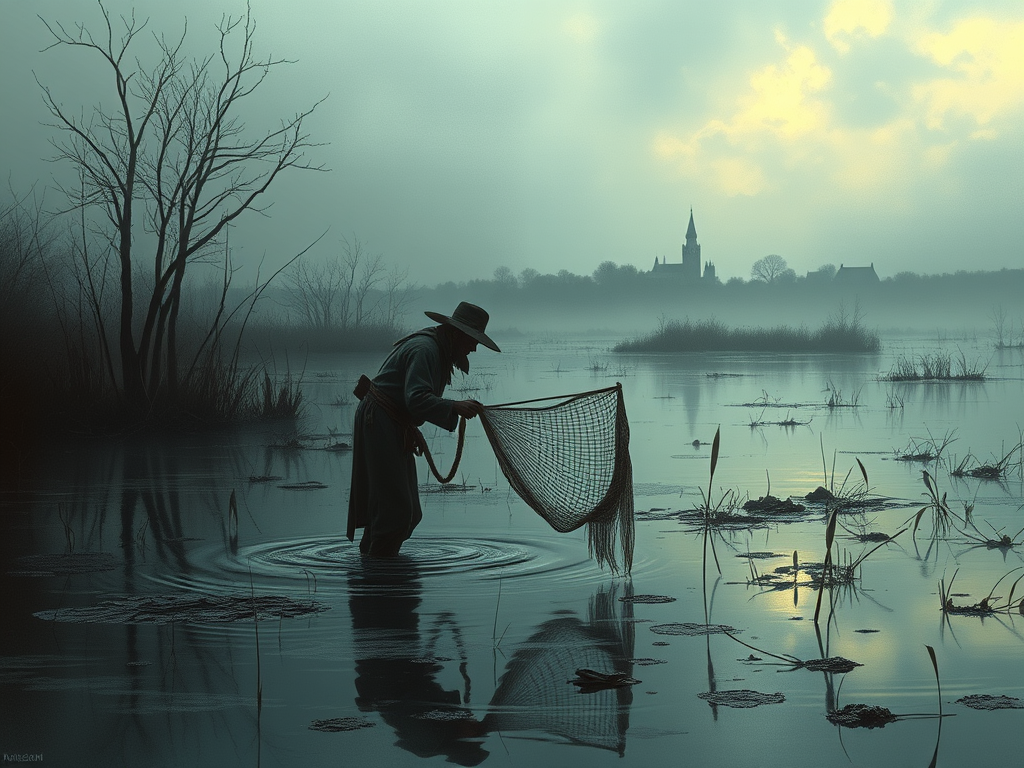
The term “Dark Ages,” while increasingly nuanced by historians, often conjures images of agrarian societies dominated by warriors and serfs tilling the land. However, beneath this simplified veneer lay a surprisingly diverse range of occupations, many of which catered to the specific needs and evolving complexities of early medieval life. While agriculture and warfare were undoubtedly central, a closer look reveals a fascinating array of unexpected professions that played crucial roles in shaping the social, economic, and even spiritual landscape of the era.
1. The Leech Collector: In an age before sophisticated medicine, bloodletting was a common practice for treating a variety of ailments. Leech collectors, often venturing into marshy and disease-ridden areas, braved the elements and the creatures of the wetlands to gather these annelids. Their knowledge of leech habitats and handling techniques was vital to the rudimentary medical practices of the time, serving physicians and local healers alike. This was a precarious and undoubtedly unpleasant job, yet essential for the prevailing medical understanding.
2. The Gleeman/Scop: Before widespread literacy and the printing press, oral tradition was paramount. Gleemen in Anglo-Saxon England, or Scops in other Germanic societies, were professional entertainers. They were more than mere jesters; they were historians, storytellers, and poets, traveling between settlements and royal courts, reciting epic poems, genealogies, and news. Their performances provided entertainment, preserved cultural memory, and reinforced social bonds, making them highly valued members of their communities.
3. The Alchemist/Wise Woman (Beyond Magic): While the popular image of alchemy is often tied to the pursuit of gold or magical potions, early medieval alchemists and wise women often engaged in practical crafts and rudimentary science. They might have experimented with dyes, metalworking, or herbal remedies, drawing on empirical knowledge and passed-down traditions. While superstition was prevalent, these individuals sometimes held a unique position as keepers of specialized knowledge beyond the ken of the average farmer.
4. The Falconer: Hunting was a significant activity for the aristocracy, providing both sport and food. Falconers were highly skilled individuals responsible for training and managing birds of prey, such as hawks and falcons. Their expertise in handling these majestic creatures and their knowledge of hunting techniques made them valued members of noble households, often enjoying a privileged status.
5. The Salt Maker/Salter: Salt was a vital commodity in the Dark Ages, crucial for preserving food before refrigeration. Salt makers, or salters, employed various techniques, from boiling brine to mining salt deposits, to extract this precious resource. Their work was often arduous and could involve specialized knowledge of local geography and evaporation processes. Control over salt production could even translate to significant economic power in some regions.
6. The Charcoal Burner: Iron production, essential for tools and weaponry, required vast amounts of charcoal. Charcoal burners lived a solitary existence in the forests, carefully managing slow-burning fires to convert wood into charcoal. Their work was smoky, labor-intensive, and often isolated, but it was a foundational industry supporting other crucial crafts and military endeavors.
7. The Fuller: Woollen cloth, a staple of medieval clothing, underwent a process called fulling to thicken and cleanse it. Fullers, often working with urine (a source of ammonia) and clay, would tread or beat the cloth in large vats. This smelly and physically demanding job was essential for producing durable and wearable textiles.
8. The Ropemaker: From ship rigging to agricultural tools, rope was an indispensable material. Ropemakers employed specialized techniques to twist fibers (hemp, flax, etc.) into strong and durable cords. Their craft required skill and often a dedicated workspace, highlighting the importance of this seemingly simple product in the functioning of medieval society.
9. The Sexton/Gravedigger: With high mortality rates, the proper burial of the dead was a significant concern. Sextons were responsible for maintaining churchyards, digging graves, and often assisting with funeral rites. While perhaps a somber occupation, it was a necessary service within the community, often holding a position of respect due to its connection with the spiritual realm.
10. The Ferryman: Before widespread bridge construction, rivers and waterways were significant barriers. Ferrymen provided essential transportation across these obstacles, ferrying people, livestock, and goods. Their knowledge of the local waterways and boat handling skills were vital for trade, communication, and travel, connecting communities that would otherwise be isolated.
These ten examples offer a glimpse into the surprisingly diverse occupational landscape of the Dark Ages, revealing a society far more complex than simple depictions often suggest. Beyond the fields and battlefields, a multitude of specialized skills and professions contributed to the fabric of early medieval life, each playing an unexpected yet crucial role in shaping the world of their time.




Leave a Reply