
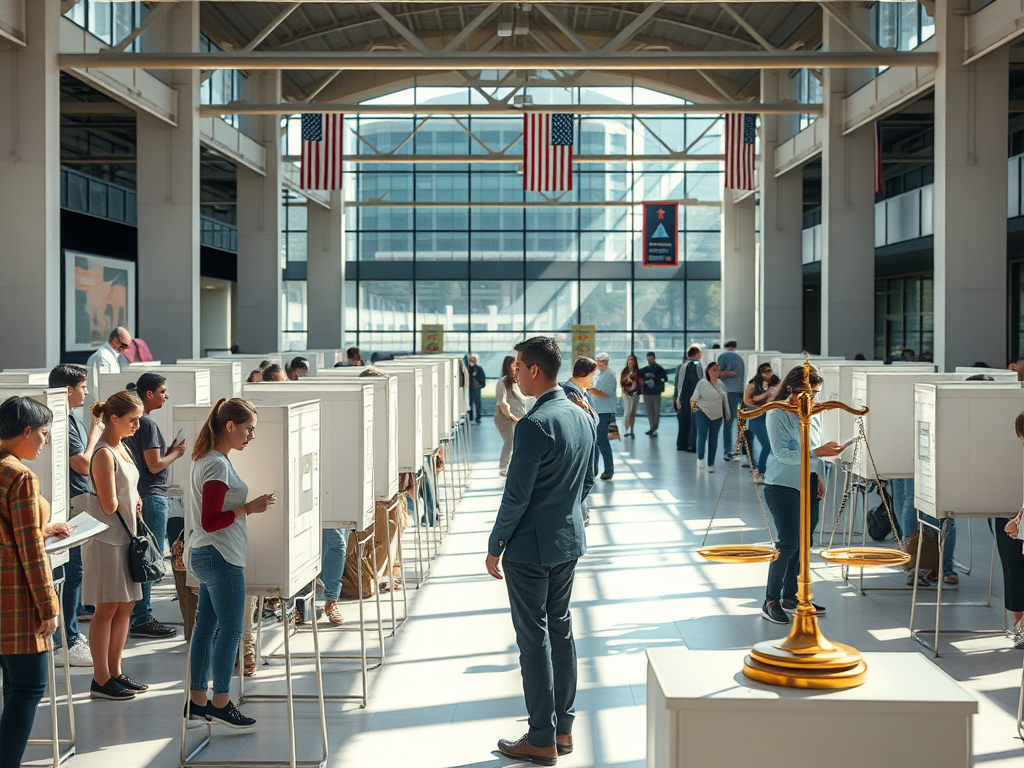
Democracy is a word we hear a lot, often associated with fairness, freedom, and people having a say. But what exactly makes a society truly democratic? It’s more than just holding elections. It’s a complex system built on several key elements that work together to ensure that power rests with the people and that their rights and voices are respected. Let’s decode democracy by exploring the top 10 essential elements of a democratic society.
1. Free and Fair Elections: The Voice of the People
At the heart of any democracy are free and fair elections. This means that all eligible citizens have the right to vote, their vote is secret, and the process is conducted honestly and without intimidation or manipulation. Everyone has an equal say, and the results accurately reflect the will of the people. Imagine a school election where everyone gets one vote, no one is forced to vote a certain way, and the votes are counted properly – that’s the basic idea behind free and fair elections in a democratic system. This ensures popular sovereignty, the idea that the ultimate power lies with the people.
2. Rule of Law: Equality Under the Law
In a democratic society, everyone, from ordinary citizens to government officials, is subject to and accountable under the rule of law. This means that laws are applied equally and fairly to all, without special privileges or exemptions. There is a transparent and independent legal system to interpret and enforce these laws. Think of it like a game with clear rules that everyone, including the referee, has to follow. The rule of law ensures that power is not arbitrary and that everyone is treated justly, which is fundamental to a democratic framework.
3. Protection of Fundamental Rights and Freedoms: Inherent Human Dignity
A cornerstone of democracy is the protection of fundamental rights and freedoms. These are the basic entitlements that every individual possesses simply by being human. They typically include freedom of speech, freedom of assembly, freedom of religion, freedom of the press, and the right to a fair trial. These rights are usually enshrined in a constitution or legal framework and are protected from infringement by the government or other individuals. Imagine these rights as essential tools that allow people to express themselves, participate in society, and live with dignity in a democratic state.
4. Independent Judiciary: Upholding Justice and the Constitution
An independent judiciary is crucial for safeguarding democracy and the rule of law. This means that judges and courts are free from undue influence or control by the executive or legislative branches of government, or by any other powerful interests. Their role is to interpret and apply the law impartially, ensuring that the government acts within the bounds of the constitution and that individual rights are protected. Think of the judiciary as an umpire in a game, making sure everyone plays by the rules and calling out any fouls, without favouring any team. This separation of powers with an independent judiciary is vital for a healthy democratic process.
5. Freedom of the Press and Access to Information: An Informed Citizenry
A vibrant and free press is often considered the fourth pillar of democracy. It plays a vital role in informing the public about important issues, holding the government accountable, and providing a platform for diverse voices and opinions. Citizens need access to accurate and unbiased information to make informed decisions about their government and society. Think of the press as a window into what’s happening in the country, allowing everyone to see and understand what’s going on. Freedom of the press and access to information are essential for an engaged and responsible citizenry in a democratic republic.
6. Civil Society and Citizen Participation: Beyond the Ballot Box
Democracy thrives when citizens are actively involved in public life beyond just voting. This includes the existence of a strong civil society, made up of various non-governmental organizations, community groups, and social movements that allow people to organize and advocate for their interests and values. Citizen participation in these groups, as well as in public discussions and debates, strengthens the fabric of democratic governance and ensures that a wide range of perspectives are heard. Imagine a town hall meeting where residents come together to discuss local issues – that’s an example of citizen participation in action.
7. Accountability and Transparency of Government: Keeping Power in Check
In a democratic system, the government is accountable to the people it serves. This means that government officials are responsible for their actions and decisions and can be held to account through mechanisms like elections, legislative oversight, and an independent judiciary. Transparency is also key, meaning that government processes and information are open and accessible to the public. Think of it like a school principal who has to explain their decisions to the students and parents and whose actions are open for review. Government accountability and transparency help prevent corruption and ensure that power is used responsibly in a democratic nation.
8. Political Pluralism and Tolerance: Embracing Diverse Views
A healthy democracy embraces political pluralism, which means the existence of multiple political parties and ideologies that can compete for power. It also requires a culture of tolerance, where different viewpoints are respected, even if they are not shared. This allows for robust debate and discussion, which are essential for identifying the best solutions to societal challenges. Imagine a classroom where students have different opinions on a topic but can discuss them respectfully and learn from each other. Political pluralism and tolerance are vital for a dynamic and inclusive democratic state.
9. Peaceful Transition of Power: Respecting the Democratic Process
A crucial test of a democracy is the peaceful transition of power following elections. This means that when a new government is elected, the outgoing government respects the results and hands over power smoothly and without violence or disruption. This demonstrates a commitment to the democratic process and the will of the people. Think of it like a relay race where one runner smoothly passes the baton to the next – it shows respect for the rules of the race. The peaceful transition of power is a hallmark of a stable and mature democratic society.
10. Education and Civic Engagement: Empowering Citizens
Finally, a thriving democracy relies on an educated and engaged citizenry. Citizens need to understand their rights and responsibilities, how the government works, and the importance of participating in the democratic process. Education plays a vital role in fostering critical thinking, civic literacy, and a sense of civic duty. Think of it like learning the rules of a game and understanding why they are important – this makes you a better player. Education and civic engagement empower citizens to make informed decisions and actively contribute to their democratic society.
Further Reading:
- What is Democracy? by Alain Touraine
- The Little Book of Democracy by Joel Rogers and Joshua Cohen
- If You Were President by Catherine Stier (for younger readers, providing a basic understanding of democratic leadership)




Leave a Reply