
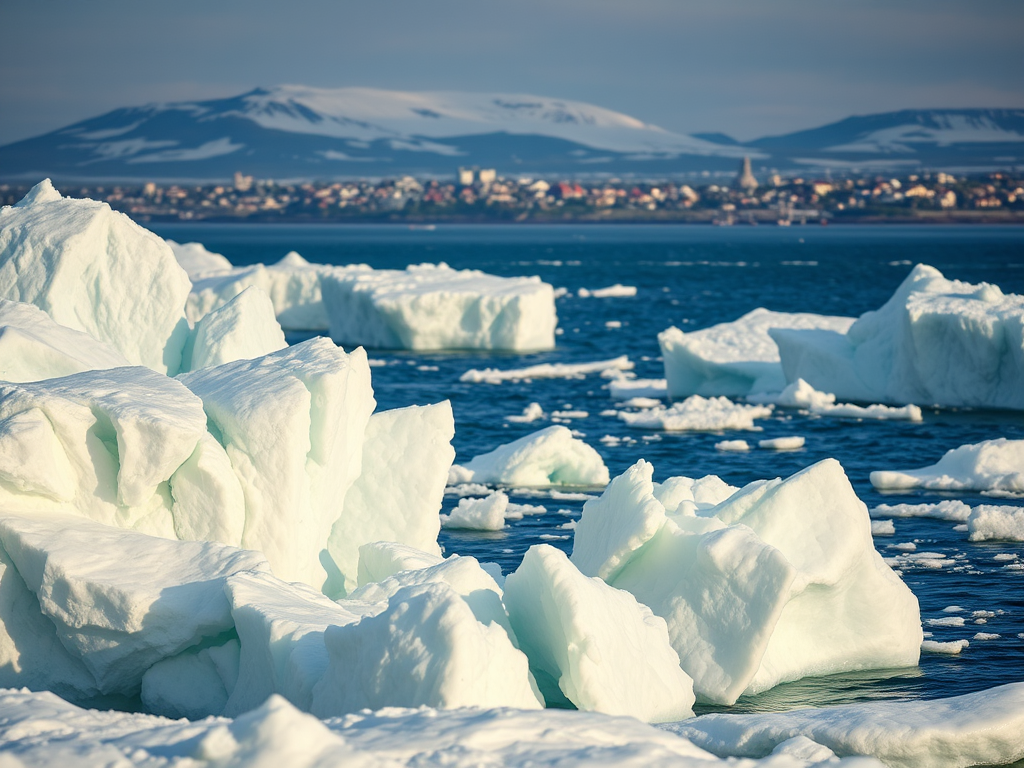
When you picture ice caps, you might just think of giant, frozen landscapes at the North and South Poles. They look pretty cool (pun intended!), but they’re so much more than just massive ice cubes. These icy giants play a vital role in our planet’s systems, and when they melt, it has far-reaching consequences that affect everything from the weather to the animals that call these icy regions home. Let’s dive into the top 10 impacts of melting ice caps and why this is a big deal for all of us.
1. Rising Sea Levels: When Ice Turns to Water
Imagine filling a glass with ice cubes and then letting them melt. What happens to the water level? It goes up! The same thing happens when polar ice caps melt. This sea level rise is one of the most direct and visible impacts of a warming planet. As vast amounts of ice from Greenland and Antarctica flow into the oceans, the water level increases. Even seemingly small increases can have huge consequences for coastal communities around the world, leading to more frequent flooding, erosion of shorelines, and even the loss of homes and land. Think of it like a bathtub overflowing – the extra water has to go somewhere, and often that’s onto the land where people live.
2. Disrupting Ocean Currents: The Global Conveyor Belt
The oceans have a complex system of currents, like giant underwater rivers, that circulate heat around the globe. These ocean currents play a crucial role in regulating our planet’s climate. The cold, dense water formed by melting glaciers and ice shelves can disrupt these delicate balances. This is because the freshwater from the melting ice is less dense than saltwater, potentially slowing down or even altering these major currents. Imagine stirring a cup of hot chocolate – the stirring (like ocean currents) distributes the heat evenly. If you stop stirring or add a lot of cold water, the temperature distribution changes.
3. Extreme Weather Events: Heatwaves, Storms, and More
While it might seem counterintuitive, the melting of ice caps can actually contribute to more extreme weather events in other parts of the world. Changes in ocean temperatures and atmospheric circulation, driven by the influx of cold freshwater and altered currents, can lead to more intense heatwaves, stronger storms, and changes in rainfall patterns. Think of the Earth’s climate system as a finely tuned orchestra. When one part (like the ice caps) is significantly altered, it can throw off the rhythm and lead to unpredictable and sometimes chaotic music (extreme weather).
4. Habitat Loss for Arctic Animals: A Frozen World Under Threat
The Arctic and Antarctic are home to unique and amazing animals like polar bears, seals, penguins, and walruses, all of whom rely on the sea ice for hunting, breeding, and resting. As ice caps melt and sea ice disappears, these animals lose their vital habitats. Polar bears, for example, use sea ice to hunt seals. With less ice, they have to swim longer distances and may struggle to find enough food. This habitat loss threatens the survival of these iconic species and disrupts the entire Arctic ecosystem. Imagine your home disappearing – it would be incredibly difficult to survive. That’s what’s happening to these animals.
5. Impacting Global Climate Patterns: A Change in the Thermostat
Ice is very good at reflecting sunlight back into space – this is called the albedo effect. Think of wearing a white shirt on a sunny day; it keeps you cooler than a black shirt because it reflects more of the sun’s energy. When ice caps melt, the darker ocean water or land underneath absorbs more sunlight, leading to further warming. This creates a feedback loop where melting ice causes more warming, which in turn causes more ice to melt. It’s like turning up the thermostat in your house – once it starts getting warmer, it tends to keep getting warmer.
6. Freshwater Resources at Risk: A Delicate Balance
While the melting of ice caps adds water to the oceans, it can also disrupt freshwater resources in some regions. Glaciers, which are part of larger ice masses, act as natural reservoirs, storing water in the winter and releasing it slowly in the summer, providing a vital source of freshwater for many communities. As these glaciers melt at an accelerated rate, it can lead to both flooding in the short term and water shortages in the long term. Imagine a slow-dripping tap providing a steady supply of water – if the tap suddenly gushes and then runs dry, it creates problems.
7. Changes in Ocean Acidity: A Threat to Marine Life
The oceans absorb a significant amount of carbon dioxide from the atmosphere. While this helps to regulate the climate, too much absorbed CO2 can make the ocean more acidic. The freshwater from melting ice caps can further contribute to changes in ocean chemistry, potentially impacting marine life, especially shellfish and corals that rely on calcium carbonate to build their shells and skeletons. Think of adding too much vinegar to water – it changes the pH and can make it harmful for certain creatures.
8. Increased Risk of Landslides and Avalanches: Unstable Ground
Glaciers and ice sheets help to stabilize mountain slopes. As they melt and retreat, they can leave behind unstable terrain, increasing the risk of landslides and avalanches in mountainous regions. This can pose a significant threat to communities living in these areas and damage infrastructure. Imagine the ice as glue holding rocks and soil together – when the glue melts away, things can become unstable and slide.
9. Economic Impacts: From Tourism to Infrastructure
The melting of ice caps has significant economic consequences. Coastal communities face increased costs for dealing with flooding and erosion. Industries like tourism that rely on stable ice and snow conditions may suffer. Shipping routes in the Arctic may open up, but this also brings environmental risks. The overall costs of dealing with the impacts of climate change, driven in part by melting ice, will be substantial. Think of the domino effect – one change can lead to a chain of economic consequences.
10. A Stark Reminder of Climate Change: The Urgency of Action
The rapid melting of ice caps serves as a stark and visible reminder of the reality and urgency of climate change. It highlights the interconnectedness of our planet’s systems and the far-reaching consequences of human activities that release greenhouse gases into the atmosphere. Understanding the impacts of ice melt can motivate us to take action to reduce our carbon footprint and work towards a more sustainable future. Think of the melting ice as a flashing warning light, telling us that we need to address the underlying issues before it’s too late.
Further Reading:
- What If Icebergs Melted? by Moira Rose Donohue
- The Big Melt: Level 5 (Wild Wonders Early Reader) by Catherineুটল
- Antarctica: The Melting Continent by Barbara Radcliffe Rogers




Leave a Reply