
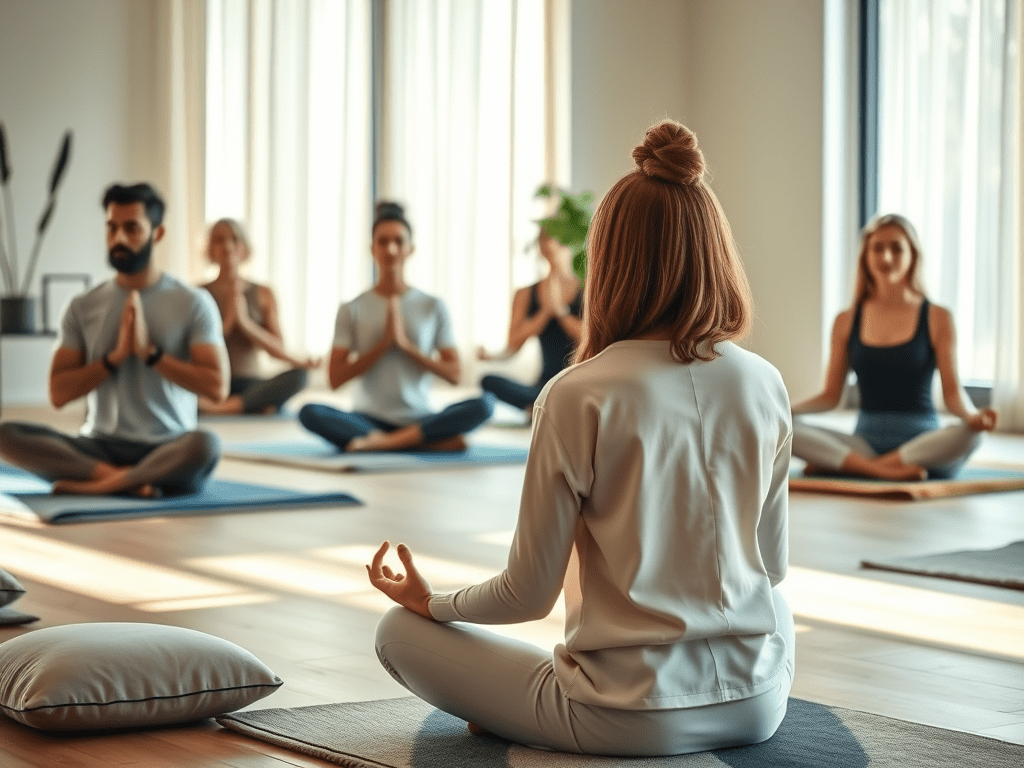
You’ve probably heard about meditation. Maybe you’ve seen people sitting quietly with their eyes closed in movies, or perhaps a teacher or family member has mentioned it. Meditation is becoming more popular because people are realizing it can help them feel calmer, focus better, and understand themselves more. But even though lots of people are talking about it, there are still many misunderstandings floating around. These meditation myths can make meditation seem weird, difficult, or just not for you.
The truth is, meditation is a simple practice of training your attention and awareness – kind of like exercise for your brain. What is meditation really? It’s about learning to pay attention to the present moment without judgment. It doesn’t require special beliefs or equipment, and it’s something anyone can learn. Getting clear on what meditation isn’t can make it feel much more approachable and help you see the real meditation benefits. So, let’s clear up some confusion and bust the top 10 common misunderstandings about meditation!
1. Misunderstanding: You Have to Completely Empty Your Mind
This is probably the biggest meditation myth out there! Many people think the goal of meditation is to stop thinking altogether and achieve a state of perfect mental silence. When they try it and realize their mind is still buzzing with thoughts, they think they’re failing. But guess what? Thinking is what minds do! Trying to force your mind to be completely blank is like trying to stop the waves in the ocean – impossible and frustrating. What is meditation really about, then? It’s not about stopping thoughts, but about noticing them without getting carried away. Imagine your thoughts are like clouds floating across the sky (your mind). In meditation, you learn to just watch the clouds drift by without grabbing onto them or judging them. It’s about changing your relationship with your thoughts, not eliminating them. This is a key point for learning meditation for beginners.
2. Misunderstanding: Meditation Is Religious or Spiritual
While meditation has roots in ancient traditions, including many religions like Buddhism and Hinduism, the practice itself doesn’t have to be religious at all. The meditation is religious myth often puts people off if they aren’t religious or follow a different faith. However, you can practice meditation purely as a mental exercise to improve focus, reduce stress, and increase self-awareness, completely separate from any spiritual beliefs. Think of it like yoga – some people practice yoga for spiritual reasons, while others do it just for physical fitness and flexibility. Meditation can be practiced secularly, focusing on the meditation benefits for the mind and body, such as improved concentration and emotional regulation. Many schools, hospitals, and workplaces now teach simple meditation techniques purely for well-being.
3. Misunderstanding: You Need Hours Every Day for It to Work
Seeing images of monks meditating for hours might give the impression that you need huge chunks of time for meditation to be effective. The idea that meditation takes too long can feel overwhelming for busy students or anyone with a packed schedule. The good news is, you don’t need to meditate for hours to experience benefits! Even short sessions – just 5 or 10 minutes a day – can make a real difference. Consistency is often more important than duration, especially when you’re starting out. Think of it like building a muscle; short, regular workouts are better than one huge workout once a month. How to start meditating? Begin with a manageable amount of time that fits into your day, maybe right after waking up or before bed. Even a few minutes of focused breathing can help reset your mind.
4. Misunderstanding: Meditation Is About Escaping Reality or Zoning Out
Some people think meditation is a way to escape problems, ignore difficult feelings, or just mentally “check out.” They might see it as similar to daydreaming or spacing out. Actually, meditation is the opposite! It’s about becoming more present with reality, not less. Instead of zoning out, you’re zoning in – paying careful attention to what’s happening right now, whether it’s your breath, sounds around you, or the thoughts and feelings arising in your mind. It teaches you to face reality, including the uncomfortable bits, with more awareness and less reactivity. It’s not about floating away on a cloud; it’s about grounding yourself firmly in the present moment, which can actually help you deal with life’s challenges more effectively.
5. Misunderstanding: You Have to Sit in a Specific (and Possibly Uncomfortable) Position
The image of someone sitting cross-legged on the floor in a perfect lotus position is iconic, but it’s also intimidating and definitely not required! Believing you need a specific, potentially uncomfortable posture is a common barrier for learning meditation for beginners. While it’s helpful to sit in a way that keeps your spine reasonably straight to aid alertness, the most important thing is to be relatively comfortable and stable. You can absolutely meditate sitting in a chair with your feet flat on the floor, lying down (though it’s easier to fall asleep this way!), or even while walking (this is called walking meditation). Don’t let worries about achieving the “perfect” posture stop you. Choose a position that works for your body and allows you to be still and aware.
6. Misunderstanding: Meditation Will Instantly Solve All Your Problems
People sometimes turn to meditation hoping for a quick fix – expecting it to magically erase stress, anxiety, or difficult life situations overnight. While meditation offers many meditation benefits and can certainly help you cope with problems more effectively, it’s not a magic wand. It’s a practice, a skill that builds over time. Think of it like learning an instrument; you don’t become a concert pianist after one lesson. Meditation helps you build inner resources like calm, clarity, and resilience, which allows you to navigate challenges better. It changes how you relate to your problems rather than making the problems instantly vanish. Setting realistic expectations is key to sticking with the practice and seeing long-term results.
7. Misunderstanding: Meditation Is Only for Calm People / You Can’t Meditate if You’re Stressed
“I can’t meditate, my mind is too busy!” or “I’m too stressed out to sit still.” Sound familiar? Many people think you need to be calm before you can start meditating. This is like thinking you need to be strong before you go to the gym! Meditation is precisely a tool for working with a busy or stressed mind. It’s perfectly normal, especially when you’re feeling overwhelmed, for your mind to feel like a whirlwind during meditation. The practice isn’t about instantly feeling calm (though that can happen sometimes); it’s about learning to notice the stress or busyness without judgment and gently bringing your attention back to your chosen focus (like your breath). In fact, meditating when you feel stressed can be particularly helpful!
8. Misunderstanding: You’re “Bad” at Meditating if Your Mind Wanders
This is closely related to the meditation empty mind myth. Beginners often get discouraged because their mind constantly wanders off during practice. They think, “I can’t focus, I must be doing it wrong,” or “I’m just bad at this.” Here’s a secret: everyone’s mind wanders! That’s totally normal. The actual practice of meditation isn’t about preventing your mind from wandering; it’s about noticing when it has wandered and gently, kindly bringing it back to your point of focus (like your breath or body sensations). Every time you notice your mind has drifted and you guide it back, that’s like doing a bicep curl for your brain’s attention muscle. So, mind wandering isn’t a sign of failure; it’s an essential part of the training!
9. Misunderstanding: Meditation Is Complicated and Hard to Learn
With different techniques, ancient philosophies, and sometimes confusing terminology, meditation can seem complex and difficult to get started with. People might worry they need a special teacher or complicated instructions. While there are many different styles of meditation, the basics are actually very simple. How to start meditating can be as easy as finding a quiet place, sitting comfortably, closing your eyes (or lowering your gaze), and paying attention to the sensation of your breath moving in and out. When your mind wanders (which it will!), just gently notice that and return your focus to your breath. That’s it! You don’t need complex rituals or deep philosophical understanding to begin experiencing the benefits. Keeping it simple is often the best approach for beginners.
10. Misunderstanding: You Should Feel Blissful or Completely Relaxed Immediately
People often expect meditation to instantly transport them to a state of blissful peace and tranquility. While meditation can lead to feelings of calm and relaxation, it doesn’t happen every time, especially not right away. Sometimes meditation might feel relaxing, other times it might feel boring, frustrating, or you might notice difficult emotions coming up. This is all part of the process. The goal isn’t necessarily to feel blissful; it’s to cultivate awareness of whatever is happening in the present moment, pleasant or unpleasant, without judgment. Sometimes just noticing your restlessness or frustration without fighting it is the most valuable part of the practice. True meditation benefits often build subtly over time, rather than appearing as instant fireworks.
So there you have it – ten common misunderstandings about meditation cleared up! Hopefully, seeing past these meditation myths makes the practice seem less mysterious and more doable. What is meditation really? It’s a simple, practical tool for training your mind, becoming more aware, and navigating life with a bit more calm and clarity. You don’t need to empty your mind, be religious, sit like a pretzel, or dedicate hours each day. All you need is a willingness to try, a little patience, and kindness towards yourself as you learn. Why not give it a go?
Further Reading
If you’re interested in exploring meditation and mindfulness further in a kid-friendly way, check out these books:
- Sitting Still Like a Frog: Mindfulness Exercises for Kids (and Their Parents) by Eline Snel – Offers simple practices and explanations designed specifically for children.
- Breathe Like a Bear: 30 Mindful Moments for Kids to Feel Calm and Focused Anytime, Anywhere by Kira Willey – A collection of 1 short, engaging mindfulness exercises perfect for quick resets. 1. learningcorner.co learningcorner.co
- The Mindful Teen: Powerful Skills to Help You Handle Stress One Moment at a Time by Dzung X. Vo MD FAAP – Written for teenagers, this book provides practical mindfulness skills for dealing with stress and emotions.




Leave a Reply