
The passing of a Pope is a significant event, not only for the Catholic Church but also for the world. It sets in motion a series of fascinating traditions, rituals, and procedures that have developed over centuries. Let’s explore ten interesting facts about what happens when the leader of the Catholic Church dies.
1. Official Confirmation and the Role of the Camerlengo
When a Pope passes away, the first crucial step is the official confirmation of his death. This task falls to a high-ranking official within the Vatican known as the Camerlengo. Think of the Camerlengo as the Pope’s chief administrator during this interim period. Just like a detective verifying important information, the Camerlengo examines the Pope’s body, officially declares his death, and seals the papal apartments. This sealing is a symbolic act to secure the private spaces of the deceased Pope. Currently, this role is held by Cardinal Kevin Farrell.
2. Breaking the Fisherman’s Ring and Papal Seals
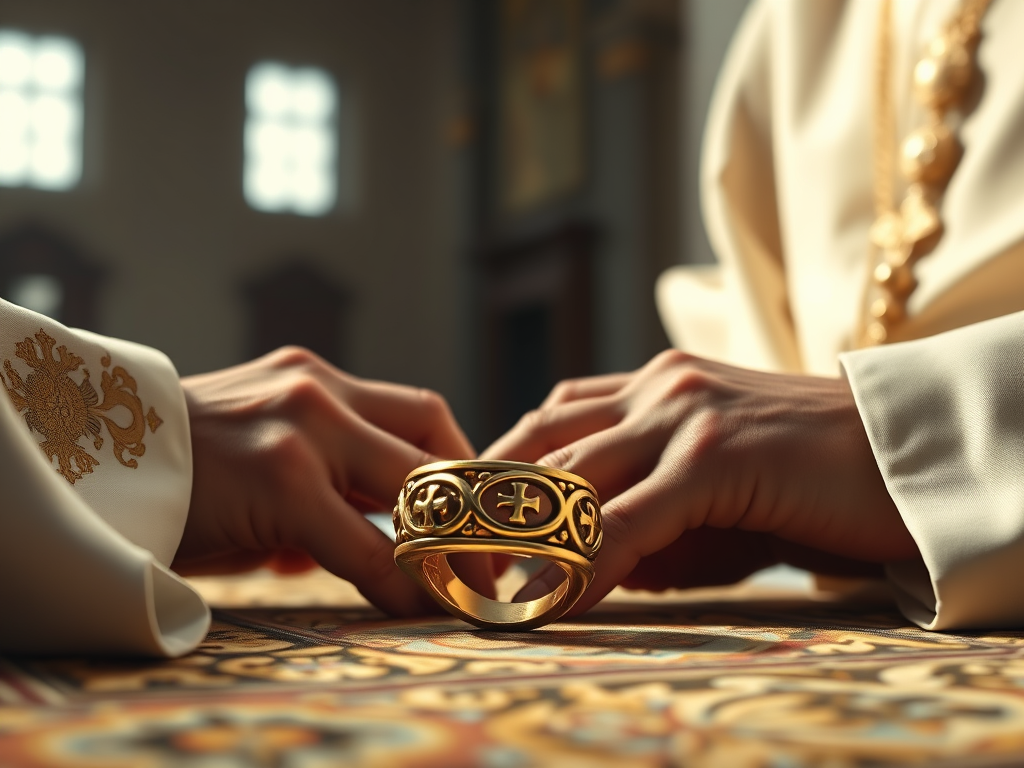
A unique tradition that follows the Pope’s death involves the Fisherman’s Ring and the papal seals. The Fisherman’s Ring is a special ring worn by the Pope, engraved with an image of St. Peter fishing from a boat. This ring, along with the official seals used to authenticate papal documents, is ceremonially broken. Imagine it like destroying a king’s signet ring to show that his reign has ended and no one can use his authority anymore. This act symbolizes the end of the deceased Pope’s authority and prevents any misuse of his official symbols.
3. The “Sede Vacante”: An Empty Throne
The time between the death of a Pope and the election of his successor is known as the “Sede Vacante,” which is Latin for “vacant seat.” During this period, the Catholic Church is in a state of transition. It’s like when a school principal retires, and the school is waiting for a new leader to be appointed. While the Church continues to function, certain decisions that only a Pope can make are put on hold. The day-to-day administrative tasks of the Vatican are overseen by the College of Cardinals.
4. Nine Days of Mourning: The “Novemdiales”
Following the Pope’s death, a period of nine days of official mourning, called the “Novemdiales,” takes place. This tradition, with roots stretching back to ancient Roman customs of mourning, involves daily Masses and prayers for the soul of the departed Pope. Think of it as a special period of remembrance, like a nine-day memorial where people gather to pray and honor the person who has passed away. These services are held in the Vatican and Catholic churches worldwide.
5. The Papal Funeral: A Global Event
The funeral of a Pope is a significant religious and international event. Dignitaries, religious leaders, and heads of state from around the world often attend to pay their respects. Imagine a gathering of world leaders, like when important figures come together for a major global summit. The funeral Mass is typically held in St. Peter’s Square in Vatican City and is led by the Dean of the College of Cardinals. Pope John Paul II’s funeral in 2005 was one of the largest gatherings of world leaders in history, showing the global impact of the papacy.
6. Burial in St. Peter’s Basilica (Usually)
Traditionally, Popes are buried in the Vatican Grottoes, located beneath St. Peter’s Basilica. This area houses the tombs of many past Popes, creating a historical and spiritual connection to the Church’s long lineage. However, a Pope can choose to be buried elsewhere. For example, Pope Francis has indicated his wish to be buried in the Basilica of Santa Maria Maggiore in Rome. This break from tradition highlights the personal choices a Pope can make even in death.
7. The Conclave: Locking in the Cardinals
One of the most fascinating aspects of a Pope’s death is the process of electing his successor, known as the papal conclave. The word “conclave” literally means “with key,” referring to the fact that the cardinal electors are locked away in seclusion until they choose a new Pope. Think of it like a jury being sequestered to make a crucial decision, without any outside influence. This tradition aims to ensure that the election is free from external pressures.
8. Voting in the Sistine Chapel: Secret Ballots and Smoke Signals
The cardinal electors, who are cardinals under the age of 80, gather in the Sistine Chapel to cast their votes in secret. It’s like a very important and confidential election taking place in a room filled with famous artwork. After each round of voting, the ballots are burned. If black smoke rises from the chimney, it means no Pope has been elected. When white smoke appears, it signals to the waiting world that a new Pope has been chosen – a moment of great anticipation and joy for Catholics worldwide.
9. Two-Thirds Majority: A Significant Decision
For a cardinal to be elected Pope, he typically needs to receive a two-thirds majority of the votes. This high threshold emphasizes the importance of consensus among the cardinal electors in choosing the new leader of the Church. It ensures that the new Pope has broad support from the College of Cardinals. If, after several rounds of voting, no one reaches this majority, there can be periods of prayer and reflection before voting resumes.
10. “Habemus Papam!”: Announcing the New Pope
Once a cardinal has been elected and has accepted the role, the world waits for the official announcement. This is made from the balcony of St. Peter’s Basilica by a senior cardinal, who proclaims in Latin, “Habemus Papam!” which means “We have a Pope!” This announcement is followed by the new Pope’s first appearance and blessing to the crowds gathered in St. Peter’s Square, marking the beginning of a new chapter for the Catholic Church.
Further Reading:
* Pope Francis: The People’s Pope by Kerry Weber
* Saints and Heroes Speak by Amy Welborn
* The Vatican: All the Buildings by Anja Grebe
Keywords: papal death, Pope dies, Vatican, Camerlengo, Fisherman’s Ring, Sede Vacante, Novemdiales, papal funeral, conclave, Sistine Chapel, white smoke, Habemus Papam, cardinal electors.




Leave a Reply