
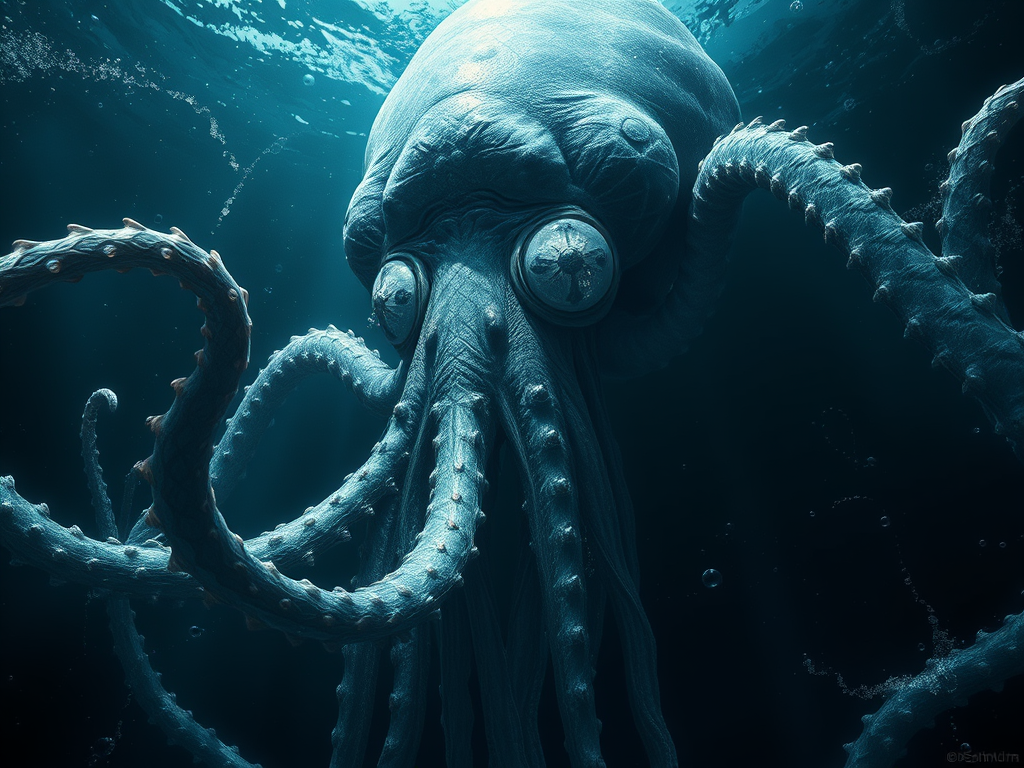
Imagine a creature living in the super-deep, dark parts of the ocean, bigger than a car and with eyes the size of dinner plates! Sounds like something out of a monster movie, right? Well, the colossal squid is a real animal, and it’s one of the most fascinating and mysterious creatures on our planet.
Unlike its slightly more famous cousin, the giant squid, the colossal squid is heavier and bulkier. Scientists don’t know everything about them because they live so deep down, but what we do know is absolutely mind-blowing. Let’s explore some incredible colossal squid facts and learn about this deep-sea giant!
1. The True King (or Queen) of Squid Size
When people think of giant squids, they usually picture the Architeuthis genus, which is indeed huge. But the colossal squid (Mesonychoteuthis hamiltoni) takes the prize for being the largest invertebrate (an animal without a backbone) on Earth by mass. While giant squids can be longer due to their very long tentacles, the colossal squid has a much wider, heavier body and thicker arms. This is a key difference when comparing colossal squid vs giant squid. Estimates suggest adult colossal squids can weigh up to 700-800 kilograms (around 1,500 to 1,700 pounds)! To give you an idea of colossal squid size, imagine stacking about 10 average-sized adults on a scale – that’s roughly how much one of these massive cephalopods might weigh! Knowing how big is a colossal squid really highlights its dominance in the deep-sea world.
2. Home Sweet Home: The Southern Ocean
If you want to find a colossal squid, you’ll need to visit the incredibly cold and deep waters of the Southern Ocean, surrounding Antarctica. This is where do colossal squid live. They prefer the inky blackness and crushing pressure of depths likely over 1,000 meters (about 3,300 feet) – that’s deeper than the height of the tallest buildings! Exploring deep sea creatures colossal squid means exploring one of the most extreme environments on Earth. These frigid depths are their hunting ground and their home, far away from sunlight and the world we know at the surface. Because this environment is so hard for humans to explore, it’s one reason we know relatively little about the colossal squid’s life. Their preference for these remote, deep southern waters is a crucial piece of the puzzle for understanding colossal squid facts.
3. Hooks, Not Suckers, on Their Arms!
Most squids have suckers on their arms and tentacles to grab onto prey. Giant squids have suckers with toothed rings. But colossal squids have something much more fearsome: swiveling hooks! Mixed in with suckers on their arms and tentacles are sharp, rotating hooks. These hooks are incredibly strong and are used to grasp and hold onto struggling prey in the dark depths. Imagine trying to escape something with hooks that can twist and turn! This unique feature is a major difference between colossal squid vs giant squid and a key adaptation for their hunting lifestyle. Studying these hooks gives scientists clues about what do colossal squid eat and how they capture their meals in the challenging deep-sea environment. These sharp weapons are a defining characteristic and a fascinating part of colossal squid facts.
4. The World’s Largest Eyes
Prepare to be amazed: the colossal squid has the largest eyes of any animal known on Earth. Each eye can measure up to 27 centimeters (about 11 inches) in diameter – that’s roughly the size of a dinner plate or even a soccer ball! These enormous eyes are an essential tool for living in the pitch-black deep sea, which is where do colossal squid live. Having such large eyes allows them to gather as much faint light as possible, helping them spot prey or avoid predators in the darkness. Scientists study the structure of colossal squid eyes to understand how animals can see in such low-light conditions. These giant eyes are arguably the most striking visual feature and a top fact when learning about colossal squid facts.
5. A Predator of the Deep
Given its size and impressive hooks, it’s no surprise that the colossal squid is a formidable predator. Scientists believe their diet mainly consists of fish and other squid living in the deep sea. We know this partly by examining the stomach contents of specimens found, and also by looking at the scars found on deep-diving whales like sperm whales. Sperm whales are known to hunt colossal squid, and the marks left by the squid’s hooks and beak tell us about the battles that happen far below the surface. Understanding what do colossal squid eat helps us understand the food web of the Southern Ocean depths. Their role as a top predator in their environment is a critical piece of colossal squid facts, showcasing their power in the deep sea.
6. Elusive and Mysterious: Hard to Study
Despite their enormous size, colossal squids are incredibly hard to study. This is primarily because where do colossal squid live is thousands of feet below the surface in freezing, high-pressure waters that are difficult and expensive for humans to explore. Most of what we know comes from specimens that have been caught accidentally by fishing trawlers or found stranded. Only a handful of relatively intact specimens have ever been recovered and studied by scientists. This makes gathering colossal squid facts a challenging task. Scientists use deep-sea submersibles and remote cameras, but sightings of live colossal squids are extremely rare. Their elusive nature adds to their mystery and makes every new discovery about them incredibly exciting, emphasizing how little we still know about deep sea creatures colossal squid.
7. Battle Scars on Sperm Whales
Sperm whales are one of the few animals large and powerful enough to hunt colossal squids. Evidence of these epic battles in the deep sea can sometimes be seen on the skin of sperm whales. Whalers and scientists have observed large, circular scars on the skin of sperm whales, which are believed to be caused by the hooks on the colossal squid’s arms and tentacles as the squid fights back. These scars provide fascinating, albeit indirect, evidence of the encounters between these two giants of the deep and give us clues about colossal squid size and strength. The presence of these battle scars is a powerful illustration of the dynamic predator-prey relationship in the ocean depths and adds an exciting chapter to the known colossal squid facts.
8. Jet Propulsion: How They Move
Like other squid and octopuses, the colossal squid moves around using jet propulsion. They suck water into their mantle cavity (the main part of their body) and then powerfully expel it through a funnel, or siphon, to push themselves through the water. This method allows them to move quickly, either to chase prey or escape predators. While their large size means they probably aren’t the fastest swimmers in the ocean, this jet propulsion is an efficient way for them to navigate the deep-sea environment where do colossal squid live. Understanding how they move is key to understanding their behavior and hunting strategies. This remarkable adaptation is a fundamental part of colossal squid facts.
9. A Short, Intense Life?
Scientists don’t know exactly how long colossal squids live, but based on studies of other large cephalopods, it’s thought that they might grow very quickly and have relatively short lifespans, perhaps only a few years. Cephalopods often put all their energy into growing rapidly and reproducing, and then they die. If colossal squids do have short lives, it makes their incredible growth to such a massive colossal squid size even more astonishing. Learning about their potential lifespan helps paint a picture of their life cycle in the mysterious depths. While the exact duration of their lives remains one of the many unanswered questions about colossal squid facts, the current hypothesis suggests a life that is perhaps short but certainly intense.
10. Beak and Radula: Tools for Eating
Once the colossal squid has captured its prey with its powerful arms and hooks, it uses a sharp, parrot-like beak to bite and tear the food into smaller pieces. This beak is incredibly strong and is located in the center of its arms. Inside the mouth, behind the beak, is a ribbon-like structure covered in tiny teeth called a radula. The squid uses the radula to scrape and process the food before swallowing it. These feeding tools are essential for digesting the fish and other squid that make up what do colossal squid eat. The beak is often one of the few parts of a colossal squid that is found in the stomachs of predators like sperm whales, providing clues about the squid’s presence. Studying the beak and radula provides valuable colossal squid facts about their diet and how they consume their prey.
The colossal squid remains one of the ocean’s most enigmatic inhabitants. Every new piece of information scientists discover adds to the incredible picture of this massive deep-sea creature. From their enormous size and giant eyes to their hooked arms and mysterious lives, the colossal squid facts we know so far only make us more curious about what else is hidden in the deep, dark parts of the ocean where do colossal squid live.
Perhaps one day, we will learn even more about the true king of the squid world!
Further Reading
If you’re hooked on learning about deep-sea creatures and cephalopods, check out these books:
- The Giant Squid by Gary Jeffrey
- Octopuses, Squids, and Cutttlefish: Incredible Living Creatures by Jennifer Boothroyd
- Deep-Sea Exploration: A Journey to the Abyssal Plane by Karen Romano Young
- Squid متخصص: Secrets of the Deep by Danna Staaf




Leave a Reply