
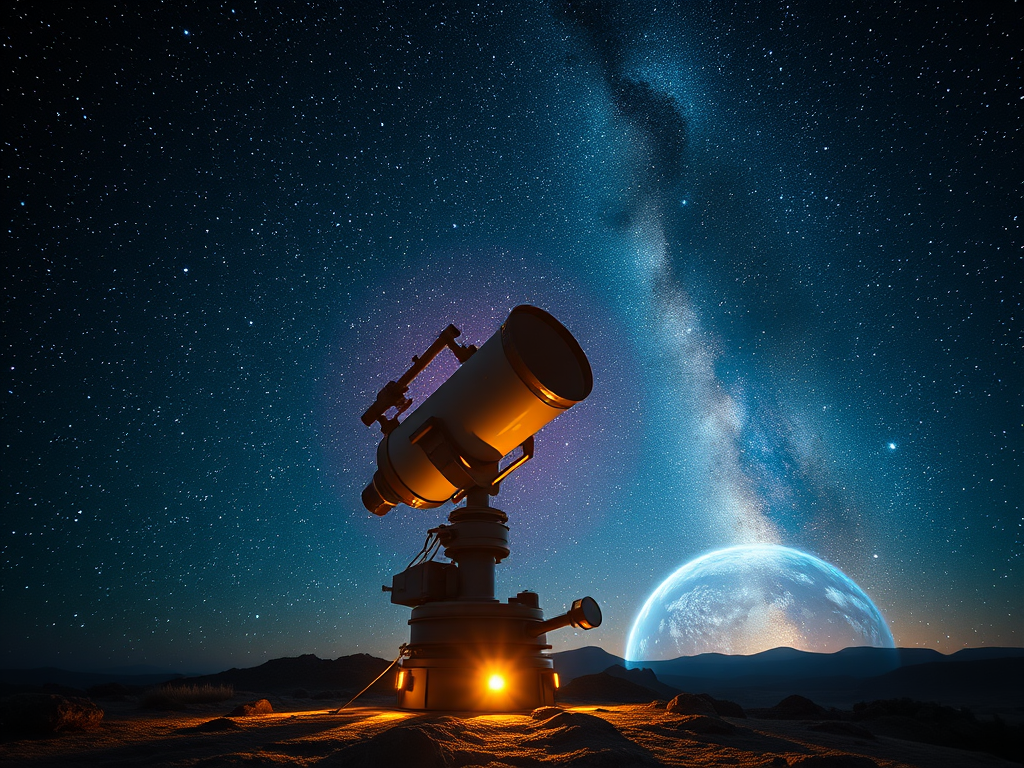
Have you ever looked up at the stars and wondered if we’re alone? Or thought about how your brain lets you think and feel? Or maybe you’ve just been curious about how everything around you works? These are some of the biggest mysteries humanity has pondered for ages!
Science is all about asking questions and trying to find answers based on evidence and testing. Throughout history, scientists have made amazing discoveries, figuring out everything from gravity to the structure of DNA. But for every question science answers, it seems like new, even bigger questions pop up!
Right now, in labs, observatories, and research centers all around the world, scientists are working hard to crack some of the most challenging puzzles about the universe, life, and ourselves. We are living in an incredibly exciting time because, thanks to new tools and technologies, we might be closer than ever to answering some of these long-standing major scientific questions.
It’s important to remember that science takes time, and “soon” in the world of big scientific breakthroughs can sometimes mean years or even a decade or two. But the progress being made right now is astonishing, and the potential discoveries could change our understanding of everything.
Let’s explore ten of the biggest science mysteries that scientists are actively investigating and might just answer in the not-so-distant future. Get ready to peek into the possible future of science!
1. Are We Alone? The Search for Life Beyond Earth
For centuries, people have wondered if there’s life out there in the vast universe. Are there other planets with living things, maybe even intelligent beings? This is one of the ultimate unanswered questions in science.
Why it matters: Finding life beyond Earth, even simple microbes, would fundamentally change our place in the cosmos. It would show that life isn’t just a one-time fluke that happened on Earth but could be a common occurrence under the right conditions. Finding intelligent life would be an even more monumental discovery, raising questions about communication and shared understanding. It’s a huge part of exploring the universe.
How science is seeking answers: Scientists are actively searching for exoplanets – planets orbiting stars other than our Sun. Powerful telescopes like the James Webb Space Telescope can analyze the atmospheres of these distant worlds for signs of gases that might be produced by living organisms. Space probes are exploring places in our own solar system, like the icy moons of Jupiter (Europa) and Saturn (Enceladus), which might have liquid water oceans under their surfaces – potential habitats for life. Radio telescopes listen for potential signals from intelligent civilizations. The search for alien life is more active than ever.
2. What Are Dark Matter and Dark Energy? The Invisible Universe
Look up at the night sky, and you see stars and galaxies. But scientists have discovered that all the visible stuff – stars, planets, gas, dust – only makes up about 5% of the universe! The rest is made of mysterious, invisible substances called dark matter and dark energy.
Why it matters: Dark matter seems to be the invisible “glue” that holds galaxies together, providing extra gravity that we can’t explain with visible matter alone. Dark energy is even stranger; it seems to be the force pushing the universe apart, causing its expansion to speed up. Understanding these components is crucial to understanding the structure, evolution, and ultimate fate of the entire universe. They are fundamental major scientific questions about the cosmos.
How science is seeking answers: Scientists haven’t directly detected dark matter or dark energy yet, but they see their effects through gravity and the expansion of space. Experiments deep underground are trying to catch dark matter particles interacting with normal matter. Telescopes are mapping the universe on giant scales to understand how dark energy affects its expansion. Future experiments in particle physics and astronomy aim to shed more light on these elusive substances. Research into dark matter and dark energy is at the cutting edge of cosmology and particle physics, part of the exciting future of science discoveries.
3. How Did Life Begin on Earth? From Non-Living to Living
Earth is teeming with life, from the smallest bacteria to the largest whales. But how did the very first life forms appear from non-living chemicals billions of years ago? This jump from chemistry to biology is one of the deepest unanswered questions in science.
Why it matters: Answering this question would not only tell us about our own origins but also provide clues about where else in the universe life might arise. It involves understanding the complex chemical reactions that could have occurred on early Earth and the conditions necessary for self-replicating molecules to form. It’s the ultimate origin of life research.
How science is seeking answers: Scientists are conducting experiments in labs that recreate the conditions thought to exist on early Earth, mixing simple chemicals and zapping them with electricity or UV light to see if they can form the building blocks of life, like amino acids and nucleotides. They are studying extremophiles – organisms that live in extreme environments on Earth (like deep-sea vents or hot springs) – to understand what conditions life can tolerate and potentially where it could have started. Research in biochemistry and geology is constantly adding pieces to this complex puzzle, contributing to the potential future of science discoveries.
4. What is Consciousness? The Mystery of the Mind
You are reading these words and thinking about them. You have feelings, awareness, and a sense of “you.” This is consciousness, and how it arises from the physical stuff of the brain – the neurons and their connections – is one of the most profound biggest science mysteries.
Why it matters: Understanding consciousness would unlock secrets about the mind, potentially leading to new ways to treat brain disorders, improve learning, and even develop artificial intelligence that is truly sentient. It crosses the boundaries between biology, psychology, philosophy, and computer science. Understanding consciousness is key to understanding ourselves.
How science is seeking answers: Neuroscientists are studying the brain using advanced imaging techniques (like fMRI and EEG) to see which areas are active during different conscious experiences. They are studying people with brain injuries or disorders to understand how consciousness is affected. Philosophers and computer scientists are developing theories and models to try and explain how complex interactions of neurons could give rise to subjective experience. It’s a challenging question that requires input from many different fields, representing a frontier in science questions being researched.
5. Can We Cure Major Diseases? Fighting Cancer, Alzheimer’s, and More
Diseases like cancer, Alzheimer’s, diabetes, and many others cause immense suffering and impact millions of lives. While science has made incredible progress in treating and preventing many illnesses, finding cures or highly effective treatments for some of the most complex diseases remains a major challenge.
Why it matters: Finding cures for these diseases would alleviate suffering on a global scale, extend lifespans, and vastly improve the quality of life for countless people. It’s one of the most direct ways major scientific questions impact everyday human lives.
How science is seeking answers: Scientists are constantly researching the underlying causes of these diseases at a molecular and cellular level. They are developing new drugs, gene therapies, immunotherapies, and other targeted treatments. Advanced technologies allow scientists to analyze vast amounts of biological data to identify potential weaknesses in disease processes. Clinical trials are testing new treatments in humans. While a single “cure” might be elusive for complex diseases like cancer, ongoing research promises more effective treatments and possibly ways to prevent them in the future of science discoveries, part of curing diseases science.
6. Can We Achieve Fusion Energy? Powering the Future
Most of the world’s energy comes from burning fossil fuels, which contributes to climate change. Nuclear power plants use fission (splitting atoms), but they produce radioactive waste. Fusion is the process that powers the Sun, where light atoms are squeezed together to form heavier ones, releasing huge amounts of energy. If we could harness this on Earth, it could provide almost limitless, clean energy.
Why it matters: Successfully creating controlled nuclear fusion on Earth would revolutionize energy production. It would offer a clean, safe, and virtually inexhaustible energy source, drastically reducing our reliance on fossil fuels and helping to combat climate change. This would have a massive impact on global society and the environment. It’s a crucial science question being researched for our planet’s future.
How science is seeking answers: Achieving fusion is incredibly difficult because it requires heating matter to temperatures hotter than the Sun’s core and containing it. Large international projects like ITER (International Thermonuclear Experimental Reactor) are building massive fusion reactors to test whether it’s scientifically possible to achieve sustained fusion power. Private companies are also exploring different approaches. Significant breakthroughs in materials science and plasma physics are needed, but progress is being made, making controlled fusion a potential future of science discoveries.
7. What are the Fundamental Building Blocks of the Universe? Particle Physics Mysteries
Scientists have discovered tiny particles like electrons, protons, and neutrons, which make up atoms. But protons and neutrons are made of even smaller particles called quarks. Is there a deepest layer? Are there other fundamental particles we haven’t found yet? Can we unify all the forces of nature (like gravity, electromagnetism, and the nuclear forces)?
Why it matters: Understanding the most basic components of the universe and how they interact helps us understand everything from the Big Bang to how atoms hold together. It’s about finding the fundamental rules that govern reality. Unifying the forces would be a major step towards a complete “theory of everything.” This explores the biggest science mysteries at the smallest scales.
How science is seeking answers: Particle physicists use massive machines called particle accelerators, like the Large Hadron Collider (LHC) at CERN, to smash particles together at nearly the speed of light. By studying the debris, they can learn about the particles and forces involved. Theoretical physicists develop mathematical models to try and describe the universe’s fundamental nature. The discovery of the Higgs boson at the LHC was a major step, but many mysteries remain, keeping science questions being researched at the forefront of physics.
8. How Can We Predict and Mitigate Climate Change? Understanding Our Changing Planet
The Earth’s climate is changing, with rising global temperatures, changing weather patterns, and rising sea levels. While the science is clear that human activities are the primary driver, predicting the exact timing and severity of future changes, and figuring out the best ways to adapt and reduce our impact, are complex scientific challenges.
Why it matters: Climate change poses significant threats to ecosystems, human societies, and global stability. Understanding the Earth’s climate system and our impact on it is essential for making informed decisions to protect the planet and future generations. It’s one of the most urgent major scientific questions with immediate relevance to life on Earth.
How science is seeking answers: Climate scientists use complex computer models to simulate the Earth’s climate system and predict future changes based on different scenarios of greenhouse gas emissions. They analyze historical climate data from ice cores, tree rings, and sediment layers. They study current weather patterns, ocean currents, and atmospheric composition using satellites and ground-based sensors. Research in renewable energy, carbon capture technologies, and sustainable practices explores ways to mitigate our impact, part of the science questions being researched with urgency.
9. What Happens Inside a Black Hole? Gravity’s Extreme Mysteries
Black holes are regions in space where gravity is so strong that nothing, not even light, can escape. We know they exist, but what happens inside the “event horizon” – the point of no return – remains one of the most extreme and fascinating unanswered questions in science.
Why it matters: Understanding black holes pushes the limits of our understanding of gravity, space, and time. They are extreme laboratories where the laws of physics as we currently know them might break down. Studying them could lead to new insights into the fundamental nature of the universe and potentially help reconcile general relativity (which describes gravity) with quantum mechanics (which describes the very small). They are captivating objects in exploring the universe.
How science is seeking answers: Scientists study black holes indirectly by observing their effects on nearby stars and gas. They use powerful telescopes to detect X-rays emitted by matter falling into black holes. The detection of gravitational waves from colliding black holes by observatories like LIGO and Virgo has provided a completely new way to “hear” these cosmic events. Theoretical physicists develop mathematical models to try and describe the physics inside black holes, part of the ongoing science questions being researched in astrophysics.
10. Can We Restore Damaged Ecosystems? Healing Our Planet
Human activities have damaged many of Earth’s natural ecosystems, from forests and coral reefs to wetlands and grasslands. These ecosystems provide vital services, like clean air and water, food, and habitats for wildlife. Can science help us repair this damage and bring these ecosystems back to health?
Why it matters: The health of natural ecosystems is essential for the health of the planet and for human well-being. Restoring damaged environments can help preserve biodiversity, combat climate change, and ensure the long-term availability of natural resources. It’s a crucial application of major scientific questions related to environmental science.
How science is seeking answers: Scientists are researching techniques for ecological restoration, such as reforestation, wetland creation, and coral reef propagation. They study how different species interact and the conditions needed for ecosystems to recover. Genetic research is exploring how to help endangered species. Conservation biologists are working to protect remaining healthy habitats. This involves a combination of ecological understanding, technological innovation, and collaborative efforts to heal the planet, an important area of science questions being researched for a sustainable future.
The Excitement of Unanswered Questions
These are just a few of the biggest science mysteries that scientists are working hard to solve. Each question represents a frontier of human knowledge, a challenge that drives innovation and discovery.
Being alive at a time when we have the tools and the knowledge to even ask these questions, let alone potentially answer them, is incredibly exciting. The answers won’t just fill textbooks; they have the potential to change our world, our understanding of ourselves, and our place in the cosmos. The future of science discoveries is unfolding right now, driven by the fundamental human desire to explore, understand, and solve the unanswered questions in science.
Further Reading
Want to explore these incredible topics more? Check out these books:
- A Brief History of Time by Stephen Hawking (A classic, though potentially challenging, introduction to cosmology)
- Cosmos by Carl Sagan (An inspiring journey through the universe and the history of science)
- The Human Body: A Pop-Up Guide to Anatomy by Jennie Maizels & Richard Walker (A fun way to learn about the body and brain)
- Basher Science: Chemistry or Basher Science: Physics (Visually engaging introductions to fundamental scientific concepts)
Here at Zentara.blog, our mission is to take those tricky subjects and unlock them, making knowledge exciting and easy to grasp for everyone. But the adventure doesn’t stop on this page! We’re constantly exploring new frontiers and sharing discoveries across the digital universe.
Want to dive deeper into more mind-bending Top 10s and keep expanding your world? Come join us on our other platforms – we’ve got unique experiences waiting for you on each one!
- Get inspired by visual wonders and bite-sized facts: See the world through Zentara’s eyes on Pinterest! Pin our fascinating facts and stunning visuals to your own boards. Explore Pins on Pinterest: https://uk.pinterest.com/zentarablog/
- Discover quick insights and behind-the-scenes peeks: Hop over to Tumblr for snippets, quotes, and unique content you won’t find anywhere else. It’s a different flavour of discovery! Follow the Fun on Tumblr: https://www.tumblr.com/zentarablog
- Ready for deep dives you can listen to or watch? We’re bringing our accessible approach to video and potentially audio! Subscribe to our YouTube channel and tune into future projects that make learning pop! Subscribe on YouTube: https://www.youtube.com/@ZentaraUK
- Seeking even more knowledge in one place? We’ve compiled some of our most popular topic deep dives into fantastic ebooks! Find them on Amazon and keep the learning journey going anytime, anywhere. Find Our Ebooks on Amazon: https://www.amazon.co.uk/s?k=zentara+uk&crid=2273NA7RAJ1EU&sprefix=zentara+uk%2Caps%2C90&ref=nb_sb_noss
- Connect with us and fellow knowledge seekers: Join the conversation on BlueSky! We’re sharing updates, thoughts, and maybe even asking you what wonders we should explore next. Chat with Us on BlueSky: https://bsky.app/profile/zentarablog.bsky.social
- Perfect for learning on the move! We post multiple 10-minute podcasts per day on Spotify. Pop on your headphones and fill your day with fascinating facts while you’re out and about! Listen on Spotify: https://open.spotify.com/show/3dmHbKeDufRx95xPYIqKhJ
Every click helps us keep bringing honest, accessible knowledge to everyone. Thanks for exploring with us today – see you out there in the world of discovery!




Leave a Reply