
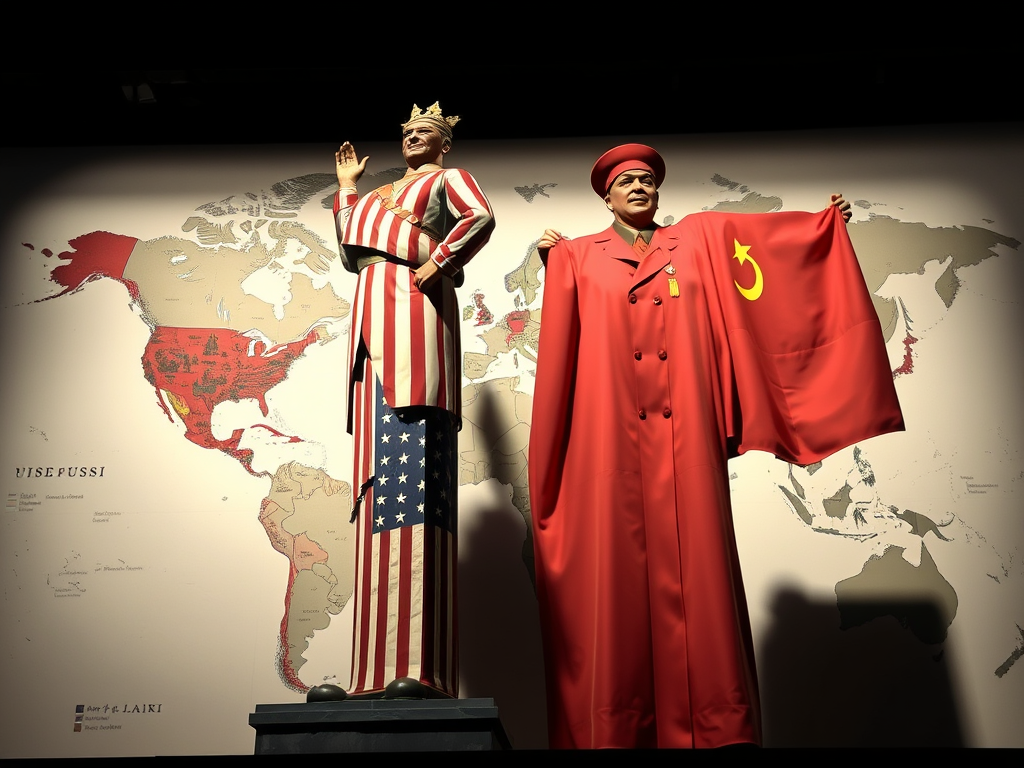
Imagine a time when the whole world was fighting. From 1939 to 1945, a terrible conflict called World War 2 raged across continents, involving almost every country on Earth. Millions of people were affected, and the fighting caused immense destruction.
Table of Contents
When the guns finally fell silent in 1945, it wasn’t just the end of a war; it was the dawn of a new era. The world that emerged from the ashes of World War 2 was dramatically different from the one that had existed before. Borders were redrawn, new leaders rose, and the way countries interacted with each other changed forever.
Understanding the world changes after WW2 is super important because the events of that time shaped the world we live in today. From the countries that exist to the international groups that try to keep peace, the end of the war set many things in motion.
It can seem like a complicated time, but if we break it down, we can see some clear ways the world was totally transformed. Let’s uncover the top 10 biggest changes that happened after World War 2 ended!
1. The Rise of Two Superpowers: USA and USSR
Before World War 2, several countries were considered major world powers, like Great Britain, France, and Germany. But the war was incredibly costly for these nations. After 1945, two countries emerged from the conflict with immense military and economic strength that dwarfed all others: the United States of America and the Soviet Union (USSR).
Think of them like the two strongest kids on the playground after a big contest – suddenly, everyone else seemed much smaller in comparison. The USA had a booming economy and the world’s only nuclear weapons (at first). The USSR had a huge army and controlled vast territories in Eastern Europe.
These two nations had very different ideas about how countries should be run. The USA believed in democracy and capitalism (where businesses are privately owned), while the USSR believed in communism (where the government controls everything). This fundamental difference in beliefs set them on a collision course, even without direct fighting between them. The rise of these two giants was the first massive shift in the world changes after WW2, creating a new global balance of power.
2. The Start of the Cold War: A Standoff Begins
With two powerful nations like the USA and the USSR having such opposite ideas, tension was bound to build. This led to the cold war origins simple to understand as a period of intense rivalry between the two superpowers and their allies. It’s called the “Cold War” because the two main opponents never actually fought each other directly in a large-scale “hot” war.
Instead of tanks and soldiers fighting on battlefields between the USA and USSR, the conflict was fought with words, ideas, economic competition, spying, and proxy wars (where they supported opposite sides in conflicts happening in other countries). The USA and its allies formed NATO (North Atlantic Treaty Organization), a military alliance. The USSR and its allies formed the Warsaw Pact in response.
Both sides built up huge arsenals of nuclear weapons, creating a constant fear that a small incident could escalate into a devastating global war. The Cold War lasted for over four decades, shaping international politics and influencing events in almost every corner of the globe. It was a defining feature of the post war world explained simply as a long, tense global competition.
3. The Founding of the United Nations: Hoping for Peace
The failure of the League of Nations to prevent World War 2 made it clear that a new international organization was needed to help countries work together and avoid future conflicts. This led to the founding of United Nations in 1945, shortly after the war ended.
Imagine setting up a global club where almost all the countries in the world could talk to each other instead of fighting. That’s essentially what the UN was designed to be. Its main goals are to maintain international peace and security, develop friendly relations among nations, achieve international cooperation, 1 and be a center for harmonizing the actions of nations. 2
The UN has several important parts, including the General Assembly (where all member countries have a voice) and the Security Council (which has the power to make decisions about peace and security). While the UN hasn’t been able to prevent all wars, it has played a crucial role in peacekeeping operations, providing humanitarian aid, and tackling global issues like poverty and disease. Its creation was a direct impact of world war 2 end, showing a global commitment, at least in principle, to diplomacy over warfare.
4. The Division of Europe: Behind the Iron Curtain
One of the most visible world changes after WW2 was the sharp division of Europe. As the war ended, Soviet forces occupied much of Eastern Europe, while Western Allied forces were in control of Western Europe. This military reality quickly turned into a political and ideological split.
Winston Churchill, the former British Prime Minister, famously described this division as an “Iron Curtain” falling across Europe. To the west of the curtain were countries mostly allied with the USA, embracing democracy and market economies. To the east were countries under the strong influence or direct control of the Soviet Union, with communist governments and state-controlled economies.
Germany, where the war had started, was divided into four zones of occupation, eventually becoming two separate countries: West Germany (aligned with the USA) and East Germany (aligned with the USSR), with the city of Berlin also divided. This division wasn’t just political; it affected people’s lives, limiting travel and communication between East and West for decades. The image of a divided europe after ww2 is a powerful symbol of the new Cold War reality.
5. Decolonization: Empires Begin to Crumble
Before World War 2, powerful European countries like Britain, France, and the Netherlands controlled vast empires in Asia and Africa. They ruled over many different peoples and lands far from their own borders. However, the war significantly weakened these European powers.
Fighting the war had drained their resources and changed public opinion both at home and in the colonies. People in the colonies who had fought for the European powers against Germany and Japan felt they deserved independence. This led to a massive wave of decolonization simple explanation: countries that were once colonies fought for and gained their independence.
India and Pakistan gained independence from Britain in 1947, followed by many countries in Africa and Asia over the next couple of decades. This redrew the world map, creating many new nations. While independence was a cause for celebration for many, it was often a difficult and sometimes violent process, leading to new challenges for these young countries. The end of European empires was a profound and lasting impact of world war 2 end.
6. The Dawn of the Nuclear Age: A New Kind of Weapon
Perhaps the most terrifying development at the very end of World War 2 was the use of atomic bombs by the United States on the Japanese cities of Hiroshima and Nagasaki. This event marked the beginning of the nuclear age begins.
These bombs unleashed a level of destruction never before seen, instantly killing tens of thousands of people and causing long-lasting health problems. The immense power of nuclear weapons changed warfare forever. Suddenly, humanity had the ability to destroy itself on a massive scale.
The Soviet Union developed its own nuclear weapons a few years later, leading to the arms race mentioned earlier in the Cold War section. The existence of nuclear weapons created a tense situation known as “Mutually Assured Destruction” (MAD) – the idea that if one side launched a nuclear attack, the other side would retaliate, resulting in the destruction of both. The constant threat of nuclear war became a frightening backdrop to life for decades after World War 2, a direct and chilling impact of world war 2 end.
7. Economic Reshaping: Rebuilding and Growth
World War 2 caused unprecedented economic damage across the globe, especially in Europe and Asia. Cities, factories, and infrastructure were destroyed. Millions were left homeless and without work. The post war world explained economically involves massive efforts to rebuild.
The United States, which had suffered less physical damage than many other nations, launched a huge aid program called the Marshall Plan. This plan provided billions of dollars to help rebuild Western European economies. The idea was to prevent economic collapse, which people feared could lead to political instability and the spread of communism.
Japan also underwent significant economic and social changes under Allied occupation, leading to it becoming a major economic power later on. While some economies struggled, the post-war period also saw significant economic growth in many parts of the world, partly fueled by reconstruction efforts and new technologies developed during the war. The global economy was fundamentally reshaped, with new trade patterns emerging.
8. Advances in Science and Technology
Wars often accelerate scientific and technological development, and World War 2 was no exception. Many innovations developed during the war for military purposes found new uses in the post war world explained by continued research and development.
Think about radar, which was crucial for detecting aircraft during the war. After the war, this technology contributed to air traffic control and weather forecasting. Rocket technology, developed for missiles, became the basis for space exploration. The first computers, though massive and basic by today’s standards, were developed partly for code-breaking and ballistics calculations during the war, paving the way for the digital age.
Medical research also advanced rapidly, leading to new treatments and medicines. The post-war era saw continued investment in science and technology, driven partly by the Cold War competition (like the “Space Race” between the USA and USSR). These advancements profoundly changed daily life in the decades that followed, influencing everything from communication to travel to healthcare.
9. Shifts in Social Structures and Ideas
The war wasn’t just fought by soldiers; it involved entire populations. This participation led to significant shifts in social structures and ideas, creating further world changes after WW2.
For example, as men went off to fight, women stepped into roles in factories and other jobs they hadn’t traditionally held. While many women returned to their previous roles after the war, their wartime contributions challenged existing ideas about gender roles and contributed to the growing movement for women’s rights.
The fight against Nazism, with its racist ideology, also highlighted issues of racial discrimination in other parts of the world, particularly in the United States. The post-war period saw the beginning of the modern Civil Rights Movement as African Americans and their allies pushed harder for equal rights. The war also led to increased awareness of human rights globally, influencing international agreements and movements in the decades that followed.
10. The Creation of Israel and Conflict in the Middle East
One specific and very significant impact of world war 2 end was related to the situation in the Middle East. The horrors of the Holocaust, the systematic murder of six million Jews by the Nazis, created a strong international desire to provide a safe homeland for Jewish people.
Following the war, the newly formed United Nations played a key role in the events that led to the creation of the state of Israel in 1948 in a region that was already inhabited by a large Arab population (Palestinians). This decision, and the subsequent displacement of many Palestinians, immediately led to conflict between Israel and its Arab neighbors.
This conflict has continued in various forms for decades and remains a major source of tension and instability in the Middle East. It’s a complex issue with deep historical roots, but the end of World War 2 and the international response to the Holocaust were direct catalysts for the events that created this enduring conflict, profoundly changing the political landscape of the region.
Further Reading
Want to learn more about World War 2 and the exciting (and sometimes challenging) time that came after? Check out these books:
- The Story of World War II: A Cartoon History of the Global Conflict by Ernest Marquez (A visual and accessible introduction)
- What Was the Cold War? by Gail Herman (Explains the Cold War simply)
- Anne Frank: The Diary of a Young Girl by Anne Frank (A powerful personal account from the war years)
- When the World Seemed New: The 1960s by the Editors of TIME For Kids (Explores the decades shaped by the post-war changes)
Here at Zentara.blog, our mission is to take those tricky subjects and unlock them, making knowledge exciting and easy to grasp for everyone. But the adventure doesn’t stop on this page! We’re constantly exploring new frontiers and sharing discoveries across the digital universe.
Want to dive deeper into more mind-bending Top 10s and keep expanding your world? Come join us on our other platforms – we’ve got unique experiences waiting for you on each one!
- Get inspired by visual wonders and bite-sized facts: See the world through Zentara’s eyes on Pinterest! Pin our fascinating facts and stunning visuals to your own boards. Explore Pins on Pinterest: https://uk.pinterest.com/zentarablog/
- Discover quick insights and behind-the-scenes peeks: Hop over to Tumblr for snippets, quotes, and unique content you won’t find anywhere else. It’s a different flavour of discovery! Follow the Fun on Tumblr: https://www.tumblr.com/zentarablog
- Ready for deep dives you can listen to or watch? We’re bringing our accessible approach to video and potentially audio! Subscribe to our YouTube channel and tune into future projects that make learning pop! Subscribe on YouTube: https://www.youtube.com/@ZentaraUK
- Seeking even more knowledge in one place? We’ve compiled some of our most popular topic deep dives into fantastic ebooks! Find them on Amazon and keep the learning journey going anytime, anywhere. Find Our Ebooks on Amazon: https://www.amazon.co.uk/s?k=zentara+uk&crid=2273NA7RAJ1EU&sprefix=zentara+uk%2Caps%2C90&ref=nb_sb_noss
- Connect with us and fellow knowledge seekers: Join the conversation on BlueSky! We’re sharing updates, thoughts, and maybe even asking you what wonders we should explore next. Chat with Us on BlueSky: https://bsky.app/profile/zentarablog.bsky.social
- Perfect for learning on the move! We post multiple 10-minute podcasts per day on Spotify. Pop on your headphones and fill your day with fascinating facts while you’re out and about! Listen on Spotify: https://open.spotify.com/show/3dmHbKeDufRx95xPYIqKhJ
Every click helps us keep bringing honest, accessible knowledge to everyone. Thanks for exploring with us today – see you out there in the world of discovery!

Leave a Reply