
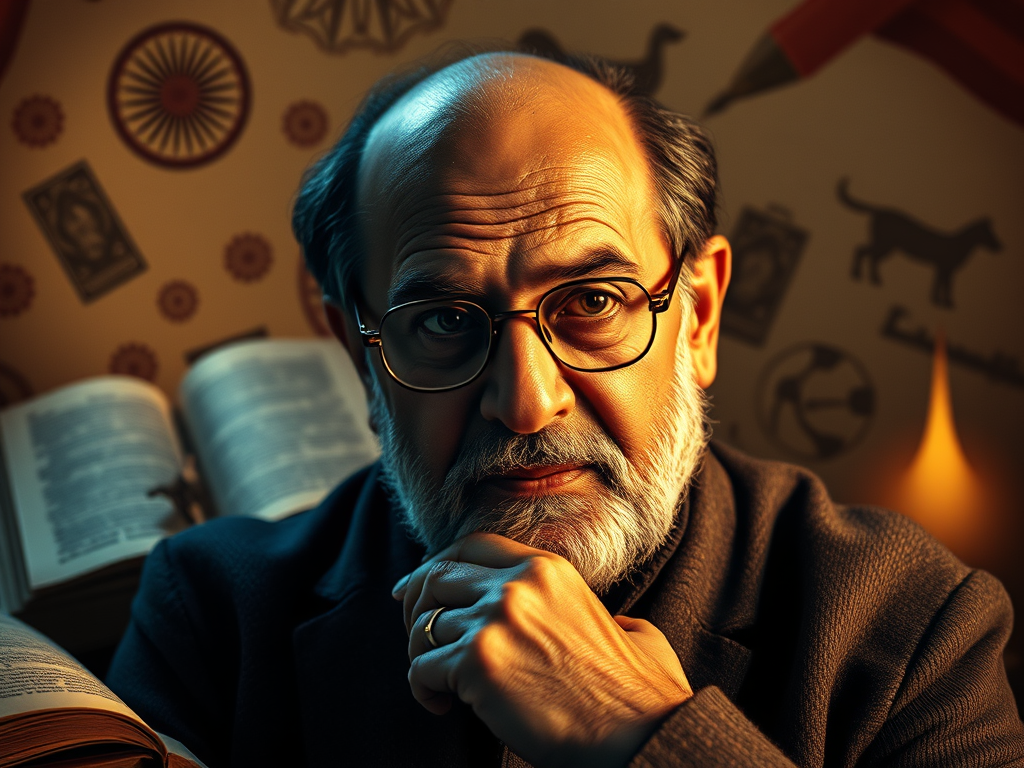
Have you ever thought about how powerful words can be? They can build bridges, share amazing stories, and even cause big reactions. Salman Rushdie is a famous writer who has shown the world just how much impact words can have. His life story isn’t just about writing books; it’s also about facing huge challenges and standing up for the right to express ideas freely.
Born in India and spending much of his life in the United Kingdom and the United States, Rushdie is known for writing stories that blend imagination with reality, often exploring themes of history, culture, and identity. But one of his books, in particular, led to a period of intense controversy and danger that changed his life forever.
Learning about Salman Rushdie means understanding not just his creative mind and his famous books by Salman Rushdie, but also the historical events that surrounded him and his brave stand for freedom of speech. It’s a story that shows the serious side of writing and the importance of protecting the ability to share ideas, even when they are difficult or unpopular for some people. Let’s look at some interesting facts about Salman Rushdie and explore his extraordinary journey.
1. He Was Born in Mumbai, India, Right Around a Historic Moment
Salman Rushdie was born in Mumbai, India, in 1947. This wasn’t just any year; it was the same year that India gained its independence from British rule. Imagine being born right as your country is being reborn! This timing is really important because his experiences growing up in a country changing so dramatically, dealing with history, different cultures, and big political shifts, deeply influenced his writing.
His family was Muslim, but not strictly religious. He grew up in a diverse city where many different cultures and religions lived side by side. When he was a teenager, he moved to England to go to school. This experience of moving between continents and cultures, from India to England, gave him a unique perspective on the world – seeing things from different viewpoints. This mix of Eastern and Western influences, history blending with personal experience, became a hallmark of his writing style later on and is a key part of understanding the beginning of his Salman Rushdie life story.
2. He Didn’t Start Out Wanting to Be a Full-Time Writer
Even though we know him as a world-famous author today, Salman Rushdie didn’t initially plan to become a full-time writer. After studying history at Cambridge University in England, he first worked in advertising. Yes, making commercials and catchy slogans for products! He was a copywriter, which means he wrote the words used in advertisements.
He worked in advertising for several years in London. While he was doing this job, he was also trying to write stories in his spare time. It took him a few years and a couple of early books that didn’t become super famous before he finally had a major breakthrough. This shows that even talented people sometimes have to work other jobs while they pursue their real passion. His time in advertising might have even helped him learn how to use words effectively and grab people’s attention, skills that definitely helped him later when he wrote his famous books by Salman Rushdie.
3. His Second Book, Midnight’s Children, Made Him Famous
Salman Rushdie’s second novel, Midnight’s Children, published in 1981, was the book that truly launched him into literary stardom. It’s a big, imaginative story about India’s transition from British rule to independence, told through the eyes of a character named Saleem Sinai, who is born exactly at the moment India becomes free. Saleem, like other children born at that hour, has special powers, which serves as a magical way to explore India’s complex history.
The book is a brilliant example of a style of writing called magical realism, which blends everyday life with fantastical or dreamlike elements. Midnight’s Children was praised by critics around the world and won a very important award called the Booker Prize, which is given to the best novel written in English published in the UK or Ireland. Winning this prize brought him international recognition and allowed him to become a full-time writer, finally leaving his advertising job behind. This success cemented his place as a major literary voice and is a crucial part of his Salman Rushdie life story.
4. His Writing Often Uses “Magical Realism”
Salman Rushdie is one of the most famous writers who uses a style called magical realism. This isn’t quite fantasy, but it’s not strictly realistic fiction either. In magical realism, the story is set in the real world with real-world problems and characters, but magical or impossible things happen as if they are perfectly normal.
Think of it like a dream happening while you’re wide awake, or seeing something impossible through a slightly tilted lens. In Midnight’s Children, children born at a specific time have special powers. In other stories, animals might talk, or people might have unusual abilities, but the narrative treats these things matter-of-factly. This style allows Rushdie to explore deep ideas about history, identity, and reality in a creative and often surprising way. It’s a key part of Salman Rushdie’s impact on writing and makes his books unique, challenging readers to think about the world in new ways. It’s definitely one of the fascinating interesting facts about Salman Rushdie as a writer.
5. One of His Books, The Satanic Verses, Caused Huge Controversy
In 1988, Salman Rushdie published his fourth novel, The Satanic Verses. This book is a complex story that involves dreams, identity, and characters inspired in part by figures from religious history. It’s a work of fiction, meaning it’s a made-up story, but it touched on very sensitive religious themes.
For many people around the world, particularly some Muslims, the way certain characters and events were portrayed in the book was seen as highly disrespectful and blasphemous (insulting to their religion or God). They felt the book mocked their faith and its important figures. It’s important to understand that people have very strong feelings about their religious beliefs, and they felt genuinely hurt and offended by the book’s content. This led to widespread protests, book burnings, and angry reactions in several countries, marking the beginning of The Satanic Verses controversy explained through public outcry. This event is central to understanding Salman Rushdie and the controversy that defined a period of his life.
6. Iran’s Leader Issued a “Fatwa” Against Him
Because of the strong negative reactions to The Satanic Verses, something very serious happened. In February 1989, Ayatollah Ruhollah Khomeini, the Supreme Leader of Iran at the time, issued a religious ruling called a “fatwa.” This particular fatwa declared that The Satanic Verses was blasphemous and called for Muslims around the world to kill Salman Rushdie and anyone involved in publishing the book.
A fatwa is a legal opinion or ruling issued by an Islamic religious leader. While not all Muslims agreed with this specific fatwa, it was interpreted by some as a religious command. This was an incredibly dangerous development. Suddenly, Salman Rushdie was facing a death threat issued by the leader of a country, simply for writing a novel. This event, known as the Salman Rushdie fatwa, put his life in immediate and extreme danger and was the most dramatic consequence of why some people were angry about Salman Rushdie’s book. It was an unprecedented situation for an author in the modern world.
7. He Had to Live in Hiding for Years
Because of the fatwa and the very real threats to his life, Salman Rushdie had to go into hiding. For many years, he lived under constant police protection, moving from place to place secretly. He couldn’t live a normal life. He had to be incredibly careful about where he went and who he saw.
Imagine not being able to go to the store, walk down the street, or visit friends freely because you were constantly in danger. It was a time of great isolation and stress for him. The British government provided him with protection, which involved a team of police officers looking after him 24 hours a day. This period of living secretly and under guard is a difficult but significant chapter in his Salman Rushdie life story, highlighting the severe consequences of the fatwa and the threat it posed to his personal safety.
8. He Became a Strong Voice for Freedom of Speech
Living under the threat of the fatwa turned Salman Rushdie into a prominent advocate for freedom of speech and expression. Even while in hiding, he continued to write and speak out about the importance of being able to share ideas, even if those ideas are unpopular, controversial, or offensive to some people.
He argued that the ability to write, read, and discuss anything is fundamental to a free society. He believed that trying to silence writers or punish them for their words was a dangerous attack on basic human rights. His situation became a symbol for the struggle for free expression around the world. He spoke at events (often secretly or with heavy security) and wrote essays defending the principle of free speech. His courage in continuing to write and speak despite the danger is an important part of Salman Rushdie’s view on free speech and his legacy, making him a global figure in this important debate.
9. He Gradually Started to Live More Publicly Again
After many years in deep hiding, the situation slowly began to change. The threat level changed over time, and the original fatwa was no longer actively promoted by the Iranian government, though some individuals and groups might still have interpreted it as valid. Because of these changes and the ongoing efforts to protect him, Salman Rushdie was gradually able to emerge from living in complete secrecy.
He started appearing more publicly, giving interviews, attending literary events, and continuing his writing career more openly, though often still with security precautions. He moved to the United States and became a distinguished figure in the literary world there. This return to public life was a significant step, showing resilience and a determination to live life more freely despite the lingering risks. It marked a new phase in his complex Salman Rushdie life story.
10. He Survived a Severe Attack Years Later
Even after years of living more openly, the danger sadly had not completely disappeared. In August 2022, over 30 years after the fatwa was first issued, Salman Rushdie was tragically attacked while on stage at a literary event in Chautauqua, New York. He suffered severe injuries but, thankfully, survived the attack after receiving urgent medical care.
This shocking event was a stark reminder that the controversies and threats from the past could still have real and dangerous consequences. The attack was widely condemned around the world as an assault on a writer and on the principle of free expression. Despite his injuries, Rushdie has continued to speak out and even written about the experience. The Salman Rushdie attacked facts highlighted the ongoing challenges faced by those who speak freely, reinforcing the points he has made for decades about the importance of protecting the right to write and think without fear.
Further Reading
Interested in learning more about writing, history, or the importance of speaking up? Check out these books:
- A Long Walk to Water by Linda Sue Park (A fictional story about resilience and overcoming challenges, touches on difficult realities)
- Separate Is Never Equal: Sylvia Mendez and Her Family’s Fight for Desegregation by Duncan Tonatiuh (A picture book about standing up for rights, good for understanding courage)
- Words on Fire: Maps and Legends and Other Papers by Ursula K. Le Guin (Essays by a famous writer about reading, writing, and the power of words – note: some essays might be advanced, but the themes are relevant)
- The Right to Write: Book of Activities for Young Writers by Lucy Calkins (Encourages young people to explore their own voices and express themselves)
Conclusion
Salman Rushdie’s life has been one of remarkable creativity, profound historical connection, and significant controversy. From his birth in a newly independent India to his success as a writer of magical stories, and then facing a dangerous fatwa that forced him into hiding, his journey highlights the powerful impact that words and ideas can have on the world. His courageous stand for the principle of Salman Rushdie freedom of speech in the face of threats has made him an enduring symbol for writers and thinkers everywhere.
Here at Zentara.blog, our mission is to take those tricky subjects and unlock them, making knowledge exciting and easy to grasp for everyone. But the adventure doesn’t stop on this page! We’re constantly exploring new frontiers and sharing discoveries across the digital universe.
Want to dive deeper into more mind-bending Top 10s and keep expanding your world? Come join us on our other platforms – we’ve got unique experiences waiting for you on each one!
- Get inspired by visual wonders and bite-sized facts: See the world through Zentara’s eyes on Pinterest! Pin our fascinating facts and stunning visuals to your own boards. Explore Pins on Pinterest: https://uk.pinterest.com/zentarablog/
- Discover quick insights and behind-the-scenes peeks: Hop over to Tumblr for snippets, quotes, and unique content you won’t find anywhere else. It’s a different flavour of discovery! Follow the Fun on Tumblr: https://www.tumblr.com/zentarablog
- Ready for deep dives you can listen to or watch? We’re bringing our accessible approach to video and potentially audio! Subscribe to our YouTube channel and tune into future projects that make learning pop! Subscribe on YouTube: https://www.youtube.com/@ZentaraUK
- Seeking even more knowledge in one place? We’ve compiled some of our most popular topic deep dives into fantastic ebooks! Find them on Amazon and keep the learning journey going anytime, anywhere. Find Our Ebooks on Amazon: https://www.amazon.co.uk/s?k=Zentara+UK&ref=nb_sb_noss
- Connect with us and fellow knowledge seekers: Join the conversation on BlueSky! We’re sharing updates, thoughts, and maybe even asking you what wonders we should explore next. Chat with Us on BlueSky: https://bsky.app/profile/zentarablog.bsky.social
- Perfect for learning on the move! We post multiple 10-minute podcasts per day on Spotify. Pop on your headphones and fill your day with fascinating facts while you’re out and about! Listen on Spotify: https://open.spotify.com/show/3dmHbKeDufRx95xPYIqKhJ
Every click helps us keep bringing honest, accessible knowledge to everyone. Thanks for exploring with us today – see you out there in the world of discovery!




Leave a Reply to 10 Banned Books That Sparked Controversy (and Why) – Zentara.blog: Knowledge Made Accessible | Science, History, Tech & MoreCancel reply