
1. What is the Autism Spectrum? A World of Unique Differences
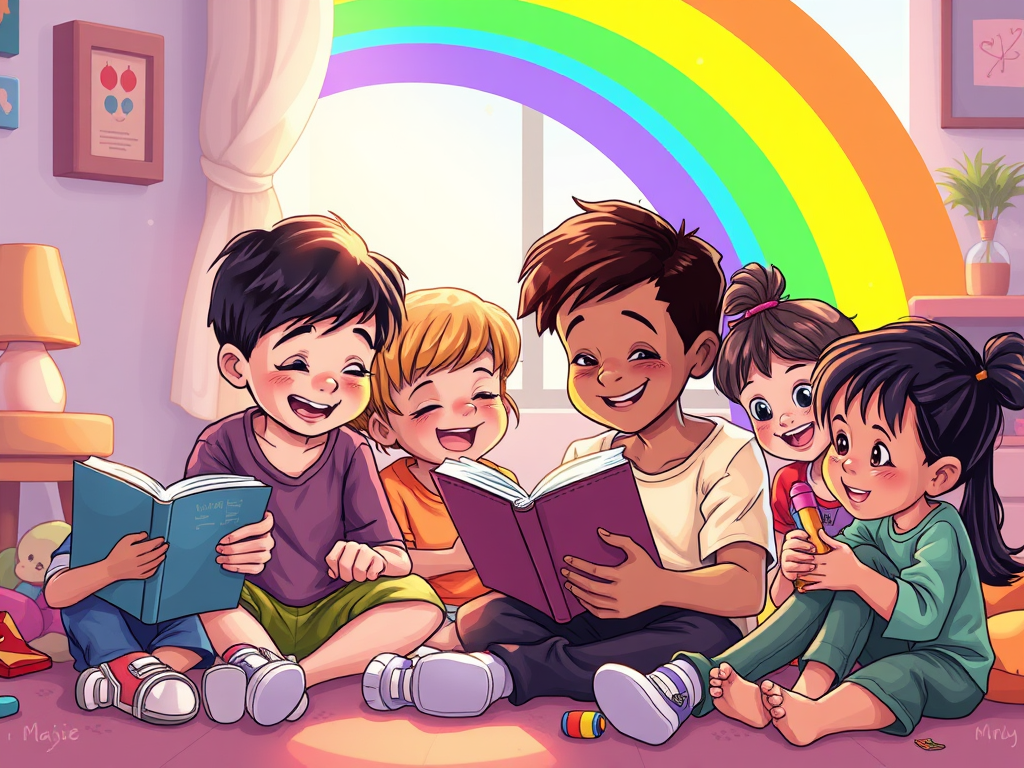
Imagine a giant rainbow with all sorts of beautiful colors, each one unique and special. That’s a little bit like the Autism Spectrum! When we say “spectrum,” it means that autism looks different in every single person who has it. There isn’t just one way to be autistic. Some autistic children might be super talkative and know everything about dinosaurs or space, while others might not use spoken words much at all but can communicate in other amazing ways. Some might love big hugs, while others prefer a gentle high-five or just quiet company.
The important thing to remember is that “spectrum” means variety. Autistic children have their own unique set of strengths, challenges, and ways of seeing the world. It’s not a line from “less autistic” to “more autistic,” but more like a wonderful constellation of different traits. Understanding this helps us meet each child where they are and appreciate their individual personality and abilities. It’s all about celebrating these unique differences that make everyone so special!
2. Seeing the World Differently: How Autistic Children Might Experience Things
Autistic children often experience the world around them in a way that’s more intense or different from non-autistic children. Think about your senses: sight, sound, touch, taste, and smell. For some autistic kids, these senses can be super-powered! Bright lights might feel like a spotlight in their eyes, everyday sounds like a vacuum cleaner might seem as loud as a concert, or the tag on a shirt might feel incredibly scratchy and uncomfortable. This is called sensory sensitivity.
On the other hand, some autistic children might be under-sensitive, meaning they might seek out really strong sensations, like spinning around or wanting deep pressure hugs. They might also process information differently. They might be amazing at noticing tiny details that others miss, or they might think in pictures rather than words. Understanding that their sensory world can be so different helps us create environments where they feel comfortable and safe, allowing them to learn and play without feeling overwhelmed by too much sensory information.
3. Little Signs, Big Insights: Early Clues to Look For
Every baby and toddler grows and learns at their own pace, which is wonderful! Sometimes, though, there are little clues that might suggest a child is developing in a way that could be autism. These aren’t things to worry about, but just gentle nudges to learn more and offer support if needed. For example, very young children might not make a lot of eye contact, or they might not smile back at you when you smile at them. They might not point at interesting things to show you, or respond much to their name being called.
As they get a bit older, some autistic children might have delays in learning to talk, or they might use language in unique ways, like repeating phrases they’ve heard (this is called echolalia). They might be very interested in routines and get upset if things change. They might also play with toys in a different way, perhaps by lining them up perfectly or focusing on one part of a toy instead of the whole thing. They might also have very strong reactions to certain sounds, textures, or lights. Noticing these things early means we can start supporting them sooner!
4. The Journey to Understanding: Why Early Diagnosis Matters
If you notice some of the little signs we talked about, or if your gut tells you that your child might experience the world differently, seeking an assessment for autism can be a really helpful step. Getting a diagnosis isn’t about putting a label on your child. Instead, think of it as getting a special guidebook that’s all about them! An early diagnosis can open up a world of understanding and support that can make a huge positive difference in a child’s life.
When autism is identified early, children can get access to therapies and supports that are designed to help them develop their communication skills, learn how to navigate social situations, and manage any sensory sensitivities they might have. It also helps parents, caregivers, and teachers understand the “why” behind some of their behaviors and learn the best ways to support their learning and happiness. It’s like getting the right tools for a very important job – helping your child thrive and shine their brightest! It empowers everyone involved to provide the best possible environment for the child.
5. Communicating in Many Ways: Beyond Just Spoken Words
Communication is so much more than just talking! Autistic children have all sorts of wonderful ways to express themselves, and it’s our job to listen with our eyes and our hearts, not just our ears. Some autistic children might be very verbal and have amazing vocabularies. Others might use few or no spoken words, but that doesn’t mean they don’t have anything to say! They might communicate through gestures, pointing, leading you by the hand, or using sounds.
Many autistic children benefit from something called Augmentative and Alternative Communication, or AAC for short. This sounds complicated, but it just means using other ways to communicate besides speech. This could include picture exchange systems (like PECS), sign language, or special speech-generating devices and apps on tablets. Using visuals, like a picture schedule for the day, can also be super helpful. The most important thing is to find what works for each child and celebrate every attempt they make to connect and share their thoughts and feelings with us.
6. Making Friends and Connections: Supporting Social Growth
Making friends and understanding social rules can sometimes be a bit like trying to solve a tricky puzzle for autistic children. They might want to connect with others but find it hard to know how to start a conversation, join in play, or understand social cues like body language or tone of voice. They might take things very literally, so jokes or sarcasm can be confusing. It’s not that they don’t want friends; they just might need some extra help learning the skills to build those connections.
We can support their social growth in lots of ways! We can help them practice social skills in safe and supportive environments, perhaps through playdates with understanding peers or social skills groups. Using stories or role-playing to explain social situations can be really helpful. We can also teach them about emotions – their own and others’. It’s important to be patient and celebrate small successes. Finding friends who share their interests can also make a big difference. Every child deserves to feel connected, and with gentle guidance, autistic children can build meaningful relationships.
7. Loving Routines and Special Interests: Embracing Autistic Passions
Have you ever noticed how comforting it is to know what’s going to happen next? For many autistic children, routines and predictability are super important. They can make the world feel like a safer, less confusing place. Having a consistent daily schedule for things like meals, school, playtime, and bedtime can help reduce anxiety and make transitions smoother. When changes do need to happen, giving them advance warning and explaining what to expect can be really helpful.
Many autistic children also have very strong special interests – things they are incredibly passionate about and know a LOT about! It could be trains, dinosaurs, a particular cartoon character, numbers, or patterns. Sometimes grown-ups worry about these intense interests, but they can actually be amazing strengths! These passions can be a great way for them to learn, a source of joy and comfort, and even a way to connect with others who share the same interest. Embracing and encouraging these special interests can build their confidence and skills.
8. Your Support Superpowers: Therapies and Approaches that Help
There are many wonderful people and therapies that can support autistic children and their families. These aren’t about “fixing” autism, because autism isn’t something that needs to be fixed! Instead, they’re about helping children develop skills, manage challenges, and live their happiest lives. Speech therapy can help with understanding and using language, as well as other communication skills. Occupational therapy (often called OT) can help with sensory sensitivities, motor skills (like writing or buttoning clothes), and everyday tasks.
Some children benefit from Applied Behavior Analysis (ABA) therapy, which uses positive reinforcement to teach new skills and reduce challenging behaviors. However, it’s important to ensure any ABA approach is child-led, play-based, and focuses on the child’s well-being and happiness. Other therapies might include play therapy, social skills groups, or educational approaches designed for autistic learners. The best plan is usually a team effort, with parents and professionals working together to find what suits the individual child best.
9. Building a Team: Working with Schools and Specialists
Supporting an autistic child to thrive is often a team effort, and you, the parents and caregivers, are the most valuable players on that team! Working closely with your child’s school and any specialists involved in their care can make a world of difference. Open and regular communication with teachers is key. Share what you know about your child’s strengths, challenges, interests, and what strategies work well at home.
Schools can often provide an Individualized Education Program (IEP) or similar plan, which outlines specific goals and supports for your child in the classroom. This might include things like having a classroom aide, using visual supports, allowing for sensory breaks, or modifying assignments. Don’t be afraid to ask questions and advocate for what your child needs. Specialists, like pediatricians, psychologists, speech therapists, and occupational therapists, are also important members of the team. When everyone works together, sharing information and supporting each other, the child is the one who benefits most.
10. Celebrating Every Victory: Focusing on Strengths and Progress
Every child is on their own unique journey of growth and learning, and autistic children are no different. It’s so important to celebrate every milestone, no matter how small it might seem to others. Maybe they tried a new food, used a new word, managed a tricky social situation, or showed amazing focus on something they love. These are all victories worth cheering for! Focusing on their strengths and progress, rather than just their challenges, helps build their self-esteem and shows them how capable they are.
Remember that autism comes with many incredible strengths. Autistic individuals often have amazing attention to detail, a deep capacity for focus, honesty, loyalty, and a unique way of looking at the world that can lead to incredible creativity and innovation. Help your child discover their talents and passions. Let them know that being autistic is a part of who they are, and it’s something to be proud of. Your belief in them and your celebration of their unique awesomeness is one of the greatest gifts you can give.
Conclusion: A Tapestry of Talents
Exploring the world of Autism Spectrum Disorder shows us just how wonderfully diverse humanity is. Like a beautiful tapestry woven with threads of different colors and textures, each autistic child brings their own unique pattern of strengths, talents, and perspectives to the world. Understanding that autism is a spectrum, recognizing their individual ways of experiencing and communicating, and providing tailored support can help these amazing children not just navigate the world, but truly shine in it. By embracing their routines, celebrating their special interests, and working as a team with schools and specialists, we create an environment where they feel loved, understood, and empowered to reach their fullest potential. Let’s continue to learn, support, and celebrate every child!
Further Reading
- NeuroTribes: The Legacy of Autism and the Future of Neurodiversity by Steve Silberman
- Uniquely Human: A Different Way of Seeing Autism by Barry M. Prizant, PhD
- The Reason I Jump: The Inner Voice of a Thirteen-Year-Old Boy with Autism by Naoki Higashida
Thank you for exploring Autism Spectrum Disorders: Autism is being identified in more children than ever. As of 2023, about 1 in 36 children in the U.S. is diagnosed with an autism spectrum disorderwhitehouse.gov – a staggering increase from a few decades ago. Autism affects social interaction, communication, and behavior, often requiring specialized support and services. Improved awareness and screening have contributed to higher reported prevalence, making autism a pressing developmental concern for American children. We hope these 10 points and further reading suggestions have offered valuable insights into this important aspect of children’s health and development.
To continue your journey of discovery and learning with Zentara:
🎙️ Tune into our daily Zentara Unlocked podcast for more fascinating insights across a universe of topics. 🎧 Catch our Spotify Channel here: https://open.spotify.com/show/3dmHbKeDufRx95xPYIqKhJ 📺 Explore engaging visual content and dive deeper on our Zentara YouTube Channel. 📚 Deepen your understanding with our ebooks, available for purchase on Amazon, and our audiobooks, ready for listening on Audible. Many of these compile our most sought-after topics for easy, on-the-go access!




Leave a Reply