
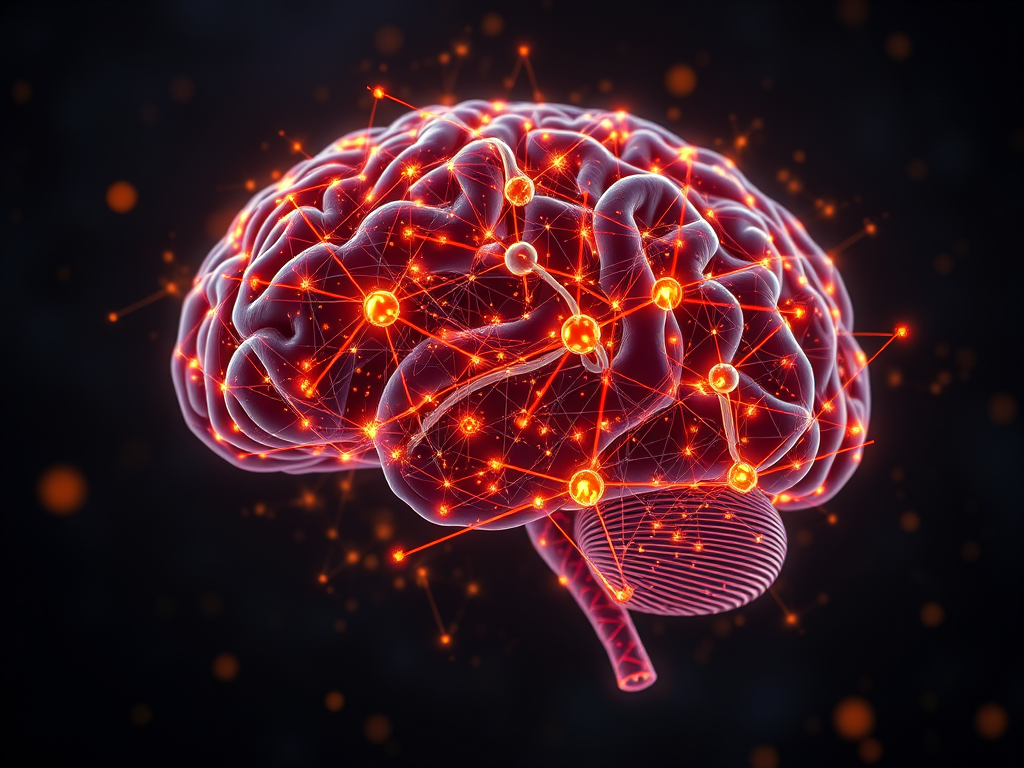
Have you ever stopped to think about the amazing organ tucked inside your skull? It’s squishy, weighs about as much as a small cauliflower, and yet it’s the control center for everything you think, feel, say, and do. Your brain is truly the most complex object we know of in the entire universe – a mini-universe right there inside your head! From remembering your best friend’s birthday to solving a tricky math problem, or even just feeling happy or sad, it’s all thanks to your incredible brain.
Scientists are constantly uncovering new secrets about this astonishing organ, revealing just how powerful and adaptable it is. Concepts like neuroplasticity show us how the brain can rewire itself, and understanding memory formation helps us appreciate why we remember some things perfectly and others fade away. The very nature of consciousness – that feeling of being you – is still one of the biggest mysteries. Get ready to have your mind blown as we explore 10 incredible facts about the human brain and its sheer complexity!
1. Your Brain is an Energy Hog: But Super Efficient!
Despite making up only about 2% of your body weight, your brain is an absolute energy superstar. It demands a whopping 20% of your body’s total oxygen and calories, even when you’re just sitting still or sleeping! Think about that – one-fifth of all the fuel you take in goes straight to your brain. This incredible demand highlights the intense activity constantly happening within your skull, from regulating your heartbeat to processing complex thoughts.
However, it’s also incredibly efficient. The brain processes an unimaginable amount of information using relatively little energy compared to even the most advanced supercomputers. This constant, high-energy activity is necessary to keep billions of neurons firing, forming new connections, and maintaining all your bodily functions. This sheer energy demand is a testament to the brain’s incredible complexity and its constant, unseen work, making it the most power-hungry organ in your body, yet exquisitely designed for its immense tasks.
2. Billions of Neurons, Trillions of Connections: A Cosmic Network
Imagine a galaxy with billions of stars, each connected to thousands of others. That’s a bit like your brain! It contains approximately 86 billion neurons – special cells that transmit information using electrical and chemical signals. But it’s not just the number of neurons that’s mind-boggling; it’s the number of connections they make. Each neuron can connect to thousands of other neurons, forming an estimated 100 trillion (100,000,000,000,000!) synapses.
These synapses are the tiny gaps where information passes from one neuron to another, creating an unimaginably complex network. This vast interconnectedness is what allows for the brain’s incredible processing power, enabling everything from simple reflexes to complex problem-solving, creativity, and the very foundation of your consciousness. This intricate wiring system, constantly sending signals faster than the blink of an eye, is the bedrock of the brain’s sheer complexity, allowing for the vast array of human experiences and abilities.
3. Neuroplasticity: Your Brain Can Rewire Itself!
For a long time, scientists thought that once you reached adulthood, your brain was pretty much set in stone. We now know this is completely false! One of the most astounding discoveries is neuroplasticity, also known as brain plasticity. This refers to the brain’s incredible ability to reorganize itself throughout life by forming new neural connections or strengthening existing ones. It’s like your brain is a constantly evolving map, able to draw new roads and reroute traffic.
This means that every time you learn something new, practice a skill, or even recover from an injury, your brain is physically changing and adapting. For example, if you learn to play a musical instrument, the parts of your brain responsible for hand-eye coordination and auditory processing will literally expand and strengthen. This remarkable adaptability is key to learning, memory, and recovery from brain damage, showing the brain’s immense capacity for growth and change throughout your entire life. It’s the ultimate proof that you can always learn and grow, no matter your age!
4. Memories Aren’t Stored in One Place: It’s a Network!
Ever wondered how your brain stores all those memories, from your first birthday party to what you had for breakfast? It’s not like a hard drive in a computer, where each file has a specific location. Instead, memory formation is a complex process where different parts of your brain work together. A single memory is often stored as a distributed network of connections across various brain regions.
For instance, remembering a specific event might involve activity in your hippocampus (for factual details), your amygdala (for the emotions linked to the memory), and your sensory cortices (for sights, sounds, or smells associated with it). When you recall a memory, your brain reconstructs it by activating these scattered pieces. This distributed storage makes memories resilient – if one part of the network is damaged, other parts might still allow you to access fragments or related information. It’s a dynamic, intricate process that highlights the brain’s sheer complexity in piecing together our past experiences.
5. Your Brain Generates Enough Electricity to Power a Lightbulb!
While you won’t be plugging your phone into your head anytime soon, your brain is a surprisingly powerful electrical generator. All those neurons communicating with each other do so through tiny electrical impulses. At any given moment, the billions of neurons in your brain are firing, creating a significant amount of electrical activity.
Collectively, this electrical activity is enough to generate about 10-23 watts of power, which is roughly enough to illuminate a small LED lightbulb. This continuous electrical chatter is the basis of all thought, feeling, and action. It’s how your brain controls your muscles, processes sensory information, and forms complex ideas. This fascinating fact highlights the brain’s incredible complexity as a biological supercomputer, constantly buzzing with electrical signals that allow you to interact with and make sense of the world.
6. Dreams Are the Brain’s Way of Processing (and Maybe More!)
Every night, when you enter the world of sleep, your brain embarks on an extraordinary journey: dreaming. While the exact purpose of dreams is still one of the biggest mysteries in neuroscience, scientists believe they play a crucial role in various brain functions, especially memory formation and emotional processing. Dreams occur most vividly during REM (Rapid Eye Movement) sleep.
One theory suggests that dreams help your brain consolidate memories, transferring information from short-term to long-term storage. Another proposes that dreams are a way for your brain to process emotions, work through problems, and even practice responses to threats in a safe, simulated environment. Some even believe dreams are simply random firings of neurons that your conscious mind tries to make sense of. Regardless, the fact that your brain creates these intricate, often bizarre, worlds every night is a testament to its incredible complexity and its continuous, unseen work.
7. The Brain is Mostly Water (and Fat!): A Soft, Delicate Organ
Despite its incredible power, the brain isn’t a hard, solid object. In fact, it’s remarkably soft and delicate, similar in consistency to soft tofu or gelatin. This is because the human brain is composed of about 75% water, making it incredibly susceptible to dehydration, which can affect concentration and cognitive function. The remaining 25% is largely made up of fats (lipids), proteins, and carbohydrates.
This squishy, watery composition means the brain needs protection, which is why it’s encased in the skull and cushioned by cerebrospinal fluid. Understanding its physical makeup helps us appreciate its fragility and the importance of hydration and a healthy diet for optimal brain function. This surprising softness contrasts with its immense power and highlights the delicate balance of its physiological aspects, allowing for the intricate neural activities that underpin all thought and sensation.
8. Your Brain Shrinks with Age, But Not Always Your Abilities
It’s a natural part of aging: as we get older, our brains do, in fact, gradually shrink in size. This process, known as atrophy, can lead to a slight decrease in brain volume, particularly in certain areas like the frontal lobe and hippocampus (involved in memory). While this might sound alarming, it doesn’t necessarily mean a decline in all cognitive abilities.
Thanks to neuroplasticity, your brain can often compensate for these changes. Older adults can continue to learn new skills, form new memories, and maintain sharp cognitive function. Engaging in mentally stimulating activities, staying physically active, and maintaining social connections can help preserve brain health and even encourage the growth of new neural pathways. This fact underscores that while the brain undergoes physical changes, its adaptability and your lifestyle choices play a significant role in maintaining its function and vitality throughout your life.
9. Placebo Effect: Your Belief Can Change Your Brain (and Body!)
The placebo effect is one of the most fascinating examples of the brain’s power over the body, and it’s a profound demonstration of how deeply connected our thoughts and beliefs are to our physical well-being. A placebo is a treatment, like a sugar pill, that has no active medicinal properties. Yet, when a person believes they are receiving an actual medication, their symptoms can genuinely improve. This isn’t just “all in their head” in a dismissive way; the brain itself produces real physiological changes.
When you believe a placebo will work, your brain can release natural pain-relieving chemicals like endorphins, activate specific brain regions associated with reward and expectation, and even influence hormone levels. This phenomenon highlights the brain’s incredible complexity and its capacity for self-healing and self-regulation. It powerfully demonstrates how expectations and beliefs, rooted in the psychological aspects of our being, can have tangible impacts on our physical health, underscoring the deep connection between mind and body.
10. Consciousness: The Ultimate Brain Mystery
While we’ve made incredible strides in understanding the brain’s structure and function, the nature of consciousness remains one of the greatest unsolved mysteries in science and philosophy. What exactly is consciousness? Why do we have that subjective experience of being “us”? How do billions of neurons firing away create the feeling of seeing red, tasting chocolate, or experiencing love?
Scientists are exploring various theories, from consciousness emerging from complex neural networks to it being a fundamental property of the universe. We can map brain activity, but we still don’t fully understand how that activity translates into the rich, inner world of thoughts, feelings, and self-awareness that defines our existence. The question of consciousness is the ultimate puzzle within the brain’s sheer complexity, a fascinating frontier that continues to inspire scientific inquiry and philosophical debate, reminding us that the universe inside our head holds depths we’ve only just begun to explore.
Further Reading
- Incognito: The Secret Lives of the Brain by David Eagleman
- Phantoms in the Brain: Probing the Mysteries of the Human Mind by V.S. Ramachandran and Sandra Blakeslee
- The Man Who Mistook His Wife for a Hat by Oliver Sacks
- Why We Sleep: Unlocking the Power of Sleep and Dreams by Matthew Walker
- Seven and a Half Lessons About the Brain by Lisa Feldman Barrett
Here at Zentara.blog, our mission is to take those tricky subjects and unlock them, making knowledge exciting and easy to grasp for everyone. But the adventure doesn’t stop on this page! We’re constantly exploring new frontiers and sharing discoveries across the digital universe.
Want to dive deeper into more mind-bending Top 10s and keep expanding your world? Come join us on our other platforms – we’ve got unique experiences waiting for you on each one!
- Get inspired by visual wonders and bite-sized facts: See the world through Zentara’s eyes on Pinterest! Pin our fascinating facts and stunning visuals to your own boards. Explore Pins on Pinterest: https://uk.pinterest.com/zentarablog/
- Discover quick insights and behind-the-scenes peeks: Hop over to Tumblr for snippets, quotes, and unique content you won’t find anywhere else. It’s a different flavour of discovery! Follow the Fun on Tumblr: https://www.tumblr.com/zentarablog
- Ready for deep dives you can listen to or watch? We’re bringing our accessible approach to video and potentially audio! Subscribe to our YouTube channel and tune into future projects that make learning pop! Subscribe on YouTube: https://www.youtube.com/@ZentaraUK
- Seeking even more knowledge in one place? We’ve compiled some of our most popular topic deep dives into fantastic ebooks! Find them on Amazon and keep the learning journey going anytime, anywhere. Find Our Ebooks on Amazon: https://www.amazon.co.uk/s?k=Zentara+UK&ref=nb_sb_noss
- Connect with us and fellow knowledge seekers: Join the conversation on BlueSky! We’re sharing updates, thoughts, and maybe even asking you what wonders we should explore next. Chat with Us on BlueSky: https://bsky.app/profile/zentarablog.bsky.social
- Perfect for learning on the move! We post multiple 10-minute podcasts per day on Spotify. Pop on your headphones and fill your day with fascinating facts while you’re out and about! Listen on Spotify: https://open.spotify.com/show/3dmHbKeDufRx95xPYIqKhJ
Every click helps us keep bringing honest, accessible knowledge to everyone. Thanks for exploring with us today – see you out there in the world of discovery!




Leave a Reply