
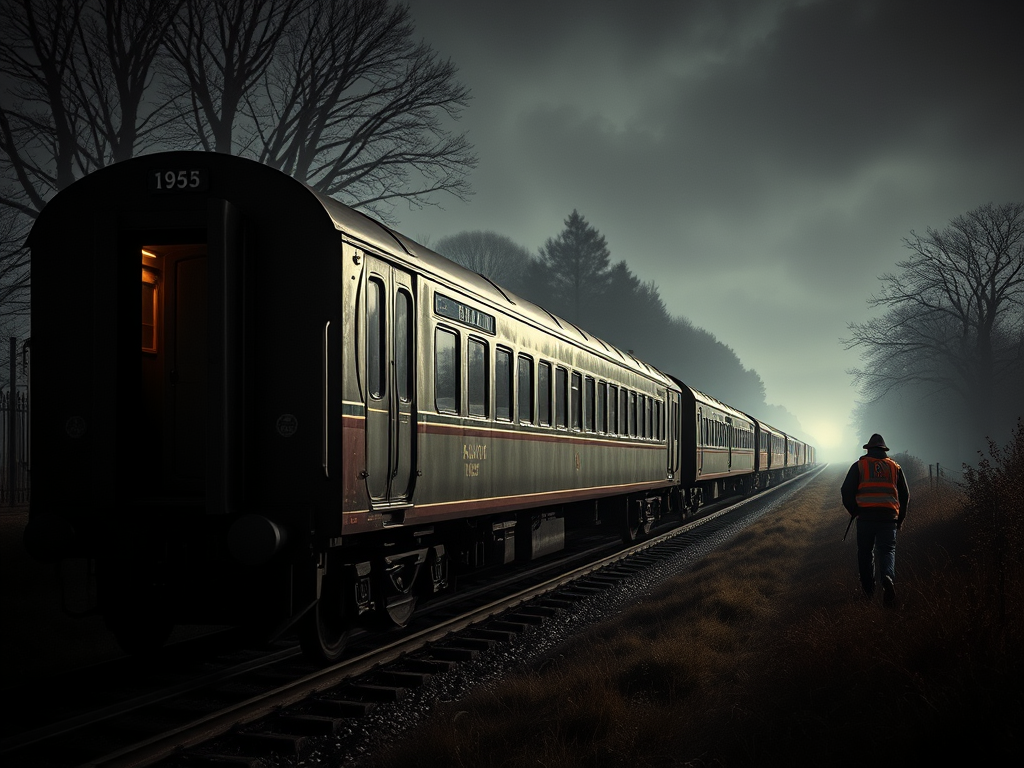
In the annals of criminal history, few heists capture the imagination quite like the Great Train Robbery of August 8, 1963. It wasn’t just the sheer audacity of the plan or the enormous sum of money stolen that cemented its legendary status; it was the almost theatrical execution, the colourful characters involved, and the subsequent manhunt and sensational trials that captivated a nation and, indeed, the world. This wasn’t merely a robbery; it was a meticulously planned operation that, for a time, made its perpetrators seem like modern-day folk heroes to some, while simultaneously igniting widespread public outrage and a massive law enforcement response.
The early hours of that fateful Thursday morning saw a Royal Mail Post Office train, laden with sacks of banknotes, halted in the quiet Buckinghamshire countryside. What followed was a daring, almost cinematic sequence of events: the manipulation of railway signals, the swift overpowering of the train crew, and the coordinated transfer of over £2.6 million (equivalent to more than £60 million today) in a matter of minutes. The scale of the theft was unprecedented for its time, instantly making it the largest cash robbery in British history.
Beyond the astounding sum, the allure of the Great Train Robbery lies in its human element. It brought together a diverse group of criminals, many of whom became household names overnight, none more so than Ronnie Biggs. Their escapades, their initial success, and their subsequent lives on the run became the stuff of tabloid headlines and popular culture legend, overshadowing the very real fear and disruption they caused. The police response was equally formidable, a testament to the shockwaves the crime sent through the establishment.
This article delves into ten compelling facts about the Great Train Robbery, exploring the intricate details of the plot, the key figures involved, the immediate aftermath, and its enduring place in both criminal folklore and British history. It’s a story of meticulous planning, bold execution, unforeseen complications, and the long shadow cast by one of the 20th century’s most iconic criminal acts.
1. The Target: A High-Value Royal Mail Train
The target of the Great Train Robbery was not just any train; it was the Royal Mail Post Office train operating on its routine night journey from Glasgow to London Euston. This particular train was known to carry high-value registered mail, including significant sums of cash, especially on Mondays following bank holidays, when cash accumulated over the weekend was transported to London for distribution. The robbers, led by Bruce Reynolds, meticulously gathered intelligence, learning the train’s schedule, its specific carriage for valuable parcels (the High Value Package (HVP) coach), and even the typical composition of its crew. Their knowledge of this specific high-value target was a testament to sophisticated planning, transforming a regular mail service into the focus of Britain’s most audacious cash heist. This intimate understanding of the Royal Mail train operations was crucial to their success, underscoring the deep research undertaken for the Great Train Robbery planning.
2. The Mastermind: Bruce Reynolds and His Meticulous Planning
While many names became famous in connection with the Great Train Robbery, the true mastermind and lead organizer was Bruce Reynolds. A charismatic and intelligent career criminal, Reynolds envisioned and orchestrated the audacious plan. He assembled a diverse team of criminals, including those with specific skills like train driving (or at least, the ability to move a train a short distance) and logistics. Reynolds didn’t just recruit; he meticulously planned every detail, from the timing of the heist to the method of diverting the train and the transportation of the loot. He studied railway timetables, identified the ideal location for the ambush (Bridego Bridge, Ledburn, Buckinghamshire), and even considered how to handle the train crew. His leadership and the methodical nature of the Great Train Robbery planning were central to its initial success, solidifying his reputation as a criminal genius and the primary Great Train Robbery mastermind.
3. The Signal Manipulation: A Crucial Deception
A critical and ingenious element of the heist involved manipulating railway signals to bring the train to a halt. The gang tampered with the green ‘proceed’ signal at Sears Crossing, a remote location in Buckinghamshire. They covered the green light and rigged a red light using a battery and a glove, effectively creating a false danger signal. This forced the train driver, Jack Mills, to stop the train precisely where the gang intended – near Bridego Bridge. This intricate piece of deception demonstrated the robbers’ extensive research and coordination, allowing them to stop a moving train without a direct confrontation on a busy line. The precision of this train signal alteration was a key factor in the heist’s smooth execution and highlights the professional nature of the Great Train Robbery method. It was a bold move that turned a normal train journey into a meticulously orchestrated ambush, showcasing the robbers’ ingenuity.
4. The Overpowering of the Crew: Violence and Consequences
Upon the train’s unexpected stop, the robbers swiftly moved to overpower the crew. Train driver Jack Mills and his co-driver, David Whitby, were attacked. While the intention was largely to subdue without severe injury, the reality was brutal. Jack Mills was struck on the head with a blunt instrument, suffering significant head injuries from which he never fully recovered, eventually dying seven years later. David Whitby was also assaulted. This use of violence against the train crew immediately elevated the crime beyond a mere property theft, making it a much more serious offence in the eyes of the law and the public. Despite the romanticized portrayal of the robbers in some media, the reality of the physical harm inflicted on the crew was a stark reminder of the dangerous nature of the heist and contributed significantly to the intensity of the police manhunt that followed, altering public perception of the Great Train Robbery participants.
5. The Astonishing Haul: £2.6 Million in Old Notes
The most staggering fact about the Great Train Robbery was the astonishing amount of money stolen: £2,631,684 in old £1, £5, and £10 banknotes. At the time, this was an unprecedented sum, equivalent to over £60 million in today’s money (considering inflation). The sheer volume of cash – 120 sacks weighing over two tons – presented an immediate logistical challenge for the robbers, requiring precise coordination to transfer it from the train to waiting vehicles. The scale of this record-breaking cash theft immediately captured global headlines and sent shockwaves through Britain’s financial and law enforcement institutions. The Great Train Robbery loot was so immense that its recovery became a national priority, forever etching the £2.6 million heist into the collective memory as the largest cash robbery in British history.
6. The Escape and the Farmhouse Hideout
After emptying the HVP carriage, the robbers meticulously transported the vast sum of cash to a pre-arranged hideout: Leatherslade Farm in Buckinghamshire, approximately 27 miles from the crime scene. This remote farmhouse served as their temporary sanctuary, where they intended to divide the spoils and lie low. However, a crucial miscalculation in their escape plan and the premature abandonment of the farmhouse became their undoing. They had planned to clean and burn the farmhouse, but ran out of time and were forced to flee earlier than anticipated when the police investigation intensified. The discovery of the farmhouse, along with crucial forensic evidence like fingerprints on a discarded Monopoly board used to count the money, provided the police with vital clues. The Leatherslade Farm hideout became infamous, a crucial link between the crime and its perpetrators, demonstrating a critical flaw in the Great Train Robbery escape plan and leading directly to their subsequent capture.
7. The Intensive Police Manhunt: “Operation One”
The sheer scale of the Great Train Robbery triggered an immediate and intensive police manhunt, codenamed “Operation One.” Led by Detective Chief Superintendent Tommy Butler of Scotland Yard, the investigation was unprecedented in its scope and determination. Every available resource was mobilized, and police departments across the country were put on high alert. The discovery of the abandoned farm and the forensic evidence left behind, though initially dismissed by some robbers as insignificant, proved invaluable. Butler and his team meticulously pieced together clues, leading to the rapid identification and arrest of many of the gang members within days and weeks of the robbery. The relentless pursuit by Scotland Yard detectives showcased a highly coordinated effort to bring the perpetrators to justice, cementing “Operation One” as one of the most famous and successful police investigations in British criminal history and highlighting the tenacity of the Great Train Robbery manhunt.
8. The Celebrity Crooks and Media Frenzy
Unlike previous generations of British criminals, the Great Train Robbers, particularly figures like Ronnie Biggs, Bruce Reynolds, and Buster Edwards, became instant celebrity crooks. The media frenzy surrounding the heist, their audacious escapes from prison, and their lives on the run captivated the public. Tabloids sensationalized their stories, turning them into anti-establishment figures for some. Their bold defiance of authority, combined with the glamorous narrative of a massive cash score, inadvertently created a peculiar form of notoriety. This media attention not only frustrated law enforcement but also immortalized the robbers in popular culture, leading to books, films, and songs. The Great Train Robbery media coverage transformed criminals into characters, contributing significantly to the heist’s legendary status and making the Great Train Robbery participants enduring figures in British criminal folklore.
9. The Long Shadow of Justice: Escapes and Recaptures
Despite the initial arrests, the story of the Great Train Robbery was far from over. Several key figures, most notably Ronnie Biggs, Bruce Reynolds, and Buster Edwards, managed daring escapes from prison and lived lives as fugitives for years, if not decades. Ronnie Biggs, in particular, became an international celebrity after escaping Wandsworth Prison in 1965 and living openly in Brazil for 36 years, famously taunting British authorities. His life on the run, his distinctive appearance, and his media appearances fueled the legend, much to the chagrin of the police. While all three were eventually recaptured or voluntarily returned (Biggs in 2001), the long and complex saga of their prison escapes and subsequent recaptures added layers of intrigue to the already famous heist, solidifying the Great Train Robbery’s enduring legacy and the dramatic lives of its fugitive robbers.
10. The Enduring Legacy: Crime, Culture, and Cautionary Tale
The Great Train Robbery’s enduring legacy is multifaceted, weaving its way into British culture and serving as both a legendary crime story and a cautionary tale. It remains a benchmark for audacious heists, inspiring numerous books, films, documentaries, and even stage plays, proving its powerful grip on the popular imagination. Beyond its cultural impact, the robbery led to significant changes in railway security procedures and enhanced police investigation techniques for major crimes. It highlighted vulnerabilities in the system and forced a reevaluation of security protocols for cash transit. While some might view the robbers as folk heroes, the human cost, including the permanent injury to Jack Mills and the long prison sentences, serves as a stark reminder of the serious consequences of such criminal acts. The Great Train Robbery’s historical significance lies not just in the money stolen, but in its lasting influence on crime and popular culture, and its role in shaping public perception of law and order in Britain.
Further Reading
- The Great Train Robbery by Bruce Reynolds
- Ronnie Biggs: My Story by Ronnie Biggs
- The Great Train Robbery: The Mastermind’s Tale by Peter Scott
- The Train Robbers: The Final Verdict by Nick Russell-Pavier and Stewart Richards
- Jack Mills: The Victim of the Great Train Robbery by Michael Harvey
Here at Zentara.blog, our mission is to take those tricky subjects and unlock them, making knowledge exciting and easy to grasp for everyone. But the adventure doesn’t stop on this page! We’re constantly exploring new frontiers and sharing discoveries across the digital universe. Want to dive deeper into more mind-bending Top 10s and keep expanding your world? Come join us on our other platforms – we’ve got unique experiences waiting for you on each one!
Get inspired by visual wonders and bite-sized facts: See the world through Zentara’s eyes on Pinterest!
Pin our fascinating facts and stunning visuals to your own boards. Explore Pins on Pinterest: https://uk.pinterest.com/zentarablog/
Discover quick insights and behind-the-scenes peeks: Hop over to Tumblr for snippets, quotes, and unique content you won’t find anywhere else. It’s a different flavour of discovery! Follow the Fun on Tumblr: https://www.tumblr.com/zentarablog
Ready for deep dives you can listen to or watch? We’re bringing our accessible approach to video and potentially audio! Subscribe to our YouTube channel and tune into future projects that make learning pop! Subscribe on YouTube: https://www.youtube.com/@ZentaraUK
Seeking even more knowledge in one place? We’ve compiled some of our most popular topic deep dives into fantastic ebooks! Find them on Amazon and keep the learning journey going anytime, anywhere. Find Our Ebooks on Amazon: https://www.amazon.co.uk/s?k=Zentara+UK&ref=nb_sb_noss
Connect with us and fellow knowledge seekers: Join the conversation on BlueSky! We’re sharing updates, thoughts, and maybe even asking you what wonders we should explore next. Chat with Us on BlueSky: https://bsky.app/profile/zentarablog.bsky.social
Perfect for learning on the move! We post multiple 10-minute podcasts per day on Spotify. Pop on your headphones and fill your day with fascinating facts while you’re out and about! Listen on Spotify: https://open.spotify.com/show/3dmHbKeDufRx95xPYIqKhJ
Follow us on Instagram for bytesize knowledge! We post multiple posts per day on our official Instagram account. https://www.instagram.com/zentarablog/ Every click helps us keep bringing honest, accessible knowledge to everyone. Thanks for exploring with us today – see you out there in the world of discovery!




Leave a Reply