
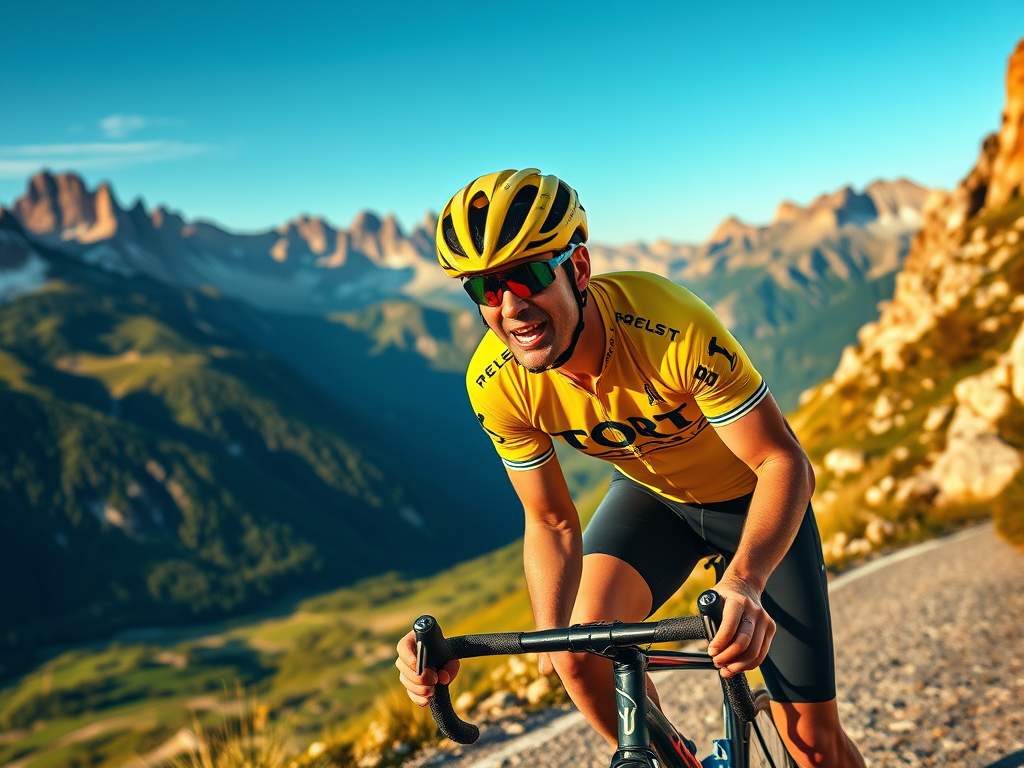
The Tour de France, often simply referred to as “the Tour,” stands as the undisputed pinnacle of professional road cycling. More than just a race, it’s a grueling three-week odyssey across France and sometimes neighboring countries, testing the absolute limits of human endurance, strategy, and teamwork. For over a century, this iconic event has captivated millions, weaving tales of heroic climbs, blistering sprints, and dramatic moments that have cemented its place in sporting folklore.
From its humble beginnings as a newspaper promotion to its current status as a global spectacle, the Tour de France has evolved into a complex athletic challenge. Riders push their bodies to the brink, battling not only their competitors but also punishing mountain passes, unpredictable weather, and the sheer cumulative fatigue of thousands of kilometers. The allure lies not just in the individual triumph of the overall winner, but in the collective effort of teams, the courage of breakaway riders, and the beauty of the French landscape that serves as its ever-changing backdrop.
Understanding the Tour de France goes beyond merely knowing who wins the coveted yellow jersey. It involves appreciating the nuances of its various classifications, the strategic battles played out daily, and the historical moments that have shaped its legendary status. This article will delve into ten essential facts about cycling’s toughest race, offering insights into its origins, its unique challenges, and the reasons why it continues to be one of the most compelling and physically demanding sporting events on the planet. Whether you’re a seasoned cycling fan or a curious newcomer, these facts will illuminate the extraordinary nature of the Grand Boucle and the athletes who dare to conquer it.
1. The Genesis of Grit: A Newspaper’s Bold Idea
The Tour de France was first conceived in 1903 by Henri Desgrange, the editor of the French sports newspaper L’Auto. Faced with declining sales, Desgrange and his cycling journalist Géo Lefèvre concocted the audacious idea of a multi-stage cycling race around France. The inaugural race, designed to be a monumental test of endurance, was an immediate success, capturing the public’s imagination and dramatically boosting L’Auto‘s circulation. This clever marketing ploy laid the foundation for what would become the world’s most famous bicycle race, a testament to the power of a grand sporting spectacle. The initial goal was to create an event so challenging that only the strongest could complete it, a marketing strategy that inadvertently created a global phenomenon and one of the most enduring cycling races in history.
2. The Yellow Leader: The Iconic Maillot Jaune
The most recognized symbol of the Tour de France is the yellow jersey, or Maillot Jaune, worn by the rider with the lowest cumulative time across all stages. Introduced in 1919, the yellow color was chosen because L’Auto (the newspaper that organized the race) was printed on yellow paper. This jersey signifies the overall leader of the race and is fiercely contested daily. While individual stage wins are prestigious, the ultimate goal for many riders and teams is to have their rider wear the Maillot Jaune on the final podium in Paris. It represents consistent performance, tactical brilliance, and immense physical endurance over three grueling weeks, making it the most coveted prize in professional road cycling.
3. Conquering the Peaks: The Polka Dot Jersey’s Challenge
Beyond the overall leader, the Tour de France features several other significant classifications, each with its own distinctive jersey. The polka dot jersey, or Maillot à Pois Rouges, is awarded to the “King of the Mountains” – the rider who accumulates the most points on designated climbs throughout the race. These mountain stages are often the most dramatic and decisive, testing climbers’ strength and resilience against brutal gradients and thin air. Iconic climbs like the Col du Tourmalet, Alpe d’Huez, and Mont Ventoux have become legendary battlegrounds where the mountains classification is often decided, showcasing the sheer power and tactical brilliance required to excel in climbing.
4. Sprinting for Glory: The Green Jersey’s Pursuit
The green jersey, or Maillot Vert, is awarded to the leader of the points classification. Points are primarily earned at the finish line of flat and hilly stages, as well as at intermediate sprints positioned along the route. This classification rewards sprinters – riders with explosive power who can accelerate rapidly in the final meters of a stage. The competition for the green jersey often involves strategic battles throughout the race, with teams working tirelessly to position their sprinters for maximum points. It highlights a different facet of cycling skill, focusing on speed and tactical positioning within the furious chaos of a peloton sprint. The green jersey is a symbol of consistency in sprinting, a vital element of the Tour de France.
5. Youthful Promise: The White Jersey’s Future Stars
The white jersey, or Maillot Blanc, is awarded to the best young rider in the general classification. This classification is open to riders under a certain age (currently 25 years old at the start of the year). It identifies emerging talent and future contenders for the overall title, often showcasing riders who are already performing at an elite level despite their relative youth. Many past winners of the white jersey have gone on to win the yellow jersey in subsequent years, making it a strong indicator of future champions in the Tour de France. It provides a platform for young cyclists to shine and gain valuable experience in one of the world’s most demanding races.
6. The Shifting Canvas: A Dynamic Route Each Year
While the Tour de France always culminates with a ceremonial finish on the Champs-Élysées in Paris, the overall route changes significantly each year. Race organizers meticulously design a new course, typically covering around 3,500 kilometers (2,175 miles) over 21 stages, interspersed with two rest days. The route incorporates a diverse range of terrain, including flat stages for sprinters, undulating “hilly” stages, challenging individual and team time trials, and, most famously, brutal mountain stages in the Pyrenees and Alps. This constant variation ensures fresh challenges and strategic puzzles for the teams and riders, keeping the cycling race unpredictable and exciting for fans worldwide.
7. The Pelvic Inferno: Surviving the Hors Catégorie Climbs
The most iconic and feared sections of the Tour de France are its Hors Catégorie (HC) climbs. This French term, meaning “beyond category,” is reserved for the most impossibly steep and long ascents, those that defy conventional categorization due to their extreme difficulty. These legendary climbs, such as Mont Ventoux, Col du Tourmalet, and Alpe d’Huez, are where the true contenders for the yellow jersey often make or lose significant time. They demand immense physical power, mental fortitude, and precise pacing, often seeing riders pushing themselves to the absolute limits of human endurance. Conquering these behemoths is a badge of honor in the cycling world.
8. The Team Dynamic: A Solo Sport, A Collective Effort
Despite appearing to be an individual sport, cycling in the Tour de France is profoundly a team effort. Each of the approximately 20 professional teams (with around 8 riders each) has a clear hierarchy, with a designated team leader aiming for the general classification or stage wins. Teammates, known as domestiques, sacrifice their own ambitions to support their leader, sheltering them from the wind (drafting), fetching water bottles, chasing down attacks, and setting a blistering pace on climbs. Without this selfless collective effort, a single rider’s success in the Tour de France would be virtually impossible, highlighting the intricate strategic ballet performed by each team throughout the race.
9. The Long Shadow: Doping Controversies
The history of the Tour de France, particularly in the late 20th and early 21st centuries, has been marred by significant doping controversies. High-profile cases, most notably that of Lance Armstrong, who was stripped of his seven titles, exposed a pervasive problem within professional cycling. These scandals cast a long shadow over the sport, leading to increased anti-doping efforts, stricter regulations, and a concerted push for a cleaner image. While the sport continues to battle these issues, the ongoing efforts by governing bodies to ensure fair competition reflect a commitment to restoring integrity and maintaining the credibility of the Tour de France as the ultimate test of athletic prowess.
10. A Global Phenomenon: Beyond the Finish Line
The Tour de France transcends its sporting nature to become a global cultural event. Millions of roadside spectators line the route, sometimes camping out days in advance to catch a glimpse of the peloton. Billions more tune in via television broadcasts, making it one of the most-watched annual sporting events worldwide. The race generates significant economic impact for the regions it passes through, boosting tourism and local economies. Its cultural significance extends to inspiring amateur cyclists, shaping national identities in countries like France, and consistently providing a captivating narrative of human ambition, suffering, and triumph, solidifying its place as a cornerstone of the global sporting calendar.
The Tour de France is a magnificent beast, a rolling spectacle that combines athletic heroism with breathtaking landscapes and strategic genius. It is a race that demands every ounce of effort, every strategic decision, and every moment of teamwork. From its humble origins to its current status as a global phenomenon, the Tour continues to embody the very essence of endurance cycling, captivating audiences and inspiring countless individuals to push their own limits. It remains cycling’s toughest race, a true crucible where legends are forged and human will is tested against the vastness of France itself.
Further Reading
- The Yellow Jersey: The Tour de France in Story and Picture by Claude Sudres
- Slaying the Badger: Greg LeMond, Bernard Hinault, and the Greatest Tour de France by Richard Moore
- Rough Ride: An Insight into Pro Cycling by Paul Kimmage
- The Secret Race: Inside the Covert World of Lance Armstrong’s Tour de France by Tyler Hamilton and Daniel Coyle
- Lance Armstrong’s War: One Man’s Battle Against Fate, Fame, Death, Scandal, and a Few Other Things by Daniel Coyle
Here at Zentara.blog, our mission is to take those tricky subjects and unlock them, making knowledge exciting and easy to grasp for everyone. But the adventure doesn’t stop on this page! We’re constantly exploring new frontiers and sharing discoveries across the digital universe. Want to dive deeper into more mind-bending Top 10s and keep expanding your world? Come join us on our other platforms – we’ve got unique experiences waiting for you on each one!
Get inspired by visual wonders and bite-sized facts: See the world through Zentara’s eyes on Pinterest!
Pin our fascinating facts and stunning visuals to your own boards. Explore Pins on Pinterest: https://uk.pinterest.com/zentarablog/
Discover quick insights and behind-the-scenes peeks: Hop over to Tumblr for snippets, quotes, and unique content you won’t find anywhere else. It’s a different flavour of discovery! Follow the Fun on Tumblr: https://www.tumblr.com/zentarablog
Ready for deep dives you can listen to or watch? We’re bringing our accessible approach to video and potentially audio! Subscribe to our YouTube channel and tune into future projects that make learning pop! Subscribe on YouTube: https://www.youtube.com/@ZentaraUK
Seeking even more knowledge in one place? We’ve compiled some of our most popular topic deep dives into fantastic ebooks! Find them on Amazon and keep the learning journey going anytime, anywhere. Find Our Ebooks on Amazon: https://www.amazon.co.uk/s?k=Zentara+UK&ref=nb_sb_noss
Connect with us and fellow knowledge seekers: Join the conversation on BlueSky! We’re sharing updates, thoughts, and maybe even asking you what wonders we should explore next. Chat with Us on BlueSky: https://bsky.app/profile/zentarablog.bsky.social
Perfect for learning on the move! We post multiple 10-minute podcasts per day on Spotify. Pop on your headphones and fill your day with fascinating facts while you’re out and about! Listen on Spotify: https://open.spotify.com/show/3dmHbKeDufRx95xPYIqKhJ
Follow us on Instagram for bytesize knowledge! We post multiple posts per day on our official Instagram account. https://www.instagram.com/zentarablog/ Every click helps us keep bringing honest, accessible knowledge to everyone. Thanks for exploring with us today – see you out there in the world of discovery!




Leave a Reply