
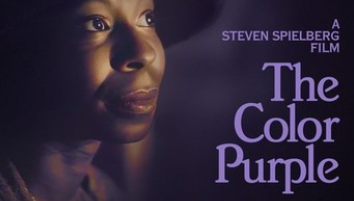
It’s a film that has etched itself into the very soul of cinema. Released in 1985, The Color Purple was more than just a movie; it was a cultural event. Directed by the legendary Steven Spielberg, this adaptation of Alice Walker’s Pulitzer Prize-winning novel brought to the screen a story of profound hardship, enduring hope, and ultimate triumph that has resonated with audiences for decades. It introduced the world to the immense talents of Whoopi Goldberg and Oprah Winfrey in their debut film roles and left an indelible mark on all who witnessed the harrowing and inspiring journey of Celie. But even if you’ve watched this cinematic masterpiece countless times, there are still secrets and stories from behind the curtain that will give you a whole new appreciation for the film. Prepare to delve into the heart of this beloved classic as we reveal 10 surprising facts that will change the way you see The Color Purple forever.
1. Alice Walker’s Hesitation and Crucial Conditions
Today, it’s hard to imagine The Color Purple without Alice Walker’s blessing, but the celebrated author was initially very hesitant to sell the film rights to her deeply personal and Pulitzer Prize-winning novel. In the early 1980s, Hollywood didn’t have the best track record when it came to portraying Black stories with the nuance and respect they deserved. Walker was justifiably concerned that her powerful narrative of Black female resilience would be mishandled or sensationalized.
Before agreeing to the adaptation, Walker convened with a group of trusted female friends to debate the offer from producers Jon Peters and Peter Guber. Their consensus was that to enact change within the system, one had to engage with it. Armed with this perspective, Walker agreed to the film, but with a set of non-negotiable conditions. She insisted on being a project consultant, giving her a voice in the creative process. Furthermore, her contract stipulated that at least fifty percent of the production team, excluding the cast, must be comprised of African Americans, women, or individuals from “Third World” countries. This was a groundbreaking move at the time, ensuring that the film’s production environment would be more inclusive and reflective of the story it was telling. Walker also retained a degree of script approval, a crucial element that allowed her to safeguard the integrity of her characters and their journey. Her initial caution ultimately paved the way for a more thoughtful and authentic adaptation of her literary masterpiece.
2. Whoopi Goldberg’s Unconventional Audition
The role of Celie is the heart and soul of The Color Purple, a character whose transformation from a timid, abused young girl to a self-assured, independent woman is one of the most powerful arcs in cinematic history. Finding the perfect actress to embody this complex role was paramount. The answer came from a then-unknown comedian named Whoopi Goldberg.
At the time, Whoopi was making a name for herself with her one-woman Off-Broadway show, “The Spook Show,” where she portrayed a variety of characters. Alice Walker herself was the first to recognize Whoopi’s potential after seeing her perform. Convinced she had found Celie, Walker sent a copy of her novel to Whoopi with a note that read, “I know you don’t know me, but I know you. I think I know you.” Whoopi, in turn, wrote to Walker expressing her deep love for the book and her desire to be a part of any film adaptation, even if it meant just playing a rock in a field.
When it came time to convince Steven Spielberg, Whoopi’s audition was anything but conventional. Instead of a simple reading, she performed her “Spook Show” for Spielberg and his team. Her incredible range and ability to disappear into different characters left the director in awe. He immediately knew he had found his Celie. It was a star-making moment, launching Whoopi Goldberg from the comedy stage to the heights of Hollywood, and earning her an Academy Award nomination for Best Actress for her very first film role.
3. Oprah Winfrey’s Life-Changing Prayer
Oprah Winfrey’s portrayal of the fiercely independent and indomitable Sofia is one of the most iconic performances in The Color Purple. However, securing the role was a deeply personal and almost spiritual journey for the future media mogul. At the time, Oprah was a local talk show host in Chicago and had heard about the film adaptation of her favorite book. She desperately wanted to be a part of it, so much so that she began a personal campaign of prayer.
Feeling overweight at the time, Oprah went to a fat farm, hoping to get in shape. It was there that she truly began to focus her energy on landing the role of Sofia. She would run and pray, chanting, “I want to be Sofia. I want to be Sofia.” Her prayers felt so intense and personal that she believed if she didn’t get the part, it would be a sign that God had no time for her.
The call from her agent finally came, informing her that Steven Spielberg wanted to see her. The audition itself was nerve-wracking, but Oprah’s passion for the character shone through. When she finally landed the role, it was more than just a career move; it was a profound affirmation of her faith and determination. Her powerful and heartbreaking performance earned her an Academy Award nomination for Best Supporting Actress and set her on a path to becoming one of the most influential women in the world. For Oprah, The Color Purple was and remains a cornerstone of her life’s journey.
4. The Controversy of a White Director
Despite its eventual acclaim, the production of The Color Purple was not without its controversies. One of the most significant points of contention was the choice of Steven Spielberg as director. In 1985, Spielberg was primarily known for his blockbuster hits like Jaws, E.T. the Extra-Terrestrial, and Raiders of the Lost Ark – films celebrated for their spectacle and adventure, but not for their deep dives into serious dramatic themes, particularly those centered on the African American experience.
Many critics and activists questioned whether a white male director could authentically capture the nuances of Alice Walker’s novel, a story so deeply rooted in the lives and struggles of Black women in the Jim Crow South. The NAACP even organized protests against the film, expressing concern over the potential for stereotyping and a lack of authentic representation. They argued that a Black director would have been a more appropriate choice to helm such a culturally specific and sensitive story.
Spielberg himself was aware of the criticism and approached the project with a sense of immense responsibility. He collaborated closely with Alice Walker and Quincy Jones, who served as a producer and composer, to ensure the film remained true to the spirit of the novel. While the debate over his role as director continues to this day, Spielberg’s heartfelt and emotionally resonant direction ultimately won over many skeptics and helped bring this powerful story to a global audience. For Spielberg, it marked a significant turning point in his career, demonstrating his ability to tackle profound human dramas with the same skill he brought to his blockbusters.
5. Oprah’s Improvised Thanksgiving Monologue
One of the most emotionally charged and memorable scenes in The Color Purple is the Thanksgiving dinner scene, where a broken and weary Sofia returns to see her family after years of abuse and imprisonment. Her raw and powerful monologue, delivered with trembling emotion, is a standout moment in a film filled with them. What many viewers don’t know is that this gut-wrenching speech was largely improvised by Oprah Winfrey.
According to Steven Spielberg, during the filming of the scene, he could sense that Oprah had more to give to the character’s emotional state. He approached her and quietly encouraged her to speak from the heart, to express what Sofia was truly feeling in that moment. What followed was an outpouring of raw, unscripted emotion. Oprah, channeling all of Sofia’s pain and resilience, delivered a monologue that was not in the original script.
Her ad-libbed lines, including the heart-wrenching, “I want to thank you, Ms. Celie, for everything you done for me,” brought a new level of depth and authenticity to the scene. The reactions of the other actors at the table were genuine, as they were witnessing a powerful and unexpected moment of creative inspiration. Oprah herself has said that this was the day she truly became an actress, breaking through a barrier of fear and fully embodying her character. It’s a testament to her incredible talent and the collaborative and supportive environment that Spielberg fostered on set.
6. The Infamous Oscar Snub
The 58th Academy Awards in 1986 is a night that lives on in Oscar infamy, largely due to The Color Purple. The film was a critical and commercial success, and it went into the awards ceremony with a staggering eleven nominations, tying with The Turning Point (1977) for the most nominations for a single film. The nominations included Best Picture, Best Actress for Whoopi Goldberg, Best Supporting Actress for both Oprah Winfrey and Margaret Avery, and Best Adapted Screenplay.
With such a strong showing in the nominations, it was widely expected that The Color Purple would take home at least a few of the coveted golden statues. However, as the night progressed, a shocking pattern emerged. One by one, the film lost in every category it was nominated in. The night culminated in a complete shutout, with The Color Purple winning zero of its eleven nominations. To this day, it holds the record, alongside The Turning Point, for the most Oscar nominations without a single win.
The snub was met with widespread disbelief and outrage. Many felt that the film’s subject matter, its all-Black principal cast, and the controversy surrounding Spielberg’s direction may have played a role in the Academy’s decision. While the cast and crew were undoubtedly disappointed, the film’s enduring legacy and its profound impact on audiences have far outshone its lack of Oscar gold. The snub has become a part of the film’s story, a reminder that the true measure of a film’s greatness isn’t always reflected in the number of awards it wins.
7. Quincy Jones: The Musical and Producing Powerhouse
The music of The Color Purple is as integral to its emotional impact as the powerful performances and stunning cinematography. The man behind this unforgettable soundscape was the legendary Quincy Jones, who served as both a producer and the film’s composer. At the time, Jones was already a music icon, having worked with everyone from Frank Sinatra to Michael Jackson, fresh off producing the best-selling album of all time, Thriller.
Spielberg, who typically collaborated with composer John Williams, recognized that The Color Purple required a different musical sensibility. He turned to Jones to create a score that could navigate the film’s vast emotional terrain, from the joyous gospel hymns to the sultry blues of Shug Avery’s juke joint performances. Jones, alongside a team of talented musicians, crafted a score that seamlessly blended blues, jazz, gospel, and African rhythms, earning him an Academy Award nomination for Best Original Score.
Beyond his musical contributions, Jones was a crucial producing partner for Spielberg. As an African American man with deep roots in the entertainment industry, he provided invaluable cultural insight and served as a bridge between the white director and the predominantly Black cast. He was instrumental in bringing Oprah Winfrey to Spielberg’s attention and played a key role in the overall creative direction of the film. His passion for Alice Walker’s story and his multifaceted contributions were essential to bringing The Color Purple to the screen with such power and grace.
8. The Deliberately Muted On-Screen Romance
One of the most significant and debated aspects of Spielberg’s adaptation is its handling of the lesbian relationship between Celie and Shug Avery. In Alice Walker’s novel, the physical and emotional intimacy between the two women is a central element of Celie’s awakening and self-discovery. It is through her loving relationship with Shug that Celie begins to understand her own worth and finds the strength to leave her abusive husband.
In the 1985 film, however, this relationship is significantly downplayed. While the deep emotional bond between Celie and Shug is evident, their physical intimacy is reduced to a single, brief kiss. Spielberg has since admitted that this was a conscious decision driven by his own creative cowardice at the time. He was concerned that a more explicit depiction of their relationship would be too controversial for mainstream audiences in the mid-1980s and could overshadow the film’s other important themes.
This decision has been a point of criticism for many who feel that it sanitizes a crucial part of Walker’s novel and diminishes the significance of Celie’s sexual identity in her journey of empowerment. While the film still powerfully portrays the love and support between the two women, the muting of their romantic relationship is a notable departure from the source material and reflects the societal constraints and commercial pressures of the era in which it was made.
9. The Real-Life Family Connection on Set
The Color Purple is a story about the enduring power of family, both the one you are born into and the one you create. This theme of family connection extended behind the scenes in a very real and touching way. Whoopi Goldberg’s real-life daughter, Alexandrea “Alex” Martin, has a small but significant role in the film.
In the early scenes of the movie, when Celie is giving birth, Alex can be seen as one of the children in the room. This on-screen appearance was a sweet, personal touch that added another layer of family connection to the production. Years later, Alex Martin would appear on screen with her mother again, this time in a more prominent role as one of the students in Whoopi’s class in the 1993 hit comedy, Sister Act 2: Back in the Habit. This little-known fact adds a heartwarming, full-circle element to the legacy of The Color Purple, reminding us of the personal connections that are often woven into the fabric of our favorite films.
10. The Symbolism of the Color Purple
The title of the film and novel, The Color Purple, holds a deep and profound meaning that is central to the story’s themes of beauty, divinity, and self-worth. The color itself is rarely seen in the film until the very end, a deliberate choice that mirrors Celie’s own journey of discovery.
Throughout the story, Celie is told she is ugly and worthless, and her world is depicted in drab, muted tones. It is Shug Avery who first introduces her to the idea that beauty can be found in the simplest of things. In a pivotal conversation, Shug tells Celie that she thinks it “pisses God off if you walk by the color purple in a field somewhere and don’t notice it.” This line encapsulates the film’s central message: that God’s love and beauty are present in all of creation, and it is our right and our joy to recognize and appreciate it.
The color purple, a hue historically associated with royalty and divinity, becomes a symbol of the divine beauty that Celie has been taught to ignore in the world and in herself. In the film’s triumphant final scene, as Celie is reunited with her long-lost sister and children, she is surrounded by fields of purple flowers. This visual cue signifies that she has finally found her own sense of self-worth and is able to see the beauty and divinity in her own life. It’s a powerful and poetic use of color that elevates the film’s emotional and spiritual resonance.
Conclusion
From the courageous decisions made before a single frame was shot to the spontaneous moments of creative genius on set, the story behind The Color Purple is as rich and compelling as the film itself. These behind-the-scenes secrets reveal a production fraught with challenges, controversies, and profound personal journeys. They give us a deeper understanding of the immense passion and dedication that went into creating this timeless classic. The film’s enduring legacy is a testament not only to the power of Alice Walker’s original story but also to the collaborative spirit of the artists who brought it to life. It reminds us that even in the face of adversity, the human spirit can triumph and find its own beautiful shade of purple. What is your favorite memory or most impactful scene from The Color Purple? Share your thoughts in the comments below.
Dive Deeper
For those who wish to explore the world of The Color Purple even further, here are a few recommended books that offer deeper insights into the story and its creation:
- The Color Purple by Alice Walker: The Pulitzer Prize-winning novel that started it all. Experience Celie’s journey in her own words through her powerful and moving letters to God.
- The Same River Twice: Honoring the Difficult by Alice Walker: In this deeply personal memoir, Walker reflects on her experiences during the making of the film, her battle with Lyme disease, and the controversies that surrounded the adaptation.
- Spielberg: A Retrospective by Richard Schickel: This comprehensive book offers a look back at the legendary director’s career, with a dedicated chapter on the making of The Color Purple and its significance in his filmography.




Leave a Reply