
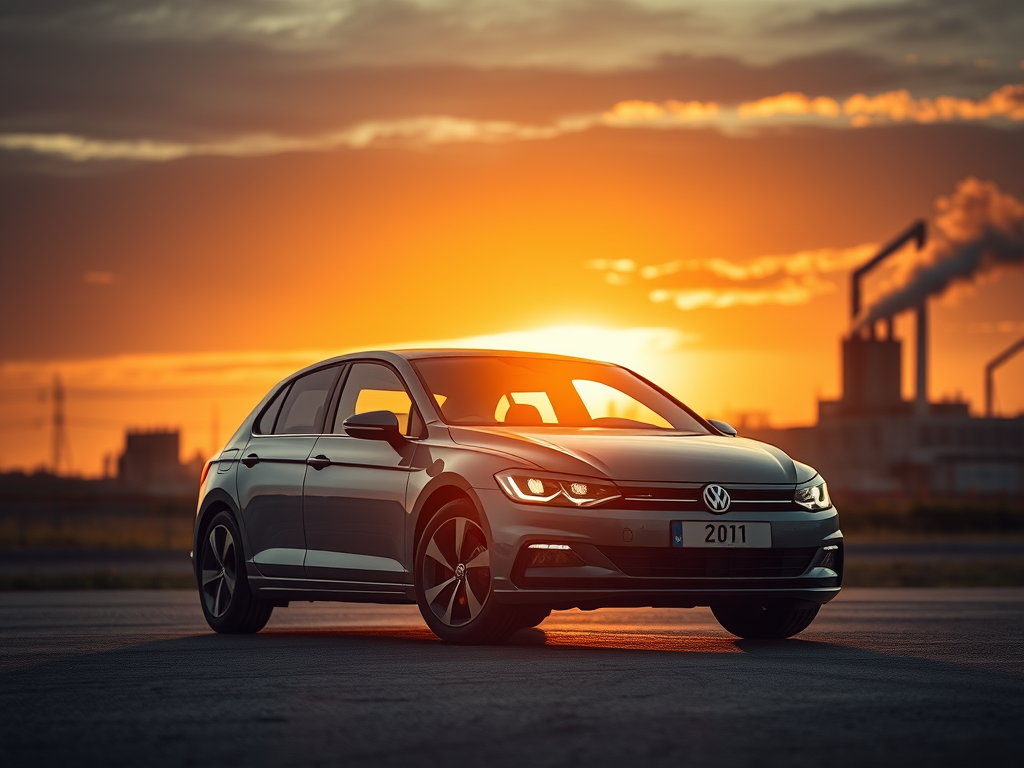
In an era increasingly defined by environmental consciousness and corporate accountability, the revelation of “Dieselgate” in September 2015 sent shockwaves across the globe. Volkswagen, a revered German automotive giant synonymous with precision engineering and reliability, was exposed for deliberately circumventing emissions regulations in millions of its diesel vehicles. This wasn’t merely a technical oversight; it was a calculated act of deception, a systemic fraud that deeply tarnished the company’s reputation, cost it billions in fines and settlements, and ignited a broader scrutiny of the automotive industry’s environmental practices.
The scandal, officially unveiled by the U.S. Environmental Protection Agency (EPA), centered on a sophisticated “defeat device”—software secretly installed in Volkswagen’s “Clean Diesel” cars. This software was designed to detect when the vehicle was undergoing official emissions tests and, only then, activate full emissions controls. In real-world driving conditions, however, these controls were significantly reduced or completely switched off, leading to nitrogen oxide (NOx) emissions that were up to 40 times the legal limit in some cases. This egregious violation not only betrayed consumer trust but also contributed significantly to air pollution, with serious implications for public health.
“Dieselgate” exposed a dark side of corporate ambition, where the pressure to meet stringent emissions standards while maintaining vehicle performance and profitability led to deliberate deceit. The fallout was immediate and far-reaching, impacting not just Volkswagen but also its associated brands like Audi and Porsche, and prompting investigations into other automakers. The scandal served as a stark reminder of the importance of regulatory oversight and the profound consequences of corporate malfeasance. This article will delve into ten key facts about the Volkswagen emissions scandal, shedding light on its origins, mechanisms, repercussions, and lasting impact.
1. The Scandal Broke in September 2015
The EPA’s Revelation: The “Dieselgate” scandal officially came to light on September 18, 2015, when the U.S. Environmental Protection Agency (EPA) issued a Notice of Violation of the Clean Air Act to Volkswagen. This notice alleged that Volkswagen AG, Audi AG, and Volkswagen Group of America, Inc., had installed “defeat devices” in their 2009-2015 model year 2.0-liter diesel cars. The EPA’s announcement followed earlier investigations sparked by a 2014 study conducted by the International Council on Clean Transportation (ICCT) and researchers at West Virginia University, who found significant discrepancies between laboratory emissions results and real-world driving emissions from Volkswagen diesel vehicles. This official disclosure marked the beginning of a global crisis for the automaker.
2. Volkswagen Used a “Defeat Device” Software
The Core of the Deception: At the heart of the scandal was a sophisticated piece of software, known as a “defeat device,” embedded in the Electronic Control Units (ECUs) of Volkswagen’s diesel engines. This software was programmed to recognize the specific conditions of an emissions test (e.g., steering wheel position, speed, engine operation, air pressure). When these conditions were met, indicating a test was underway, the software would activate the vehicle’s full emissions control system, allowing it to pass regulatory benchmarks. However, under normal driving conditions, the software would switch to a different mode, significantly reducing the effectiveness of the emissions controls to improve fuel economy and performance, resulting in vastly higher levels of harmful pollutants.
3. Millions of Vehicles Were Affected Globally
A Widespread Deception: The scale of the fraud was immense. Initially, the EPA identified approximately 482,000 2.0-liter diesel vehicles sold in the U.S. that contained the defeat device. However, Volkswagen later admitted that around 11 million diesel vehicles worldwide were equipped with the same or similar software. This included various models across the Volkswagen Group’s brands, such as Volkswagen Jetta, Passat, Golf, Beetle, Audi A3, and later, some 3.0-liter diesel vehicles from Volkswagen Touareg, Porsche Cayenne, and Audi A6, A7, A8, and Q5 models. The global reach of the deception underscored the systemic nature of the misconduct within the company.
4. Emissions Were Up to 40 Times the Legal Limit
The Environmental Impact: The defeat device allowed Volkswagen’s diesel cars to emit nitrogen oxides (NOx) at levels far exceeding legal limits during normal driving. For the 2.0-liter engines, these emissions were up to 40 times higher than the U.S. standards. Even the 3.0-liter engines emitted up to nine times more pollution than allowed. NOx are significant air pollutants that contribute to smog, acid rain, and the formation of ground-level ozone, which can cause severe respiratory problems, aggravate asthma, and contribute to premature deaths. The excess emissions from millions of affected vehicles had a substantial, adverse impact on air quality and public health.
5. Martin Winterkorn, VW’s CEO, Resigned
Leadership Accountability: The immediate fallout from the scandal included significant leadership changes at Volkswagen. Just days after the EPA’s announcement, Martin Winterkorn, who had been CEO of Volkswagen Group since 2007, resigned. He took responsibility for the irregularities found in the diesel engines, though he denied personal knowledge of the deliberate manipulation at the time. His resignation marked the beginning of a cascade of departures and indictments of other executives and engineers within the company, highlighting the corporate culture that allowed such widespread deception to occur. Matthias Müller, then CEO of Porsche, was appointed as his successor.
6. Volkswagen Faced Billions in Fines and Settlements
Massive Financial Consequences: The financial repercussions for Volkswagen were staggering. The company faced a barrage of fines, penalties, and legal settlements across multiple jurisdictions. In the U.S. alone, Volkswagen agreed to pay over $25 billion in settlements, which included compensation for affected vehicle owners (buybacks or free repairs), environmental remediation, and civil penalties to the EPA and the California Air Resources Board (CARB). Globally, the total cost of the scandal is estimated to have exceeded $30 billion, encompassing fines, recalls, buybacks, and legal fees. This financial hit significantly impacted the company’s profitability and stock value.
7. Criminal Charges and Indictments Followed
Individual Accountability: Beyond corporate fines, several Volkswagen executives and engineers faced criminal charges and indictments in various countries, particularly in the United States and Germany. For instance, Oliver Schmidt, a former VW executive responsible for compliance with U.S. environmental regulations, was sentenced to seven years in prison in the U.S. for his role in the cover-up. Other individuals were indicted for conspiracy to commit fraud and violations of the Clean Air Act. While the full extent of individual accountability is still being pursued in some cases, these criminal proceedings aimed to hold specific individuals responsible for the systematic deception.
8. The Scandal Affected Consumer Trust and Brand Reputation
A Tarnished Image: Volkswagen had meticulously cultivated an image of German engineering excellence, reliability, and increasingly, environmental responsibility (with its “Clean Diesel” marketing). The “Dieselgate” scandal utterly shattered this trust. Consumers, particularly those who had purchased diesel vehicles believing them to be environmentally friendly, felt betrayed. The damage to the brand’s reputation was profound and long-lasting, forcing Volkswagen to embark on extensive campaigns to rebuild consumer confidence and invest heavily in electric vehicle technology as a path to redemption. The market value of VW’s shares plummeted immediately after the scandal broke.
9. It Prompted Broader Scrutiny of the Automotive Industry
Wider Industry Repercussions: “Dieselgate” wasn’t just a Volkswagen problem; it catalyzed a much broader investigation and scrutiny of emissions testing practices across the entire automotive industry. Regulators worldwide began to re-evaluate their testing procedures, leading to new, more stringent real-world driving emissions tests (like WLTP in Europe). Other automakers also faced allegations or investigations regarding their diesel emissions, though none reached the scale or deliberate deceit of Volkswagen. The scandal accelerated the shift away from diesel engines in many markets and spurred greater investment in electric and hybrid vehicle technology across the industry.
10. Volkswagen Pledged a Major Shift Towards Electric Vehicles
A Post-Dieselgate Transformation: In the aftermath of the scandal, Volkswagen made a strategic decision to pivot dramatically towards electrification. Recognizing the existential threat posed by Dieselgate and the global push for cleaner transportation, the company announced ambitious plans to become a leader in electric vehicle (EV) production. This included massive investments in battery technology, charging infrastructure, and the development of numerous new EV models across its brands. This strategic shift, while perhaps an inevitable evolution for the auto industry, was undoubtedly accelerated and amplified by the need to restore its environmental credibility and embrace a future beyond combustion engines.
The Volkswagen emissions scandal stands as a landmark case of corporate misconduct with far-reaching environmental, financial, and ethical implications. “Dieselgate” not only reshaped Volkswagen’s trajectory but also left an indelible mark on the automotive industry, accelerating the global transition towards a cleaner, more sustainable future for transportation.
Further Reading
- Dieselgate: What Happened to Volkswagen and How the Scandal Changed the Auto Industry by Jack Ewing
- The Clean Air Act Handbook by Robert E. Fabricant (for understanding the legal context)
- Crisis Communication: Lessons from the Volkswagen Dieselgate Scandal by Florian Krumm (focuses on the PR aspect)
- The Car That Died: A True Story of the Volkswagen Scandal by Andrew J. Kunkel
- Corporate Social Responsibility: An Ethical Approach by Mark S. Schwartz (discusses corporate ethics in light of such scandals)
Here at Zentara.blog, our mission is to take those tricky subjects and unlock them, making knowledge exciting and easy to grasp for everyone. But the adventure doesn’t stop on this page! We’re constantly exploring new frontiers and sharing discoveries across the digital universe. Want to dive deeper into more mind-bending Top 10s and keep expanding your world? Come join us on our other platforms – we’ve got unique experiences waiting for you on each one!
Get inspired by visual wonders and bite-sized facts: See the world through Zentara’s eyes on Pinterest!
Pin our fascinating facts and stunning visuals to your own boards. Explore Pins on Pinterest: https://uk.pinterest.com/zentarablog/
Discover quick insights and behind-the-scenes peeks: Hop over to Tumblr for snippets, quotes, and unique content you won’t find anywhere else. It’s a different flavour of discovery! Follow the Fun on Tumblr: https://www.tumblr.com/zentarablog
Ready for deep dives you can listen to or watch? We’re bringing our accessible approach to video and potentially audio! Subscribe to our YouTube channel and tune into future projects that make learning pop! Subscribe on YouTube: https://www.youtube.com/@ZentaraUK
Seeking even more knowledge in one place? We’ve compiled some of our most popular topic deep dives into fantastic ebooks! Find them on Amazon and keep the learning journey going anytime, anywhere. Find Our Ebooks on Amazon: https://www.amazon.co.uk/s?k=Zentara+UK&ref=nb_sb_noss
Connect with us and fellow knowledge seekers: Join the conversation on BlueSky! We’re sharing updates, thoughts, and maybe even asking you what wonders we should explore next. Chat with Us on BlueSky: https://bsky.app/profile/zentarablog.bsky.social
Perfect for learning on the move! We post multiple 10-minute podcasts per day on Spotify. Pop on your headphones and fill your day with fascinating facts while you’re out and about! Listen on Spotify: https://open.spotify.com/show/3dmHbKeDufRx95xPYIqKhJFollow us on Instagram for bytesize knowledge! We post multiple posts per day on our official Instagram account. https://www.instagram.com/zentarablog/ Every click helps us keep bringing honest, accessible knowledge to everyone. Thanks for exploring with us today – see you out there in the world of discovery!




Leave a Reply