
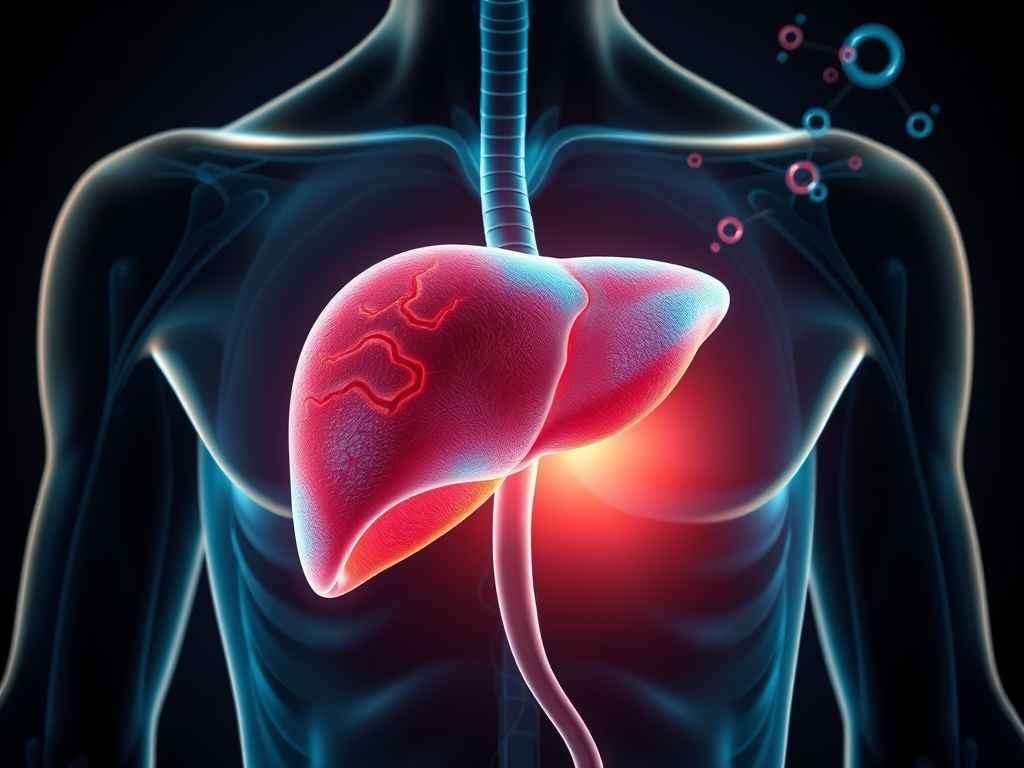
Tucked away in the upper right quadrant of our abdomen lies one of the body’s largest and most underappreciated organs: the liver. This silent workhorse is a master chemist, a detoxification centre, and a metabolic powerhouse, performing over 500 vital functions that keep us alive and healthy. Its incredible resilience allows it to withstand significant stress and even regenerate itself. Yet, this resilience has a downside. Liver disease can progress quietly for years, often without any noticeable symptoms, until significant and sometimes irreversible damage has occurred.
In the modern world, the threats to our liver have evolved. While viral hepatitis and excessive alcohol consumption remain major causes of liver damage, we now face a growing epidemic of Non-Alcoholic Fatty Liver Disease (NAFLD), a condition intrinsically linked to our diet and lifestyle. Understanding the spectrum of liver disease, from the silent build-up of fat to the severe scarring of cirrhosis, is more crucial than ever. This guide will illuminate the 10 most important aspects of liver disease, providing the essential knowledge you need to protect this vital organ for a lifetime.
1. The Body’s Master Chemist: Understanding the Liver’s Crucial Roles
Before delving into what happens when the liver fails, it’s essential to appreciate its profound importance when it’s working correctly. Think of your liver as the body’s main industrial park and processing plant, operating 24/7. One of its most famous roles is as a filtration system. All the blood leaving your stomach and intestines passes through the liver, where it metabolizes nutrients and filters out drugs, alcohol, and other potentially toxic substances, making them safe for removal from the body.
Simultaneously, the liver is a manufacturing hub. It produces bile, a greenish-yellow fluid that is crucial for digesting fats and absorbing fat-soluble vitamins in the small intestine. It also synthesizes essential proteins, including albumin, which maintains fluid balance in the bloodstream, and the clotting factors that prevent you from bleeding uncontrollably after a cut. Furthermore, it’s a key player in metabolism, expertly managing the body’s fuel supply by converting excess glucose into glycogen for storage and releasing it back into the bloodstream when energy is needed. Understanding these vital functions provides a stark context for why diseases that impair the liver can have such devastating, body-wide consequences.
2. The “Silent” Epidemic: What is Non-Alcoholic Fatty Liver Disease (NAFLD)?
One of the most significant health challenges of the 21st century is the quiet and rapidly growing epidemic of Non-Alcoholic Fatty Liver Disease (NAFLD). As the name suggests, this is a condition characterized by the accumulation of excess fat in liver cells, but it occurs in people who drink little to no alcohol. The primary drivers of NAFLD are closely linked to metabolic syndrome—a cluster of conditions that includes obesity (particularly excess abdominal fat), high blood pressure, high cholesterol, and insulin resistance or Type 2 diabetes.
In its simplest form, known as fatty liver or steatosis, NAFLD often causes no harm. However, in a significant number of people, it can progress to a more serious form called non-alcoholic steatohepatitis (NASH). NASH involves not just fat, but also inflammation and liver cell damage. This inflammation can lead to the formation of scar tissue (fibrosis). The most alarming aspect of NAFLD is its silent nature. Most people have no symptoms and are unaware they have it until it’s discovered incidentally through blood tests or imaging for another reason.
3. The Point of No Return? Understanding Cirrhosis
Cirrhosis is a word that often conjures images of end-stage liver disease, and for good reason. It is not a specific disease itself, but rather the final, severe phase of scarring caused by long-term, continuous liver damage. Any chronic liver disease—including advanced NAFLD (NASH), chronic viral hepatitis, or alcoholic liver disease—can eventually lead to cirrhosis. To understand the process, imagine your skin healing after a deep cut; it forms a scar. When the liver is repeatedly injured, it tries to repair itself, and in the process, scar tissue (fibrosis) forms.
In the early stages, this scarring may not significantly impact liver function. But as the disease progresses, the scar tissue builds up and replaces healthy, functioning liver cells. Think of a soft, pliable sponge being gradually replaced by hard, lumpy concrete. This scar tissue disrupts the liver’s internal structure and blood flow, crippling its ability to perform its hundreds of vital tasks. While the liver has a remarkable ability to regenerate, the extensive scarring of cirrhosis is generally considered permanent and irreversible.
4. Recognizing the Red Flags: Symptoms of Advancing Liver Disease
A major challenge in diagnosing liver disease is that the liver is “clinically silent” in the early stages. As fat builds up or mild fibrosis occurs, there are rarely any symptoms to alert you that something is wrong. Symptoms typically only begin to appear once the liver damage is extensive and its function starts to decline. The initial signs are often vague and can be easily mistaken for other conditions; they include persistent fatigue, a general feeling of unwellness, loss of appetite, nausea, and an aching discomfort in the upper right abdomen.
As cirrhosis progresses and liver function deteriorates further, more specific and alarming symptoms emerge. Jaundice, a yellowing of the skin and the whites of the eyes, occurs because the liver can no longer process bilirubin, a yellow pigment. Other signs include ascites (a build-up of fluid in the abdomen causing significant swelling), oedema (swelling in the legs and ankles), dark-coloured urine, pale stools, and a tendency to bruise or bleed easily due to a lack of clotting proteins.
5. The Diagnostic Toolkit: How Doctors Detect Liver Problems
Diagnosing liver disease involves a multi-step process that begins with assessing a person’s risk factors, such as obesity, Type 2 diabetes, or heavy alcohol use. If a problem is suspected, the first step is usually a set of blood tests called Liver Function Tests (LFTs). These tests measure the levels of certain enzymes, such as alanine transaminase (ALT) and aspartate transaminase (AST), which are released into the bloodstream when liver cells are damaged. They also measure proteins like albumin and check bilirubin levels.
While LFTs can indicate a problem, they don’t reveal the specific cause or extent of the damage. The next step is often medical imaging. An abdominal ultrasound can detect fat in the liver and may show signs of cirrhosis. A more advanced, specialised ultrasound called a FibroScan (transient elastography) is increasingly used. This non-invasive test measures the stiffness of the liver, which corresponds to the degree of fibrosis or scarring, providing a clear picture of disease progression. In some cases, when the diagnosis is still uncertain, a liver biopsy—where a small sample of liver tissue is removed with a needle and examined under a microscope—remains the “gold standard” to confirm a diagnosis and assess the severity of the damage.
6. The Primary Culprits: Unpacking the Main Causes of Liver Disease
While NAFLD is on the rise, it’s important to understand the full landscape of what can cause chronic liver disease. The causes can be broadly grouped into several categories. First, as discussed, is metabolic disease. The combination of obesity, insulin resistance, and high cholesterol is the driving force behind the NAFLD and NASH epidemic. Second is excessive alcohol consumption. Alcoholic Liver Disease (ALD) follows a similar path to NAFLD, progressing from fatty liver to alcoholic hepatitis and eventually to cirrhosis if drinking continues.
Third are the chronic viral infections of the liver, primarily Hepatitis B and Hepatitis C. For decades, Hepatitis C was a leading cause of cirrhosis and liver transplants, though revolutionary new antiviral drugs can now cure the majority of cases. Hepatitis B is also a major global cause of liver disease and can be prevented with a safe and effective vaccine. Finally, there are less common causes, including autoimmune diseases (like autoimmune hepatitis and primary biliary cholangitis), where the body’s own immune system attacks the liver, and genetic conditions (such as haemochromatosis, where iron builds up in the body, and Wilson’s disease, involving copper accumulation).
7. The Reversibility Question: Can You Heal a Damaged Liver?
This is a critical question for anyone diagnosed with liver problems. The answer depends entirely on the stage of the disease. The liver has a truly astonishing capacity for regeneration. In the early stages, such as simple fatty liver (the first stage of both NAFLD and ALD), the condition is often completely reversible. If the underlying cause is addressed—for instance, through weight loss and diet changes for NAFLD, or abstaining from alcohol for ALD—the fat in the liver can decrease, and the liver can return to a healthy state.
However, as the disease progresses and fibrosis (scar tissue) begins to form, the picture changes. While some mild-to-moderate fibrosis may be reversible in some individuals, there is a tipping point. Once extensive, advanced fibrosis develops and progresses to cirrhosis, the structural damage and scarring are considered permanent. The liver’s architecture is fundamentally changed. At this stage, the goal of treatment shifts from reversing the damage to stopping its progression, managing the debilitating complications, and preserving whatever liver function remains.
8. The Power of Lifestyle: Your First Line of Defence and Treatment
For NAFLD, which is now the most common liver problem in Western countries, there are currently no approved medications. The primary and most effective treatment is lifestyle modification. This puts a remarkable amount of power directly into the hands of the patient. The single most impactful intervention is gradual, sustained weight loss. Losing just 5-10% of your body weight can dramatically reduce liver fat, inflammation, and even improve fibrosis.
This weight loss should be achieved through a combination of dietary changes and physical activity. While there’s no single “liver diet,” most experts recommend a Mediterranean-style eating pattern. This means a diet rich in fruits, vegetables, whole grains, nuts, and legumes, using olive oil as the main source of fat, and favouring fish and poultry over red meat. Critically, it involves minimizing the intake of processed foods, sugary drinks, and refined carbohydrates, which are major drivers of liver fat. Aiming for at least 150 minutes of moderate-intensity exercise, like brisk walking, per week is also essential for improving insulin sensitivity and overall metabolic health.
9. When Lifestyle Isn’t Enough: Medical and Advanced Treatments
When liver disease progresses to cirrhosis or is caused by factors other than lifestyle, medical intervention becomes necessary. For specific diseases, there are targeted treatments. As mentioned, potent antiviral medications can cure Hepatitis C, halting the progression of the disease. For autoimmune liver diseases, immunosuppressant drugs are used to calm the immune system’s attack on the liver.
Once cirrhosis develops, treatment focuses on managing its serious complications. For example, ascites (abdominal fluid) is treated with a low-sodium diet and diuretic medications (“water pills”) to help the body excrete excess fluid. Hepatic encephalopathy, a state of confusion caused by the build-up of toxins in the blood, is managed with medications that help to clear these toxins from the gut. If the liver damage becomes so severe that it leads to end-stage liver failure, the only definitive treatment is a liver transplant, a major surgical procedure to replace the diseased liver with a healthy one from a donor.
10. Protecting Your Liver for Life: Key Prevention Strategies
Given that liver disease is often silent until advanced stages, prevention is paramount. The steps to protect your liver are straightforward and have the added benefit of improving your overall health. The most important strategy is to maintain a healthy weight through a balanced diet and regular exercise, which is the best defence against NAFLD. If you drink alcohol, do so in strict moderation, adhering to recommended public health guidelines. Exceeding these limits is a direct path to alcoholic liver disease.
Be proactive with vaccinations. Safe and effective vaccines are available to protect you against Hepatitis A and Hepatitis B. As Hepatitis C is spread through blood-to-blood contact, avoid sharing needles, razors, or other personal items that could carry contaminated blood. Finally, be sensible with medications. Many drugs, including over-the-counter pain relievers like paracetamol (acetaminophen), can be toxic to the liver if taken in high doses or mixed with alcohol. Always follow the dosage instructions and inform your doctor of all medications and supplements you are taking. By adopting these habits, you can act as a lifelong guardian for this incredibly vital organ.
Further Reading
“The Fatty Liver Diet Guide: 10 Steps to Reverse NAFLD and Lose Weight” by Dr. David E. Bernstein and Jessica Edelstein, RD
“Curing Hepatitis C: A Patient’s Guide to Treatment” by Gregory T. Everson, MD
“The Liver Healing Diet: The MD’s Nutritional Plan to Eliminate Toxins, Reverse Fatty Liver, and Promote Good Health” by Dr. Nicole M. Farmer and Dr. G. S. Luthra
“What Your Doctor May Not Tell You About(TM): Autoimmune Biliary Tract Disease” by Ursula M. Storb, MD
Here at Zentara.blog, our mission is to take those tricky subjects and unlock them, making knowledge exciting and easy to grasp for everyone. But the adventure doesn’t stop on this page! We’re constantly exploring new frontiers and sharing discoveries across the digital universe. Want to dive deeper into more mind-bending Top 10s and keep expanding your world? Come join us on our other platforms – we’ve got unique experiences waiting for you on each one!
Get inspired by visual wonders and bite-sized facts: See the world through Zentara’s eyes on Pinterest!
Pin our fascinating facts and stunning visuals to your own boards. Explore Pins on Pinterest: https://uk.pinterest.com/zentarablog/
Discover quick insights and behind-the-scenes peeks: Hop over to Tumblr for snippets, quotes, and unique content you won’t find anywhere else. It’s a different flavour of discovery! Follow the Fun on Tumblr: https://www.tumblr.com/zentarablog
Ready for deep dives you can listen to or watch? We’re bringing our accessible approach to video and potentially audio! Subscribe to our YouTube channel and tune into future projects that make learning pop! Subscribe on YouTube: https://www.youtube.com/@ZentaraUK
Seeking even more knowledge in one place? We’ve compiled some of our most popular topic deep dives into fantastic ebooks! Find them on Amazon and keep the learning journey going anytime, anywhere. Find Our Ebooks on Amazon: https://www.amazon.co.uk/s?k=Zentara+UK&ref=nb_sb_noss
Connect with us and fellow knowledge seekers: Join the conversation on BlueSky! We’re sharing updates, thoughts, and maybe even asking you what wonders we should explore next. Chat with Us on BlueSky: https://bsky.app/profile/zentarablog.bsky.social
Perfect for learning on the move! We post multiple 10-minute podcasts per day on Spotify. Pop on your headphones and fill your day with fascinating facts while you’re out and about! Listen on Spotify: https://open.spotify.com/show/3dmHbKeDufRx95xPYIqKhJ
Follow us on Instagram for bytesize knowledge! We post multiple posts per day on our official Instagram account. https://www.instagram.com/zentarablog/ Every click helps us keep bringing honest, accessible knowledge to everyone. Thanks for exploring with us today – see you out there in the world of discovery!




Leave a Reply