
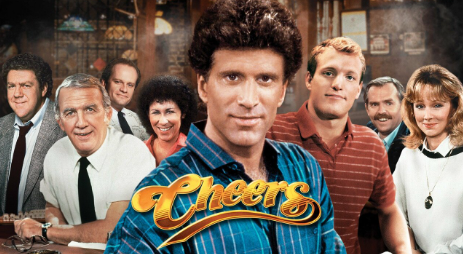
For eleven seasons, a cosy Boston bar became America’s favourite living room. Cheers, the iconic sitcom about a group of lovable locals and the staff who served them, was more than just a television show; it was a weekly appointment with friends. Its simple premise—a place “where everybody knows your name”—belied a sophisticated, witty, and wonderfully human comedy that set the gold standard for the genre. The will-they-won’t-they romance of Sam and Diane, the hilarious pontifications of Cliff Clavin, and Norm Peterson’s iconic entrance became indelible parts of pop culture history. But behind the laughter and the perfectly poured pints lies a story of near-cancellation, casting genius, and creative gambles that paid off in spectacular fashion. So, pull up a stool and get comfortable as we serve up ten fascinating facts about the television classic that taught us all the comfort of finding our place in the world.
1. A Ratings Disaster That Was Saved by Faith (and an Answering Machine)
It’s difficult to imagine now, but when Cheers premiered on September 30, 1982, almost no one was watching. The first episode ranked 74th out of 77 shows for the week, a catastrophic debut by any measure. For its entire first season, the show languished at the bottom of the ratings, and by all conventional logic, it should have been cancelled. However, the show was a critical darling, and it had a powerful champion in NBC’s then-president of entertainment, Brandon Tartikoff. He and his team believed in the show’s quality and protected it from the axe, convinced that an audience would eventually find it. Tartikoff famously cited a story where he was asked by a reporter how it felt to have the lowest-rated show on television. His answering machine at home had a message from a friend saying, “I don’t care what the papers say, Cheers is the best show on TV.” That personal vote of confidence, combined with rave reviews, was enough to secure a second season. Their faith was rewarded handsomely as the show’s viewership grew exponentially, eventually becoming a top-ten fixture for eight of its eleven seasons.
2. Sam Malone Was Almost a Football Player
The character of Sam “Mayday” Malone, the charming ex-relief pitcher for the Boston Red Sox and proprietor of Cheers, is one of television’s most iconic leading men. Ted Danson’s portrayal of the handsome, slightly dim-witted, and recovering alcoholic was perfect. However, the original concept for the character was quite different. The show’s creators, Glen and Les Charles and James Burrows, initially envisioned Sam as a retired football player, specifically a former wide receiver. The idea was to have a former jock running the bar. However, as they developed the concept, they realised that the physical build of an ex-football player might be too imposing and bulky for the intimate, confined space of the bar set. They decided a baseball player’s leaner physique would fit more naturally into the environment. This change led them to cast the slim and agile Ted Danson, a decision that proved to be a home run and perfectly shaped the relaxed, charismatic feel of the show’s central character.
3. The Unseen Vera Was Voiced by a Co-Star’s Wife
One of the most beloved running gags in Cheers was the character of Vera, Norm Peterson’s oft-mentioned but never-seen wife. Throughout the show’s 275 episodes, her face is never shown to the audience. We hear about her constantly through Norm’s witty complaints, we see her legs on one occasion, and we even see her face covered in pie after a Thanksgiving food fight, but she remains a hilarious enigma. What many fans don’t know is that on the rare occasions Vera’s voice was heard, she was played by Bernadette Birkett. Birkett is the real-life wife of George Wendt, the actor who played Norm. This inside joke added another layer to the fun for the cast and crew. Birkett’s casting was a perfect touch, making the unseen character feel both real and hilariously elusive, forever existing just off-screen as the primary reason Norm needed a place to go where everybody knew his name.
4. John Ratzenberger Invented Cliff Clavin During His Audition
The character of Cliff Clavin, the postman who was a bottomless font of questionable facts and trivia, was not part of the original plan for Cheers. He was born out of a moment of pure improvisational genius from actor John Ratzenberger. Ratzenberger had originally auditioned for the role of Norm Peterson, but he felt his reading didn’t go well and knew he hadn’t gotten the part. As he was about to leave the audition room, he turned to the producers and asked, “Do you have a bar know-it-all?” He explained that every bar in New England has that one guy who pontificates with absolute authority on any subject, whether he knows anything about it or not. The creators were intrigued and asked him to show them. Ratzenberger immediately launched into an improvised monologue as the character he had just described. The producers, Glen and Les Charles and James Burrows, were so impressed that they hired him on the spot and created the role of Cliff Clavin specifically for him, adding one of the show’s most memorable characters in a brilliant flash of inspiration.
5. The Iconic Theme Song Beat Out Two Others
“Where Everybody Knows Your Name” is arguably one of the most iconic and beloved television theme songs of all time. Its gentle piano melody and warm, inviting lyrics perfectly encapsulate the show’s core message of community and belonging. However, it was not the first choice. The songwriters, Gary Portnoy and Judy Hart Angelo, had initially submitted two other songs to the producers. The first, “People Like Us,” was a rousing tribute to “regular joes” but was deemed not quite right. The second was a ballad called “My Kind of People,” which the producers liked but felt was a bit too downbeat. They asked the songwriters for one more try, giving them notes on the specific themes they wanted to convey. Portnoy and Hart Angelo went back and crafted the masterpiece we know today. Its opening lines, “Making your way in the world today takes everything you’ve got,” instantly resonated with audiences, becoming a comforting anthem for anyone seeking refuge from the pressures of life.
6. The Real ‘Cheers’ Bar Looks Nothing Like the Set
Many fans making a pilgrimage to Boston are eager to visit the real Cheers bar. The exterior shots of the bar shown in the series are of a real establishment, the Bull & Finch Pub, located in the city’s Beacon Hill neighbourhood. Thanks to the show, the pub became a massive international tourist attraction and eventually officially changed its name to Cheers Beacon Hill. However, tourists are often surprised when they step inside, as the interior looks nothing like the bar they know from television. The actual bar has a completely different layout. The iconic Cheers set, with its central island bar where Sam held court, was built entirely on Stage 25 at Paramount Studios in Hollywood. The set was a masterful piece of design by James Burrows, created specifically to allow for optimal camera placement and to foster a sense of intimacy and interaction among the characters, a layout that proved crucial to the show’s comedic and dramatic success.
7. Frasier Crane Was Only Supposed to Last a Few Episodes
Dr. Frasier Crane, the pompous but lovable psychiatrist played by Kelsey Grammer, is one of the most successful and enduring characters in sitcom history, starring in Cheers for nine seasons and headlining his own critically acclaimed spin-off, Frasier, for another eleven. It is astonishing, then, to learn that he was never intended to be a permanent fixture. Frasier was introduced in the third season as a short-term obstacle for the show’s central couple, Sam and Diane. He was brought in as Diane’s new intellectual love interest, a romantic rival for Sam, and his character arc was only supposed to last for a handful of episodes. However, Kelsey Grammer’s performance was so brilliant, and the character proved to be such a perfect comedic foil for the rest of the cast, that the writers kept finding new ways to keep him around. The audience loved him, and he was quickly promoted to a series regular, a decision that would change the course of television history.
8. Shelley Long’s Departure Led to a Creative Rebirth
The romantic and intellectual sparring between Sam Malone and Diane Chambers was the undeniable heart of Cheers for its first five seasons. So, when Shelley Long announced her decision to leave the show in 1987 to pursue a film career, many critics and fans believed it was a death sentence for the series. The producers were faced with a monumental creative challenge: how to continue a show after losing one of its two central pillars. Instead of trying to replace Diane with a similar character, they went in a completely different direction. They introduced Kirstie Alley as Rebecca Howe, a neurotic, ambitious, and often insecure corporate career woman who takes over management of the bar. This casting was a stroke of genius. The dynamic between the street-smart Sam and the flustered, business-minded Rebecca created a fresh new energy, leading to a creative renaissance that propelled the show to even greater heights of popularity for another six seasons.
9. A Superstitious Pre-Show Ritual in the Dressing Room
The on-screen chemistry of the Cheers cast was legendary, a product of brilliant writing and perfect casting. But it was also nurtured by a genuine off-screen camaraderie. The cast developed several traditions over the years, including a superstitious pre-show ritual that took place before every single taping. Before filming each episode in front of the live studio audience, the principal actors would gather together in Shelley Long’s dressing room (a tradition that continued in Kirstie Alley’s dressing room after Long’s departure). They would form a huddle, put their hands in the middle, and share a quiet moment to wish each other a good show and get focused. This simple act of unity helped calm their nerves, fostered a team spirit, and reinforced the ensemble bond that was so vital to the show’s magic. It was a private moment that spoke volumes about the respect and affection the cast had for one another.
10. The Finale Was One of the Biggest Events in TV History
When Cheers finally closed its doors on May 20, 1993, it did so as a national event. The 98-minute final episode, titled “One for the Road,” was watched by an estimated 93 million viewers in the United States, making it the most-watched television episode of the 1990s and, at the time, the second most-watched series finale ever, behind only MASH*. The episode featured the much-anticipated return of Diane Chambers, bringing the show’s central love story to a poignant and fitting conclusion. The final scene is a masterclass in quiet perfection. After the last of his friends have left, Sam Malone walks through the darkened bar, straightens a picture on the wall, and turns to a shadowy figure at the door, saying, “Sorry, we’re closed.” It was a simple, understated, and powerful ending to an eleven-year run, a final call of “last orders” for one of the most beloved and celebrated shows in the history of television.
Further Reading
For those who want to spend a little more time where everybody knows your name, these books offer a fantastic look behind the scenes of the classic sitcom.
- Directed by James Burrows by James Burrows
- Cheers: A Cultural History by Joseph J. Darowski and Kate Darowski
- I’ll Be Right Back: And Other Triumphs of Barely Being There by John Ratzenberger
- So Far… by Kelsey Grammer
- Top of the Rock: Inside the Rise and Fall of Must See TV by Warren Littlefield
Here at Zentara.blog, our mission is to take those tricky subjects and unlock them, making knowledge exciting and easy to grasp for everyone. But the adventure doesn’t stop on this page! We’re constantly exploring new frontiers and sharing discoveries across the digital universe. Want to dive deeper into more mind-bending Top 10s and keep expanding your world? Come join us on our other platforms – we’ve got unique experiences waiting for you on each one!
Get inspired by visual wonders and bite-sized facts: See the world through Zentara’s eyes on Pinterest!
Pin our fascinating facts and stunning visuals to your own boards. Explore Pins on Pinterest: https://uk.pinterest.com/zentarablog/
Discover quick insights and behind-the-scenes peeks: Hop over to Tumblr for snippets, quotes, and unique content you won’t find anywhere else. It’s a different flavour of discovery! Follow the Fun on Tumblr: https://www.tumblr.com/zentarablog
Ready for deep dives you can listen to or watch? We’re bringing our accessible approach to video and potentially audio! Subscribe to our YouTube channel and tune into future projects that make learning pop! Subscribe on YouTube: https://www.youtube.com/@ZentaraUK
Seeking even more knowledge in one place? We’ve compiled some of our most popular topic deep dives into fantastic ebooks! Find them on Amazon and keep the learning journey going anytime, anywhere. Find Our Ebooks on Amazon: https://www.amazon.co.uk/s?k=Zentara+UK&ref=nb_sb_noss
Connect with us and fellow knowledge seekers: Join the conversation on BlueSky! We’re sharing updates, thoughts, and maybe even asking you what wonders we should explore next. Chat with Us on BlueSky: https://bsky.app/profile/zentarablog.bsky.social
Perfect for learning on the move! We post multiple 10-minute podcasts per day on Spotify. Pop on your headphones and fill your day with fascinating facts while you’re out and about! Listen on Spotify: https://open.spotify.com/show/3dmHbKeDufRx95xPYIqKhJ
Follow us on Instagram for bytesize knowledge! We post multiple posts per day on our official Instagram account. https://www.instagram.com/zentarablog/ Every click helps us keep bringing honest, accessible knowledge to everyone. Thanks for exploring with us today – see you out there in the world of discovery!




Leave a Reply