
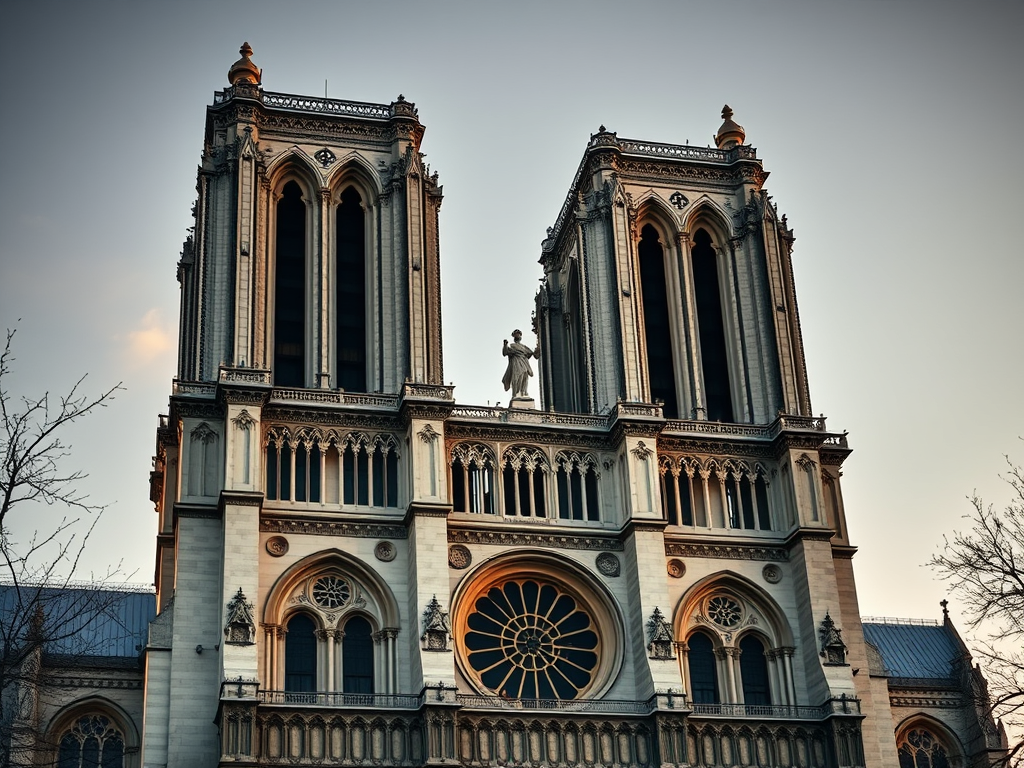
For over 850 years, the Cathédrale Notre-Dame de Paris has been the soul of Paris, a silent stone sentinel on the Île de la Cité watching over the city as it grew, flourished, and faced its darkest hours. More than just a church, it is a masterpiece of Gothic architecture, a repository of priceless religious relics, a setting for epic literature, and the historical and geographical heart of France itself. Its famous twin towers, magnificent rose windows, and chorus of bells have become indelible symbols of French culture and the enduring power of faith.
In April 2019, the world watched in horror as a devastating fire tore through its ancient timbers, threatening to erase centuries of history in a single night. Yet, from the ashes of that tragedy rose an unprecedented story of human resilience, ingenuity, and a global determination to rebuild. The cathedral, having recently reopened its doors, now stands not only as a monument to the past but as a powerful symbol of rebirth. To truly understand its significance, we must look beyond the headlines and delve into the incredible facts and hidden stories that make Notre Dame one of the most beloved buildings on Earth.
1. It Took Nearly Two Centuries to Build
The construction of Notre Dame was not a swift undertaking; it was a colossal, multi-generational project that spanned nearly 200 years. The first stone was laid in 1163 in the presence of King Louis VII and Pope Alexander III, but the great cathedral was not considered complete until around 1345. This incredibly long construction period means that the building is not a pure snapshot of a single architectural moment, but rather a living textbook on the evolution of Gothic design.
The early stages, including the choir and nave, showcase the characteristics of Early Gothic architecture, with its focus on achieving new heights and filling the space with light. As construction progressed through the decades, the style evolved into High Gothic, which is reflected in the design of the transepts and the magnificent rose windows. Later additions, like side chapels and the final touches, incorporated elements of the Rayonnant style. This epic timeline, driven by generations of anonymous masons, carpenters, and artisans, resulted in a harmonious yet complex structure that embodies the ambition and deep faith of the medieval world.
2. Its Famous Gargoyles Have a Very Practical Job
The monstrous, demonic-looking creatures clinging to the upper reaches of Notre Dame are one of its most famous features, but there’s a common confusion between two distinct types of beasties: gargoyles and grotesques. The true gargoyles are the ones with a crucial engineering purpose. The word “gargoyle” comes from the French gargouille, meaning “throat,” and these sculptures are essentially ornate, decorative waterspouts. Their primary function is to project rainwater away from the cathedral’s walls, protecting the stone masonry from erosion. By channelling the water through their mouths, they prevent it from running down and damaging the delicate structure below.
The other fantastical figures—the chimeras, demons, and bird-like creatures that peer down from the balustrades—are technically called grotesques. They have no plumbing function and are purely decorative and symbolic. Many of the most famous grotesques, including the pensive “Stryge,” were not part of the original medieval design. They were added during the 19th-century restoration by architect Eugène Viollet-le-Duc, who was inspired by medieval folklore and a desire to recapture the spirit of the Gothic age.
3. It Houses Some of Christianity’s Most Sacred Relics
Beyond its architectural splendour, Notre Dame is a hugely important pilgrimage site because it is the custodian of some of the most revered relics in all of Christendom. The three most significant are all associated with the Passion of Christ:
- The Crown of Thorns: Believed to be the very crown placed on Jesus’ head before the crucifixion.
- A Fragment of the True Cross: A small piece of wood believed to be from the cross on which Jesus was crucified.
- A Holy Nail: Said to be one of the nails used in the crucifixion.
During the terrifying fire of April 2019, as the spire was collapsing, the fate of these priceless relics hung in the balance. In an act of incredible bravery, the chaplain of the Paris Fire Brigade, Father Jean-Marc Fournier, formed a human chain with firefighters and rushed into the burning cathedral to rescue them. The relics were successfully saved and moved to safety at the Louvre. This heroic act ensured that the spiritual heart of the cathedral was preserved, and these sacred objects have now been returned to their home.
4. The Great Bells Have Names, and a Revolutionary History
The bells of Notre Dame have marked the rhythm of Paris for centuries, ringing out for royal weddings, war-time liberations, and solemn funerals. Each of the main bells has a name. The largest and most famous is the great bourdon bell, Emmanuel. Cast in 1681, Emmanuel weighs over 13 tonnes and is renowned for its deep, resonant tone. It has been rung to mark the end of both World Wars and the funeral of French heads of state.
Emmanuel is the only one of the original great bells to have survived the French Revolution. In 1791, revolutionaries, hostile to the church, seized the cathedral, melted down all of its other bells, and repurposed the bronze to forge cannons. It wasn’t until the 19th century that new bells were installed. Following the 2019 fire, the eight bells in the North Tower, along with Emmanuel and Marie in the South Tower, were carefully inspected and found to have survived the blaze unharmed, a small miracle amid the devastation.
5. It Was Saved from Demolition by a Novel
It’s difficult to imagine Paris without Notre Dame, but by the early 19th century, the cathedral was in a shocking state of decay. Decades of neglect, vandalism during the French Revolution, and alterations had left it crumbling and on the verge of being demolished. Public interest was minimal, and the building’s future looked bleak. That all changed in 1831 with the publication of Victor Hugo’s monumental novel, Notre-Dame de Paris, known in English as The Hunchback of Notre-Dame.
The novel, with its unforgettable characters of Quasimodo, Esmeralda, and Frollo, and its powerful depiction of the cathedral as the living, breathing heart of Paris, was a colossal success. Hugo’s passionate descriptions of the cathedral’s beauty and his laments over its decay ignited a huge public outcry. The book single-handedly revived popular appreciation for Gothic architecture and created a massive public demand for the cathedral’s restoration. This led directly to the sweeping, 25-year restoration project begun in 1844 and led by the architect Eugène Viollet-le-Duc, which saved the cathedral and shaped it into the icon we know today.
6. The Iconic Spire Destroyed in the Fire Was Not Original
The dramatic, heart-stopping collapse of Notre Dame’s spire was the defining image of the 2019 fire. However, this iconic feature was not part of the original medieval cathedral. The first, 13th-century spire was removed in the late 1700s after it became so damaged by wind that it was in danger of falling. For over 50 years, the cathedral had no spire at all.
The one that was destroyed in the fire was a 19th-century creation, designed by Eugène Viollet-le-Duc as the crowning achievement of his restoration project. It was an idealized Gothic spire, taller and more ornate than the original. In a whimsical touch, Viollet-le-Duc surrounded its base with copper statues of the twelve apostles, and he cheekily modelled the face of St. Thomas, the patron saint of architects, on himself, holding a ruler and gazing up at his own creation. As part of the recent restoration, the decision was made to rebuild the spire exactly to Viollet-le-Duc’s 19th-century design, an identical replica of which now soars once more above the Paris skyline.
7. It Stands on a Site Sacred Since Roman Times
The Île de la Cité, the island in the Seine where Notre Dame stands, is the ancient birthplace of Paris. Long before the first stones of the cathedral were laid, this was the centre of a Gallo-Roman city called Lutetia. Archaeological evidence suggests that a pagan temple once stood on or near the site. As Christianity spread, this was replaced by a large Christian basilica, the Cathedral of Saint-Étienne, which stood there from the 4th to the 12th century.
When Bishop Maurice de Sully launched the project to build Notre Dame in 1163, it was a declaration of Paris’s growing importance. He wanted a cathedral that would dwarf the old one, a building worthy of being the spiritual capital of the kingdom. In essence, Notre Dame was built on top of layers of history, continuing a tradition of sacred worship on that exact spot that stretches back for nearly two millennia.
8. Its Rose Windows Are Miracles of Medieval Engineering
Notre Dame’s three spectacular rose windows are among the greatest masterpieces of Christian art. These enormous, circular stained-glass windows, dating from the 13th century, were an incredible feat of Gothic engineering. The architects pushed the limits of stone construction to create vast, delicate webs of tracery that could support thousands of individual pieces of coloured glass, flooding the interior with what they considered to be divine, multi-coloured light.
The South Rose Window, a gift from King Louis IX (St. Louis), is particularly precious as it still contains a large number of its original 13th-century glass panels. The windows have miraculously survived centuries of turmoil. During the French Revolution, they were spared destruction. They were removed for safekeeping during both World Wars and, most recently, they survived the intense heat of the 2019 fire without any catastrophic damage, a testament to the genius of their medieval creators.
9. It Marks “Point Zero” for the Entire Nation of France
Embedded in the cobblestones of the square in front of the cathedral’s main entrance is a small, unassuming bronze star. This is Point Zéro des Routes de France (Point Zero of the Roads of France). This marker is not just a tourist curiosity; it is the official geographical centre of Paris. More than that, it is the precise location from which all road distances from Paris to other cities across France are measured.
If a signpost says a city is “150 km from Paris,” this is the exact spot that measurement is taken from. This makes Notre Dame not just the spiritual and historical heart of the nation, but its literal geographical heart as well. It reinforces the cathedral’s central role in the life of the country. Tourists often toss a coin onto the marker for good luck or stand on it to ensure they will one day return to Paris.
10. The Restoration Blended Medieval Craft with 21st-Century Tech
The five-year restoration project following the 2019 fire was one of the most complex and ambitious heritage projects ever undertaken. The effort to reopen the cathedral in time for the 2024 Paris Olympics (a deadline it met for its grand reopening in December 2024) required an unprecedented fusion of old and new.
On one hand, the project was a celebration of traditional craftsmanship. Hundreds of master artisans—stonemasons, glassmakers, ironmongers, and gilders—were brought in from all over France. The new roof structure, nicknamed “the forest,” was rebuilt using massive oak beams sourced from French forests, with carpenters using medieval-era tools and techniques to hew and shape them. On the other hand, the project was guided by cutting-edge technology. Scientists used highly detailed 3D laser scans taken before the fire to create a perfect digital twin of the cathedral, ensuring every detail could be replicated with millimetre precision. This remarkable blend of ancient craft and modern science has not only restored a beloved icon but has also created a new chapter in its long and storied history.
Further Reading
To immerse yourself in the dramatic history, art, and cultural impact of Notre Dame, these books provide a perfect starting point.
- The Hunchback of Notre-Dame by Victor Hugo – The essential novel that saved the cathedral from ruin and immortalized it in the popular imagination. A must-read to understand its cultural significance.
- Notre-Dame: A History of the World’s Most Famous Cathedral by Ken Follett – Written by the master of historical fiction and cathedral enthusiast, this short book offers a passionate and accessible history of the cathedral, published after the 2019 fire.
- The Cathedral Builders by Jean Gimpel – For those interested in the architectural context, this book provides a fascinating look into the world of the medieval masons and engineers who built the great Gothic cathedrals of Europe, including Notre Dame.
Here at Zentara.blog, our mission is to take those tricky subjects and unlock them, making knowledge exciting and easy to grasp for everyone. But the adventure doesn’t stop on this page! We’re constantly exploring new frontiers and sharing discoveries across the digital universe. Want to dive deeper into more mind-bending Top 10s and keep expanding your world? Come join us on our other platforms – we’ve got unique experiences waiting for you on each one!
Get inspired by visual wonders and bite-sized facts: See the world through Zentara’s eyes on Pinterest!
Pin our fascinating facts and stunning visuals to your own boards. Explore Pins on Pinterest: https://uk.pinterest.com/zentarablog/
Discover quick insights and behind-the-scenes peeks: Hop over to Tumblr for snippets, quotes, and unique content you won’t find anywhere else. It’s a different flavour of discovery! Follow the Fun on Tumblr: https://www.tumblr.com/zentarablog
Ready for deep dives you can listen to or watch? We’re bringing our accessible approach to video and potentially audio! Subscribe to our YouTube channel and tune into future projects that make learning pop! Subscribe on YouTube: https://www.youtube.com/@ZentaraUK
Seeking even more knowledge in one place? We’ve compiled some of our most popular topic deep dives into fantastic ebooks! Find them on Amazon and keep the learning journey going anytime, anywhere. Find Our Ebooks on Amazon: https://www.amazon.co.uk/s?k=Zentara+UK&ref=nb_sb_noss
Connect with us and fellow knowledge seekers: Join the conversation on BlueSky! We’re sharing updates, thoughts, and maybe even asking you what wonders we should explore next. Chat with Us on BlueSky: https://bsky.app/profile/zentarablog.bsky.social
Perfect for learning on the move! We post multiple 10-minute podcasts per day on Spotify. Pop on your headphones and fill your day with fascinating facts while you’re out and about! Listen on Spotify: https://open.spotify.com/show/3dmHbKeDufRx95xPYIqKhJFollow us on Instagram for bytesize knowledge! We post multiple posts per day on our official Instagram account. https://www.instagram.com/zentarablog/ Every click helps us keep bringing honest, accessible knowledge to everyone. Thanks for exploring with us today – see you out there in the world of discovery!




Leave a Reply