
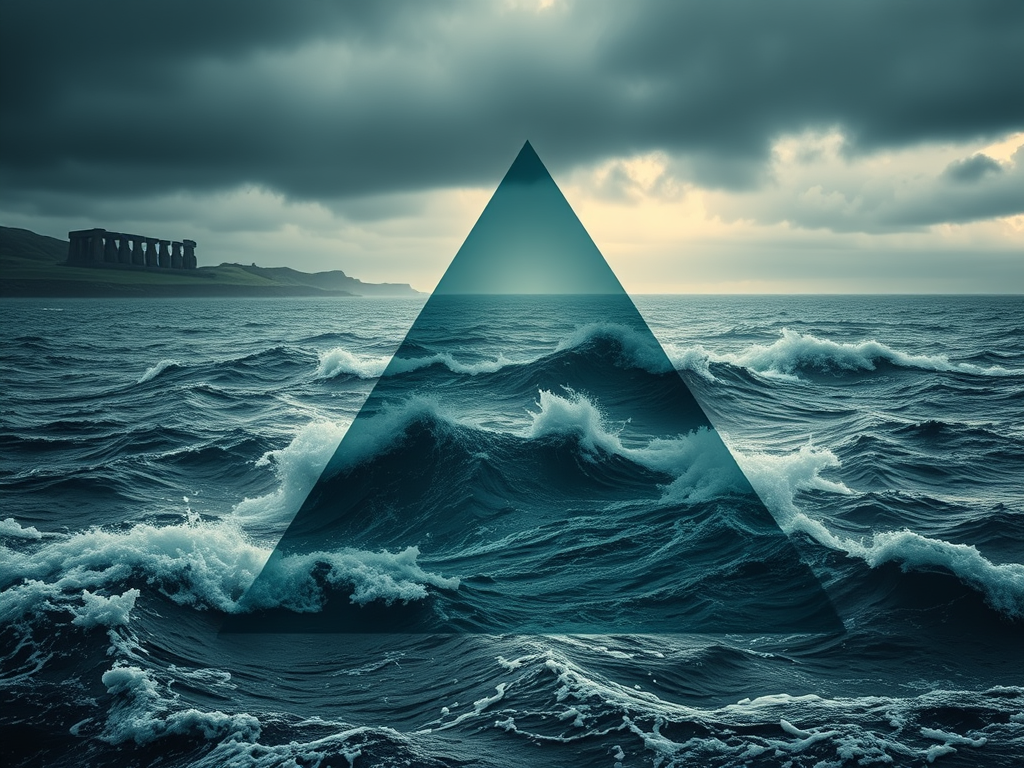
Our world is a tapestry woven with threads of the known and the unknown. For centuries, humanity has been captivated by geographical enigmas—places on our planet that defy easy explanation and spark our collective imagination. These are the locations whispered about in legends, the epicentres of bizarre disappearances, ancient structures of impossible scale, and landscapes so alien they seem to belong to another world. From the myth-laden waters of the Bermuda Triangle to the silent, staring statues of Easter Island, these mysteries challenge our understanding of history, geology, and the very limits of human ingenuity.
But what if the truth behind these enigmas is just as compelling as the fiction? As science advances, we are given new tools to peer into the past and understand the powerful forces that shape our world. Archaeologists, geologists, historians, and climatologists are piecing together the puzzles, and the explanations they are uncovering are often more astounding than any tale of aliens or ancient curses.
This journey is not about dispelling wonder, but about redirecting it. It is about trading baseless speculation for a deeper appreciation of scientific truth and the richness of our own history. Join us as we pull back the curtain on ten of the world’s most mysterious places, exploring the popular myths and revealing the fascinating explanations that lie beneath.
1. The Devil’s Triangle: Solving the Secrets of the Bermuda Triangle
The Enigma: For decades, the Bermuda Triangle, a loosely defined patch of the North Atlantic Ocean, has been notorious as a place where ships and planes vanish without a trace. Popular lore blames everything from magnetic anomalies and rogue waves to alien abductions and portals to another dimension for the alleged disappearances of countless vessels.
The Explanation: The truth about the Bermuda Triangle is that there is no mystery at all. The entire enigma was largely popularized by sensationalist writers in the mid-20th century. Investigations by the U.S. Coast Guard and other official bodies have concluded that the number of disappearances within this heavily trafficked area is not statistically significant compared to any other part of the ocean. The region is known for its volatile and unpredictable weather, including powerful hurricanes that can form with little warning. The powerful and swift-moving Gulf Stream current can quickly disperse any wreckage, making it difficult to find. Furthermore, many of the most famous “mysterious” disappearances have been thoroughly debunked, with records showing the vessels were lost in severe storms or due to documented mechanical failures and human error. In short, the Bermuda Triangle is a myth—a product of compelling fiction, not geographical fact.
2. The Stone Sentinels: Easter Island’s Moai Statues
The Enigma: On the remote Pacific island of Rapa Nui (Easter Island), nearly 1,000 colossal stone statues, known as Moai, stand in silent testament to a lost culture. How could a small, isolated population carve, transport, and erect these massive figures, some weighing up to 80 tons, using only primitive tools? And what caused the collapse of the civilization that created them?
The Explanation: The creation of the Moai was a remarkable feat of human ingenuity and devotion, not a mystery requiring an otherworldly explanation. The statues were carved from solidified volcanic ash in a single quarry on the island. Recent experiments have shown that a relatively small number of people could have moved the massive statues across the island by “walking” them upright. Using ropes, teams would rock the statues from side to side, inching them forward in a shuffling motion, much like moving a heavy refrigerator. The leading theory for the society’s collapse is an “ecocide.” Over generations, the islanders deforested the entire island to procure logs for moving statues and for agriculture, leading to catastrophic soil erosion. This environmental collapse made it impossible to build canoes for fishing or grow enough food, leading to starvation, warfare, and the downfall of their complex society—a profound cautionary tale for the modern world.
3. A Prehistoric Calendar in the Sky: The Purpose of Stonehenge
The Enigma: Rising from the Salisbury Plain in England, Stonehenge is the world’s most famous prehistoric monument. How did ancient people, with no modern technology, quarry and transport these massive sarsens and bluestones over hundreds of miles? More importantly, what was its purpose? Was it a temple for druidic sacrifice, an alien landing pad, or a magical healing centre?
The Explanation: Stonehenge was not built in a single event but was a complex, evolving project constructed over a period of 1,500 years, beginning around 3000 BC. Its purpose was multifaceted, serving as a burial ground, a place of ceremony, and, crucially, a sophisticated astronomical observatory. The layout is perfectly aligned with the movements of the sun. On the summer solstice, the sun rises directly over the Heel Stone, which stands just outside the main circle, and its rays illuminate the centre of the monument. On the winter solstice, the sunset is framed perfectly between the uprights of the tallest trilithon. This allowed its builders to mark the changing of the seasons, which was vital knowledge for an early agricultural society. It was less a temple for a single religion and more a monumental calendar, a sacred site that connected the people on Earth to the cycles of the heavens.
4. The Desert’s Giant Sketchbook: Peru’s Nazca Lines
The Enigma: Etched into the arid coastal plain of Peru are hundreds of enormous geoglyphs known as the Nazca Lines. These designs, some stretching over 1,200 feet, depict animals, plants, and strange geometric shapes. Created between 500 BC and 500 AD, they are so large they can only be fully appreciated from the air. Why did the ancient Nazca people create these massive drawings that they themselves could never see in their entirety?
The Explanation: While early theories proposed they were runways for alien spacecraft, archaeologists now believe the Nazca Lines were created as part of complex rituals, likely related to appeals for water and fertility. The Nazca civilization lived in a harsh, arid environment where water was life’s most precious resource. Researchers now theorize that the lines were not meant to be seen from above, but to be walked upon as ceremonial pathways. The animal figures, such as the hummingbird, spider, and monkey, were likely powerful symbols from Nazca cosmology. By walking these sacred paths and performing rituals, the Nazca people likely believed they were interacting with their gods to ensure a successful harvest and the arrival of the life-giving rains from the Andes mountains.
5. The Self-Propelled Stones: Death Valley’s “Sailing Stones”
The Enigma: On a dry lakebed in Death Valley, California, known as Racetrack Playa, a bizarre phenomenon occurs: large rocks, some weighing hundreds of pounds, appear to move across the flat ground on their own, leaving long tracks behind them. For decades, this geological puzzle baffled scientists, leading to theories involving mysterious magnetic forces or even pranksters.
The Explanation: In 2014, scientists finally and definitively solved the mystery after years of observation. The movement requires a rare combination of specific weather conditions. First, the playa must fill with a shallow layer of water from winter rains, just deep enough to allow ice to form but shallow enough to leave the rocks exposed. As temperatures drop overnight, this water freezes into a thin, windowpane-like sheet of ice around the rocks. In the morning, as the sun begins to melt the ice, the frozen sheet breaks up into large floating panels. A light, steady wind can then push these massive ice sheets, which act like sails, carrying the embedded rocks with them across the slick, muddy floor of the playa at a slow, almost imperceptible speed, leaving the famous tracks in their wake.
6. The Eye of the Sahara: The Richat Structure
The Enigma: In the midst of the vast, featureless Sahara Desert in Mauritania is a spectacular, 25-mile-wide circular feature known as the Richat Structure, or the “Eye of the Sahara.” So perfectly circular and ringed, it looks like a giant impact crater or, as some have suggested, the location of the mythical lost city of Atlantis.
The Explanation: The Eye of the Sahara is a completely natural geological formation, though its origins are no less impressive than the myths. It is not an impact crater, as it lacks the tell-tale signs of shock and melted rock. Instead, it is what geologists call a domal uplift or a geological dome. Over 100 million years ago, molten rock pushed up from deep within the Earth, creating a large, dome-like blister of rock layers. Over eons, wind and water erosion sliced the top off this dome, exposing the concentric rings of different rock types, much like slicing an onion in half reveals its layers. The different colours of the rings correspond to different types of rock that erode at different rates, creating the spectacular “eye” visible from space.
7. The Vanished Settlers: The Lost Colony of Roanoke
The Enigma: In 1587, a group of about 115 English settlers established a colony on Roanoke Island, off the coast of modern-day North Carolina. The colony’s governor, John White, sailed back to England for supplies but was delayed by war for three years. When he finally returned in 1590, the settlement was completely deserted. The only clue was the word “CROATOAN” carved into a post. What happened to the colonists?
The Explanation: While the fate of the “Lost Colony” remains a compelling historical mystery, the most plausible explanation is not one of mass abduction or a single catastrophe, but a combination of factors leading to assimilation. The carved word “CROATOAN” almost certainly referred to the nearby Croatoan Island (modern-day Hatteras Island) and the friendly Croatoan people who lived there. The most widely accepted theory is that the struggling colonists, facing dwindling supplies and possibly a devastating drought that occurred during that period, chose to abandon their settlement. They likely split up, with some attempting to sail back to England (and perishing at sea) and the majority going to live with their native allies, the Croatoan. Over time, they would have intermarried and been absorbed into the local population, their English identities fading into history.
8. The Alien Landscape on Earth: The Danakil Depression
The Enigma: Located in Ethiopia, the Danakil Depression is one of the hottest, driest, and lowest places on Earth. It is a volcanic landscape of bubbling lava lakes, vast salt pans, and acid pools that fume with poisonous gases. With its sulfur-yellow fields and turquoise water, it looks like the surface of an alien planet. How could life possibly exist in such an extreme and hostile environment?
The Explanation: The Danakil Depression is a cradle of life, but not as we know it. The vibrant colours are the result of chemical reactions involving salt, sulfur, and other minerals brought to the surface by superheated water. In this toxic brine, scientists have discovered the existence of extremophiles. These are microbes, a form of bacteria, that have evolved to thrive in conditions that would be instantly lethal to almost any other organism on Earth. They are able to survive the high temperatures, extreme acidity, and lack of oxygen. The study of these resilient organisms is of huge interest to astrobiologists, as they provide a model for the type of life that might exist on other planets and moons in our solar system, such as Mars or Jupiter’s moon Europa.
9. The Abyss in the Ocean: The Great Blue Hole of Belize
The Enigma: Off the coast of Belize lies a giant, perfectly circular marine sinkhole known as the Great Blue Hole. It measures over 1,000 feet across and 400 feet deep, and its deep blue colour contrasts sharply with the surrounding turquoise shallows. What created this massive, geometrically perfect abyss in the middle of a shallow reef?
The Explanation: The Great Blue Hole is a stunning relic of the last Ice Age. Over 15,000 years ago, sea levels were much lower—as much as 400-500 feet lower than they are today. The area that is now a shallow sea was then dry land. The Blue Hole was once the opening to a massive dry limestone cave system. Over millennia, acidic groundwater seeped through the porous limestone, carving out a vast underground cavern. Evidence of this past can still be seen today in the giant stalactites and stalagmites that adorn the walls deep inside the hole. When the Ice Age ended and the glaciers melted, the sea level rose dramatically, flooding the entire cave system and causing the roof of the cavern to collapse, creating the perfect circular sinkhole we see today.
10. The Forbidden Zone: Nevada’s Area 51
The Enigma: No place fuels conspiracy theories quite like Area 51, a highly classified U.S. Air Force facility in the Nevada desert. Its intense secrecy has led to decades of speculation that it is a storage site for crashed alien spacecraft and a laboratory for reverse-engineering extraterrestrial technology. What really goes on behind the guarded perimeter?
The Explanation: The truth of Area 51 is both more mundane and, in its own way, more fascinating than the UFO legends. Its secrecy has nothing to do with aliens and everything to do with cutting-edge military technology. Established in the 1950s, Area 51 has served as the primary development and testing ground for America’s most advanced spy planes, including the U-2, the SR-71 Blackbird, and the F-117 Nighthawk stealth fighter. Many of the “UFO” sightings reported in the area over the years were almost certainly test flights of these top-secret, radically designed aircraft flying at speeds and altitudes never seen before. The extreme secrecy is necessary to protect state-of-the-art aeronautical engineering and intelligence-gathering technology from foreign adversaries. So, while it doesn’t house aliens, it is indeed a place where futuristic technology becomes a reality.
Further Reading
For those wishing to explore more of our planet’s mysteries and the science behind them, these books offer a fantastic starting point.
- Lost Cities, Ancient Tombs: 100 Discoveries That Changed the World by National Geographic – A beautifully illustrated journey through some of the most significant archaeological finds in history, explaining what they tell us about our past.
- Atlas of Lost Cities: A Travel Guide to Vanished Wonders by Aude de Tocqueville – A captivating guide to famous lost cities and settlements, from Roanoke to Angkor Wat, exploring the reasons for their decline.
- Sapiens: A Brief History of Humankind by Yuval Noah Harari – While not specifically about mysterious places, this book provides essential context on how human societies, cultures, and myths develop over time.
- The World’s Most Mysterious Places by Reader’s Digest – A classic compilation that explores many of the world’s greatest enigmas, perfect for sparking curiosity and further research.
Here at Zentara.blog, our mission is to take those tricky subjects and unlock them, making knowledge exciting and easy to grasp for everyone. But the adventure doesn’t stop on this page! We’re constantly exploring new frontiers and sharing discoveries across the digital universe. Want to dive deeper into more mind-bending Top 10s and keep expanding your world? Come join us on our other platforms – we’ve got unique experiences waiting for you on each one!
Get inspired by visual wonders and bite-sized facts: See the world through Zentara’s eyes on Pinterest!
Pin our fascinating facts and stunning visuals to your own boards. Explore Pins on Pinterest: https://uk.pinterest.com/zentarablog/
Discover quick insights and behind-the-scenes peeks: Hop over to Tumblr for snippets, quotes, and unique content you won’t find anywhere else. It’s a different flavour of discovery! Follow the Fun on Tumblr: https://www.tumblr.com/zentarablog
Ready for deep dives you can listen to or watch? We’re bringing our accessible approach to video and potentially audio! Subscribe to our YouTube channel and tune into future projects that make learning pop! Subscribe on YouTube: https://www.youtube.com/@ZentaraUK
Seeking even more knowledge in one place? We’ve compiled some of our most popular topic deep dives into fantastic ebooks! Find them on Amazon and keep the learning journey going anytime, anywhere. Find Our Ebooks on Amazon: https://www.amazon.co.uk/s?k=Zentara+UK&ref=nb_sb_noss
Connect with us and fellow knowledge seekers: Join the conversation on BlueSky! We’re sharing updates, thoughts, and maybe even asking you what wonders we should explore next. Chat with Us on BlueSky: https://bsky.app/profile/zentarablog.bsky.social
Perfect for learning on the move! We post multiple 10-minute podcasts per day on Spotify. Pop on your headphones and fill your day with fascinating facts while you’re out and about! Listen on Spotify: https://open.spotify.com/show/3dmHbKeDufRx95xPYIqKhJFollow us on Instagram for bytesize knowledge! We post multiple posts per day on our official Instagram account. https://www.instagram.com/zentarablog/ Every click helps us keep bringing honest, accessible knowledge to everyone. Thanks for exploring with us today – see you out there in the world of discovery!




Leave a Reply