
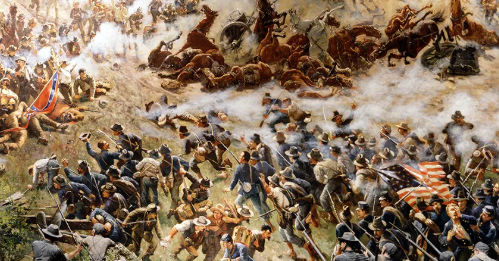
When we picture the American Civil War, we often see heroic charges, tactical genius, and the grim determination of soldiers in blue and gray. But for the hundreds of thousands who fell in battle, this was only the start of their fight. The moment a soldier was wounded, he entered a different kind of war—a desperate struggle for survival against primitive science, overwhelming odds, and an invisible enemy that killed more men than all the bullets combined.
The medical world of the 1860s stood on the brink of a revolution, but it wasn’t there yet. Doctors operated with a courage bordering on madness, using techniques that seem barbaric today. Yet, they were also innovators, laying the groundwork for modern emergency medicine. To understand the true cost of the war, we must look past the battlefield and into the bloody, chaotic, and surprisingly sophisticated world of the Civil War field hospital.
Here are the top 10 medical practices and dangers that defined life—and, all too often, death—on a Civil War battlefield.
1. The Minié Ball: The Bullet That Shattered Everything
The single greatest medical danger on the battlefield wasn’t a disease or a doctor; it was a small piece of lead. The Minié ball (pronounced “min-ay”) was not a ball at all. It was a .58-caliber conical bullet with a hollow base, weighing about an ounce. Fired from a rifled musket, it was devastatingly accurate over long distances. But its real terror was what it did upon impact.
Unlike a modern, high-velocity bullet that might drill a clean hole, the Minié ball was large, heavy, and made of soft lead. It traveled relatively slowly, and when it hit a human body, it didn’t just pierce; it tumbled. It acted less like a bullet and more like a small, spinning wrecking ball. When it struck bone, especially the long bones of an arm or leg, it didn’t just crack it; it shattered it into dozens of fragments, obliterating the limb.
This single innovation in weaponry rendered all previous medical knowledge about gunshot wounds obsolete. Surgeons trained to treat clean wounds from smoothbore muskets were now faced with limbs that looked like, in one surgeon’s words, “a bag of crushed ice.” This catastrophic damage is the primary reason one practice became so infamous: amputation.
2. Infection: The Invisible Enemy That Killed Armies
If the Minié ball was the most visible danger, infection was the most lethal. For every soldier killed in action, two died of disease. This was a world operating entirely without the knowledge of germ theory. Louis Pasteur was still experimenting in France, and Joseph Lister’s work on antiseptic surgery was years away.
On the battlefield, “sanitation” was not a medical concept. Surgeons moved from patient to patient, wiping their hands and bloody instruments on a rag or rinsing them in a single bucket of cold, contaminated water. Wounds were packed with dirty lint and cloth. The very ground of the field hospitals—often a barn floor covered in straw and blood—was a breeding ground for bacteria like Clostridium and Streptococcus.
Soldiers who survived the bullet and the surgery would often die days later from “blood poisoning” (sepsis), tetanus (lockjaw), or dysentery and typhoid fever that swept through the camps. Doctors were powerless against this microscopic foe because they literally did not know it existed. They fought what they could see, unaware that the true killer was on their own hands.
3. Amputation: The Gruesome But Life-Saving “First Resort”
No medical practice is more associated with the Civil War than amputation. The image of “sawbones” butchers hacking off limbs is seared into popular culture. The truth, however, is more complex. Amputation was not a sign of medical incompetence; it was the only effective response to the catastrophic wounds caused by the Minié ball.
When a Minié ball shattered a bone, saving the limb was almost impossible. An attempt to set the fragmented bone—a “conservative” surgery—would almost certainly lead to a deep, agonizing infection and, ultimately, death by gangrene or sepsis. Amputation, by contrast, created a “simple” wound from a “complex” one. By removing the shattered, contaminated mess, a surgeon gave the soldier his best—and often only—chance of survival.
Speed was essential. “Primary amputations,” performed within the first 48 hours, had a much higher survival rate (around 75%) than “secondary amputations” done after infection had set in (less than 50%). A skilled surgeon could amputate a limb in under 10 minutes, a mercy when operating in a chaotic field hospital. It was a brutal calculus, but it saved tens of thousands of lives.
4. Anesthesia’s Battlefield Debut: The Myth of “Biting the Bullet”
Here is one of the most persistent myths of the Civil War: that surgeons performed these gruesome operations on wide-awake soldiers, giving them only a bullet to bite on or a swig of whiskey. This is almost entirely false. The Civil War was, in fact, the first major conflict in which chemical anesthesia was used on a massive, systematic scale.
Chloroform and ether had been discovered in the 1840s and were readily available to both Union and Confederate armies. Records show that anesthesia was administered in over 95% of major surgeries. The “bullet” myth likely comes from the chaos of a primary aid station right on the firing line, where a soldier might have a wound probed before being moved. But in the field hospital where amputations occurred, a patient would almost always be unconscious.
The method was simple: a cloth was fashioned into a cone, and chloroform or ether was drizzled onto a sponge inside it. The cone was then placed over the patient’s nose and mouth. It was a crude but effective delivery system that brought the profound mercy of unconsciousness to the surgical tent, separating the pain of the wound from the trauma of the “cure.”
5. The Field Hospital: The Bloody Dawn of Triage
After a major battle like Antietam or Gettysburg, tens of thousands of wounded men could be left on the field. The medical corps faced a logistical nightmare. The solution was the “field hospital,” the direct ancestor of the modern MASH unit or battlefield trauma center. These were not buildings; they were pop-up medical centers established in any available structure—a barn, a farmhouse, a church, or simply a collection of tents.
Here, surgeons practiced a brutal but necessary form of prioritization called “triage.” The wounded were rapidly sorted into three groups.
- The Walking Wounded: Those with minor wounds to the hands, feet, or flesh were bandaged and sent to the rear.
- Surgical Cases: Those with severe wounds to the limbs, head, or torso who might be saved by immediate surgery. These were the men sent to the operating table (often a bloody barn door laid on barrels).
- The Mortally Wounded: Men with severe abdominal or head wounds were deemed “beyond help.” In an age before antibiotics or sterile abdominal surgery, these wounds were a 100% death sentence. These men were given opium or morphine for their pain, a sip of water, and made as comfortable as possible to die.
This cold, hard-nosed system was the only way to focus limited medical resources on the men who could actually be saved.
6. “Hospital Gangrene”: The Contagious Nightmare of the Wards
Of all the infections a soldier feared, “hospital gangrene” was the most terrifying. This wasn’t the common gas gangrene from a dirty wound. This was a highly contagious, flesh-eating bacterial infection that spread through the wards like wildfire, carried on the unwashed hands and sponges of surgeons and nurses.
It began innocently enough, with a wound turning gray and puss-filled. But within hours, the flesh would begin to rot and slough off the bone, emitting a horrific, putrid stench that filled the hospital. The infection had a staggeringly high fatality rate, sometimes over 50%. It was essentially a death sentence that spread from bed to bed.
Doctors were desperate for a cure. They tried everything, from packing the wound with nitric acid to the first primitive uses of bromine, a toxic chemical that, when applied, was one of the few treatments that could actually halt the infection’s spread. It was a vivid, horrifying example of how hospitals, in the pre-germ theory era, were often more dangerous than the battlefield itself.
7. The Letterman System: Inventing the Modern Ambulance Corps
Early in the war, medical evacuation was a disaster. After a battle, wounded men might lie on the field for days, dying of exposure, thirst, or bleeding. The “ambulance corps” was just a collection of civilian wagon drivers who were often unreliable and would flee at the first sign of danger.
This changed thanks to one man: Union Major Jonathan Letterman. As the Medical Director of the Army of the Potomac, he created a revolutionary new system. The “Letterman System” was essentially the invention of modern emergency medical services (EMS).
- He created a dedicated, trained Ambulance Corps of soldiers whose only job was to retrieve the wounded.
- He established a three-tiered evacuation plan:
- Field Dressing Station: (On the battlefield) Stretcher-bearers would apply first aid and stop bleeding.
- Field Hospital: (Nearby) Ambulances would transport patients here for triage and major surgery.
- General Hospital: (Far from the front) Recovering patients were moved by train or boat to large hospitals in cities.
This system, first used effectively at the Battle of Antietam, was a triumph of organization. It ensured that wounded men were collected, treated, and evacuated with speed and efficiency, saving countless lives through logistics alone.
8. Probing for the Ball: The Perilous Hunt for Lead and Cloth
When a soldier arrived at a field hospital, one of the surgeon’s first jobs was to find the bullet. This was done by “probing,” a practice that was as dangerous as it was necessary. The surgeon would insert his unsterilized finger into the wound to feel for the bullet and any bone fragments. If he couldn’t reach it, he would use a long metal probe called a Nélaton probe, which had a small porcelain tip that would show a gray streak if it scraped against lead.
The goal wasn’t just to remove the bullet. The Minié ball often carried fragments of the soldier’s dirty, wool uniform deep into the wound track. Surgeons knew from experience that if this “foreign matter” was left inside, the wound would putrefy. While they didn’t know about the bacteria on the cloth, they knew the cloth itself was a source of lethal infection.
This probing, done with bare hands and dirty instruments, was a terrible gamble. The surgeon was often introducing new, deadly germs in the very act of trying to remove the source of infection.
9. The Rise of the Volunteer Nurse: Angels on the Battlefield
At the start of the war, “nursing” was not considered a respectable profession for women. It was a job for convalescing male soldiers, who were often too weak or indifferent to provide proper care. The suffering in the hospitals was immense, and a call went out.
Women across the North and South answered. Visionaries like Dorothea Dix (Superintendent of Army Nurses for the Union) and Clara Barton (who would later found the American Red Cross) organized thousands of volunteers. These women fought a two-front war: one against disease and suffering, and another against the army surgeons who believed women had no place in a military hospital.
They fundamentally changed the nature of care. They didn’t just administer medicine; they cleaned wards, cooked nutritious food, wrote letters home for dying soldiers, and provided a level of human compassion that had been utterly lacking. They were the true “angels of the battlefield,” and their tireless work created the foundation for modern, professional nursing.
10. The Age of “Laudable Pus”: When Infection Was a Good Sign
Perhaps nothing better illustrates the medical gulf between the 1860s and today than the concept of “laudable pus.” Surgeons of the era were not alarmed by an infected wound; they expected it. In fact, they believed it was a necessary and good part of the healing process.
They identified two types of pus. A thin, watery, foul-smelling discharge was known to be a sign of gangrene or blood poisoning and was a death warrant. But a thick, creamy, white-to-yellow pus was called “laudable” (meaning “praiseworthy”). Doctors believed this “good” pus was the body’s natural way of expelling the “bad humors” from the wound.
Because they believed pus was part of the cure, they saw no reason to prevent it. This single, massive medical misunderstanding is the key to why they didn’t wash their hands, sterilize their tools, or keep their wards clean. They were actively waiting for the very thing we now fight: a sign of a massive staph infection. It was a tragic, fatal error in a medical world operating just moments before the dawn of germ theory.
The medical story of the Civil War is one of terrifying paradoxes. It was an age of butchery and an age of profound mercy. It was a time when doctors killed patients by trying to heal them, and yet, it was also the crucible that forged modern medicine. The horrors of the field hospital forced a revolution in organization, logistics, and professional care. From the chaos of the Letterman System, modern battlefield evacuation was born. From the dedication of its volunteer nurses, a new profession was created. And from the sheer, overwhelming scale of its infected wounds, the world was made desperately ready for the revolution that was to come: the simple, life-changing idea that an enemy you cannot see can kill you, and that the first weapon against it is a clean pair of hands.
Further Reading
For those interested in diving deeper into this fascinating and harrowing subject, here are a few accessible books that explore the medical world of the Civil War:
- Gangrene and Glory: Medical Care During the American Civil War by Frank R. Freemon
- Bleeding Blue and Gray: Civil War Surgery and the Evolution of American Medicine by Ira M. Rutkow
- Surgeon in Blue: Jonathan Letterman, the Civil War Doctor Who Pioneered Battlefield Care by Scott McGaugh
- Civil War Medicine by C. Keith Wilbur
Here at Zentara.blog, our mission is to take those tricky subjects and unlock them, making knowledge exciting and easy to grasp for everyone. But the adventure doesn’t stop on this page! We’re constantly exploring new frontiers and sharing discoveries across the digital universe. Want to dive deeper into more mind-bending Top 10s and keep expanding your world? Come join us on our other platforms – we’ve got unique experiences waiting for you on each one!
Get inspired by visual wonders and bite-sized facts: See the world through Zentara’s eyes on Pinterest!
Pin our fascinating facts and stunning visuals to your own boards. Explore Pins on Pinterest: https://uk.pinterest.com/zentarablog/
Discover quick insights and behind-the-scenes peeks: Hop over to Tumblr for snippets, quotes, and unique content you won’t find anywhere else. It’s a different flavour of discovery! Follow the Fun on Tumblr: https://www.tumblr.com/zentarablog
Ready for deep dives you can listen to or watch? We’re bringing our accessible approach to video and potentially audio! Subscribe to our YouTube channel and tune into future projects that make learning pop! Subscribe on YouTube: https://www.youtube.com/@ZentaraUK
Seeking even more knowledge in one place? We’ve compiled some of our most popular topic deep dives into fantastic ebooks! Find them on Amazon and keep the learning journey going anytime, anywhere. Find Our Ebooks on Amazon: https://www.amazon.co.uk/s?k=Zentara+UK&ref=nb_sb_noss
Connect with us and fellow knowledge seekers: Join the conversation on BlueSky! We’re sharing updates, thoughts, and maybe even asking you what wonders we should explore next. Chat with Us on BlueSky: https://bsky.app/profile/zentarablog.bsky.social
Perfect for learning on the move! We post multiple 10-minute podcasts per day on Spotify. Pop on your headphones and fill your day with fascinating facts while you’re out and about! Listen on Spotify: https://open.spotify.com/show/3dmHbKeDufRx95xPYIqKhJFollow us on Instagram for bytesize knowledge! We post multiple posts per day on our official Instagram account. https://www.instagram.com/zentarablog/ Every click helps us keep bringing honest, accessible knowledge to everyone. Thanks for exploring with us today – see you out there in the world of discovery!




Leave a Reply