
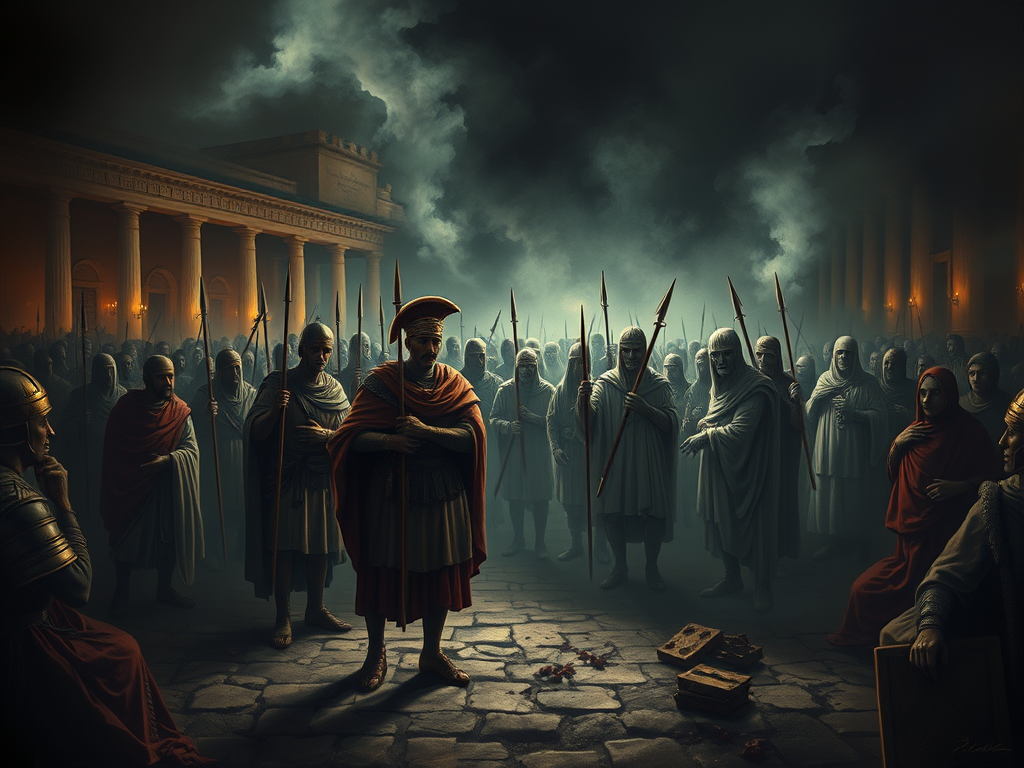
Our recent collective experience with a global pandemic has left an indelible mark on the 21st century, reminding us of our vulnerability to the invisible world of pathogens. Yet, as profound as this event has been, it is but the latest chapter in a very old story. For as long as humans have built cities, traded goods, and waged wars, we have lived in the shadow of epidemic disease. These are not mere public health crises; they are history’s great accelerators, powerful and terrifying forces that have toppled empires, reshaped economies, and fundamentally altered the course of civilization.
From the ancient world to the modern era, pandemics have acted as biological resets, exposing the weaknesses in our societies and forcing dramatic change in their wake. They have shattered armies, dismantled social structures, and spurred revolutionary advances in science and medicine. To look back at the great plagues of history is to understand that much of our world was built on the foundations left by their devastation. Excluding our most recent encounter, let’s explore the top 10 pandemics that forever changed the human story.
1. The Antonine Plague (165-180 CE): The Empire’s First Great Wound
At the height of its power, the Roman Empire seemed invincible, a sprawling colossus of military and engineering might. But in 165 CE, soldiers returning from campaigns in the Near East brought back an invisible enemy that would inflict a devastating blow. The Antonine Plague, believed to have been an outbreak of either smallpox or measles, swept through the Empire for 15 years. At its peak, the Roman historian Cassius Dio reported 2,000 deaths a day in the city of Rome alone. The total death toll is estimated to be in the millions, including the co-emperor Lucius Verus.
The consequences were catastrophic. The plague hollowed out the ranks of the Roman legions, creating a severe manpower shortage on the frontiers that would plague the Empire for decades. It crippled the economy, disrupted trade, and led to a sharp decline in tax revenue. Perhaps most profoundly, it created a crisis of faith. The traditional Roman gods seemed powerless to stop the suffering, leading many to turn to new, more personal religions like Christianity, which offered solace and care for the sick. The Antonine Plague didn’t cause the fall of Rome, but it was the Empire’s first great wound, a long, slow bleed from which it would never fully recover.
2. The Plague of Justinian (541-542 CE): A Dream of Empire Dies
In the 6th century, the Eastern Roman (Byzantine) Emperor Justinian I was on the cusp of greatness. His brilliant general, Belisarius, was reconquering lost territories in Italy and North Africa, and Justinian dreamed of restoring the Roman Empire to its former glory. That dream was shattered by the arrival of a terrifying new disease in 541 CE. Carried by fleas on rats travelling on grain ships from Egypt, the bubonic plague (Yersinia pestis) erupted in the magnificent capital of Constantinople.
The historian Procopius described a city in apocalyptic horror, with bodies piling up in the streets faster than they could be buried and the emperor himself falling ill (though he survived). The plague killed an estimated 25-50 million people, perhaps a quarter of the population of the Eastern Mediterranean. The impact was immediate and absolute. Justinian’s armies were decimated, his treasury was bankrupted by the loss of taxpayers, and his ambition of a reunited Rome was rendered impossible. The Plague of Justinian permanently weakened the Byzantine Empire, leaving it vulnerable to the rise of Islam in the following century and redrawing the political map of the world.
3. The Black Death (1347-1351): The Plague That Ended the Middle Ages
Of all the pandemics in history, none holds a more fearsome place in our collective memory than the Black Death. The second major outbreak of bubonic plague, it arrived in Europe in 1347 at the port of Messina, Sicily, and spread with terrifying speed. In less than five years, it wiped out an estimated 30% to 60% of Europe’s population. It was a demographic catastrophe on a scale that is difficult to comprehend today, a storm of death that touched every corner of society.
The impact of the Black Death was so profound that it served as a violent catalyst for the end of the medieval world. The rigid feudal system, which relied on a vast population of peasant labour, crumbled as the survivors found their work to be in high demand, allowing them to demand wages and freedom. The authority of the Catholic Church was severely shaken, as its prayers and processions proved powerless against the pestilence. The trauma of the plague seeped into art, literature, and culture, while the economic and social upheaval it caused helped create the conditions for the Renaissance and the Protestant Reformation. It was a brutal, world-breaking event that, from its ashes, allowed a new, more modern Europe to be born.
4. The Columbian Exchange: An American Apocalypse
When Christopher Columbus made landfall in the Americas in 1492, he initiated a process of exchange—of plants, animals, cultures, and ideas—that would change the world. But the most consequential part of this “Columbian Exchange” was the unintentional transfer of diseases. Europeans brought with them pathogens like smallpox, measles, and influenza, to which the indigenous peoples of the Americas had absolutely no prior exposure and therefore no immunity.
The result was the single greatest demographic disaster in human history. Waves of epidemics swept through the continents, killing an estimated 90% of the indigenous population in the century and a half following contact. Powerful and sophisticated empires, including the Aztec and the Inca, were hollowed out by disease, their social structures collapsing and their armies decimated, which made the Spanish conquest vastly easier. The smallpox pandemic in the Americas was an apocalyptic event that depopulated entire regions, forever altered the genetic and cultural landscape of the New World, and paved the way for European colonisation on a massive scale.
5. The Great Plague of London (1665-1666): A City’s Final Bout with the Plague
For centuries after the Black Death, the bubonic plague remained a terrifying, recurring visitor to European cities. Its last major outbreak in Great Britain was the Great Plague of London. In the hot summer of 1665, the familiar and dreaded signs appeared: the tell-tale buboes, the red crosses painted on the doors of the sick, and the nightly rounds of carts with the cry, “Bring out your dead!” The city descended into panic as those who could, including King Charles II and his court, fled to the countryside.
The plague killed an estimated 100,000 Londoners, about a quarter of the city’s population, in just over a year. The historical significance of this outbreak lies in what happened next. It was the final gasp of the bubonic plague in Britain. Shortly after it subsided, the Great Fire of London in 1666 destroyed much of the crowded, rat-infested medieval centre of the city. The subsequent rebuilding efforts, which used brick instead of timber and created wider streets, along with the gradual replacement of the black rat with the more human-shy brown rat, helped ensure the plague would never return on such a scale. It was a turning point for London, marking the end of one era of disease and the beginning of new ideas about public health and urban design.
6. The Third Plague Pandemic (1855 – c. 1960): The Plague Goes Modern
While many associate the plague with the medieval world, the third major global pandemic of bubonic plague began in the mid-19th century and lasted well into the 20th. Originating in the Yunnan province of China, it was spread worldwide by the new technologies of the age: steamships and the expanding global trade network. It reached every inhabited continent, causing an estimated 12 to 15 million deaths, the vast majority of which were in India and China.
The historical importance of the Third Plague Pandemic, however, was not its death toll, but its scientific legacy. As the plague spread to Hong Kong in 1894, two bacteriologists, Alexandre Yersin (a student of Louis Pasteur) and Kitasato Shibasaburō, rushed to identify the cause. Working independently, Yersin was the first to successfully isolate the bacillus responsible, which was later named Yersinia pestis in his honour. A few years later, researchers definitively proved the role of the flea and the rat in transmitting the disease. This was a landmark victory for the new germ theory of disease and laid the foundation for modern epidemiology, transforming our understanding of how infectious diseases spread and how they can be controlled.
7. The 1918 Flu (“Spanish Flu”): The Deadliest Pandemic of the 20th Century
As World War I was drawing to a close, a far deadlier killer was circling the globe. The 1918 influenza pandemic, misleadingly known as the “Spanish Flu” (Spain was one of the few neutral countries where the press could report on it freely), was caused by a uniquely virulent H1N1 influenza A virus. It infected an estimated 500 million people—one-third of the world’s population at the time—and killed between 50 and 100 million. This staggering death toll surpasses the number of people killed in the Great War itself.
A particularly terrifying feature of the 1918 Spanish Flu was that it disproportionately killed young, healthy adults in the prime of their lives, a demographic usually spared by influenza. The pandemic overwhelmed hospitals, silenced cities, and brought the war effort to a halt in some areas. Its impact was so swift and devastating that it was strangely “forgotten” for decades, overshadowed by the war. However, it had a lasting legacy, spurring the creation of national public health organisations and leading to a new international focus on the surveillance and study of influenza, a threat that remains with us to this day.
8. The Encephalitis Lethargica Epidemic (c. 1917-1928): The Mysterious “Sleepy Sickness”
Concurrent with the 1918 flu pandemic, a bizarre and terrifying neurological disease appeared, seemingly out of nowhere. Encephalitis lethargica, or “sleepy sickness,” spread across the world, affecting nearly five million people. The initial symptoms were flu-like, but they soon progressed into a bewildering array of neurological conditions. Some patients became hyperkinetic and agitated, while others descended into a statue-like catatonic state, conscious but unable to move or speak.
The epidemic vanished as mysteriously as it arrived, but its legacy endured. About a third of those infected died, and many of the survivors were left frozen in a post-encephalitic Parkinson’s-like state for decades, becoming “living statues” in institutions around the world. These patients were famously documented by the neurologist Oliver Sacks in his book Awakenings. The cause of encephalitis lethargica remains one of the great medical mysteries of the 20th century. Its emergence serves as a chilling reminder of the potential for new and poorly understood diseases to wreak havoc, and it profoundly advanced our understanding of the complex relationship between the brain, viruses, and the immune system.
9. The Polio Epidemics (1910s-1950s): A Modern Terror Conquered by Science
Though the poliovirus has existed for millennia, it was a disease of modernity that it became a terrifying epidemic scourge. Improved sanitation in the late 19th and early 20th centuries meant that infants were less likely to be exposed to the virus while still protected by maternal antibodies. This paradoxically led to large-scale epidemics that peaked in the summer months, striking fear into the hearts of parents everywhere.
The historical impact of polio is a story of two parts. First was the terror. The virus primarily affected children, and its most dreaded outcome was paralysis, symbolised by the haunting image of rows of children encased in “iron lung” ventilators. Second was the triumph of science. The fear of polio galvanized an unprecedented public response, most notably the “March of Dimes” campaign in the United States, which raised enormous sums for research. This funding led directly to the development of the Salk (1955) and Sabin (1961) vaccines. Polio became the ultimate symbol of a global public health victory, demonstrating the power of vaccination to conquer a devastating disease and inspiring the global eradication efforts that continue to this day.
10. The HIV/AIDS Pandemic (1981-Present): A Plague That Ignited Activism
In 1981, doctors in the United States began reporting cases of a rare pneumonia and an aggressive cancer among young, otherwise healthy gay men. This was the beginning of the Acquired Immunodeficiency Syndrome (AIDS) pandemic, caused by the Human Immunodeficiency Virus (HIV). The early years were defined by fear, misinformation, and a devastating death toll, compounded by social stigma and government inaction.
The global impact of HIV/AIDS has been immense and multifaceted. It has claimed an estimated 40 million lives and continues to be a major global health issue. But its historical legacy is also one of profound social and medical change. The pandemic forced LGBTQ+ issues into the public consciousness on a scale never seen before. The perceived indifference of the political and medical establishments ignited a new, powerful, and sophisticated form of patient-led activism, with groups like ACT UP demanding research, treatment access, and a voice in their own care. Scientifically, the crisis spurred a revolution in virology, leading to the development of life-saving antiretroviral drugs that have transformed HIV from a death sentence into a manageable chronic condition, one of the greatest medical achievements of our time.
Further Reading
Pandemics are a powerful lens through which to view human history. For those who wish to delve deeper into how diseases have shaped our world, these books are essential reading.
- Plagues and Peoples by William H. McNeill. A foundational and sweeping history that was one of the first to argue for the central role of infectious disease in shaping human civilization.
- The Great Mortality: An Intimate History of the Black Death, the Most Devastating Plague of All Time by John Kelly. A vivid and gripping narrative account of the Black Death and its human impact.
- The Great Influenza: The Story of the Deadliest Pandemic in History by John M. Barry. The definitive account of the 1918 flu pandemic, exploring the science, politics, and terror of the event.
- And the Band Played On: Politics, People, and the AIDS Epidemic by Randy Shilts. A monumental piece of journalism that chronicles the early years of the AIDS crisis, its heroes, and its villains.
Here at Zentara.blog, our mission is to take those tricky subjects and unlock them, making knowledge exciting and easy to grasp for everyone. But the adventure doesn’t stop on this page! We’re constantly exploring new frontiers and sharing discoveries across the digital universe. Want to dive deeper into more mind-bending Top 10s and keep expanding your world? Come join us on our other platforms – we’ve got unique experiences waiting for you on each one!
Get inspired by visual wonders and bite-sized facts: See the world through Zentara’s eyes on Pinterest!
Pin our fascinating facts and stunning visuals to your own boards. Explore Pins on Pinterest: https://uk.pinterest.com/zentarablog/
Discover quick insights and behind-the-scenes peeks: Hop over to Tumblr for snippets, quotes, and unique content you won’t find anywhere else. It’s a different flavour of discovery! Follow the Fun on Tumblr: https://www.tumblr.com/zentarablog
Ready for deep dives you can listen to or watch? We’re bringing our accessible approach to video and potentially audio! Subscribe to our YouTube channel and tune into future projects that make learning pop! Subscribe on YouTube: https://www.youtube.com/@ZentaraUK
Seeking even more knowledge in one place? We’ve compiled some of our most popular topic deep dives into fantastic ebooks! Find them on Amazon and keep the learning journey going anytime, anywhere. Find Our Ebooks on Amazon: https://www.amazon.co.uk/s?k=Zentara+UK&ref=nb_sb_noss
Connect with us and fellow knowledge seekers: Join the conversation on BlueSky! We’re sharing updates, thoughts, and maybe even asking you what wonders we should explore next. Chat with Us on BlueSky: https://bsky.app/profile/zentarablog.bsky.social
Perfect for learning on the move! We post multiple 10-minute podcasts per day on Spotify. Pop on your headphones and fill your day with fascinating facts while you’re out and about! Listen on Spotify: https://open.spotify.com/show/3dmHbKeDufRx95xPYIqKhJFollow us on Instagram for bytesize knowledge! We post multiple posts per day on our official Instagram account. https://www.instagram.com/zentarablog/ Every click helps us keep bringing honest, accessible knowledge to everyone. Thanks for exploring with us today – see you out there in the world of discovery!




Leave a Reply