
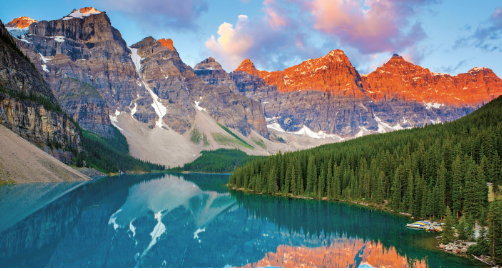
Canada is often seen as the “Great White North,” a vast and peaceful kingdom. It’s a country known for its politeness, its hockey, and its stunning natural landscapes. But this calm, modern exterior was forged in a complex and often turbulent history. Canada’s story is not one of a single, fiery revolution but of a slow, steady, and often reluctant evolution. It’s a tale of empires clashing, of a nation defined by what it is not (specifically, American), and of a constant, challenging negotiation between peoples, languages, and vast distances.
From the battlefields that decided the fate of a continent to the quiet constitutional moments that defined its soul, Canada’s journey is one of the most unique national stories in the world. To understand the country today, you must understand the key turning points that shaped its character. Here are the top 10 most important events in the history of Canada.
1. The Battle of the Plains of Abraham (1759)
If you had to pick a single 15-minute period that decided the fate of North America, it would be the Battle of the Plains of Abraham. This one clash was the climax of the Seven Years’ War (known as the French and Indian War in the U.S.), a global conflict between Great Britain and France. For months, the British, led by General James Wolfe, had besieged the fortress city of Quebec, the heart of New France.
In a daring and high-risk gamble, Wolfe had his soldiers scale the “unclimbable” cliffs west of the city under cover of darkness, assembling his army on a farmer’s field known as the Plains of Abraham. The French commander, the Marquis de Montcalm, was forced to leave the city’s defenses and meet them in a traditional European-style battle. The fight was short, brutal, and decisive. In a matter of minutes, the French line broke, and the city was lost. Both Wolfe and Montcalm were mortally wounded.
This battle was the beginning of the end for the French empire in North America. Four years later, the Treaty of Paris (1763) ceded all of New France to Britain. This single event is the genesis of modern Canada. It set the stage for a new, continent-spanning nation that would be officially British, but whose foundational core in Quebec would remain stubbornly, proudly, and enduringly French.
2. The War of 1812
For the United States, the War of 1812 is a “forgotten” conflict. For Canada, it is the foundational military event. After the American Revolution, the British colonies to the north were populated by English-speaking Loyalists who had fled the U.S. and French-speaking Canadiens. When the U.S. declared war on Britain and invaded, it assumed the colonists would rise up and join them.
They were wrong. French-speaking militia, British regulars, English-speaking settlers, and Indigenous allies (led by the great Shawnee chief Tecumseh) united to repel the American invasions. This wasn’t a “Canadian” army—the country didn’t exist yet—but it was the first time these disparate groups fought side-by-side for a common cause: to not be American.
The war was a brutal stalemate, but for Canada, it was a profound psychological victory. Heroes like Sir Isaac Brock and Laura Secord became national legends. The conflict solidified the border, fostered a unique anti-American identity, and created a shared sense of resilience. It planted the idea that, despite their differences, the people living in British North America had a separate destiny from their southern neighbours.
3. The Canadian Confederation (1867)
On July 1, 1867, the Dominion of Canada was born. This event, known as Confederation, was not the result of a war for independence. In fact, it was the exact opposite: it was a peaceful, political merger, a business deal hammered out by politicians in smoky backrooms.
So what was the problem they were solving? The Province of Canada (modern Ontario and Quebec) was in a state of “political deadlock,” with the English and French-speaking halves unable to agree on anything. Meanwhile, the American Civil War had just ended, and the victorious, massive Union army to the south made the small, separate British colonies nervous. They feared being annexed.
Led by Sir John A. Macdonald, the “Fathers of Confederation” (from the Province of Canada, New Brunswick, and Nova Scotia) pitched a solution: “union.” The British North America Act (BNA Act), passed by the UK Parliament, united them into a single country. It was a pragmatic arrangement designed for economic stability and mutual defense. This event created the political framework for the modern state, establishing the federal-provincial system that still defines Canadian politics today.
4. The Completion of the Canadian Pacific Railway (1885)
Confederation in 1867 was a promise, but the Canadian Pacific Railway (CPR) was the fulfillment. When the colony of British Columbia agreed to join Canada in 1871, it did so on one almost-impossible condition: that a railway be built to connect it to the east, spanning 4,000 kilometers of brutal, unforgiving terrain.
The project, led by Sir John A. Macdonald’s government, was a monumental feat of engineering and a national scandal of corruption. It was built in just five years, largely by the back-breaking labour of thousands of Chinese and European immigrants, many of whom died in the process.
When the “Last Spike” was driven at Craigellachie, British Columbia, it did more than just link two oceans with steel; it physically stitched the new, fragile country together. It allowed for the mass settlement of the Prairies, transported troops to the west (to put down the North-West Resistance), and made the idea of a Canada “from sea to sea” a physical reality. Without the CPR, the prairies would have likely been absorbed by the United States, and Canada would exist only as a small eastern rump state.
5. The Battle of Vimy Ridge (1917)
In the bloody stalemate of the First World War, Vimy Ridge was a heavily fortified, 7-kilometre-long escarpment in northern France that was considered the most impregnable German position on the Western Front. Both the British and French armies had tried and failed to take it, suffering over 100,000 casualties.
In April 1917, the task fell to the Canadian Corps. For the first time in the war, all four Canadian divisions were brought together to fight as a single, unified force. Under the meticulous planning of Canadian General Arthur Currie, the attack was rehearsed with unprecedented precision. After a massive, week-long artillery barrage, the 100,000 Canadian soldiers went “over the top” at dawn on Easter Monday.
They achieved the impossible, capturing the ridge in four days. The victory was strategically important, but its symbolic power was immense. It was the first time Canada, as a nation, had stepped onto the world stage and, on its own terms, achieved a victory that its colonial masters could not. One general famously remarked, “In those few minutes, I witnessed the birth of a nation.” Vimy Ridge became the symbol of Canada’s sacrifice, its capability, and its emergence from a colony to a nation in its own right.
6. The Statute of Westminster (1931)
While Vimy Ridge was the spiritual birth of the nation, the Statute of Westminster was its legal birth certificate. For decades after 1867, Canada was still, in effect, a colony. It managed its own internal affairs, but its foreign policy was controlled by Britain, and its highest court was in London. When Britain declared war in 1914, Canada was automatically at war, too.
After the sacrifices of WWI, this was no longer acceptable. Prime Minister William Lyon Mackenzie King spent the 1920s demanding full autonomy. The Statute of Westminster was the result. This simple act of the British Parliament declared that the “Dominions” (Canada, Australia, New Zealand, etc.) were now fully independent and “equal in status” to Great Britain.
This was Canada’s peaceful declaration of independence. From this moment on, Canada could make its own laws, sign its own treaties, and—crucially—declare war on its own. When WWII began in 1939, Canada made a point of waiting a full week after Britain to declare war, a symbolic gesture to prove to the world, and to itself, that the decision was now its own.
7. The Quiet Revolution (1960s)
For 200 years after the Battle of the Plains of Abraham, Quebec had been a society defined by “survivance” (survival). It was rural, conservative, and dominated by the Roman Catholic Church. The Quiet Revolution was the moment that system shattered, almost overnight.
It wasn’t a violent revolution, but a social and intellectual one. It began with the election of Premier Jean Lesage in 1960 under the slogan “Maîtres chez nous” (Masters in our own house). In a few short years, the provincial government took control of healthcare and education from the Church, nationalized the hydroelectric industry (a massive source of provincial pride and power), and embraced a new, secular Quebec nationalism (Québécois identity).
This event transformed Quebec from a traditional, religious society into a modern, secular, and assertive one. It also lit the fuse for the Quebec sovereignty movement, which would dominate Canadian politics for the next 40 years. It created the “two solitudes”—a modern, assertive French-speaking Quebec existing alongside English-speaking Canada—that defines the country’s central political challenge.
8. The October Crisis (1970)
The Quiet Revolution had a dark, radical fringe. The Front de libération du Québec (FLQ) was a Marxist terrorist group that wanted to “liberate” Quebec from Anglo-American imperialism through violence. For years, they had been planting bombs, culminating in October 1970 with the kidnapping of two high-profile officials: British diplomat James Cross and Quebec’s Minister of Labour, Pierre Laporte.
The province of Quebec was paralyzed with fear. In a shocking and controversial move, Prime Minister Pierre Elliott Trudeau (a Quebecer himself) invoked the War Measures Act. This was an extreme law, previously used only in wartime, that suspended all civil liberties. Tanks rolled into the streets of Montreal, and hundreds of innocent artists, intellectuals, and activists were arrested and held without charge.
When a reporter asked Trudeau how far he would go, he gave his most famous, icy reply: “Just watch me.” While the crisis ended with the FLQ’s collapse (after they murdered Pierre Laporte), it was a traumatic moment. It was the only time in peacetime history that Canada’s government used military force and suspended the rights of its own citizens to deal with a domestic threat.
9. The Patriation of the Constitution and the Charter of Rights (1982)
This is arguably the most important political event since 1867. For all its independence, Canada’s “constitution” (the BNA Act) was still a British law. To amend it, Canada had to formally ask the UK Parliament. Prime Minister Pierre Trudeau, a legal scholar, was obsessed with fixing this. He wanted to “patriate” (bring home) the constitution.
After a bitter political fight with the provinces, he succeeded. But he didn’t just bring the old law home; he added something new: the Charter of Rights and Freedoms. This was a radical change. Before the Charter, Canada’s legal system was based on British “parliamentary supremacy” (the government could pass almost any law it wanted). The Charter, much like the U.S. Bill of Rights, put the rights of the individual—freedom of speech, religion, equality—above the power of the government.
This single document fundamentally rewrote the social and legal contract of Canada. It empowered the Supreme Court, gave a powerful new tool to minority groups, and defined the country as a nation built on a foundation of individual rights.
10. The Creation of Nunavut (1999)
The map of Canada looks ancient, but it’s not. Its most recent, and perhaps most profound, change happened in 1999 with the creation of Nunavut (“Our Land” in the Inuktitut language). This was not just a new territory; it was the largest Indigenous land claim settlement in modern history.
After decades of negotiation, the Canadian government and the Inuit people agreed to carve a new territory out of the eastern half of the Northwest Territories. This new territory is enormous—it’s one-fifth of Canada’s entire landmass (larger than Western Europe). More importantly, it is a self-governing homeland for the Inuit, with a public government where their language and culture are the majority.
The creation of Nunavut was a revolutionary, peaceful event. It was a step away from Canada’s dark colonial past—defined by residential schools and broken treaties—and toward a new model of Indigenous self-government. It represents a fundamental, ongoing shift in how Canada redefines its relationship with the First Peoples who have lived on the land for millennia.
Further Reading
- The Penguin History of Canada by Robert Bothwell
- A comprehensive, well-written, and authoritative one-volume history that is perfect for understanding the full sweep of the country’s story.
- Canadian History for Dummies by Will Ferguson
- Don’t let the title fool you. Ferguson is one of Canada’s best satirists, and this book is a genuinely funny, engaging, and highly informative overview of the nation’s past.
- A Concise History of Canada by Margaret R. Conrad
- A more academic, but still very accessible, text that is excellent at weaving social and political history together.
- Vimy by Pierre Berton
- A masterpiece of narrative non-fiction by one of Canada’s most famous authors. It details the battle that defined a nation in vivid, human terms.
- Clearing the Plains: Disease, Politics of Starvation, and the Loss of Aboriginal Life by James Daschuk
- A more challenging but essential read that re-frames the settlement of the Canadian West, focusing on the devastating and often deliberate impact on Indigenous populations.
Here at Zentara.blog, our mission is to take those tricky subjects and unlock them, making knowledge exciting and easy to grasp for everyone. But the adventure doesn’t stop on this page! We’re constantly exploring new frontiers and sharing discoveries across the digital universe. Want to dive deeper into more mind-bending Top 10s and keep expanding your world? Come join us on our other platforms – we’ve got unique experiences waiting for you on each one!
Get inspired by visual wonders and bite-sized facts: See the world through Zentara’s eyes on Pinterest!
Pin our fascinating facts and stunning visuals to your own boards. Explore Pins on Pinterest: https://uk.pinterest.com/zentarablog/
Discover quick insights and behind-the-scenes peeks: Hop over to Tumblr for snippets, quotes, and unique content you won’t find anywhere else. It’s a different flavour of discovery! Follow the Fun on Tumblr: https://www.tumblr.com/zentarablog
Ready for deep dives you can listen to or watch? We’re bringing our accessible approach to video and potentially audio! Subscribe to our YouTube channel and tune into future projects that make learning pop! Subscribe on YouTube: https://www.youtube.com/@ZentaraUK
Seeking even more knowledge in one place? We’ve compiled some of our most popular topic deep dives into fantastic ebooks! Find them on Amazon and keep the learning journey going anytime, anywhere. Find Our Ebooks on Amazon: https://www.amazon.co.uk/s?k=Zentara+UK&ref=nb_sb_noss
Connect with us and fellow knowledge seekers: Join the conversation on BlueSky! We’re sharing updates, thoughts, and maybe even asking you what wonders we should explore next. Chat with Us on BlueSky: https://bsky.app/profile/zentarablog.bsky.social
Perfect for learning on the move! We post multiple 10-minute podcasts per day on Spotify. Pop on your headphones and fill your day with fascinating facts while you’re out and about! Listen on Spotify: https://open.spotify.com/show/3dmHbKeDufRx95xPYIqKhJFollow us on Instagram for bytesize knowledge! We post multiple posts per day on our official Instagram account. https://www.instagram.com/zentarablog/ Every click helps us keep bringing honest, accessible knowledge to everyone. Thanks for exploring with us today – see you out there in the world of discovery!




Leave a Reply