
The Night the Music Died (Again)
Table of Contents
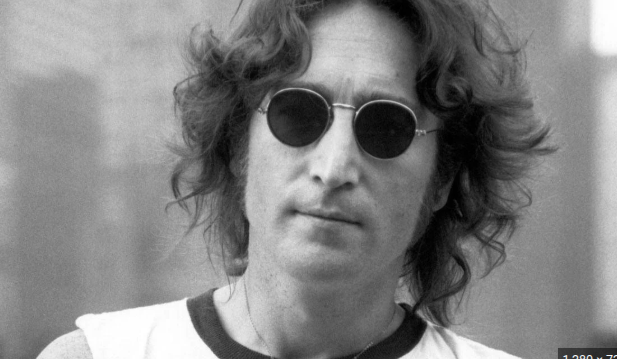
It is a date etched into the collective consciousness of the world, much like November 22, 1963, or September 11, 2001. On the night of December 8, 1980—exactly 45 years ago today as of this writing in 2025—John Lennon was gunned down outside his home, the Dakota, in New York City. The tragedy didn’t just end the life of a rock star; it shattered the lingering utopian dreams of the 1960s. Lennon was more than a musician; he was a symbol of peace, a counterculture icon, and a man who had finally found personal stability after years of turmoil.
For decades, the narrative has been dominated by the image of the lone, deranged gunman and the grieving widow. But the full story of that night is a tapestry of bizarre coincidences, missed opportunities, and haunting premonitions. It is a story of a comeback cut short and a media landscape that changed forever in the span of a few hours.
As we mark the 45th anniversary of this dark day, it is time to look past the headlines and examine the specific, often heartbreaking details that define the event. From the legendary sportscaster who broke the news to the chilling photograph taken just hours before the shots rang out, here are ten fundamental facts about the murder of John Lennon.
1. Monday Night Football Broke the News First
In the pre-internet age, news traveled at the speed of the morning paper or the evening broadcast. However, the news of Lennon’s death broke in the most unlikely of places: a football game. On the night of December 8, the New England Patriots were playing the Miami Dolphins on Monday Night Football.
In the broadcast booth, legendary sportscaster Howard Cosell received the confirmation from ABC News producers. With just seconds left in the game and the score tied, Cosell hesitated, worrying that a football game was the wrong venue for such a tragedy. However, realized the magnitude of the moment. He famously interrupted the commentary:
“Remember this is just a football game, no matter who wins or loses. An unspeakable tragedy confirmed to us by ABC News in New York City: John Lennon, outside of his apartment building on the West Side of New York City, the most famous perhaps of all of the Beatles, shot twice in the back, rushed to Roosevelt Hospital, dead on arrival.”
For millions of Americans, the memory of Lennon’s death is forever linked to the roar of a stadium crowd suddenly falling away into shock. It was a seminal moment in media history, blurring the lines between sports, entertainment, and hard news.
2. The Killer Got an Autograph Hours Earlier
One of the most chilling aspects of the murder is the interaction that occurred roughly six hours before the shooting. As John Lennon and Yoko Ono left the Dakota building around 5:00 PM to head to the Record Plant recording studio, they were approached by fans, a common occurrence for the couple.
Among them was Mark David Chapman. He silently held out a copy of Lennon’s newly released album, Double Fantasy. Lennon took the album, signed it “John Lennon 1980,” and asked, “Is that all you want?” Chapman nodded. A photographer, Paul Goresh, happened to snap a picture of this precise moment.
That photograph exists today as a haunting artifact: the victim obliging his killer, capturing the very last moment of normalcy in Lennon’s life. It underscores the terrifying accessibility of celebrities in that era and the tragic irony that Lennon’s kindness to a fan was the prelude to his death.
3. Lennon’s Last Photo Was Taken That Morning
December 8, 1980, began as a busy, productive day for Lennon. That morning, famed photographer Annie Leibovitz arrived at the Dakota to shoot photos for Rolling Stone magazine. She wanted to capture the couple together to promote their new joint album.
Leibovitz wanted a photo of both of them naked, but Yoko Ono was uncomfortable with removing her clothes. The compromise resulted in one of the most iconic images in rock history: a naked John Lennon curled into a fetal position, clinging to a fully clothed Yoko Ono. Lennon reportedly loved the Polaroid, telling Leibovitz, “You’ve captured our relationship exactly.”
He made her promise to put it on the cover. She did. The photo, taken just hours before he died, ran on the cover of the January 1981 issue without a headline. It stands as a vulnerable, final testament to his love for his wife, immortalizing him not as a rock god, but as a husband clinging to his anchor.
4. The “Catcher in the Rye” Obsession
When the police arrived at the scene minutes after the shooting, they didn’t have to hunt for the gunman. Mark David Chapman hadn’t fled. He was standing calmly nearby, reading a paperback book: J.D. Salinger’s The Catcher in the Rye.
Chapman identified obsessively with the book’s protagonist, Holden Caulfield, who despises “phonies.” In Chapman’s distorted reality, Lennon had become the ultimate “phony”—a wealthy man preaching “imagine no possessions” while living in an elite Manhattan apartment.
Inside the front cover of the book he was holding, Chapman had written: “This is my statement.” He believed that by killing Lennon, he would essentially become the living embodiment of the book’s themes (or rather, his twisted interpretation of them). This connection forever linked Salinger’s literary classic with the tragedy, turning a story about teenage angst into a prop for a violent crime.
5. Lennon Could Have Driven Into the Courtyard
The architecture of the Dakota building played a fateful role in the tragedy. The building features a secure, arched carriage entrance where cars can drive through to a private courtyard. Usually, when returning home, the limousine would drive through this archway, allowing Lennon and Ono to exit the vehicle in a secure area, away from the street.
However, on the night of December 8, the limousine pulled up to the curb on 72nd Street instead. It is believed that Lennon wanted to get out on the street to greet the fans who had been waiting there, or perhaps simply because the weather was unusually mild for December.
By exiting on the sidewalk, Lennon had to walk past the archway where Chapman was waiting in the shadows. This tiny, seemingly inconsequential decision—stopping at the curb instead of the courtyard—closed the distance between the artist and his assassin, proving how history can hinge on a matter of feet.
6. James Taylor Met the Killer the Day Before
The “Six Degrees of Separation” surrounding Lennon’s death are startling. Musician James Taylor lived in a building nearby and had a bizarre encounter with Mark David Chapman just one day before the murder.
Taylor later recounted that a man pinned him against a wall in a subway station, sweating profusely and speaking in a manic, “freakish” manner about how he was going to do something important for John Lennon. Taylor, unnerved, managed to get away. It wasn’t until he saw the news photos later that he realized the manic stranger was Chapman.
This anecdote highlights that Chapman was unraveling in public view in the days leading up to the crime. He was a ticking time bomb wandering the streets of the Upper West Side, unnoticed by authorities but brushing shoulders with the very peers of the man he intended to kill.
7. There Was No Funeral
In the wake of the murder, the world expected a massive, state-like funeral. The Beatles were royalty, after all. Fans flocked to New York, London, and Liverpool, waiting for details on where to pay their respects.
However, Yoko Ono made the decision that there would be no funeral. She wanted to avoid the media circus that would inevitably surround a burial service. Instead, she issued a statement: “John loved and prayed for the human race. Please do the same for him.”
She asked the world to observe ten minutes of silence on the following Sunday, December 14. The response was global. Millions of people stood silent in parks, streets, and homes. Radio stations went off the air. It was a unique, decentralized memorial that fit Lennon’s anti-establishment ethos far better than a traditional religious ceremony would have. His body was cremated, and his ashes were scattered in Central Park, where the Strawberry Fields memorial now stands.
8. The “John Doe” Wristband
When police officers rushed Lennon to Roosevelt Hospital in the back of a squad car (they didn’t wait for an ambulance), he was barely clinging to life. Despite the frantic efforts of the doctors to open his chest and massage his heart manually, the damage to his major arteries was too severe.
In the chaos of the emergency room, the staff had to follow protocol. Even though the doctors eventually realized who the patient was, Lennon was officially tagged as “John Doe” to prevent the media from leaking the death before his wife could be informed.
However, a twist of fate occurred. A producer for ABC News was in the hospital for a different reason (a motorcycle accident) and spotted the commotion. He confirmed the identity, leading to the tip that reached Howard Cosell. The “John Doe” tag was a futile attempt to maintain dignity and order in a situation that had already spiraled into a global news event.
9. He Had Just Recorded “Walking on Thin Ice”
The final creative act of John Lennon’s life was not a Beatles song or a solo ballad, but a track by Yoko Ono. On the night of the murder, the couple had been at the Record Plant mixing a song called “Walking on Thin Ice.”
It was a disco-infused, eerie track featuring Lennon on lead guitar. The lyrics, written by Ono, were hauntingly prophetic: “Walking on thin ice / I’m paying the price / For throwing the dice in the air / Why must we learn it the hard way / And play the game of life with your heart?”
Lennon was reportedly thrilled with the track, telling Yoko, “This is your number one hit.” He was holding the tape of the final mix when he was shot. The tape fell to the ground during the chaos and was later returned to Ono. The song was released a month later, becoming Yoko Ono’s highest-charting solo hit, forever stained with the knowledge that it was the last music Lennon ever heard.
10. The Strawberry Fields Memorial Was a Diplomatic Victory
Today, the Strawberry Fields section of Central Park is a pilgrimage site for fans. It features the famous “Imagine” mosaic. However, getting it built was a massive diplomatic and logistical struggle.
Yoko Ono wanted a living memorial, not a statue. She engaged in a years-long battle with the New York City officials and landscape architects to designate a specific area of the park as a “quiet zone.” She donated over $1 million to the project and solicited donations from foreign governments to plant trees from around the world.
The mosaic itself was a gift from the city of Naples, Italy. Dedicated on what would have been Lennon’s 45th birthday in 1985, the site is technically an “international garden of peace.” It represents one of the few times the rigid landscaping rules of Central Park were bent for a celebrity, creating a permanent physical space that embodies Lennon’s legacy of global unity.
Further Reading
- The Last Days of John Lennon by James Patterson.
- John Lennon: The Life by Philip Norman.
- Let Me Take You Down: Inside the Mind of Mark David Chapman by Jack Jones.
- Dakota Days by John Green (Lennon’s tarot card reader/employee).
- Instamatic Karma by May Pang (For context on his “Lost Weekend” years).
Keep the Discovery Going!
Here at Zentara, our mission is to take tricky subjects and unlock them, making knowledge exciting and easy to grasp. But the adventure doesn’t stop at the bottom of this page. We are constantly creating new ways for you to learn, watch, and listen every single day.
Watch & Learn on YouTube
Visual learner? We publish 4 new videos every day, plus breaking news shorts to keep you smarter than the headlines. From deep dives to quick facts, our channel is your daily visual dose of wonder.
Click here to Subscribe to Zentara on YouTube
Listen on the Go on Spotify
Prefer to learn while you move? Tune into the Zentara Podcast! We drop a new episode daily, perfect for your commute, workout, or coffee break. Pop on your headphones and fill your day with fascinating facts.
Click here to Listen on Spotify
Every click, view, and listen helps us keep bringing honest knowledge to everyone. Thanks for exploring with us today—see you out there in the world of discovery!

Leave a Reply