
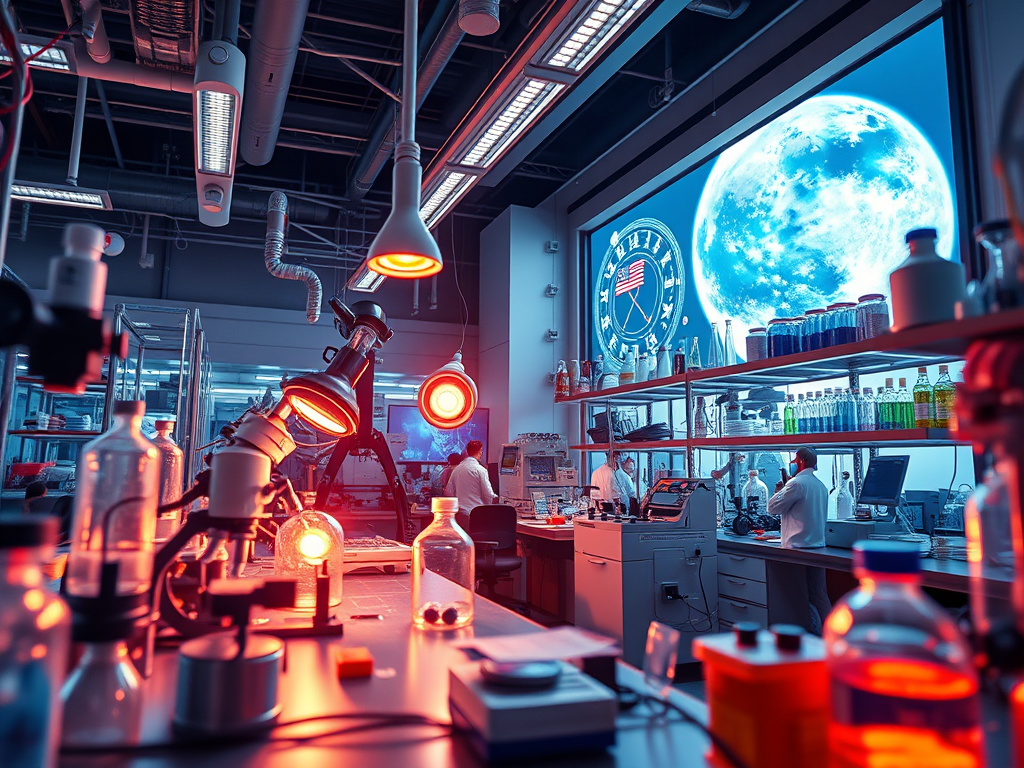
The Year of the Harvest: Science Moves from Theory to Reality
If the last decade of science was about “promising discoveries,” 2026 is shaping up to be the year of the “harvest.” Across laboratories, observatories, and tech incubators, we are witnessing a critical shift: technologies that have lived in the realm of theory or tiny experimental prototypes for twenty years are finally reaching maturity. We are moving from the question of “Is this possible?” to “How do we manufacture this at scale?”
The scientific pipeline for 2026 is teeming with breakthroughs that feel pulled from the pages of science fiction, yet they are grounded in years of rigorous testing. We aren’t just looking at incremental improvements in smartphone screens; we are looking at fundamental shifts in how we treat disease, how we power our civilization, and how we explore the cosmos. From the dusty surface of the Moon to the microscopic twisting of our own DNA, the boundaries of human capability are expanding.
In this list, we will look at the most anticipated milestones scheduled for the coming year. These aren’t wild guesses; they are the projected results of funded, active, and near-completion research pipelines as of mid-2025. Prepare to see how medical miracles, clean energy, and space travel will touch your life sooner than you think. Here are the top 10 scientific breakthroughs expected in 2026.
1. The First “Smart” Cancer Vaccines: mRNA’s Second Act
While the world knows mRNA technology for its role in fighting the pandemic, its original purpose was far more ambitious: curing cancer. In 2026, we expect to see the results of pivotal Phase 3 trials for Personalized Cancer Vaccines (PCVs) from major biotech firms like Moderna and BioNTech. Unlike traditional vaccines that prevent viruses, these are therapeutic vaccines designed to teach the body’s immune system to hunt down existing cancer cells.
Think of it like giving a bloodhound a specific scent. Doctors take a biopsy of a patient’s tumor, sequence its DNA to find its unique mutations (neoantigens), and create a custom mRNA vaccine that codes for those specific mutations. When injected, the vaccine shows the immune system exactly what the “enemy” looks like, allowing it to seek and destroy the cancer cells without harming healthy tissue. By 2026, we anticipate the first regulatory approvals for these vaccines targeting melanoma and potentially pancreatic cancer, marking the beginning of the end for “one-size-fits-all” chemotherapy.
2. Artemis III Prep and the Lunar Gateway: A House in Orbit
Space exploration in 2026 will be dominated by the Moon. While the “boots on the ground” landing of Artemis III might face timeline fluctuations, 2026 is the year the infrastructure for a permanent human presence truly comes together. Specifically, we are looking at the launch and assembly of the first components of the Lunar Gateway—a space station that will orbit the Moon.
Imagine the International Space Station (ISS), but located 240,000 miles away from Earth. The Gateway will serve as a staging point for astronauts descending to the lunar surface and a laboratory for deep-space science. This is a fundamental shift from the “visit and return” style of the Apollo missions to a “stay and sustain” model. We will see the launch of the Power and Propulsion Element (PPE) and the Habitation and Logistics Outpost (HALO), turning the Moon from a distant neighbor into a reachable destination with a driveway and a front porch.
3. Solid-State Batteries: The Electric Vehicle Tipping Point
For years, electric vehicles (EVs) have been held back by lithium-ion batteries: they are heavy, take a long time to charge, and carry a fire risk. In 2026, the “holy grail” of battery tech—Solid-State Batteries (SSBs)—is expected to move from lab benches to pilot production lines in vehicles from major manufacturers like Toyota and Volkswagen.
The difference is in the electrolyte. Traditional batteries use a liquid to move energy, which is volatile and limits density. SSBs use a solid material (like ceramic or glass). This allows for a battery that is half the size, holds twice the energy, charges in 10 minutes, and is almost impossible to catch fire. It is akin to upgrading from a spinning hard drive to a solid-state drive (SSD) in a computer: everything becomes faster, safer, and more efficient. In 2026, we will see the first commercial cars on the road powered by this tech, effectively killing “range anxiety” forever.
4. CRISPR 2.0: “Prime Editing” Cures Genetic Typos
We have heard of CRISPR, the “genetic scissors” that can cut DNA. But cutting DNA can be messy and sometimes leads to errors. By 2026, we expect the first major human successes using Prime Editing, a more advanced version of the technology often described as a “genetic word processor.” Instead of just cutting the strand, Prime Editing can “search and replace” specific DNA letters with incredible precision.
Imagine you have a book with a single typo that changes the meaning of a sentence. Old CRISPR was like tearing out the page. Prime Editing is like using a pencil and eraser to fix just that one letter. This technology is currently in the pipeline to treat genetic disorders like sickle cell anemia and Tay-Sachs disease with fewer side effects than ever before. 2026 will likely bring data from clinical trials showing that we can correct the typos of life without risking the integrity of the rest of the book.
5. Generative AI for Drug Discovery: The End of Trial and Error
The traditional method of finding new drugs involves testing thousands of chemical compounds to see what sticks—a process that takes a decade and costs billions. In 2026, Generative Biology powered by AI models (successors to AlphaFold) will deliver its first entirely AI-designed drugs into advanced human trials. These AIs don’t just guess; they simulate the laws of physics to design proteins and molecules from scratch that fit into disease receptors like a key in a lock.
This is a fundamental change in biochemistry. Instead of discovering drugs, we are designing them, much like an engineer designs a bridge. We expect to see AI-generated candidates for antibiotic-resistant superbugs and rare neurodegenerative diseases. This breakthrough drastically reduces the timeline of medicine, turning a 10-year marathon into a 2-year sprint, and potentially offering hope for diseases that were previously considered “undruggable” because they were too complex for human researchers to solve manually.
6. Net-Zero Aviation: The First Hydrogen-Electric Short Hauls
While we are still years away from flying across the Atlantic on a battery, 2026 is the year hydrogen-electric aviation becomes a commercial reality for short-hop flights. Companies like ZeroAvia and Airbus have been testing hydrogen fuel cell powertrains, and 2026 is the target for the first certified commercial routes for 19-to-40 seat aircraft.
Unlike burning jet fuel, which releases CO2 and contrails, hydrogen fuel cells generate electricity to turn propellers, emitting nothing but water vapor. Imagine taking a flight from London to Rotterdam or Seattle to Vancouver on a plane that acts like a flying Brita filter. This breakthrough proves that “guilt-free flying” is technologically possible. It starts with regional island-hopping flights, but it lays the regulatory and infrastructure groundwork (like hydrogen refueling at airports) needed to eventually scale up to the jumbo jets of the 2030s.
7. The “Internet of Forests”: Biosensors for Climate Protection
Tracking climate change has largely been done via satellites, which give a great “big picture” view but miss the details on the ground. In 2026, we will see the wide-scale deployment of biodegradable microsensors—the so-called “Internet of Forests.” These are tiny, seed-sized sensors that can be dropped by drones into remote ecosystems like the Amazon rainforest or the Siberian tundra.
These sensors monitor soil moisture, CO2 absorption, and temperature in real-time, networking together to create a living digital twin of the planet’s most critical biomes. Because they are made of biodegradable materials, they dissolve into the earth after their lifespan, leaving no electronic waste. This data will allow scientists to see forest fires before they spread or track the health of the soil with unprecedented accuracy, moving conservation from a reactive practice (fixing damage) to a proactive one (preventing it).
8. Fusion Energy’s “Net Gain” Pilot Plants
In late 2022, scientists achieved “ignition”—getting more energy out of a fusion reaction than the laser energy put in. By 2026, we stop looking at physics experiments and start looking at engineering pilots. Several private companies, backed by billions in venture capital, are scheduled to switch on their demonstration machines (like Helion Energy or Commonwealth Fusion Systems) aimed at proving sustained net electricity generation.
Fusion is the process that powers the sun—smashing atoms together to release massive energy without long-lived radioactive waste. While we won’t be plugging our toasters into a fusion grid in 2026, this year will be the “Wright Brothers moment” where the technology moves from a government science lab to a commercial prototype. If these pilot plants succeed in sustaining a reaction for minutes or hours rather than split-seconds, it proves that an era of limitless, clean energy is an engineering inevitability.
9. Neuro-Restoration: BCI Goes Mainstream
Brain-Computer Interfaces (BCI) have been grabbing headlines with experimental chips, but 2026 is the year they move toward therapeutic approval. We expect to see advanced trials where implantable BCIs restore significant function to people with spinal cord injuries—specifically, bridging the gap between the brain and the limbs to restore walking or complex hand movements.
But the real 2026 breakthrough is likely in vision. Systems that bypass damaged eyes and send visual data directly to the visual cortex are entering mature testing phases. For the blind, this doesn’t mean perfect 20/20 vision, but it means perceiving shapes, light, and movement well enough to navigate a room independently. We are witnessing the transition of the brain from a “black box” we can’t touch to a biological circuit board we can repair, fundamentally changing the prognosis for paralysis and sensory loss.
10. Exascale Climate Modeling: The Crystal Ball of Weather
Computers have finally reached “Exascale”—capable of a quintillion calculations per second. In 2026, this power will be fully applied to hyper-local climate modeling. Current weather models operate on grid squares that are 10-50km wide, which is why they often miss thunderstorms or specific wind patterns. Exascale computers can model the Earth in 1km squares (or smaller).
This means we won’t just predict “rain in London”; we will predict “flooding on Oxford Street between 2:00 PM and 3:00 PM.” This granularity allows cities to prepare for extreme weather events with street-by-street precision. It helps farmers know exactly which field needs water and which doesn’t. In 2026, this computing power becomes a critical tool for survival, helping humanity adapt to a volatile climate by taking the guesswork out of the forecast.
Further Reading
- The Coming Wave: Technology, Power, and the Twenty-first Century’s Greatest Dilemma by Mustafa Suleyman
- Life 3.0: Being Human in the Age of Artificial Intelligence by Max Tegmark
- The Code Breaker: Jennifer Doudna, Gene Editing, and the Future of the Human Race by Walter Isaacson
- Until the End of Time: Mind, Matter, and Our Search for Meaning in an Evolving Universe by Brian Greene
- Under a White Sky: The Nature of the Future by Elizabeth Kolbert
Keep the Discovery Going!
Here at Zentara, our mission is to take tricky subjects and unlock them, making knowledge exciting and easy to grasp. But the adventure doesn’t stop at the bottom of this page. We are constantly creating new ways for you to learn, watch, and listen every single day.
Watch & Learn on YouTube
Visual learner? We publish 4 new videos every day, plus breaking news shorts to keep you smarter than the headlines. From deep dives to quick facts, our channel is your daily visual dose of wonder.
Click here to Subscribe to Zentara on YouTube
Listen on the Go on Spotify
Prefer to learn while you move? Tune into the Zentara Podcast! We drop a new episode daily, perfect for your commute, workout, or coffee break. Pop on your headphones and fill your day with fascinating facts.
Click here to Listen on Spotify
Every click, view, and listen helps us keep bringing honest knowledge to everyone. Thanks for exploring with us today—see you out there in the world of discovery!




Leave a Reply