
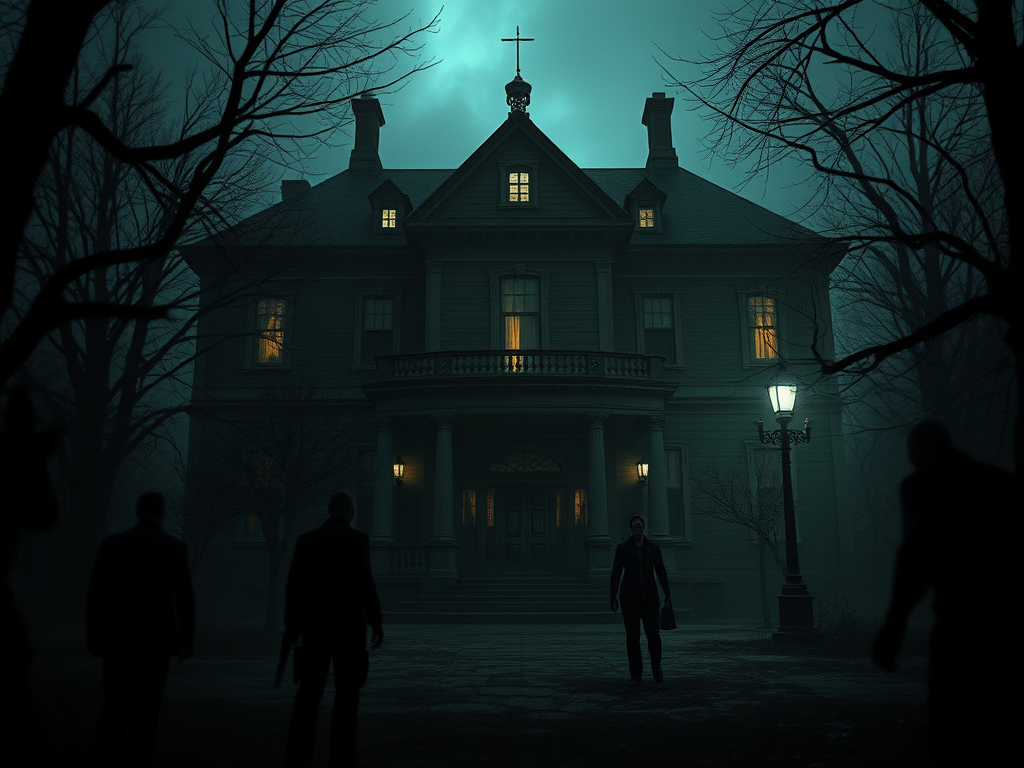
The survival horror genre as we know it today owes a massive debt to one specific franchise: Resident Evil. Since the creaky doors of the Spencer Mansion first opened in 1996, Capcom’s juggernaut has defined, redefined, and occasionally exploded the very concept of fear in video games. For nearly three decades, players have hoarded green herbs, solved bizarre puzzles involving chess pieces, and fled from unrelenting bioweapons. But behind the jump scares and the T-Virus outbreaks lies a development history as twisted and dramatic as the games themselves.
While most fans know about the S.T.A.R.S. team and the Umbrella Corporation, the franchise’s history is littered with scrapped prototypes, bizarre legal battles, and accidental spinoffs that changed the gaming landscape forever. From the game that was almost a Super Nintendo remake to the action masterpiece that started as a horror sequel, the road to Raccoon City was never a straight line. Whether you are a veteran survivor of the PS1 era or a new recruit who joined with Resident Evil Village, these ten obscure facts will shed new light on the series that refused to die.
1. The Franchise Was Originally a Remake of a Nintendo Horror Game Called “Sweet Home”
Before Resident Evil became the household name for zombies, it began life as something entirely different: a remake. In the late 1980s, Capcom produced a role-playing game for the Nintendo Entertainment System (NES) called Sweet Home, based on a Japanese horror film of the same name. Sweet Home was revolutionary for its time, featuring a haunted mansion setting, resource management, intricate puzzles, and the terrifying concept of permanent death for its characters. It laid the literal groundwork for the survival horror genre, but it never saw an official release outside of Japan, largely due to its gruesome imagery which clashed with Nintendo of America’s strict censorship policies.
When Tokuro Fujiwara, the director of Sweet Home, decided it was time to revisit the concept of a haunted house game using the power of the upcoming PlayStation console, he tapped a young designer named Shinji Mikami to lead the project. Mikami’s initial mandate was essentially to update Sweet Home for a 3D era. Many of the iconic elements we associate with Resident Evil—the mansion layout, the “door opening” loading screens (originally used to heighten tension), the limited inventory space, and even the narrative told through scattered notes and journals—were lifted directly from its 8-bit predecessor. While the project eventually evolved into its own beast with a biological twist rather than a supernatural one, the DNA of Sweet Home is undeniably the genetic code of the entire franchise.
2. The Name Changed From “Biohazard” to “Resident Evil” Because of a Punk Band
One of the most confusing aspects of the franchise for international fans is the dual naming convention. In Japan, the series is famously known as Biohazard. The name makes perfect sense given the series’ focus on biological weapons, viruses, and scientific hubris. However, when Capcom prepared to bring the game to North America in 1996, they hit a legal brick wall. A quick trademark search revealed that the name “Biohazard” was already heavily occupied in the United States.
Specifically, a New York-based hardcore punk band named Biohazard had already claimed the rights to the name, and there was also a DOS-based game using the title. To avoid a potential lawsuit that could derail the launch, Capcom held an internal contest to rename the game for the Western market. The staff proposed various titles, some of which were comically bad, before settling on Resident Evil. The logic was that the game took place in a residence (the mansion) filled with evil. While the developers reportedly found the name “cheesy” at first, it stuck. The split branding continues to this day, leading to the clever title integration in Resident Evil 7, which is titled Biohazard 7: Resident Evil in Japan and Resident Evil 7: Biohazard in the West, finally bridging the gap.
3. “Resident Evil 1.5” Was a Nearly Finished Sequel That Was Scrapped Entirely
Imagine spending nearly two years developing a highly anticipated sequel, getting it 60-80% complete, and then throwing it all in the trash because it “didn’t feel right.” That is exactly what happened with the original version of Resident Evil 2, now legendary among fans as Resident Evil 1.5. This version of the game featured a completely different police station that looked more like a modern, sterile office building rather than the gothic museum setting of the final game. More shockingly, it didn’t feature Claire Redfield at all.
Instead of Chris Redfield’s sister, the female protagonist was a blonde college student and motorcycle racer named Elza Walker. Elza wore a red racing suit and had her own unique storyline unrelated to the S.T.A.R.S. members. The game also featured different enemy mechanics, such as zombies that could fit through thinner spaces and a different version of the monstrous William Birkin. However, producer Shinji Mikami and director Hideki Kamiya felt the game lacked the “cinematic” quality they wanted and that the environments were too dull. In a bold (and expensive) move, they cancelled the project and restarted from scratch. While Elza Walker was lost to history for years, she was eventually paid tribute in the Resident Evil 2 Remake (2019) as an unlockable “Elza Walker” costume for Claire Redfield.
4. The Action Game “Devil May Cry” Started as a Prototype for Resident Evil 4
Resident Evil 4 is often cited as one of the greatest games ever made, but its development cycle was notoriously chaotic, spawning several rejected versions. The most famous of these failures actually became a massive success for Capcom under a different name. Early in the development of Resident Evil 4, director Hideki Kamiya wanted to create a cooler, more stylish action hero. The protagonist was a man named Tony, who possessed superhuman abilities, invincibility frames, and juggled enemies in the air with dual pistols.
The team designed gothic environments and fast-paced combat that felt incredible to play, but there was one major problem: it wasn’t a survival horror game. The main character was too powerful to be scared of zombies, and the tone was far too action-heavy for the slow-burning tension of Resident Evil. Rather than scrapping the excellent work they had done, Shinji Mikami convinced the team to spin the project off into a completely new intellectual property. “Tony” was reworked into the demon-hunter Dante, the bioweapons became demons, and the game was released as Devil May Cry. This decision inadvertently created the “Character Action” genre, proving that even Resident Evil‘s mistakes are influential.
5. The Original Game Was Intended to Be a First-Person Shooter
When modern fans played Resident Evil 7 and Resident Evil Village, many were shocked by the shift to a First-Person perspective, arguing that it broke the tradition of the series. Ironically, the franchise was originally designed to be played exactly that way. During the initial prototyping phase of the first Resident Evil in 1993 and 1994, Shinji Mikami wanted the player to explore the mansion through the eyes of the character to maximize immersion and fear.
However, the team quickly ran into the hardware limitations of the original PlayStation. Rendering a fully 3D, detailed environment in real-time from a first-person view was technically demanding and often resulted in choppy frame rates or poor texture quality. Additionally, after seeing the success of Alone in the Dark, which utilized fixed camera angles with pre-rendered backgrounds, Mikami realized that this “cinematic” approach allowed for much higher graphical detail and atmosphere. They switched to the fixed camera perspective that defined the “classic” era of survival horror. The return to first-person in Resident Evil 7 was not a betrayal of the series’ roots, but rather the fulfillment of the original vision that technology finally caught up to.
6. Zombie Movie Legend George A. Romero Directed a Commercial for Resident Evil 2
The connection between Resident Evil and zombie cinema is a two-way street. While the game was inspired by movies, it eventually became big enough to hire the godfather of the genre himself. In 1998, to promote the release of Resident Evil 2 in Japan, Capcom hired George A. Romero—the director of Night of the Living Dead and Dawn of the Dead—to direct a live-action television commercial.
The commercial was filmed in Los Angeles and featured actor Brad Renfro as Leon S. Kennedy and Adrienne Frantz as Claire Redfield. It was a high-budget, 30-second masterpiece of practical effects and makeup that perfectly captured the chaos of Raccoon City. Romero was so well-received that he was subsequently hired to write the script for the first Hollywood Resident Evil movie. However, his script, which faithfully followed the plot of the first game (including the mansion and Chris/Jill), was ultimately rejected by the producers in favor of Paul W.S. Anderson’s action-heavy adaptation featuring Alice. Fans have long lamented the loss of what could have been the ultimate faithful adaptation by the man who invented the modern zombie.
7. The “Hook Man” Prototype of Resident Evil 4 Featured Paranormal Ghosts
Before Resident Evil 4 settled on the Ganados (parasite-infected villagers) as the main threat, the game went through a phase where it focused on psychological horror and the supernatural. Known among fans as the “Hook Man” version, this prototype was showcased at E3 2003 and featured Leon S. Kennedy exploring a haunted airship and a castle.
In this version, Leon was infected with a virus that caused him to hallucinate. The gameplay featured a blue tint and terrified Leon fighting against living dolls and a recurring spectral enemy wielding a massive hook. The Hook Man would materialize out of paintings and walls, suggesting a ghost-like adversary rather than a biological one. This version was incredibly atmospheric but was eventually scrapped because of technical limitations on the Nintendo GameCube; the developers struggled to make the “hallucination” assets load instantly without memory issues. While the Hook Man never made the final cut, the concept of a protagonist questioning their sanity and fighting hallucinations was later revisited in Resident Evil Village with the terrifying House Beneviento section.
8. The “Kitchen” VR Demo Was a Secret Resident Evil 7 Reveal
At E3 2015, Capcom showcased a terrifying Virtual Reality tech demo titled simply “Kitchen.” In the demo, the player was tied to a chair in a grimy, photorealistic kitchen while a deranged woman attacked them with a knife. It was visceral, disturbing, and garnered massive buzz as a showcase for the upcoming PlayStation VR headset. Most journalists and players assumed it was just a generic horror tech demo designed to test the VR waters.
It wasn’t until a year later, at E3 2016, that Capcom revealed the truth: “Kitchen” was actually a teaser for Resident Evil 7. The title itself was a clever anagram and hint; if you looked at the letter “T” in the “Kitchen” logo, it had a small slash through it that made it look like a “7.” The “Kitchen” demo was effectively the prologue to the Baker family saga. This guerrilla marketing strategy allowed Capcom to test the audience’s reaction to a slower, more grounded horror experience without the baggage of the Resident Evil brand name, which had become associated with explosions and action movies by that point. The overwhelming positive reaction to “Kitchen” confirmed that fans were hungry for true horror again.
9. A Technical Marvel Game Boy Color Port of Resident Evil Was Completed (And Leaked)
In the late 90s, the idea of porting a two-disc PlayStation game with pre-rendered backgrounds and voice acting to the 8-bit Game Boy Color seemed impossible. Yet, a British studio named HotGen attempted exactly that. They managed to compress the entirety of the first Resident Evil onto a Game Boy Color cartridge. It was a staggering technical achievement; they digitized the backgrounds, recreated the zombie movements, and even kept the door-opening animations.
However, just as the game was nearing release, Capcom cancelled it. The official reason was that they were unhappy with the quality, feeling it didn’t meet their standards for the franchise. For years, this port was considered a myth, but eventually, unfinished ROMs of the game leaked online. Players who have tried it confirm that while it is technically impressive that it runs at all, the low resolution made it nearly impossible to see items or enemies, and the controls were frustratingly stiff. It remains a fascinating historical footnote—a “demake” that officially existed before fan-made demakes became popular.
10. The Iconic “Dual Shock” Soundtrack Was Created by a Fraud
One of the strangest controversies in Resident Evil history involves the soundtrack for the Resident Evil: Director’s Cut Dual Shock Ver. released in 1998. The game is infamous for its bizarre, chaotic basement theme that sounds like clowns falling down stairs. The composer credited for this soundtrack was Mamoru Samuragochi, who was famously hailed as “Japan’s Beethoven” because he claimed to be a deaf genius composing masterpieces in his head.
In 2014, a massive scandal erupted when it was revealed that Samuragochi was a fraud. He was not legally deaf, and he had not written his own music for nearly two decades. The music had actually been ghostwritten by a university professor named Takashi Niigaki, who was paid a pittance while Samuragochi took the fame. Niigaki later revealed that the bizarre quality of the Dual Shock soundtrack was partly due to Samuragochi’s vague and demanding instructions. The revelation turned the already infamously bad basement track into a symbol of one of the music industry’s strangest hoaxes, forever linking the Resident Evil franchise to a real-life scandal of deception.
Further Reading
- Itchy, Tasty: An Unofficial History of Resident Evil by Alex Aniel
- Resident Evil: The Umbrella Conspiracy by S.D. Perry
- An Itch for Horror: The History of Resident Evil by Alex Aniel (Note: This title is often interchangeable with Itchy, Tasty in different regions, verify specific edition).
- Resident Evil: Code Veronica by S.D. Perry
Keep the Discovery Going!
Here at Zentara, our mission is to take tricky subjects and unlock them, making knowledge exciting and easy to grasp. But the adventure doesn’t stop at the bottom of this page. We are constantly creating new ways for you to learn, watch, and listen every single day.
📺 Watch & Learn on YouTube
Visual learner? We publish 4 new videos every day, plus breaking news shorts to keep you smarter than the headlines. From deep dives to quick facts, our channel is your daily visual dose of wonder.
Click here to Subscribe to Zentara on YouTube
🎧 Listen on the Go on Spotify
Prefer to learn while you move? Tune into the Zentara Podcast! We drop a new episode daily, perfect for your commute, workout, or coffee break. Pop on your headphones and fill your day with fascinating facts.
Click here to Listen on Spotify
Every click, view, and listen helps us keep bringing honest knowledge to everyone. Thanks for exploring with us today—see you out there in the world of discovery!




Leave a Reply