
Table of Contents
We live in an age where miracles are mundane. We carry the sum of human knowledge in our pockets, fly across oceans in hours, and video chat with friends on the other side of the planet. It is easy to forget that for the vast majority of human history, these feats were not just considered difficult—they were deemed scientifically, physically, and logically impossible.
History is littered with the “confident no.” Some of the most brilliant minds who ever lived—Nobel laureates, titans of industry, and respected editorials—have publicly staked their reputations on the impossibility of the very technologies that define our modern world. These weren’t just casual dismissals; they were arguments rooted in the “facts” of the time.
The following list is a testament to human stubbornness. It is a reminder that “impossible” is often just a temporary label for “we haven’t figured it out yet.” Here are the top 10 technologies that experts swore would never exist.
1. Heavier-Than-Air Flight
“No Balloon and No Aeroplane Will Ever Be Practically Successful”

Getty Images
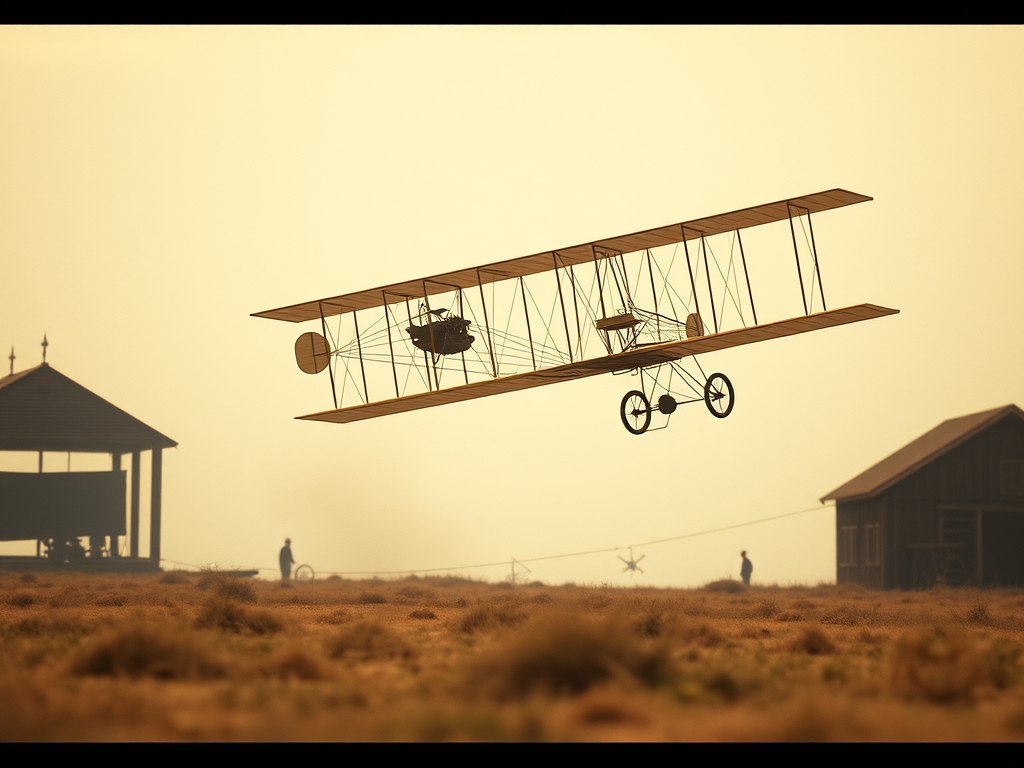
If you had asked a physicist in the late 19th century about flying machines, they wouldn’t have just said it was hard; they would have told you the math didn’t add up. Lord Kelvin, one of the most prominent physicists of the 19th century and the President of the Royal Society, famously declared in 1895, “Heavier-than-air flying machines are impossible.”
He wasn’t alone in his skepticism. The scientific consensus was that without a balloon to provide buoyancy, the weight-to-power ratio required to lift an engine and a pilot was unachievable. Just weeks before the Wright Brothers took to the skies at Kitty Hawk in 1903, The New York Times published an editorial predicting that flight might be possible in “one million to ten million years” if mathematicians and mechanicians worked together continuously.
Orville and Wilbur Wright, two bicycle mechanics who didn’t read The New York Times, proved them wrong 69 days later. They demonstrated that the key wasn’t just raw power, but control—using wing warping to manage the aircraft’s instability. The “impossible” machine is now the safest way to travel.
2. Space Travel (Rocketry)
“A Rocket Will Never Leave the Earth’s Atmosphere”
In 1920, Robert Goddard, the father of modern rocketry, published a paper suggesting that rockets could one day reach the moon. The media reaction was ruthless mockery. The New York Times (striking again) published a scathing editorial claiming that Goddard lacked the “knowledge ladled out daily in high schools.”
Their argument was based on a fundamental misunderstanding of physics. The editors believed that a rocket needed air to “push against” to move. They argued that in the vacuum of space, a rocket would have no traction and thus couldn’t accelerate. They failed to grasp Newton’s Third Law: for every action, there is an equal and opposite reaction. The burning fuel shooting out the back is the push; no air is required.
It took 49 years for the newspaper to issue a retraction. On July 17, 1969, as Apollo 11 hurtled toward the moon, the Times printed a short correction: “Further investigation and experimentation have confirmed the findings of Isaac Newton in the 17th century… The Times regrets the error.”
3. The Light Bulb
“A Conspicuous Failure”
When Thomas Edison announced he was working on an electric light for the home, the British Parliament set up a committee to investigate. Their conclusion? Electric light was “unworthy of the attention of practical or scientific men.”
The skepticism wasn’t just bureaucratic; it was technical. At the time, arc lamps existed but were blindingly bright, smoky, and required massive amounts of power. Experts believed that “subdividing” electric light into small, soft, household-safe units was physically impossible because of the resistance problem. Henry Morton, president of the Stevens Institute of Technology, witnessed Edison’s early experiments and declared them a “conspicuous failure,” calling the idea of a commercial light bulb a “fraud upon the public.”
Edison’s genius wasn’t just the bulb; it was the entire system. He realized that by using a high-resistance filament (carbonized bamboo, initially), he could reduce the current needed, making the system economically viable. He didn’t just invent a light; he proved that electricity could be domesticated.
4. The Telephone
“The Americans Have Need of the Telephone, But We Do Not”
In 1876, Alexander Graham Bell offered to sell his telephone patent to Western Union, the telegraph giant, for $100,000. They laughed him out of the room. An internal memo reportedly described the device as an “electronic toy” and noted, “This device has of no value to us.”
The skepticism was rooted in the dominance of the telegraph. Business leaders couldn’t fathom why anyone would want to transmit a voice—which could be misunderstood or forgotten—when they could send a crisp, written telegram. Sir William Preece, the Chief Engineer of the British Post Office, famously dismissed the invention by saying, “The Americans have need of the telephone, but we do not. We have plenty of messenger boys.”
The experts failed to predict the value of immediacy and emotional connection. The telephone didn’t just replace the telegraph; it created an entirely new layer of human social infrastructure, proving that voice communication was far more than a novelty.
5. Alternating Current (AC)
“Fooling Around with Alternating Current is Just a Waste of Time”
This entry is unique because the man calling it impossible was Thomas Edison himself. In the late 1880s, the “War of the Currents” raged. Edison championed Direct Current (DC), which worked well for light bulbs but could only transmit power for about a mile. Nikola Tesla and George Westinghouse proposed Alternating Current (AC), which could transmit electricity over hundreds of miles.
Edison launched a massive propaganda campaign to convince the public that AC was scientifically unmanageable and inevitably lethal. He argued that the high voltages required for AC transmission could never be made safe for homes. He even went so far as to publicly electrocute animals to prove AC’s “impossibility” as a safe utility.
Despite Edison’s influence, the physics favored Tesla. AC power could be stepped up and down using transformers, making it the only viable solution for a national power grid. Today, every outlet in your home delivers the “impossible” and “dangerous” Alternating Current.
6. The Home Computer
“There is No Reason Anyone Would Want a Computer in Their Home”
In 1977, Ken Olsen was a titan of the tech industry. As the founder of Digital Equipment Corporation (DEC), he built the massive mainframe computers that ran banks and governments. When asked about the future of computing, he famously stated, “There is no reason anyone would want a computer in their home.”
Olsen wasn’t stupid; he was just trapped in the paradigm of his time. Computers in the 70s were industrial machines used for payroll, inventory, and complex calculus. The idea of a “personal” computer seemed as absurd as having a “personal” nuclear reactor in your basement—expensive, high-maintenance, and overkill for balancing a checkbook.
What Olsen missed was that computers wouldn’t just do work; they would become media centers, communication hubs, and gaming consoles. The “impossible” leap wasn’t the technology itself, but the use case. He failed to see that the computer would evolve from a calculator into a window to the world.
7. Splitting the Atom (Nuclear Energy)
“Moonshine”
Ernest Rutherford is the father of nuclear physics. He discovered the atomic nucleus and the proton. Yet, even he couldn’t see the path to nuclear energy. In 1933, less than a decade before the Manhattan Project, Rutherford declared, “Anyone who looks for a source of power in the transformation of the atoms is talking moonshine.”
Albert Einstein was similarly skeptical. In 1932, he said, “There is not the slightest indication that nuclear energy will ever be obtainable. It would mean that the atom would have to be shattered at will.” The consensus was that while the energy existed inside the atom, the energy required to release it would be greater than the energy produced—a net loss.
This belief was shattered by the discovery of the neutron and the chain reaction. Once Leo Szilard realized that a single neutron could split an atom, which would release more neutrons to split more atoms, the “impossible” became terrifyingly inevitable. The transition from “moonshine” to the atomic bomb took less than 12 years.
8. Germ Theory and Antiseptics
“Gentlemen, Washing Hands is for The Maid”
In the mid-19th century, the idea that invisible, living creatures were killing patients was considered laughable. Medicine was ruled by the theory of “miasma”—bad air. When Hungarian doctor Ignaz Semmelweis suggested in the 1840s that doctors were killing women in childbirth by not washing their hands, he was ridiculed and eventually committed to an asylum.
The medical community found the suggestion insulting. Doctors were “gentlemen,” and gentlemen were clean by definition. The concept that their hands carried death was deemed socially and scientifically impossible. It wasn’t until Louis Pasteur and Robert Koch proved the existence of bacteria decades later that the “impossible” theory became the foundation of modern medicine.
Today, the idea of a surgeon operating without scrubbing in is unthinkable. But for decades, the “impossible” truth of germ theory was rejected because it required the experts to admit that they had been the problem all along.
9. The Internet
“No Greater Impact Than the Fax Machine”
In the mid-90s, the Internet was growing, but many serious economists and tech writers viewed it as a chaotic library that would never replace “real” business. In 1998, Nobel Prize-winning economist Paul Krugman famously predicted, “By 2005 or so, it will become clear that the Internet’s impact on the economy has been no greater than the fax machine’s.”
Even the inventors of the underlying tech were skeptical of its scale. Robert Metcalfe, the inventor of Ethernet, predicted in 1995 that the Internet would “go spectacularly supernova and in 1996 catastrophically collapse.” The skepticism came from the belief that the network couldn’t handle the traffic and that people would never trust it with their credit cards.
The critics failed to foresee the shift from a “read-only” web to a “read-write” web (Web 2.0), where users created the content. The Internet didn’t just impact the economy; it became the economy, proving that connectivity was a utility as essential as electricity.
10. The Automobile
“A Luxury for the Wealthy”
When the “horseless carriage” first appeared, it was noisy, dangerous, and constantly broke down. In 1899, The Literary Digest summarized the public sentiment: “The ordinary ‘horseless carriage’ is at present a luxury for the wealthy; and although its price will probably fall in the future, it will never, of course, come into as common use as the bicycle.”
The logic was sound at the time: cars required gasoline (hard to find), mechanics (rare), and paved roads (nonexistent). Horses ate grass and knew the way home. The infrastructure gap seemed impossible to bridge.
Henry Ford didn’t just build a car; he built a manufacturing process—the assembly line—that dropped the price of a Model T from $850 to $260. The “impossible” shift wasn’t the engine, but the economics. The car forced the world to pave itself, changing the physical landscape of the planet to accommodate the machine that “would never catch on.”
Further Reading
To explore the fascinating history of innovation and the skepticism that accompanied it, check out these books:
- “The Wright Brothers” by David McCullough – A masterclass in storytelling that details the immense skepticism and hardship the brothers faced before conquering the sky.
- “Empires of Light: Edison, Tesla, Westinghouse, and the Race to Electrify the World” by Jill Jonnes – A thrilling account of the War of the Currents and how the “impossible” AC grid was built.
- “The Innovators: How a Group of Hackers, Geniuses, and Geeks Created the Digital Revolution” by Walter Isaacson – A comprehensive history of the computer and internet, highlighting the visionaries who saw what others couldn’t.
- “Rocket Men: The Daring Odyssey of Apollo 8 and the Astronauts Who Made Man’s First Journey to the Moon” by Robert Kurson – A gripping look at the space race, emphasizing how close we came to failure and how the impossible was achieved.
- “The Structure of Scientific Revolutions” by Thomas S. Kuhn – For a more academic take, this classic book explains why experts reject new ideas (paradigm shifts) until they become undeniable.
Keep the Discovery Going!
Here at Zentara, our mission is to take tricky subjects and unlock them, making knowledge exciting and easy to grasp. But the adventure doesn’t stop at the bottom of this page. We are constantly creating new ways for you to learn, watch, and listen every single day.
📺 Watch & Learn on YouTube
Visual learner? We publish 4 new videos every day, plus breaking news shorts to keep you smarter than the headlines. From deep dives to quick facts, our channel is your daily visual dose of wonder.
Click here to Subscribe to Zentara on YouTube
🎧 Listen on the Go on Spotify
Prefer to learn while you move? Tune into the Zentara Podcast! We drop a new episode daily, perfect for your commute, workout, or coffee break. Pop on your headphones and fill your day with fascinating facts.
Click here to Listen on Spotify
Every click, view, and listen helps us keep bringing honest knowledge to everyone. Thanks for exploring with us today—see you out there in the world of discovery!




Leave a Reply