
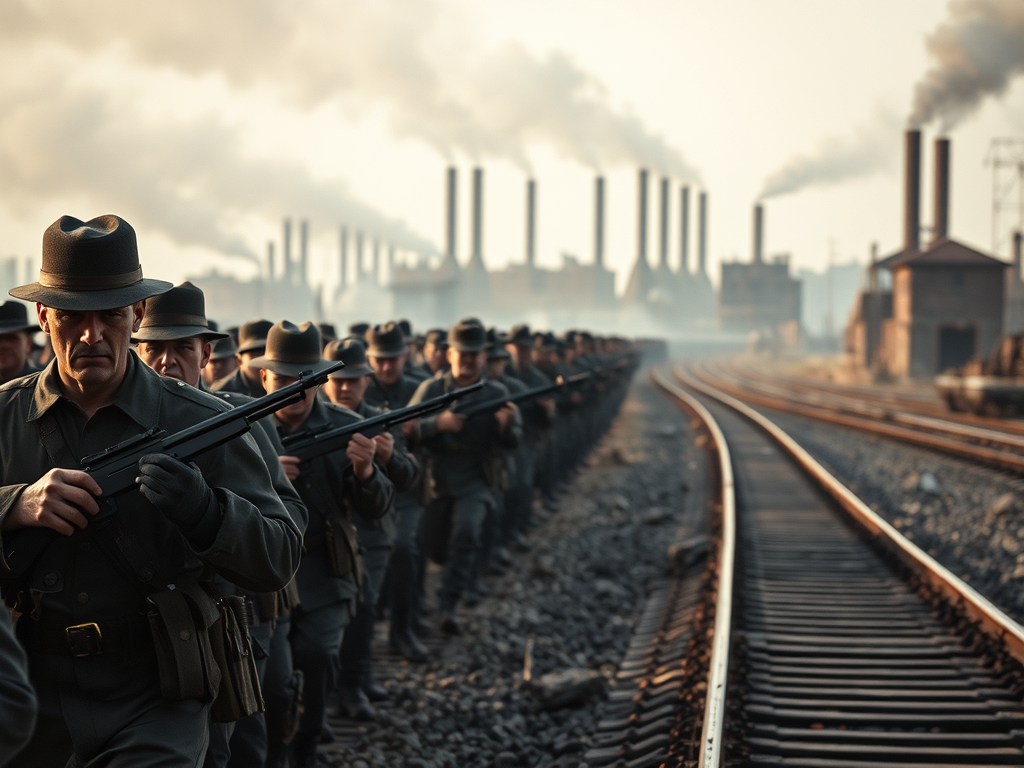
The American Civil War remains the most transformative conflict in the history of the United States. While the early years of the struggle saw significant Confederate victories that made an independent Southern nation seem like a distinct possibility, the tide eventually turned. By 1865, the Union had achieved a total strategic victory, preserving the United States as a single entity and ending the institution of slavery.
As we look back from the perspective of late 2025, historians emphasize that the Civil War victory was not the result of a single battle or a solitary leader. Instead, it was the culmination of a massive industrial advantage, a superior Union strategy, and the shifting moral landscape of the 19th century. The North’s ability to sustain a “Total War” while the South’s economy crumbled under the weight of the Anaconda Plan created a gap that the Confederacy simply could not bridge.
In this article, we will examine the fundamental pillars that supported the Northern effort. From the logistical brilliance of the Union railroads to the transformative power of the Emancipation Proclamation, these are the ten primary reasons the North emerged victorious in the struggle for the Union.
1. The Industrial Juggernaut: Manufacturing Might
One of the most decisive Union advantages was the sheer scale of Northern industrial production. At the start of the war, the North produced over 90 percent of the nation’s firearms, iron, and cloth. While the South was a primarily agrarian society dependent on “King Cotton,” the North was a burgeoning industrial powerhouse. This meant that while Confederate soldiers often marched in tattered clothes and lacked consistent access to modern weaponry, Union troops were generally well-equipped with the latest gear.
This industrial advantage acted like a giant engine that the South could never stop. Factories in cities like Lowell, Pittsburgh, and Chicago churned out boots, uniforms, and ammunition at a rate that made the Northern army the best-supplied force in the world at the time. It’s like a race where one runner has a specialized team constantly handing them new shoes and water, while the other runner has to stop and make their own. Over a four-year period, this disparity in military logistics became an insurmountable wall for the Confederacy.
2. The Anaconda Plan: Strangling the Southern Economy
Early in the war, General Winfield Scott proposed a strategy known as the Anaconda Plan. The goal was to wrap around the Confederacy like a giant snake, using a naval blockade to cut off Southern ports and seizing control of the Mississippi River to split the South in two. Initially mocked by those who wanted a quick “On to Richmond” victory, the plan proved to be a masterstroke of Union strategy.
By blockading the Atlantic and Gulf coasts, the Union prevented the South from exporting cotton and importing vital war supplies from Europe. This led to hyperinflation and “bread riots” across the South. Meanwhile, seizing the Mississippi River choked off the supply lines from Texas and Arkansas. This naval blockade was essentially an economic death sentence. Without the ability to trade, the Confederate “dollar” became worthless paper, and the South’s ability to sustain its army evaporated.
3. The Power of the Rails: Superior Transportation Logistics
In the 1860s, the railroad was the “internet” of transportation—it moved information, men, and supplies at speeds never before seen in human history. The North possessed a massive lead in this area, with more than double the railroad mileage of the South. More importantly, Union railroads were standardized, meaning a train could travel from Maine to Chicago without changing tracks. Southern tracks were often fragmented, with different widths (gauges) that required constant unloading and reloading.
This logistical superiority allowed the North to move entire armies across the country in days rather than weeks. For example, in 1863, the Union moved 20,000 troops over 1,200 miles from Virginia to Tennessee in just over a week to reinforce a besieged army. This military logistics advantage meant the North could react to threats and capitalize on opportunities with a fluidity the South simply couldn’t match. The rails were the steel veins that kept the Union war effort alive and pumping.
4. The Emancipation Proclamation: Shifting the Moral High Ground
When President Abraham Lincoln issued the Emancipation Proclamation in 1863, he fundamentally changed the nature of the war. It was no longer just a political struggle to preserve the Union; it became a moral crusade to end slavery. This was a brilliant move of Civil War diplomacy. By making the war about abolition, Lincoln made it politically impossible for Britain or France to intervene on behalf of the South. No European power wanted to be seen supporting a slave-holding nation against a “liberating” one.
Beyond diplomacy, the proclamation had a massive internal impact. It encouraged enslaved people to flee to Union lines, depriving the South of its labor force while providing the North with a new source of manpower. Approximately 180,000 African Americans joined the Union Army, fighting with a level of ferocity born from the quest for literal freedom. This shift in the war’s “soul” gave the North a renewed sense of purpose and a manpower advantage that rejuvenated the cause during its darkest hours.
5. Lincoln’s Political Leadership: Holding the Center
While the South was led by Jefferson Davis—a man often described as rigid and prone to feuding with his generals—the North was led by Abraham Lincoln, perhaps the most gifted political navigator in American history. Lincoln had the “team of rivals” approach, filling his cabinet with political enemies and managing them toward a common goal. He possessed a rare ability to balance the demands of radical abolitionists with those of conservative “War Democrats.”
Lincoln’s leadership was the glue that held the North together when the casualty lists grew long and public support wavered. His rhetoric, particularly in the Gettysburg Address, reframed the American identity and gave the citizenry a reason to keep fighting. He was a master of interpersonal communication, knowing when to be firm and when to be flexible. His re-election in 1864 was perhaps the final nail in the Confederate coffin, as it signaled to the South that the North would not quit until the job was done.
6. Financial Stability: The Power of the Greenback
Wars are fought with men, but they are paid for with money. The North entered the war with a sophisticated banking system and a functioning treasury. To fund the war, the Union passed the National Banking Act and issued “Greenbacks”—a stable national currency. They also successfully sold war bonds to the public, turning the war into a shared financial investment for Northern citizens.
In contrast, the Confederacy suffered from catastrophic economic collapse. Because they couldn’t tax their citizens effectively and couldn’t export cotton, they simply printed more money, leading to 9,000% inflation by the end of the war. While a Union soldier’s pay could still buy food for his family, a Confederate soldier’s pay couldn’t buy a loaf of bread. This financial advantage ensured the North could continue to purchase the food, horses, and iron necessary for a “Total War,” while the South literally went bankrupt.
7. The Manpower Advantage: A War of Attrition
The numbers were heavily stacked against the South from day one. The Union had a population of roughly 22 million, while the Confederacy had about 9 million—nearly 4 million of whom were enslaved and thus (initially) not allowed to serve in the military. This manpower advantage allowed the North to absorb losses that would have—and eventually did—cripple the Southern army.
Under the leadership of General Ulysses S. Grant, the Union embraced a war of attrition. Grant understood that he didn’t need to win every battle; he just needed to keep the pressure on until the South ran out of men. Every time a Confederate soldier was killed or captured, he was nearly impossible to replace. When a Union soldier fell, there was a steady stream of immigrants and young men from the North ready to take his place. This grim math made the North’s eventual Civil War victory an inevitability if they stayed the course.
8. Ulysses S. Grant and William T. Sherman: The Total War Duo
For the first half of the war, the North struggled with hesitant generals who were often outmaneuvered by Robert E. Lee. However, the emergence of Ulysses S. Grant and William Tecumseh Sherman changed everything. Grant brought a relentless, dogged determination to the Virginia theater, while Sherman introduced the concept of “Total War” during his famous March to the Sea.
Sherman realized that to end the war, he had to break the Southern “will” to fight. By destroying infrastructure, railroads, and supplies across Georgia, he proved that the Confederate government could no longer protect its people. This military strategy was psychological as much as physical. Grant and Sherman functioned as a synchronized hammer and anvil, relentlessly pounding the Confederate armies until they had nowhere left to run. Their willingness to abandon old-fashioned “gentlemanly” warfare for modern, high-pressure tactics was a decisive factor.
9. Naval Supremacy: Controlling the Blue and the Brown
The North started the war with a small but functional Navy, while the South had essentially nothing. The Union rapidly expanded its fleet, developing “Ironclads”—ships armored with iron plates—that revolutionized naval warfare. This naval blockade (the “blue water” Navy) was complemented by the “brown water” Navy—a fleet of gunboats that patrolled the rivers of the interior.
Control of the rivers allowed the Union to bypass land defenses and strike deep into the heart of the South. It made the Anaconda Plan a reality. The Union Navy’s ability to seize key port cities like New Orleans and Mobile meant the South was increasingly isolated from the rest of the world. Without a way to challenge the North at sea, the Confederacy was a house with all its doors and windows nailed shut while the North held the keys.
10. The Failure of “Cotton Diplomacy”
The South’s primary hope for victory was that Britain and France would intervene to protect their supply of Southern cotton. This was known as “Cotton Diplomacy.” However, several factors caused this to fail spectacularly. First, Britain had a surplus of cotton in 1861. Second, they began importing more cotton from India and Egypt. Third, and most importantly, the British public was staunchly anti-slavery, especially after the Emancipation Proclamation.
If the South had secured an alliance with a European power, the war might have ended in a stalemate or a Southern victory. Instead, the North’s Civil War diplomacy kept the conflict “domestic.” By keeping the world’s superpowers on the sidelines, the Union ensured the war would be decided by the relative strengths of the North and South—a contest the North was almost certain to win in the long run. The South’s greatest gamble—that the world couldn’t live without their cotton—turned out to be a fatal miscalculation.
Further Reading
To explore the intricate details of the conflict and the personalities that shaped it, consider these foundational books:
- “Battle Cry of Freedom: The Civil War Era” by James M. McPherson
- “Grant” by Ron Chernow
- “The Civil War: A Narrative” (3 Volumes) by Shelby Foote
- “Team of Rivals: The Political Genius of Abraham Lincoln” by Doris Kearns Goodwin
Keep the Discovery Going!
Here at Zentara, our mission is to take tricky subjects and unlock them, making knowledge exciting and easy to grasp. But the adventure doesn’t stop at the bottom of this page. We are constantly creating new ways for you to learn, watch, and listen every single day.
📺 Watch & Learn on YouTube
Visual learner? We publish 4 new videos every day, plus breaking news shorts to keep you smarter than the headlines. From deep dives to quick facts, our channel is your daily visual dose of wonder.
Click here to Subscribe to Zentara on YouTube
🎧 Listen on the Go on Spotify
Prefer to learn while you move? Tune into the Zentara Podcast! We drop a new episode daily, perfect for your commute, workout, or coffee break. Pop on your headphones and fill your day with fascinating facts.
Click here to Listen on Spotify
Every click, view, and listen helps us keep bringing honest knowledge to everyone. Thanks for exploring with us today—see you out there in the world of discovery!




Leave a Reply