
Table of Contents
The release of the Jeffrey Epstein documents throughout late 2025 and into early 2026 has done far more than just settle legal scores; it has acted as a high-voltage current surged through an already fractured American landscape. What was once a localized criminal case has morphed into a sprawling American political autopsy, exposing deep-seated cynicism and fundamental disagreements about how justice operates in the United States. While the public overwhelmingly supported the Epstein Files Transparency Act, the actual arrival of these documents has not brought the national closure many hoped for. Instead, the “truth” has become a Rorschach test, where what you see depends entirely on which side of the political aisle you stand on.
From the halls of Congress to the dinner tables of middle America, the 2026 Epstein scandal is no longer just about the crimes of one billionaire financier. It is about the “Deep State,” the “Elite,” and a legal system that many believe treats the wealthy with kid gloves. As we sift through millions of pages of unsealed court documents, the fallout is widening the gap between those who still believe in institutional integrity and those who see a systemic cover-up.
1. The Weaponization of Selective Transparency
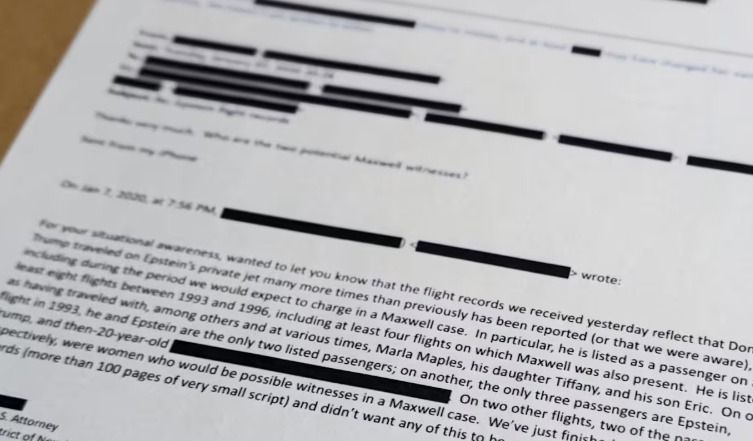
One of the most significant ways the Epstein files impact on the US is through the lens of “selective transparency.” In early 2026, the Justice Department released a massive tranche of files, but they were riddled with heavy redactions. To a skeptic, these blacked-out lines aren’t just legal protections for victims; they are shields for the powerful. This has led to a fierce battle over the narrative. Democrats often point to the Trump Epstein connections highlighted in the files—including alleged correspondence and photos—while Republicans focus on the Clinton Epstein links and the “sweetheart deals” of the past.
This creates a scenario where transparency isn’t used to find the truth, but to find “ammo.” Think of it like a messy divorce where both parties are leaking only the text messages that make the other person look bad. Instead of a shared understanding of the facts, the American public is left with two different versions of reality. This partisan warfare ensures that even when the truth is staring us in the face, it is dismissed as a political hit job if it targets “our side.”
2. The Great Trust Gap in the Judicial System
The Epstein files impact on US trust cannot be overstated. For many, the handling of the investigation by the DOJ represents a fundamental failure of the rule of law. When the government announced in late 2025 that certain grand jury secrecy rules would prevent the release of the most sensitive “client lists,” it confirmed a long-held suspicion: that there is one set of rules for the “average Joe” and another for the billionaire class.
This creates a “Trust Gap” that is splitting the country. On one side, you have institutionalists who argue that due process and privacy must be respected to prevent a “witch hunt.” On the other, a growing majority sees this as an institutional failure and evidence of a government cover-up. It’s like watching a game where the referee keeps calling fouls on one team but ignores them for the other because the other team’s owner is a friend. This perception of judicial injustice is a primary driver of the social divide in America today.
3. The MAGA Base vs. The Republican Establishment
Interestingly, the 2026 Epstein scandal has created a rift within the Republican party itself. During the 2024 campaign, promises were made to “release everything,” but the reality of governing has proven more complex. Populist voices within the MAGA movement are increasingly frustrated with what they see as a “limited hangout”—a term for when an agency releases some truth to hide a larger, more damaging truth.
This internal tension is a microcosm of the national split. The populist base, fueled by investigative journalism from alternative outlets and online radicalization, is demanding a level of elite accountability that the establishment—on both sides—seems hesitant to provide. When leaders like the House Speaker or the Attorney General suggest that the “investigation is over,” it only fuels the fire. It highlights a divide between those who want to burn the system down to find the truth and those who want to preserve the system’s stability at all costs.
4. The “Deep State” Narrative Reborn
If you thought deep state conspiracy theories were fading, the Jeffrey Epstein documents have given them a second life. The files reveal a “shadow world” of private jets, secret flight manifests, and offshore bank accounts that feel like they belong in a spy novel. For many Americans, these aren’t just dry legal records; they are proof that a shadowy cabal of elites operates above the law.
This narrative is a powerful wedge. It separates the country into those who see the Epstein network as a horrific but isolated criminal enterprise and those who see it as the tip of a global iceberg. The FBI investigation files and the Treasury Department’s reports on financial crimes investigation involving Russian banks have only added fuel to the fire. When people believe the “game is rigged,” they stop playing by the rules, leading to increased political volatility and a rejection of mainstream media bias.
5. Victim Advocacy vs. Political Theater
Amidst the shouting matches on cable news, the voices of the survivors are often drowned out. One of the saddest ways these files are splitting the US is by turning human tragedy into political theater. Advocacy groups have pointed out that the public’s obsession with “who is on the list” often ignores the actual trauma of child sex abuse and the need for sex trafficking accountability.
One half of the country sees the files as a tool for justice for the victims, while the other half sees them as a scoreboard for political “wins.” When a victim’s testimony is used to smear a politician rather than to prosecute a predator, the moral core of the issue is lost. This creates a cultural divide where empathy is selective. We are becoming a nation that only cares about “justice” if the perpetrator belongs to the opposing political tribe.
6. The European Contrast and American Stagnation
A unique aspect of the 2026 Epstein scandal is the “transatlantic gap.” While the US fallout has been mired in partisan gridlock, countries like the UK and Norway have seen senior figures fall. The firing of the British ambassador Peter Mandelson and the investigations into Norwegian diplomats have provided a stark contrast to the relatively quiet halls of American power.
This has led to a growing sentiment in the US that our accountability structures are broken. Half the country looks at Europe and asks, “Why can’t we do that?” while the other half argues that the US system is simply more robust against “media-driven lynch mobs.” This comparison is driving a wedge between those who advocate for radical judicial transparency and those who fear that such transparency will be weaponized by disinformation campaigns to topple the government.
7. Media Echo Chambers and the “Truth”
The way the Epstein files are reported is perhaps the clearest example of the American divide. If you watch one news network, the files are a bombshell proving the corruption of the “Clinton-era elites.” If you switch the channel, they are a desperate attempt by the opposition to distract from the Trump administration’s own ties.
This isn’t just a difference in opinion; it’s a difference in facts. Mainstream media bias and the rise of corporate media skepticism have reached such a peak that there is no longer a “town square” where we can agree on what the documents actually say. We are essentially living in two different movies with the same cast of characters but completely different plots. This fragmentation makes it nearly impossible to have a national conversation about moral bankruptcy or institutional reform.
8. The “Billionaire Protection” Perception
Epstein’s ability to navigate the highest echelons of society—from Mar-a-Lago recruitment to private island visits—has cemented the idea that wealth is a “get out of jail free” card. The release of the files has highlighted the wealth and power influence that allowed this network to flourish for decades.
One side of the US sees this as a call to arms for social justice movements and a total overhaul of the tax and legal codes. The other side sees it as an unfortunate reality of human nature that shouldn’t be used to “punish success.” This ideological split over the role of the global elite network is at the heart of the modern American divide. It’s no longer just about Epstein; it’s about whether we believe a billionaire can be a “good guy” or if the system itself is inherently corrupt.
9. Selective Outrage and the “List” Obsession
The obsession with the “client list” has become a national pastime, but it’s a divisive one. For many, the absence of a definitive “list” in the unsealed court documents is proof of a cover-up. For others, it’s proof that the list never existed in the way conspiracy theorists imagined.
This “List Obsession” splits the country into the “Believers” and the “Skeptics.” The Believers are convinced that the DOJ is hiding the names of the “true” villains, while the Skeptics believe the whole thing has been blown out of proportion by populism vs establishment rhetoric. This disagreement prevents any real progress on child sex abuse awareness because we are too busy arguing about whether the “smoking gun” is being hidden in a basement in D.C.
10. The End of the “American Exceptionalism” Myth
Finally, the 2026 Epstein scandal is forcing a reckoning with the myth of American exceptionalism. The files suggest that our leaders, our celebrities, and our institutions are just as susceptible to corruption and moral decay as any other nation’s.
For many, this is a painful but necessary “political autopsy.” They believe that only by facing the “ugly theater” of our elite networking can we hope to fix it. Others, however, see this self-critique as a sign of weakness that our enemies will exploit. This fundamental disagreement—whether to air our dirty laundry to clean it or to keep it hidden to preserve our image—is the ultimate divide. As the Epstein Files Transparency Act continues to yield more documents, this debate will only intensify, leaving a nation that is more transparent, perhaps, but certainly more divided.
Further Reading
- “The Mirror of Power: Elite Networks in the 21st Century” by Dr. Elena Vance
- “Deceived: The Story of the Epstein Survivors” by Sarah J. Robinson
- “The Trust Crisis: Why Institutions Fail” by Michael P. Lawson
- “Shadow Wealth: How Billionaires Bend the Law” by Arthur C. Sterling
Keep the Discovery Going!
Here at Zentara, our mission is to take tricky subjects and unlock them, making knowledge exciting and easy to grasp. But the adventure doesn’t stop at the bottom of this page. We are constantly creating new ways for you to learn, watch, and listen every single day.
Watch & Learn on YouTube
Visual learner? We publish 4 new videos every day, plus breaking news shorts to keep you smarter than the headlines. From deep dives to quick facts, our channel is your daily visual dose of wonder.
Click here to Subscribe to Zentara on YouTube
Listen on the Go on Spotify
Prefer to learn while you move? Tune into the Zentara Podcast! We drop a new episode daily, perfect for your commute, workout, or coffee break. Pop on your headphones and fill your day with fascinating facts.
Click here to Listen on Spotify
Every click, view, and listen helps us keep bringing honest knowledge to everyone. Thanks for exploring with us today—see you out there in the world of discovery!




Leave a Reply