
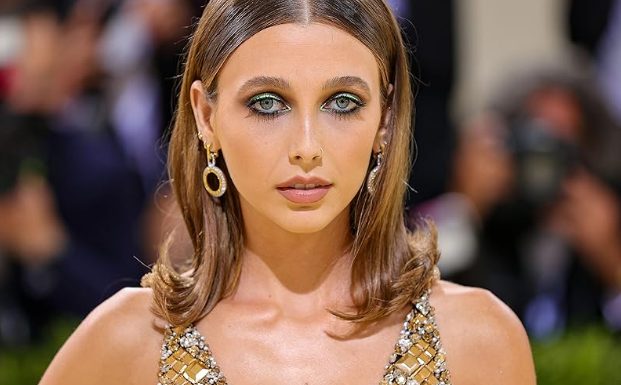
In the rapidly shifting landscape of digital media, few names carry as much weight—or as much “relatability”—as Emma Chamberlain. Rising from a high school student in California to a global fashion powerhouse and business mogul, her trajectory has redefined what it means to be an “influencer.” Unlike the polished, aspirational stars that preceded her, Emma found a global audience by leaning into the messy, unscripted, and often awkward reality of being a teenager. Today, she stands as a multi-industry force, balancing high-fashion ambassadorships with a thriving coffee empire and a top-charting podcast.
Understanding the Emma Chamberlain phenomenon is essential for anyone looking to grasp the current state of internet culture. She did not just “post videos”; she pioneered a visual and linguistic shorthand that a whole generation adopted. Her influence is visible in every corner of the web, from the way creators edit their footage to the way they discuss mental health and mundane daily routines. This article explores the ten critical pillars of Emma Chamberlain’s career, providing a comprehensive look at the girl who turned a “boring” life into a legendary brand.
1. Emma Frances Chamberlain: From Small-Town Teen to Digital Pioneer
Before she was a fixture on the front row of international fashion weeks, Emma Frances Chamberlain was a regular student in the San Francisco Bay Area. Born into a creative family—her father is an artist—she grew up with a front-row seat to the realities of a creative career. Her early life was marked by the typical milestones of suburban upbringing, including competitive cheerleading and the social pressures of high school. However, a deep sense of dissatisfaction with the traditional school system led her to seek an outlet elsewhere.
With her father’s encouragement, she turned to the internet as a creative canvas. Launching her channel as a teenager, she initially experimented with various formats, but it was her decision to document her life with brutal honesty that truly resonated. Leaving high school early to focus on content creation was a significant risk at the time, but it allowed her the freedom to develop a voice that was entirely her own. Her background serves as a reminder that the most successful digital stars often come from a place of genuine passion and a desire for connection rather than a calculated quest for fame.
2. The Unfiltered Aesthetic: Revolutionizing the YouTube Vlog
The hallmark of Emma Chamberlain’s early success was her revolutionary approach to vlogging. In an era where many creators were investing in expensive lighting and “perfect” lifestyle aesthetics, Emma went in the opposite direction. Her videos were famously unpolished, often filmed with a handheld camera and featuring her in comfortable, everyday clothing. This “unfiltered” look was not just a stylistic choice; it was a rejection of the curated perfection that had come to define social media.
She introduced an editing style that combined chaotic energy with raw vulnerability. Utilizing quick cuts, zoom-ins, and distorted audio effects, she turned the mundane acts of making coffee or driving to a convenience store into high-energy entertainment. She broke the “fourth wall” by keeping in her mistakes, awkward silences, and bloopers—effectively turning the “making of” the video into the video itself. This style, often referred to as “Emma-style editing,” became a global standard, influencing thousands of other creators and shifting the platform’s preference toward authenticity over production value.
3. The Viral Spark: How a Dollar Tree Haul Changed Everything
While many creators spend years struggling to find an audience, Emma’s rise was remarkably swift, ignited by a few key viral moments. One of the most significant was her “Dollar Tree Haul” video, which captured the internet’s attention due to its dry humor and relatable premise. At a time when other influencers were showing off luxury purchases, Emma’s excitement over inexpensive, everyday items felt refreshing and grounded. This video acted as a “proof of concept” for her brand: people didn’t need to see wealth to be entertained; they wanted to see a personality they could relate to.
This viral spark led to an explosion in her subscriber count, making her one of the fastest-growing creators in the history of the platform. She tapped into the “anti-influencer” sentiment, providing a voice for a generation that felt alienated by the traditional celebrity model. Her ability to take a simple, low-stakes activity and turn it into a shared cultural moment is what set her apart. It proved that in the digital age, personality is the ultimate currency, and a genuine connection with an audience can be more powerful than any marketing campaign or high-budget production.
4. The “Sister Squad” Era and the Power of Collaboration
As her star continued to rise, Emma became a key member of the “Sister Squad,” a high-profile collaborative group of teen creators that dominated the internet’s attention for a specific period. Alongside other massive digital stars, she participated in challenges, vlogs, and travel series that generated hundreds of millions of views. This era was crucial because it exposed her to a much broader audience and demonstrated her ability to hold her own alongside some of the platform’s biggest names.
The Sister Squad was more than just a group of friends; it was a cultural phenomenon that highlighted the power of the “creator collective.” For many fans, the group represented a digital version of high school social dynamics, with viewers deeply invested in the friendships and chemistry of the members. While the group eventually went their separate ways, the “Sister Squad” years cemented Emma’s status as a top-tier influencer. It also provided her with a masterclass in managing public image and navigating the complexities of high-level digital collaboration, skills that would be essential as she moved into the next phase of her career.
5. Gen Z Influence: The Original “VSCO Girl” and Tastemaker
Emma Chamberlain is widely credited with being one of the primary architects of the Gen Z aesthetic. Long before terms like “it girl” or “aesthetic” became mainstream, Emma was popularizing a specific look that would come to define an entire era of internet culture. Often labeled the “original VSCO girl,” her penchant for thrifted “dad” jeans, oversized sweaters, scrunchies, and a specific “effortless” style became a blueprint for millions of young people. She made thrifting and sustainable fashion “cool,” moving the focus away from fast fashion and toward personal expression.
Her influence extends beyond just clothing; she influenced how an entire generation speaks and interacts online. Her signature slang, her use of sarcasm, and her open discussion of “boring” topics created a new linguistic style. By normalizing the “average” parts of life, she lowered the barrier to entry for other creators and encouraged her audience to embrace their quirks. She remains a primary tastemaker because she doesn’t follow trends—she creates them. Whether she is wearing a vintage vest or a specific pair of sunglasses, her endorsement often leads to immediate viral demand, proving her unparalleled power in the consumer market.
6. High Fashion Ambassadorship: From YouTube to the Met Gala
One of the most impressive aspects of Emma’s career has been her seamless transition into the world of high fashion. She broke the “digital glass ceiling” by becoming a face for legendary houses like Louis Vuitton and Cartier. Unlike previous “internet celebrities” who were often marginalized by the fashion elite, Emma was embraced as a legitimate muse. Her presence on the front row of Paris Fashion Week and her recurring role as a red carpet interviewer for Vogue at the Met Gala have solidified her status as a global style icon.
This transition was strategic. She managed to maintain her “relatable” persona while wearing millions of dollars in jewelry and custom designer gowns. By bringing her unique voice and humor to these high-stakes environments, she made the world of high fashion feel more accessible to a younger audience. She proved that a digital-native creator could possess the same—if not more—cultural weight as a traditional Hollywood actor or model. Her fashion career is a testament to her versatility, showing that she can navigate the most exclusive rooms in the world without losing the “girl-next-door” charm that made her famous.
7. Anything Goes: Mastering the Art of the Personal Podcast
As she matured, Emma expanded her media empire into the world of audio with her podcast, “Anything Goes.” Originally titled “Stupid Genius,” the show evolved into a more intimate, long-form conversation recorded from the comfort of her home. The podcast allows her to explore deeper themes that don’t always fit into a visual vlog, such as philosophy, mental health, relationship dynamics, and the complexities of fame. The show has consistently ranked at the top of the charts, becoming a primary source of connection for her fans.
The success of “Anything Goes” lies in its simplicity. It feels like a late-night phone call with a close friend. By removing the visual distractions of a video, Emma is able to be even more vulnerable and transparent. The podcast has become a vital space for her to “grow up” alongside her audience, moving from teenage antics to adult reflections. It has also become a lucrative business venture, securing exclusive partnerships and attracting major advertisers. For Emma, the podcast represents a shift toward a more sustainable and intentional form of content creation that prioritizes depth over “clickability.”
8. Chamberlain Coffee: Turning a Daily Habit into a Multimillion-Dollar Business
Perhaps Emma’s most successful business venture to date is the founding of Chamberlain Coffee. What began as a personal obsession—Emma was frequently seen with an iced coffee in almost every video—transformed into a thriving global brand. Launched as a direct-to-consumer (DTC) business, the company focused on high-quality, ethically sourced beans with vibrant, character-driven packaging. The brand quickly expanded into major retail chains, becoming available in thousands of stores across North America and beyond.
Chamberlain Coffee is a masterclass in brand alignment. It wasn’t just a random product endorsement; it was a natural extension of her personality. She leveraged her massive reach to build a community around the “simple joy” of a good cup of coffee. By focusing on accessibility and fun rather than the often intimidating “coffee snob” culture, she created a brand that resonated deeply with her Gen Z audience. The company’s success has proven that Emma is more than just a “personality”; she is a savvy entrepreneur who can build and scale a serious consumer-packaged-goods (CPG) business from the ground up.
9. Public Vulnerability: A Champion for Mental Health
A core part of Emma’s legacy is her openness regarding her personal struggles. She has utilized her platform to speak candidly about body dysmorphia, eating disorders, and the intense pressures of digital fame. In an industry where many feel forced to project an image of constant happiness, her willingness to show herself “crying on camera” or discussing her “low moments” has been life-changing for many of her followers. She has effectively acted as a “digital big sister,” validating the feelings of a generation struggling with an increasingly online world.
This transparency has built a level of trust with her audience that is virtually unparalleled. Her fans don’t just “watch” her; they feel a sense of shared experience with her. By destigmatizing the conversation around mental health and the “unglamorous” parts of life, she has created a community that values honesty over perfection. This emotional connection is the foundation of her longevity. While trends and platforms may change, her role as a supportive, empathetic voice remains a constant in the lives of her millions of followers, making her more than an entertainer—she is a companion.
10. The Intentional Shift: Redefining Cultural Influence
In recent years, Emma has made a conscious shift away from the “high-volume” vlogging that initially made her famous. She has spoken openly about the burnout associated with constant production and her desire to have a more “intentional” presence on the internet. This shift—moving from weekly vlogs to a focus on her podcast, fashion partnerships, and business ventures—represents a new phase of her career. She is no longer just “participating” in the internet; she is shaping it from a higher level of cultural influence.
This evolution is a healthy model for the “creator economy.” It shows that it is possible to grow and change without losing the core of what makes a brand special. Today, she is viewed as a “tastemaker” rather than just a “YouTuber.” Her influence is measured not just in views, but in the way she dictates style, conversation, and consumer habits across multiple industries. She remains at the forefront of the digital world because she isn’t afraid to step back and re-evaluate her path. As she continues to innovate, Emma Chamberlain remains the blueprint for the modern icon—authentic, entrepreneurial, and always one step ahead.
Further Reading
- The Ideal Planner by Emma Chamberlain
- Extremely Online: The Untold Story of Fame, Influence, and Power on the Internet by Taylor Lorenz
- The Influencer Factory: A Marxist Theory of Corporate Personhood on YouTube by Grant Bollmer and Katherine Guinness
- East of Eden by John Steinbeck (A favorite of Emma Chamberlain)
- 10 Things You Should Know About HasanAbi – Digital Creator

- 10 Things You Should Know About Dream – YouTuber

- 10 Things You Should Know About Pokimanes – Digital Creator

- 10 Things You Should Know About Ninja – Digital Creator

- 10 Things You Should Know About Kai Cenats – Digital Creator




