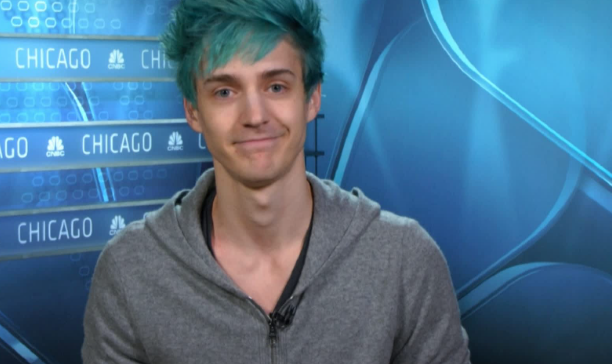
In the history of digital media, there is a clear “before” and “after” marked by the rise of Tyler Blevins, known globally as Ninja. He didn’t just play video games for an audience; he shattered the glass ceiling of what a “gamer” could be, transforming a bedroom hobby into a multi-million dollar global brand. From breaking viewership records with international superstars to becoming the first professional gamer on the cover of ESPN The Magazine, Ninja’s trajectory is a definitive study in timing, talent, and the power of personal branding. This guide explores the milestones and mechanics behind the man who brought live streaming into the living rooms of the world.
1. The Architect of Modern Gaming: Who is Tyler Blevins?
Before the vibrant hair and the world-renowned “Ninja” alias, there was Tyler Blevins, a young man from the Chicago suburbs with a competitive fire that would eventually reshape the entertainment industry. Born in 1991, Tyler’s journey began not with a silver spoon, but with a controller in his hand and a job at a local restaurant chain. His story is one of classic American grit; he balanced a full-time college schedule, a part-time job, and a burgeoning professional gaming career, proving that his later success was built on a foundation of intense discipline.
Tyler’s identity as a creator is rooted in his infectious energy and a relentless desire to be the best. He wasn’t just a player; he was a performer who understood that people didn’t just tune in to see a game—they tuned in to see him. This distinction is what allowed him to transition from a niche competitive player to a household name. His background as a former soccer player also contributed to his “athlete-first” mentality toward gaming, treating every session with the seriousness of a high-stakes match. This blend of relatable “everyman” roots and extraordinary professional drive is the core of the Ninja brand, making him a relatable yet aspirational figure for millions of fans worldwide.
2. The Fortnite Catalyst: A Cultural Explosion
The synergy between Ninja and the game Fortnite is perhaps the most significant partnership in the history of digital media. While Tyler was already a successful streamer, the release of Fortnite’s Battle Royale mode provided the perfect canvas for his high-octane playstyle and comedic personality. As the game’s popularity skyrocketed, Ninja became its unofficial ambassador. His ability to build complex structures at lightning speed while engaging with a live audience created a “spectator sport” experience that was entirely new to a general audience.
During this era, Ninja’s growth was exponential, moving from thousands of followers to millions in a matter of months. He wasn’t just playing a game; he was hosting a nightly event that felt like the center of the cultural universe. This period proved that a single creator could act as a more powerful marketing force than traditional advertising. The “Ninja effect” was so potent that his presence alone could dictate the success of a new game update or season. By mastering the mechanics of Fortnite and the engagement tools of live streaming simultaneously, he became the face of a new generation of entertainment that relied on interactivity rather than passive consumption.
3. Redefining the Streamer Career Path
Ninja’s career is a blueprint for the professionalization of live streaming. Before his rise, many viewed streaming as a transient hobby or a niche subculture. Tyler changed that perception by treating his channel like a major media network. He maintained a rigorous schedule, often streaming for ten to twelve hours a day, and invested heavily in his production value. This professional discipline set a new standard for the industry, showing aspiring creators that consistency and work ethic were just as important as gaming skill.
Beyond the hours logged on camera, Ninja’s career is defined by his ability to diversify. He was one of the first to successfully manage a multi-platform empire, ensuring his presence was felt on YouTube, Instagram, and Twitter alongside his live broadcasts. This approach protected him from the volatility of any single platform’s algorithm. His career represents the shift from “content creator” to “media mogul,” as he began to oversee a team of editors, managers, and designers who helped polish the Ninja brand into a global icon. By professionalizing his hobby, he paved the way for thousands of others to pursue gaming as a legitimate, sustainable career.
4. The Great Crossover: Gaming Meets Mainstream Pop Culture
One of the most pivotal moments in Ninja’s career—and in the history of the internet—was his record-breaking stream with global music superstar Drake. In early 2018, the two played Fortnite together, attracting over 600,000 concurrent viewers and effectively “breaking” the internet. This wasn’t just a gaming event; it was a cultural collision that proved gaming was no longer a basement-dwelling activity. It was a place where A-list celebrities and professional athletes wanted to be seen.
This crossover opened the floodgates for Ninja’s mainstream appearances. He became a fixture on late-night talk shows, appeared on the reality competition The Masked Singer, and even voiced a character in a major motion picture. Perhaps most significantly, he became the first professional esports player to be featured on the cover of ESPN The Magazine, a move that signaled the sporting world’s official recognition of competitive gaming. Ninja’s ability to move seamlessly between the digital world and traditional Hollywood proved that the new wave of celebrities didn’t need a studio contract to reach the masses; they just needed a camera and an authentic connection to their audience.
5. The Platform Pioneer: Navigating Mixer and the Twitch Return
In a move that sent shockwaves through the tech industry, Ninja announced in 2019 that he was leaving his home on Twitch for an exclusive deal with Microsoft’s now-defunct platform, Mixer. This was a watershed moment for the “creator economy,” as it established that top-tier streamers were valuable enough to be the centerpiece of multi-million dollar corporate strategies. Reports suggested the deal was worth tens of millions of dollars, highlighting the massive economic power that individual creators had begun to wield over major tech platforms.
When Mixer eventually shut down, Ninja became the industry’s most sought-after “free agent.” His subsequent return to Twitch was a masterclass in leverage, as he returned to his original platform on his own terms with a multi-year exclusivity deal. This saga demonstrated the importance of brand loyalty over platform loyalty. Ninja’s audience followed him across platforms because they were invested in him, not the website he used. This period of his life serves as a critical lesson in business for creators, illustrating the importance of knowing one’s value and being willing to take risks to redefine the landscape of the industry.
6. The Business of Being Ninja: Iconic Brand Deals
Ninja’s portfolio of brand endorsements is a “who’s who” of global giants, further cementing his status as a mainstream powerhouse. He was the first individual gamer to sign a multi-year apparel deal with Adidas, launching the “Time In” collection that bridged the gap between streetwear and gaming culture. This wasn’t just a simple logo placement; it was a full-scale collaboration that treated Tyler like a world-class athlete. His partnership with Red Bull was equally transformative, leading to the creation of custom-built streaming studios and even his face appearing on limited-edition cans.
These deals were revolutionary because they proved that gamers could move product just as effectively as basketball stars or musicians. Whether he was promoting Samsung’s latest mobile technology or working with Uber Eats, Ninja’s endorsements felt organic to his lifestyle. He didn’t just take every check; he aligned himself with brands that resonated with his audience’s interests. This strategic approach to business has made him one of the highest-earning creators in history, showing that the real “win” in gaming isn’t just the high score on the screen, but the sustainable business empire built around it.
7. Managing a Public Image in the Digital Age
With a global spotlight comes intense scrutiny, and Ninja’s journey has involved navigating the complexities of being a role model for millions of young fans. He famously made the decision to stop streaming with female creators to avoid the “shipping” rumors and clickbait drama that often plagues the internet, a move that sparked significant debate about the responsibilities of male streamers in a male-dominated industry. His public image has evolved from the “edgy” competitive gamer of his youth to a more measured, family-oriented professional.
Tyler has been open about the pressures of maintaining a “clean” image while staying true to his high-energy personality. He has had to apologize for past outbursts and learn in real-time how to be a leader in a community that can often be toxic. His ability to handle criticism while maintaining a massive following is a testament to his resilience. He represents the first generation of stars who have to live their entire growth process—mistakes and all—in front of a live audience. This transparency has made his “Mafia” and “Team Ninja” fans even more loyal, as they see him as a human being who is constantly striving to “get good” at life, not just games.
8. The Competitive Heart: Halo and the Esports Roots
While many know him for Fortnite, Ninja’s foundation was built in the trenches of professional Halo competition. Starting as a teenager in 2009, he competed in Halo 3, Halo: Reach, and Halo 4 for legendary organizations like Cloud9, Team Liquid, and Renegades. This competitive background is the secret to his success; it gave him the mechanical skill and the “clutch” factor that made his gameplay so captivating to watch. He wasn’t just a funny guy; he was a legitimate pro who could outplay almost anyone in the world.
His history in the Halo Championship Series provided him with a deep understanding of the esports ecosystem. This experience allowed him to transition seamlessly between different genres, from the sci-fi shooter mechanics of Halo to the survival-focused gameplay of H1Z1 and PUBG, and finally to the building-centric world of Fortnite. This versatility is a hallmark of his career. Even as he moved into the “entertainer” role, he never lost the heart of a competitor. His legacy in esports remains a vital part of his identity, reminding his audience that behind the blue hair is a player who spent a decade grinding in tournaments for very little pay before finally hitting the jackpot.
9. A Lasting Influence on Streaming Culture
Ninja didn’t just participate in streaming culture; he defined it. Many of the features and expectations we now take for granted in a live broadcast—from high-quality overlays and alerts to the “Icon Series” of in-game cosmetics—can be traced back to his influence. He was the first creator to receive his own skin in Fortnite, a milestone that paved the way for other real-world celebrities and influencers to be immortalized in digital worlds. This “trans-media” presence is now the gold standard for top-tier creators.
Furthermore, Ninja’s emphasis on “family-friendly” content (to an extent) helped bring mainstream advertisers into the space. By cleaning up his language and focusing on positivity, he made streaming a safe place for brands to spend millions of dollars. He also championed the idea of streamers as “athletes,” advocating for better physical and mental health within the community. His influence is felt every time a new streamer sets up their first webcam or a major brand decides to sponsor a gaming event. He showed the world that a streamer could be a leader, an innovator, and a legitimate force for cultural change.
10. The Legend Continues: Why Ninja Remains Relevant
In an industry where creators often burn out or fade into obscurity, Ninja’s longevity is his most impressive feat. He has successfully transitioned from being the “new kid on the block” to being a veteran statesman of the industry. While he may not always be the number one most-watched streamer at any given second, his influence remains unmatched. He continues to experiment with new games, platform features, and creative projects, showing a refusal to rest on his laurels.
His current relevance is tied to his role as a mentor and an icon. He has written multiple books, launched a MasterClass on streaming, and continues to advocate for the growth of gaming globally. He represents the “End Game” of a content creator: someone who has achieved every possible milestone but continues to show up because they genuinely love the craft. As long as there are people playing video games and people wanting to be entertained, the name “Ninja” will remain a cornerstone of the conversation. He isn’t just a part of gaming history; he is still actively writing it.
Further Reading
- Ninja: Get Good: My Ultimate Guide to Gaming by Tyler “Ninja” Blevins
- Ninja: The Most Dangerous Game (Graphic Novel) by Tyler “Ninja” Blevins
- Build Your Empire: My Life, My Business, and My Journey with Ninja by Jessica Blevins
- Ninja: War for the Dominions (Graphic Novel) by Tyler “Ninja” Blevins
- 10 Things You Should Know About HasanAbi – Digital Creator

- 10 Things You Should Know About Dream – YouTuber

- 10 Things You Should Know About Pokimanes – Digital Creator

- 10 Things You Should Know About Ninja – Digital Creator

- 10 Things You Should Know About Kai Cenats – Digital Creator