
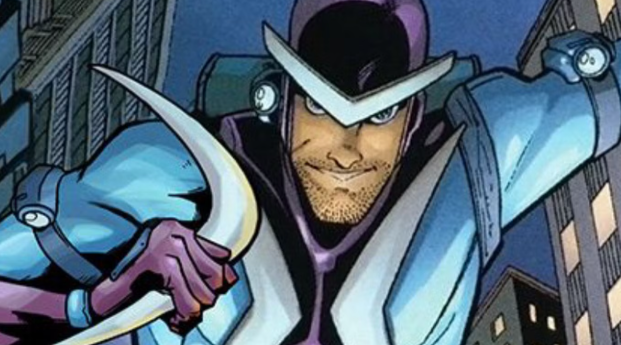
In the pantheon of Marvel antagonists, there are cosmic gods, genius billionaires, and literal monsters. And then, there is Fred Myers—better known as Boomerang. For decades, Boomerang was the punchline of the Spider-Man rogues gallery, a “loser” villain who threw curved sticks at a hero who could dodge bullets. However, in recent years, Fred has undergone one of the most fascinating character rehabilitations in comic book history, evolving from a disposable henchman into a beloved, albeit deeply untrustworthy, anti-hero.
Born in Australia and raised on the baseball diamonds of America, Fred Myers represents the “everyman” of supervillainy. He isn’t motivated by world domination or a tragic Shakespearean backstory; he’s motivated by a desire for a quick buck, a cold beer, and a bit of respect. His journey through the Marvel criminal underworld is a masterclass in failing upward, proving that even a villain with a seemingly ridiculous gimmick can become a major player if they are persistent (and sarcastic) enough.
Whether you know him from his classic purple-and-white spandex or his more recent stint as Peter Parker’s unlikely roommate, here are ten things you didn’t know about the Marvel supervillain Boomerang.
1. He Was an Elite Professional Baseball Player
Before he ever picked up a weaponized projectile, Fred Myers was a rising star in Major League Baseball. Known for his incredible pitching arm, Fred had a “cannon” that could have led him to the Hall of Fame. However, his career came to a screeching halt when he was caught taking bribes to throw games. This fall from grace is the literal Boomerang origin story—he was a man who had everything and threw it away for a shortcut.
This athletic background is crucial to his character. Unlike many villains who rely on technology to aim for them, Fred’s accuracy is purely natural talent. He possesses peak human coordination and throwing accuracy, allowing him to hit targets from impossible angles. His transition from pitching baseballs to throwing lethal boomerangs was a natural, if criminal, evolution of his physical gifts. He didn’t just find a gimmick; he adapted his only marketable skill for a life of crime.
2. He Was Originally a Foe of the Hulk, Not Spider-Man
While he is firmly established as a Spider-Man antagonist today, Boomerang actually made his debut in Tales to Astonish #81 as a villain for the Incredible Hulk. He was hired by a secret organization called the Secret Empire to take down the Jade Giant. Needless to say, throwing boomerangs at a monster that can level cities went about as well as you’d expect.
This early history highlights Fred’s persistent overconfidence. Throughout his career, he has consistently punched above his weight class. Whether it’s the Hulk, Silver Surfer, or Daredevil, Boomerang has never met a hero he didn’t think he could take down with a well-timed “Shatter-Rang.” This “David vs. Goliath” complex defines his evergreen villain motivation: he is constantly trying to prove he belongs in the big leagues, even when he’s clearly outmatched.
3. His Arsenal Is Surprisingly High-Tech
Calling Fred’s weapons “sticks” is a massive understatement. Over the years, he has utilized a variety of specialized trick boomerangs provided by tech-geniuses like Justin Hammer and the Tinkerer. His bag of tricks includes “Shatter-Rangs” (explosive), “Gas-Rangs” (tear gas), “Sonic-Rangs,” and even “Gravity-Rangs” that can pin an opponent to the floor.
Perhaps his most impressive piece of gear is his jet-boot propulsion system. Because boomerangs require space and elevation to be effective, Fred wears boots that allow him to hover and fly at high speeds. This makes him a highly mobile threat, capable of raining down a barrage of projectiles from the air. His suit also contains a hidden “return” signal that ensures his more expensive boomerangs always find their way back to his gauntlets, making him a one-man mobile artillery unit.
4. He Led the “Superior” Version of the Sinister Six
One of Boomerang’s greatest claims to fame is leading a team that was technically called the Sinister Six, despite only having five members (a recurring joke about Fred’s poor organizational skills). During the Superior Foes of Spider-Man era, Fred took charge of a group including Shocker, Speed Demon, Beetle, and Overdrive.
This period redefined the character for a modern audience. It showed that while Fred is a compulsive liar and a terrible leader, he is also incredibly charismatic. He navigated the criminal underworld politics with a mix of luck and low-level cunning. This run is widely considered one of the funniest and most insightful looks at the “B-list” villain lifestyle, transforming Boomerang from a generic bad guy into a complex, relatable failure.
5. He Became Peter Parker’s Roommate
In one of the most “only in comics” twists, Fred Myers eventually became the roommate of Peter Parker. After a series of events left Peter looking for an affordable apartment, he ended up sharing a place with Fred, who was trying (and often failing) to go straight. Peter, aware of Fred’s identity but unable to reveal his own as Spider-Man, had to endure Fred’s annoying habits, like leaving superhero memorabilia around the house.
This unlikely Marvel friendship (or “frenemyship”) added a layer of sitcom-style humor to the Spider-Man mythos. It allowed writers to explore Fred’s humanity. He isn’t inherently evil; he’s just a guy who makes terrible life choices. Seeing him try to “bond” with Peter while Peter secretly wanted to web him to the ceiling created a unique dynamic that humanized one of Spidey’s oldest foes.
6. He Is a Member of the Thunderbolts
Like many villains looking for a second chance (or a shorter prison sentence), Boomerang has served multiple stints on the Thunderbolts. Under the leadership of characters like Luke Cage, Fred was part of a government-sponsored program for “reformed” villains.
His time with the Thunderbolts highlighted his survivor instinct. In a group filled with heavy hitters and psychopaths, Fred survived by being the guy who knew when to duck. He often acted as the team’s comic relief, but his superhuman projectile accuracy proved useful in tactical situations. His tenure with the team is a testament to his “cockroach-like” ability to survive any status quo shift in the Marvel Universe.
7. He Has a Deep (and One-Sided) Rivalry with Bullseye
In the world of Marvel’s marksmen, Bullseye is the gold standard. Fred Myers, being an elite thrower himself, has a massive inferiority complex regarding Bullseye. He constantly compares his “trick-shot” abilities to the man who never misses. While Bullseye is a cold-blooded assassin, Boomerang is more of a “theatrical” criminal, which often leads to him being disrespected by the more serious villains.
This rivalry is mostly in Fred’s head, but it drives him to take bigger risks. He wants to be seen as the world’s greatest thrower, but his tendency to monologue or get distracted by shiny objects usually prevents him from reaching that top tier. This psychological need for validation is what keeps him coming back to the life of a superhuman mercenary—he doesn’t just want the money; he wants the “street cred.”
8. His Name “Fred Myers” Is an Alias (Sort Of)
In his early appearances, there was some confusion regarding his civilian identity. While he is most commonly known as Fred Myers, he has used various aliases throughout his career to dodge the law and MLB investigators. He was born in Alice Springs, Australia, and his “Aussie” roots are often brought up for comedic effect, despite him having lived in the U.S. for most of his life.
This shifting identity mirrors his unreliable narrator status. When Boomerang tells a story, you can usually bet that at least 50% of it is a lie designed to make him look cooler than he actually is. This makes him one of the most entertaining characters to read, as the audience is often in on the joke while his fellow villains are being conned by his “Fred-isms.”
9. He Once Stole the “Lifeline Tablet”
In an ambitious move that almost worked, Boomerang led his Sinister Six to steal the Lifeline Tablet, a mystical artifact capable of granting eternal youth and power. This put him in the crosshairs of the Kingpin, Hammerhead, and various other crime lords.
This storyline proved that Fred has the “guts” to go for the big scores, even if he lacks the follow-through. It’s a classic example of organized crime in Marvel—everyone is stabbing everyone else in the back, and Fred is usually the one holding the most knives (or boomerangs), only to trip over his own feet at the finish line. His ambition is his greatest strength and his most recurring weakness.
10. He Sacrificed Himself to Save the World (Sort Of)
In a surprising turn during the Sinister War and subsequent arcs, Boomerang actually performed an act of genuine heroism. While he started the journey with selfish intentions, his friendship with Peter Parker eventually led him to make a stand against the demonic Kindred.
This redemption arc for Boomerang was one of the most earned in recent memory. He didn’t become a “perfect” hero; he remained a snarky, flawed individual, but he chose to do the right thing when it mattered most. This sacrifice elevated him from a “joke villain” to a tragic figure who finally found the respect he had been chasing his entire life—even if he had to “throw away” his life to get it.
Further Reading
- “The Superior Foes of Spider-Man” by Nick Spencer and Steve Lieber – The definitive, hilarious run that redefined Boomerang for the modern era.
- “The Amazing Spider-Man” (2018 Series) #1-15 by Nick Spencer – Covers the “roommate” era and Fred’s attempts at redemption.
- “Thunderbolts” (Vol. 1) #144-174 – Features Fred as part of the Underbolt program under Luke Cage.
- “Tales to Astonish” #81 – The classic first appearance where he takes on the Hulk.

Leave a Reply