
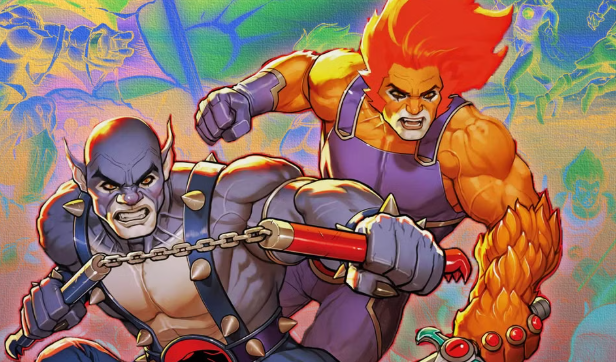
The cry of “Thunder, Thunder, Thunder, Thundercats—HO!” is an anthem that resonates across generations. For many, it evokes memories of Saturday morning cereal and the glowing red emblem of a stylized feline. However, the Thundercats franchise is far more than a relic of nostalgic animation. It is a sprawling epic that blends high-fantasy sorcery with interstellar science fiction, creating a world where ancient mummies battle bio-mechanical feline refugees on a planet known as Third Earth.
Born from the creative explosion of the 1980s, Thundercats introduced a unique mythology that felt more sophisticated than many of its contemporaries. It wasn’t just about good versus evil; it was about the burden of leadership, the loss of a homeland, and the technological divide between a dying civilization and a primitive new world. To truly understand the Eye of Thundera, one must look beyond the action figures and catchy theme song. From its surprising Japanese animation roots to the dark psychological subtext of its characters, these ten revelations will give you “Sight Beyond Sight” into one of the most enduring franchises in pop culture history.
1. The Rankin/Bass Paradox: From Rudolph to Red Lion-O
When fans think of Rankin/Bass Animated Entertainment, they often envision stop-motion holiday classics like Rudolph the Red-Nosed Reindeer or Frosty the Snowman. It seems almost paradoxical that the same studio responsible for “Holly Jolly Christmas” would create a gritty, action-packed saga about humanoid cats. Yet, Thundercats was the crown jewel of Rankin/Bass’s move into traditional 2D animation.
This pedigree is the reason why the series has such a distinct “fairytale” quality mixed with its sci-fi elements. The studio brought a sense of theatricality and whimsy to the characters that other action shows lacked. The production value was notably higher than many of its competitors because Rankin/Bass viewed it as a flagship “prestige” project. They applied the same meticulous storytelling techniques used in their feature-length specials to the serialized adventures of the Thundercats, ensuring that Third Earth felt like a living, breathing world with its own internal logic and “magic” that felt grounded in tradition.
2. The Japanese Soul: Pacific Animation Corporation
While Thundercats is often cited as a classic American cartoon, its visual DNA is almost entirely Japanese. The animation was handled by the Pacific Animation Corporation (PAC), a studio based in Tokyo. This collaboration was a precursor to the “Amerime” style we see today. The animators at PAC brought a level of fluidity, detailed line work, and dynamic “cinematic” camera angles that were far ahead of Western television standards at the time.
The connection runs even deeper: many of the animators who worked on Thundercats later moved on to Studio Ghibli, the legendary studio founded by Hayao Miyazaki. This explains why the character designs and backgrounds have such a lush, painterly quality. The fluid movement of Cheetara’s sprints or the terrifying transformation of Mumm-Ra weren’t just standard TV animation; they were the work of some of the finest craftsmen in the Japanese industry. This cross-cultural partnership is what gave the franchise its timeless aesthetic, allowing it to hold up visually even decades after its debut.
3. Lion-O: The Psychological Tragedy of the Child-King
One of the most misunderstood aspects of the franchise is the age of its protagonist, Lion-O. When the Thundercats flee their dying planet, Thundera, they are placed in “suspension pods” for the long journey through space. During the trip, Lion-O’s pod malfunctions. While his body ages physically to that of a muscular adult, his mind remains that of a twelve-year-old boy.
This creates a fascinating, and often tragic, narrative layer. Lion-O isn’t just a powerful warrior; he is a child forced into the role of King and General. His early adventures are defined by his “coming of age” struggles, as he tries to match his youthful impulsiveness with the immense responsibility of the Sword of Omens. The other Thundercats—Panthro, Tygra, and Cheetara—aren’t just his subordinates; they are his surrogate parents and teachers. This psychological depth makes Lion-O one of the most relatable heroes in animation, as he literally has to grow up “on the job” while wielding the most dangerous weapon in the galaxy.
4. The Sentient Eye: The Sword of Omens is Alive
The Sword of Omens is frequently ranked alongside Excalibur or the lightsaber as one of the greatest weapons in fiction. However, most casual viewers don’t realize that the Eye of Thundera—the jewel embedded in the hilt—is a sentient, living entity. It is the source of all the Thundercats’ power and acts as a semi-autonomous moral compass for the leader.
The Eye has its own will. It can refuse to work if used for evil, and it can warn Lion-O of danger even when he isn’t looking. The relationship between the Sword and its wielder is more akin to a partnership than a tool. This sentience is why the sword can grow in length (from a dagger to a broadsword) and why it can project the “ThunderCat Signal” into the sky. It is the “brain” of the Thundercat civilization, holding the collective energy and history of their race. In many ways, Lion-O is merely the guardian of the Eye, and his true strength comes from his ability to harmonize his will with the ancient spirit residing within the blade.
5. Mumm-Ra’s Dark Origins: The Ancient Spirits of Evil
Mumm-Ra the Ever-Living is arguably one of the most terrifying villains in all of animation. His design draws heavily from Egyptian mythology, but his power source is uniquely cosmic. He serves the Ancient Spirits of Evil, four giant, anthropomorphic statues representing a Boar, a Vulture, a Crocodile, and a Bull. These entities are not just his bosses; they are literal gods of chaos who exist in a pocket dimension.
Mumm-Ra’s transformation—where he changes from a shriveled, mummified corpse into a hulking “Ever-Living” giant—is a ritualized invocation of these dark gods. Unlike many villains who want to “rule the world,” Mumm-Ra’s goal is often more esoteric; he wants to purge Third Earth of the “infestation” of the Thundercats to return the planet to its ancient, chaotic state. This gives him a terrifyingly “fundamentalist” edge. He isn’t just a criminal; he is a priest of destruction, making him a formidable ideological opponent for the noble, life-affirming philosophy of the Thundercats.
6. The “Banned” Allegory: The Garden of Delights
The franchise has occasionally delved into surprisingly mature themes, none more famous than the episode titled “The Garden of Delights.” In this story, Tygra is lured into a garden by a creature named Silky, who offers him “pleasure fruit” that gives him incredible hallucinations and a sense of euphoria. However, the fruit is highly addictive and begins to physically and mentally wither Tygra’s resolve.
This episode is widely recognized by historians and fans as a clear allegory for drug addiction. Tygra’s withdrawal symptoms, his desperation for “just one more,” and his eventual rescue by his friends served as a stark, cautionary tale for the young audience. While it wasn’t technically “banned” in the traditional sense, it was frequently omitted from syndication packages in certain regions due to its intense subject matter. It remains a prime example of the show’s willingness to tackle “real-world” issues through the lens of high-concept fantasy, proving that Third Earth was a place of genuine danger, not just physical, but psychological.
7. Cheetara’s Limit: The Physics of Super-Speed
Cheetara is the fastest member of the team, capable of reaching speeds of up to 120 miles per hour. While this makes her an incredible asset in battle, the franchise established a very specific and grounded limitation to her power: she can only maintain this speed for short bursts. Once she reaches her limit, she suffers from extreme physical exhaustion and must rest to recover her energy.
This “hard” limit to her abilities added a layer of tactical tension to the show. The Thundercats couldn’t just rely on her to run across the planet in seconds to solve every problem. Her speed was a “finishing move” or a last-resort escape tactic. Furthermore, she possessed “Sixth Sense” psychic abilities, which also drained her mental stamina. By giving their fastest hero a “recharge” time, the writers ensured that Cheetara remained a vulnerable, humanized character rather than an invincible speedster. It forced the team to work together, emphasizing strategy over raw power.
8. Snarf’s Hidden Identity: Osbert of the Snarfs
The character of Snarf is often viewed as the “comic relief” or a mere mascot, but within the lore, he is a member of a noble and ancient species from the Planet of Snarfs. Perhaps the most surprising “fact” about him is his real name: Osbert. He detests this name and insists on being called “Snarf,” which is also the name of his race.
Snarf’s role in the group is actually that of a “nanny” or caretaker. He was specifically assigned to look after Lion-O during the prince’s childhood. Because Lion-O’s mind is still technically that of a child, Snarf often treats him as such, much to the young King’s chagrin. Despite his complaining and his cowardice, Snarf has saved the Thundercats on numerous occasions, often using his small size and the fact that villains underestimate him to his advantage. He represents the “unseen hero”—the one who keeps the household running and provides emotional support while the warriors are out fighting.
9. The Shared Universe: The SilverHawks Connection
In the mid-to-late era of Rankin/Bass, the studio created two other “sister” shows: SilverHawks and TigerSharks. While they aren’t explicitly connected in a single narrative timeline, they share a “creative universe.” They were created by the same team, featured many of the same voice actors, and utilized nearly identical character archetypes and animation styles.
Fans have long theorized that these shows take place in the same galaxy at different points in time—SilverHawks in the far future of space, Thundercats on a post-apocalyptic Earth, and TigerSharks on a water-world. This “Power Trio” of shows defined the Rankin/Bass action era. The voice of Lion-O (Larry Kenney) also provided the voice for Bluegrass in SilverHawks, creating an auditory link that made the shows feel like part of a larger, epic tapestry. This “unofficial” shared universe is a testament to the cohesive vision of the creators, who wanted to build a mythology that spanned the stars and the seas.
10. The 2011 Reboot: A Masterpiece Cut Short
In the modern era, the Thundercats franchise saw a significant revival in the form of the 2011 reboot. This version took the core concepts of the original and transformed them into a deep, serialized “prestige” anime. It reimagined the Thundercats as a kingdom of cats in a medieval world that had forgotten its technological past. The animation was stunning, and the writing was significantly more mature, exploring themes of racism, classism, and the corrupting nature of power.
Tragically, despite critical acclaim and a dedicated fanbase, the series was canceled after only one season. The reason? Toy sales. Because the show was more of a “serious drama” than a “toy commercial,” the merchandise didn’t move as quickly as retailers wanted. This cancellation remains one of the greatest “what-ifs” in animation history. It showed that the Thundercats concept was robust enough to handle modern, complex storytelling, and it paved the way for future “serious” reboots of classic franchises. It proved that Lion-O’s journey was a timeless hero’s myth that could be told and retold for any generation.
Further Reading
- Hear the Roar! The Unofficial Thundercats Companion by David Cliver
- The Art of Thundercats (Various Editions)
- Thundercats: The Enemy’s Pride (Wildstorm Comics) by Ford Lytle Gilmore
- The Encyclopedia of Animated Cartoons by Jeff Lenburg


Leave a Reply