
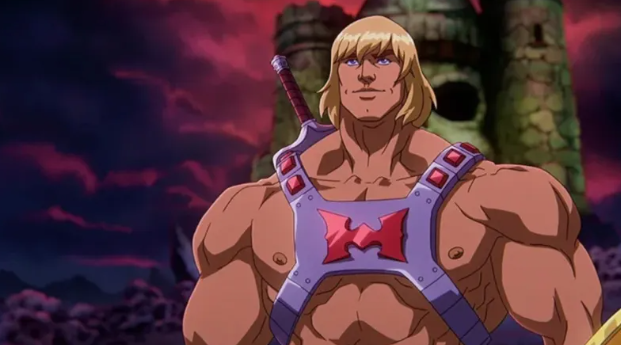
The phrase “By the Power of Grayskull!” is etched into the collective consciousness of anyone who grew up in the 1980s. He-Man, the tan, muscular hero of Eternia, wasn’t just a toy or a cartoon character; he was a cultural phenomenon that redefined how children’s entertainment was produced and marketed. Yet, despite his ubiquitous presence in pop culture, the “Most Powerful Man in the Universe” has a history far more complex and surprising than his simple “I Have the Power” catchphrase suggests.
From his origins as a Conan-esque barbarian to the legal battles that shaped his destiny, the story behind Prince Adam’s alter ego is a fascinating look at creative evolution. Whether you are a lifelong collector or a newcomer curious about the lore of Eternia, these ten insights peel back the fur loincloth to reveal the secret history of He-Man.
1. The Barbarian Origins and the “Conan” Legend
There is a long-standing urban legend that He-Man began as a prototype for a Conan the Barbarian toy line that Mattel scrapped because the film was too violent. While it’s a compelling story, it’s not strictly true. The reality is that Mattel designers, led by Mark Taylor and Roger Sweet, were aiming to capture the “sword and sorcery” trend of the early ’80s.
Early He-Man was far more “primitive” than the Prince Adam we know today. In the original mini-comics included with the first wave of toys, He-Man was a wandering barbarian from a jungle tribe. There was no secret identity, no royal palace, and no “transformation” sequence. He was simply a powerful warrior gifted magical weapons by the Goddess (a proto-Sorceress) to defend Eternia. This version of the character felt more at home in a Frank Frazetta painting than a Saturday morning cartoon, reflecting a raw, untamed energy that helped the He-Man action figures stand out against the more clinical sci-fi designs of Star Wars.
2. The Accidental Creation of Prince Adam
Believe it or not, Prince Adam—the foppish, pink-vest-wearing secret identity—was not part of the original toy concept. When Filmation was tasked with creating the He-Man and the Masters of the Universe animated series, they realized they needed a way for children to relate to the character. They also needed a clear moral framework and a “hero’s journey” element.
Filmation’s writers introduced Prince Adam as a way to incorporate a secret identity trope, similar to Clark Kent and Superman. This allowed for a dynamic narrative where Adam had to hide his courage, often appearing cowardly or lazy to protect his secret. Interestingly, Mattel was initially resistant to the idea of a “weak” version of their powerhouse hero, but the success of the show proved that the Masters of the Universe lore was greatly enhanced by the stakes of a secret identity. It added a layer of responsibility and sacrifice to the character that the original barbarian version lacked.
3. A Legal Battle for the Power of Grayskull
While the Conan rumor is technically a myth, it resulted in a very real legal battle. Conan Properties International sued Mattel in 1984, claiming that He-Man was a “bad faith” copy of Conan the Barbarian. They argued that Mattel had seen early screenings of the Arnold Schwarzenegger film and pivoted their designs to capitalize on it.
The court case was a landmark moment for 80s toy history. Mattel successfully defended themselves by showing that Mark Taylor’s sketches for the character dated back to his childhood and that the concept of a “highly muscled warrior” was a generic archetype that could not be copyrighted. Mattel won the case, but the similarity remains a point of discussion among enthusiasts. This legal victory ensured that He-Man remained a distinct entity, allowing Mattel to expand the MOTU characters into a sprawling universe of sci-fi/fantasy hybrids rather than being pigeonholed as a simple film tie-in.
4. The Half-Sword Mechanic: A Forgotten Play Feature
If you look at the original 1982 He-Man and Skeletor action figures, you’ll notice something strange about their swords. They aren’t whole; they are flat on one side with small pegs. This is because, in the early lore, there wasn’t just one Power Sword—there were two halves.
The primary conflict of the early He-Man toy line was a race to see who could join the two halves of the sword together. It was believed that whoever held the completed Power Sword would have the key to unlocking the secrets of Castle Grayskull. This “dual sword” concept was eventually dropped by the time the cartoon aired, replaced by the idea that the sword was a magical conduit for Adam’s transformation. However, for many collectors, the “Split Sword” remains one of the most iconic vintage He-Man facts, representing a time when the story of Eternia was still being written on the fly.
5. He-Man’s Surprising Connection to the Space Race
The design of Eternia is a unique blend of “swords and planets,” but one of the most interesting influences on He-Man’s world was the real-world aerospace industry. Roger Sweet, one of the primary creators of the line, worked at Mattel during a time when the company was hiring designers with backgrounds in engineering and industrial design.
Many of the early vehicles and playsets, like the Wind Raider or the Battle Ram, were designed with a “form follows function” mentality that mimicked military and space hardware. This is why the Masters of the Universe mythology feels so grounded despite its magical elements. The aesthetic wasn’t just “magic”; it was “ancient technology.” This fusion created a world where a hero could ride a giant green tiger while wielding a laser pistol and a shield, a juxtaposition that became the hallmark of the He-Man universe.
6. The “I Have the Power” Transformation was a Budget Saver
The iconic transformation sequence—where Prince Adam raises his sword and becomes He-Man—is one of the most famous moments in television history. However, its creation was born out of necessity rather than just artistic flair. Filmation, the studio behind the show, was known for using “stock footage” to save money on animation costs.
By creating a highly detailed, flashy 30-second transformation sequence, the animators could reuse that same footage in every single episode. This significantly cut down the amount of new animation required for each half-hour block. Similarly, many of the He-Man characters shared the same body molds in the toy line to save on production costs. This strategy of “repurposing” assets became a standard in the toy and animation industries, proving that sometimes, financial constraints can lead to the creation of a brand’s most enduring and recognizable hallmarks.
7. He-Man is Actually Half-Earthling
One of the most overlooked aspects of Prince Adam of Eternia is his heritage. While his father, King Randor, is a native Eternian, his mother, Queen Marlena, is actually an astronaut from Earth. In the episode “The Sky is Falling,” it is revealed that Marlena Glenn was a NASA pilot whose ship was knocked off course and crashed on Eternia.
This piece of lore adds a fascinating layer to He-Man’s character. He isn’t just a fantasy hero; he is a bridge between two worlds. This connection was explored further in the 1987 live-action film and various comic book iterations, often serving as a plot device to bring the Masters of the Universe storyline to our world. It also explains why Eternia has such a bizarre mix of medieval royalty and advanced Earth-like technology—much of it was influenced by Marlena’s arrival and the knowledge she brought with her.
8. The Battle Cat was a “Space Cat” Recycled
Battle Cat, He-Man’s loyal and fierce steed, is arguably as famous as He-Man himself. However, his inclusion in the line was a last-minute decision made to save money. Mattel had a mold for a large tiger from a previous toy line called Big Jim. They wanted to include a vehicle or creature for He-Man to ride, but they didn’t have the budget to create a new mold.
Marketing executive Bill Reese suggested painting the Big Jim tiger green and putting a saddle on it. When designers pointed out that a giant green tiger looked ridiculous, Reese suggested adding armor to hide the “cat-ness” and make it look more alien. Thus, Cringer and Battle Cat were born. This “happy accident” resulted in one of the most beloved He-Man and Battle Cat dynamics in fiction, proving that creative problem-solving is often the mother of invention in the toy industry.
9. The Moral Lessons Were Required by Law
Every episode of the original He-Man cartoon ended with a “life lesson” segment where a character would speak directly to the audience about safety, honesty, or kindness. While these segments are now viewed with nostalgic fondness (and often parodied), they were originally a strategic move to appease the Federal Communications Commission (FCC) and parental advocacy groups.
During the ’80s, there was a massive outcry against “program-length commercials”—shows designed specifically to sell toys. By including educational content and clear moral messages, Filmation was able to argue that the show provided a public service. These He-Man moral lessons helped legitimize the series and ensured it could stay on the air despite the commercial nature of the Masters of the Universe brand. It turned He-Man into a role model, emphasizing that “having the power” was about more than just physical strength—it was about character.
10. The 1987 Movie Almost Bankrupted a Studio
By the mid-80s, He-Man was a billion-dollar brand. Naturally, a live-action movie was the next step. However, the 1987 Masters of the Universe film, starring Dolph Lundgren, was a notorious production nightmare. Produced by Cannon Films, the movie suffered from massive budget cuts midway through filming.
The production was so strapped for cash that they had to stop filming before the final battle was even finished (it was later completed with a skeleton crew). The film’s failure at the box office, combined with a decline in toy sales, contributed significantly to the financial collapse of Cannon Films and forced Mattel to mothball the franchise for several years. Despite this, the film has since become a cult classic, and Lundgren’s portrayal is remembered as a quintessential 80s action hero performance. It serves as a cautionary tale of how quickly even the “Most Powerful Man in the Universe” can fall when the business side of show business falters.
Further Reading
If you want to dive deeper into the history of Eternia and the creation of these iconic toys, these books are excellent resources:
- Mastering the Universe: He-Man and the Rise and Fall of a Billion-Dollar Idea by Roger Sweet and David Wecker
- The Art of He-Man and the Masters of the Universe by Tim & Steve Seeley
- He-Man and Masters of the Universe: A Character Guide and World Compendium by Val Staples, Josh de Lioncourt, and James Eatock
- Toy Confidential: The Home of the 1980s Toy Revolution by Christopher Byrne




Leave a Reply