
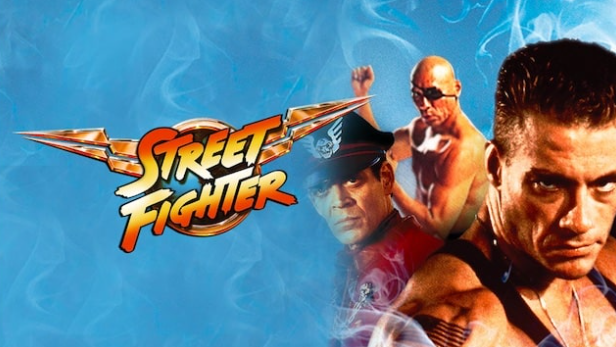
In the mid-90s, the world of cinema was still trying to figure out how to translate the frantic energy of arcades to the silver screen. Following the modest success of Super Mario Bros. (1993), the Street Fighter movie 1994 was a bold, chaotic attempt to bring Capcom’s legendary fighting franchise to life. Starring action superstar Jean-Claude Van Damme and the classically trained Raul Julia, the film has since become a paradoxical masterpiece—critically panned upon arrival but now celebrated as a high-camp cult classic.
The journey of bringing the “World Warriors” to live-action was fraught with military coups, health crises, and a lead actor who was, by all accounts, living a real-life action movie of his own. While modern audiences often search for Street Fighter 1994 production secrets, the truth behind the film is far more fascinating than any “Hadoken.” Here are ten things you likely didn’t know about the making of this bizarre 90s artifact.
1. Jean-Claude Van Damme’s Cocaine Habit Cost $10,000 a Week
At the peak of his fame, Jean-Claude Van Damme was the biggest martial arts star in the world. However, his tenure as Colonel Guile was marred by a severe personal struggle. Director Steven E. de Souza later revealed that Van Damme was consuming an estimated $10,000 worth of cocaine every week during production. This wasn’t just a private issue; it led to massive delays, with the star often being “MIA” or locked in his trailer for hours while the crew waited in the sweltering Thai heat.
The studio even hired a “minder” to keep Van Damme on track, but in a twist worthy of a Hollywood script, the minder allegedly became a bad influence themselves. This erratic behavior explains why some of Guile’s scenes feel disjointed or why his famous American flag tattoo and “inspiring” speech seem slightly… off-kilter. Despite the chaos, Van Damme’s star power carried the film to a $100 million box office haul, proving that even a “coked-out” Guile was a massive draw for 90s audiences.
2. Raul Julia Filmed His Final Role While Battling Cancer
The most heart-wrenching aspect of the Street Fighter 1994 facts is the condition of its primary villain. Raul Julia, who played the megalomaniacal M. Bison, was suffering from terminal stomach cancer during filming. He had lost a significant amount of weight and was visibly frail, which is why the production had to move his less-intensive scenes to the beginning of the shoot to give him time to “gain weight” for the action sequences.
Despite his illness, Julia gave a performance that many consider the best part of the film. He famously accepted the role not for the paycheck, but because his children were obsessed with the Street Fighter II video game and he wanted to be in a movie they could enjoy. His portrayal of Bison is a masterclass in “chewing the scenery,” delivering lines about Pax Bisonica with the gravitas of Shakespeare. He passed away shortly before the film’s release, making this his final theatrical performance and a testament to his dedication as a father and an actor.
3. The Script Was Written in a Single Night
In an industry where scripts often spend years in “development hell,” the Street Fighter movie script was born in a frantic overnight session. Director Steven E. de Souza was a veteran screenwriter (famous for Die Hard), but when Capcom executives came to Los Angeles on short notice, he had to produce a treatment immediately. He essentially mapped out a “G.I. Joe” style military adventure because he felt a straightforward tournament movie would be too repetitive for a feature-length film.
Because the script was rushed, much of the logic was “fixed” on the fly. De Souza has famously joked about “ripping pages out of the script” during production just to stay on schedule. This fly-by-the-seat-of-your-pants approach contributed to the film’s disjointed tone, where Ryu and Ken are small-time hustlers and Chun-Li is a news reporter. It was a bold deviation from the source material that arguably gave the movie its unique, albeit confusing, identity.
4. Kylie Minogue Was Cast Because of a Union Mandate
One of the most unexpected faces in the Street Fighter 1994 cast is pop princess Kylie Minogue, who played the British special forces operative Cammy. Her casting wasn’t actually the director’s first choice; it was a logistical necessity. Part of the film was shot in Australia, and the Australian Actors’ Guild required that at least one major role be filled by an Australian performer.
At the time, Minogue was a massive star in Australia and the UK but was still looking for her “big break” in Hollywood. De Souza reportedly saw her on the cover of a “Most Beautiful People” magazine and decided she fit the physical profile for Cammy. While her character doesn’t get as much screen time as fans of the game might like, her inclusion helped the film secure its Australian filming permits and added a layer of international “pop star” glamour to the gritty jungle setting.
5. The Movie Created a Bizarre “Game-to-Movie-to-Game” Loop
In one of the weirdest marketing moves in history, the film was adapted back into a video game titled Street Fighter: The Movie (The Game). Unlike the traditional 2D hand-drawn sprites of Street Fighter II, this game used digitized photos of the actors—similar to the style of Mortal Kombat. This meant that Jean-Claude Van Damme, Ming-Na Wen, and Raul Julia’s stunt double were all digitized into a fighting game.
This created a strange reality where players were controlling a digitized version of an actor playing a character from the original game. The game itself is notoriously difficult and widely considered one of the “worst” entries in the franchise, but it remains a fascinating artifact of video game movie history. It also marked one of the few times a Hollywood production had to pause filming so the actors could perform “motion capture” style photography for a tie-in product.
6. The Production Narrowly Avoided a Military Coup in Thailand
Filming a big-budget action movie in a foreign country is always risky, but the Street Fighter movie 1994 took it to the extreme. The production took place in Thailand during a period of intense political instability. At one point, there were rumors of an actual military coup occurring while the crew was filming in the jungle.
The logistics were a nightmare; the heat was unbearable, and the local facilities weren’t equipped for a $35 million Hollywood production. This atmosphere of “controlled chaos” seeped into the film. If you look closely at the Bison Troopers or the background extras, many were local Thai citizens who were reportedly confused by the neon-lit, high-tech world being built in their backyard. The stress of the location shoot is cited as one of the primary reasons the film’s editing feels so frantic.
7. Ming-Na Wen Did Her Own Stunts as Chun-Li
Long before she was a Disney Legend or “The Cavalry” in Agents of S.H.I.E.L.D., Ming-Na Wen was breaking ground as Chun-Li. At a time when female leads in action movies were often relegated to “damsels in distress,” Wen fought hard to ensure Chun-Li was a capable warrior. She underwent intense training and performed many of her own stunts and fight sequences.
Interestingly, the movie changes Chun-Li’s backstory from an Interpol agent to an undercover news reporter. This was a “fundamental aspect” of de Souza’s script, as he wanted her to have a reason to infiltrate Bison’s base without raising suspicion. Wen’s performance is often cited as one of the most “accurate” to the spirit of the game, even if her signature ox-horn hairstyle and blue qipao don’t appear until the very end of the movie.
8. The Legendary “Tuesday” Line Was Almost a Throwaway
The most famous line in the movie—and perhaps in all of video game cinema—is M. Bison’s response to Chun-Li’s tragic backstory: “For you, the day Bison graced your village was the most important day of your life. But for me, it was Tuesday.” This line has become a massive internet meme and is praised for its perfect “supervillain” logic.
Originally, the line was just a small piece of dialogue meant to show Bison’s indifference to his victims. However, Raul Julia’s delivery was so cold and casual that it transformed the scene. It elevated the M. Bison performance from a simple cartoon villain to a truly terrifying autocrat who has committed so many atrocities that he literally cannot remember them all. It is the gold standard for “beginner or intermediate level” screenwriting on how to establish a villain’s power without a single punch.
9. Capcom Demanded a “Team of 15” Characters
The primary reason the film feels overcrowded is that Capcom insisted that nearly every character from the Super Street Fighter II roster be included. The director initially wanted to focus on a smaller group—Guile, Bison, Ryu, and Ken—but the game developers wanted the movie to serve as a massive commercial for the entire lineup.
This led to the inclusion of T. Hawk, Dee Jay, Zangief, Dhalsim, and Blanka, often with very little screen time or explanation. This “Capcom interference” is why Dhalsim is a scientist rather than a yoga master and why Zangief is a dim-witted henchman rather than a Russian national hero. Balancing fifteen distinct personalities in a 100-minute movie was an impossible task, resulting in the “ensemble mess” that fans both love and hate today.
10. The Cast Trained with a Kickboxing Legend
To ensure the fights looked somewhat authentic, the production hired Benny “The Jet” Urquidez, a world-renowned kickboxing champion, to train the actors. Urquidez is a legend in martial arts cinema (famous for his fight against Jackie Chan in Wheels on Meals). He spent weeks trying to turn the Hollywood actors into believable “World Warriors.”
Urquidez even has a cameo in the film as one of Sagat’s henchmen. His influence is most visible in the footwork and striking techniques of the leads. While the editing of the film often cuts the fights into “mini-seconds,” the raw footage shows that the actors—especially Byron Mann (Ryu) and Damian Chapa (Ken)—put in significant work to learn the choreography. This commitment to martial arts films fundamentals is what prevents the movie from being a total disaster and gives it its enduring “action-packed” charm.
Further Reading
If you want to go deeper into the weird world of 90s video game adaptations and the making of this specific classic, these books are highly recommended:
- Street Fighter: The Movie – The Official Graphic Novel by Various – A fascinating look at how the story was adapted for print, often adding more context than the film.
- Jean-Claude Van Damme: The Beast Within by Steven S. Moore – A biography that covers the highs and lows of the “Muscles from Brussels” career, including the 1994 production.
- The Making of Street Fighter: The Movie (Collector’s Edition) – A rare but informative behind-the-scenes book released alongside the film.
- Console Wars: Sega, Nintendo, and the Battle that Defined a Generation by Blake J. Harris – While not exclusively about the movie, it provides the “beginner or intermediate level” context of the 90s gaming boom that led to its creation.




Leave a Reply