
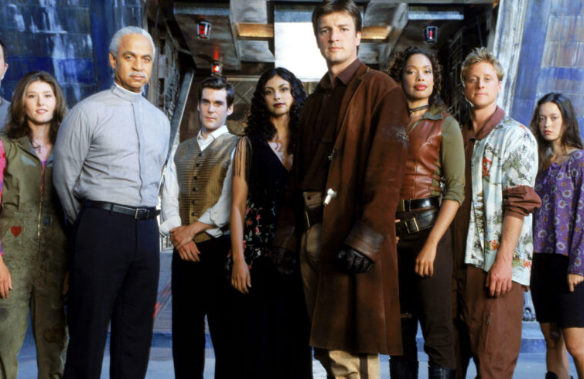
In the vast expanse of science fiction television, few shows have achieved the mythical status of Firefly. Created by Joss Whedon, this “Space Western” blended the gritty reality of frontier life with the high-tech coldness of a star-spanning Alliance. While it only aired a handful of episodes before being infamously cancelled, its legacy has outlived almost every other show of its era, spawning a feature film, comic books, and a legion of dedicated fans known as “Browncoats.”
The story of the ship Serenity and its crew of misfits—led by the rugged, morally gray Captain Malcolm Reynolds—is one of survival, not just on screen but behind the scenes. From the physics of the “Verse” to the recycled costumes and hidden cameos, the production was as resourceful and scrappy as the characters themselves. Whether you’re a veteran pilot or a “green” passenger just boarding for the first time, these ten deep-space secrets will make you want to aim to misbehave.
1. The Disastrous “Out of Order” Broadcast
One of the most tragic facts in television history is that the network responsible for airing the show actively sabotaged its narrative flow. Instead of starting with the two-hour pilot episode, “Serenity,” which introduced the characters, the world-building, and the stakes of the Unification War, the network decided it was “too slow” and lacked enough action. Consequently, they aired the second episode, “The Train Job,” as the series premiere.
This decision left audiences confused about the backstories of Mal and Zoe, the mysterious “merchandise” that was River Tam, and the overall tone of the show. By the time the actual pilot aired, it was the final episode to be shown during the original run. This disjointed presentation made it nearly impossible for the show to build a consistent viewership, as character arcs appeared to jump backward and forward in time. This “out-of-order” crime is often cited by historians as the primary reason the show struggled to find its footing during its initial broadcast.
2. Han Solo Was Secretly Aboard Serenity
In a subtle nod to the grandfather of all space westerns, Star Wars, the crew of Firefly hid a very famous passenger in the background of several scenes. A small, 12-inch model of Han Solo encased in carbonite was hidden on the set of the ship Serenity. If you look closely during scenes in the cargo bay or the bridge, you can occasionally spot the legendary smuggler tucked away on a shelf or behind a bulkhead.
This wasn’t just a random prop; it was a tribute to the influence Star Wars had on the “used future” aesthetic of the show. Nathan Fillion has often stated that his portrayal of Malcolm Reynolds was inspired by the roguish charm of characters like Solo. The “Carbonite Han” became a meta-game for the crew and eagle-eyed fans, symbolizing the shared DNA between the two franchises—where the heroes are often just regular people trying to make a living on the fringes of a galactic empire.
3. The Science of Silence in the “Verse”
Unlike almost every other science fiction show of the time, Firefly made a bold commitment to the laws of physics regarding sound. In the vacuum of space, there is no medium for sound waves to travel, which means explosions, engine roars, and gunfire should be completely silent. Whedon insisted that every exterior shot of Serenity in the void of space be accompanied by eerie, beautiful silence or the soft twang of a slide guitar.
This creative choice added a layer of realism and isolation to the show. It emphasized that space was a cold, unforgiving environment where help was millions of miles away. While other shows relied on loud, “pew-pew” laser sounds to create excitement, Firefly used the silence to build tension. When the ship’s engines flared or a hull breach occurred, the lack of sound made the visual impact feel more visceral and dangerous, grounding the fantastical setting in a recognizable physical reality.
4. Recycled Uniforms from Starship Troopers
Television production is often about making a small budget look like a million dollars, and Firefly was a master of the “recycling” craft. The armor worn by the Alliance soldiers—the “Purplebellies”—was actually surplus gear from the 1997 film Starship Troopers. The production team purchased the iconic grey armor and helmets, repainted them, and modified them slightly to fit the aesthetic of the Alliance’s oppressive regime.
This wasn’t the only time the gear was reused; the same armor appeared in several other sci-fi productions of the late 90s and early 2000s. By using existing high-quality props, the Firefly designers could focus their limited budget on creating the unique, frontier-style clothing for the crew of Serenity. It created a fascinating visual contrast: the “civilized” Alliance looked like high-budget movie soldiers, while the protagonists looked like they had shopped at a post-apocalyptic general store.
5. The “Firefly Family” Lived the Part
The chemistry between the cast members is often cited as the show’s greatest strength, and that bond was forged through genuine off-screen friendship. During the filming of the series, the cast would frequently gather at Joss Whedon’s house on weekends to perform Shakespearean plays and share meals. They referred to themselves as a family, and this translated into the effortless banter and deep emotional cues seen on screen.
When the show was cancelled, the cast was devastated. Many of them have stayed in close contact for decades, appearing in each other’s projects and attending conventions together. This wasn’t just “professional courtesy”; the actors truly felt they were the crew of that ship. This authentic connection is why the dialogue feels so lived-in and why the “Found Family” trope resonates so strongly with the audience. They weren’t just acting like they liked each other—they were a tribe of artists fighting to keep their ship in the air.
6. The Unique Solar System of “The Verse”
A common question among new viewers is how the characters can travel between so many planets and moons without utilizing “warp drive” or “hyperspace.” The answer lies in the unique astronomical makeup of the “Verse.” Instead of taking place across an entire galaxy, Firefly is set within a massive “multi-star” system—a large cluster of planets and moons orbiting a central group of suns.
This “Sol-system” on steroids was created by humanity after “Earth-That-Was” could no longer support life. Because the planets were relatively close to one another (in astronomical terms), conventional fusion engines could move a ship from a high-tech inner world to a dusty outer moon in a matter of weeks rather than years. This setup allowed the show to maintain a “hard sci-fi” feel while still allowing for the diverse environments necessary for a Western, from lush forests to barren deserts, all within a single, giant neighborhood.
7. The Unfinished “Dead” Episode: “Dead or Alive”
Before the cancellation axe fell, several scripts were in development that would have taken the show in even darker directions. One of the most famous “lost” episodes was titled “Dead or Alive.” This story would have explored the bounty hunter lifestyle in more detail, potentially bringing back characters like Jubal Early or introducing new, even more lethal threats.
Another planned arc involved the character of Inara Serra and a tragic secret regarding her health. Fans have long speculated—and Whedon has since confirmed—that Inara was carrying a life-threatening illness, which explained her desire to travel the fringes of space and her complicated relationship with Mal. These unproduced stories remind us that the version of Firefly we saw was only the beginning of a much larger, more tragic tapestry that was cut short just as the threads were being pulled tight.
8. Nathan Fillion’s “Shiny” Prank on Set
Nathan Fillion is well-known for his sense of humor, and he took his role as “Captain” seriously both on and off the camera. He frequently played pranks on his co-stars to keep the mood light during the grueling 14-hour shoot days. One of his most famous recurring gags involved the word “Shiny”—the show’s slang for “cool” or “good.”
Fillion would often try to work the word into scenes where it wasn’t scripted, or he would hide “shiny” objects in the pockets of other actors’ costumes. More famously, whenever a scene required a high-tension emotional beat, he might break character at the very end to make a joke, ensuring the cast didn’t get too bogged down in the drama. This leadership style kept the morale high despite the looming threat of cancellation, mirroring Mal’s own ability to keep his crew’s spirits up when the fuel was low and the Alliance was closing in.
9. Serenity Was Originally a Season 2 Concept
The feature film Serenity, which provided a conclusion to the series, was essentially a compressed version of what would have been the show’s second and third seasons. The revelation of the Reavers’ origins and the true nature of River Tam’s psychic abilities were meant to be slow-burn mysteries revealed over several dozen episodes.
Because the show was cancelled, Whedon had to take these massive, world-altering plot points and fit them into a two-hour cinematic window. This is why the film feels so fast-paced and high-stakes compared to the more episodic nature of the TV show. While fans were grateful for the closure, there is always a sense of “what if” regarding how those mysteries would have been teased out through the tactical, character-driven storytelling of the original television format.
10. The Power of the “Browncoats”
The most incredible fact about Firefly isn’t something that happened on a soundstage, but what happened after the lights went out. Firefly is the ultimate example of “fan power.” After the show was cancelled, fans didn’t just move on; they organized. They bought billboards, took out ads in trade magazines, and purchased the DVD sets in such massive numbers that Universal Pictures took notice.
This grassroots movement—the “Browncoats”—is the sole reason the movie Serenity was ever greenlit. It was one of the first times in history that a cancelled show was brought back as a major motion picture due to consumer demand. The fans even started a global charity event called “Can’t Stop the Serenity,” which screens the film to raise money for human rights organizations. This legacy proves that a story about “keeping your ship in the air” can inspire people to do the same in the real world, long after the cameras have stopped rolling.
Further Reading
- Firefly: The Official Companion (Vol 1 & 2) by Joss Whedon
- Finding Serenity: Anti-Heroes, Lost Shepherds, and Space Hookers by Jane Espenson
- Firefly: Still Flying – A Celebration of Joss Whedon’s Modern Masterpiece by Titan Books
- The Philosophy of TV’s Firefly by Various Authors




Leave a Reply