
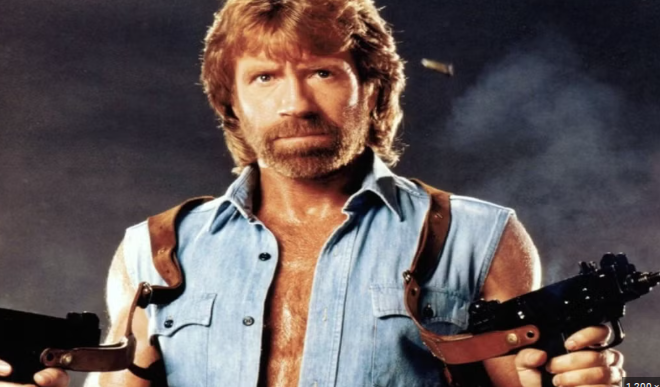
When the world thinks of Chuck Norris, a specific image immediately springs to mind: the stoic lawman with a lethal roundhouse kick, the man who can slam a revolving door, and the only person capable of counting to infinity—twice. While the internet has transformed him into a mythic figure of superhuman proportions, the reality of the man behind the memes is often even more impressive than the fiction. Long before he was a viral sensation or the star of Walker, Texas Ranger, he was a pioneer in the world of martial arts and a determined individual who overcame a difficult childhood to become a global icon.
To truly understand the legacy of this American icon, one must look past the jokes and the action-movie bravado. His journey is a masterclass in discipline, showing how a shy, non-athletic boy from Oklahoma transformed himself into one of the most respected martial artists in history. This article explores the lesser-known chapters of his life—from his humble beginnings and military service to his revolutionary contributions to combat sports and his dedicated philanthropic work. This is the definitive guide for anyone looking to discover the real man whose life story provides the backbone for those legendary “facts.”
1. The Humble Roots of Carlos Ray Norris
Before the world knew him as “Chuck,” he was simply Carlos Ray Norris, born in a small town in Oklahoma. His early life was far from the picture of an invincible action hero. Growing up in a household marked by financial instability and his father’s struggle with alcoholism, he was described by his own accounts as a shy and introverted child. He was not the natural athlete people might expect; in fact, he often felt mediocre in school and avoided the spotlight whenever possible.
His heritage is a rich blend of Cherokee and Irish ancestry, a background he frequently credits for his resilience and unique perspective on life. When his parents divorced during his teenage years, the family moved to California, where he continued to grapple with his lack of self-confidence. It is a powerful reminder that greatness is not always innate—it is forged through circumstances. His transformation from a reserved young man into a world-renowned figure began not in a gym, but in the quiet determination to overcome the difficulties of his youth. This period of his life laid the groundwork for his future philosophy, emphasizing that where you start does not define where you end up.
2. The Air Force and the Birth of a Moniker
The transition from Carlos to “Chuck” happened thousands of miles away from Hollywood while he was serving in the United States military. After graduating from high school, he joined the Air Force as an Air Policeman, hoping to pursue a career in law enforcement. It was during his basic training at Lackland Air Force Base in Texas that a fellow airman gave him the nickname “Chuck,” a name that would eventually become synonymous with action cinema.
His military service was a pivotal era that provided the structure and discipline he had lacked as a child. Being stationed overseas offered him his first real exposure to a world beyond the American suburbs. It was in this environment that he began to find his voice and his purpose. The military didn’t just give him a new name; it gave him a new trajectory. He worked as an Air Policeman with several units, including the 452d Troop Carrier Wing, and his experiences in uniform instilled a deep-seated patriotism and respect for the armed forces that he has carried throughout his entire life. This chapter of his life serves as the bridge between the shy boy from Oklahoma and the disciplined warrior the world would soon come to admire.
3. The Tang Soo Do Turning Point
While stationed at Osan Air Base in South Korea, he experienced a moment that would change the course of martial arts history. One evening, while walking through a local village, he witnessed a group of people practicing a traditional martial art called Tang Soo Do. At the time, he was recovering from a shoulder injury sustained during a judo session, but he was instantly captivated by the speed and power of the Korean “empty-hand” fighting style. He decided to enroll in classes under the tutelage of Grandmaster Jae Chul Shin.
The training was grueling. He practiced for several hours every day, often in extreme weather conditions, honing the precise kicks and strikes that would later become his trademark. Unlike the natural athleticism seen in some of his peers, his progress was the result of pure, unadulterated persistence. He eventually earned his black belt in Tang Soo Do, an achievement that served as the catalyst for his entire professional career. This wasn’t just about learning how to fight; it was about the mental fortitude required to master a complex discipline. By the time he returned to the United States, he wasn’t just a veteran; he was a martial arts expert with a vision to share his knowledge with the world.
4. An Undefeated World Champion
Many fans know he is a martial artist, but few realize just how dominant he was on the competitive circuit. Upon his return to civilian life, he began competing in karate tournaments across the country. His rise was meteoric. In the late 1960s, he achieved a feat that remains legendary in the sports world: he became the World Professional Middleweight Karate Champion. What makes this record truly astounding is that he held the title for six consecutive years, remaining undefeated until he retired from competition.
During his peak years as a fighter, he was a regular fixture in the “Triple Crown” of karate, winning the most tournaments in a single year and earning the “Fighter of the Year” title from Black Belt magazine. His fighting style was a blend of technical precision and strategic intelligence. He wasn’t just stronger than his opponents; he was often more disciplined and better prepared. His competitive career proved that his skills were not merely for the silver screen—they were tested and proven against the best fighters in the world. This era of his life established him as a true pioneer of the sport in the West, helping to popularize martial arts in the United States long before it became a mainstream phenomenon.
5. The Colosseum Clash with Bruce Lee
Perhaps the most iconic moment in martial arts cinema history is the showdown between Chuck Norris and Bruce Lee in the film Way of the Dragon. The two legends met at a martial arts tournament in California and struck up a close friendship, often training together in Lee’s backyard. When Lee was directing his new film, he famously called his friend and invited him to play the ultimate antagonist: a world-class fighter sent to Rome to eliminate Lee’s character.
The fight scene, filmed in the Roman Colosseum, is widely regarded as a masterpiece of choreography and realism. It was one of the few times audiences saw him in a “losing” role, but the performance was so impactful that it effectively launched his acting career. The chemistry between the two was palpable because it was rooted in mutual respect and real-life sparring sessions. This collaboration wasn’t just a movie scene; it was a meeting of two different philosophies and styles. While Lee was the charismatic, lightning-fast innovator, Norris represented the powerhouse traditionalist. Their on-screen battle remains a gold standard for action fans and serves as a bridge between the golden age of Hong Kong cinema and the American action boom.
6. The “King of Cool” and the Acting Bug
Despite the success of his appearance with Bruce Lee, he didn’t immediately jump into a full-time acting career. For a long time, he was primarily focused on running his chain of martial arts studios. One of his students, however, was none other than Hollywood legend Steve McQueen. McQueen, often called the “King of Cool,” recognized something in his instructor that he believed would translate well to the big screen. He noticed the quiet intensity and physical presence that made his teacher a natural performer.
McQueen encouraged him to take acting classes, famously telling him that if he could teach thousands of students how to fight, he could certainly learn how to deliver a line. Taking this advice to heart, he enrolled in acting school and began the slow process of transitioning from a world-class athlete to a professional actor. This mentorship was crucial; without McQueen’s prodding, the world might never have seen films like Missing in Action or The Delta Force. It highlights a recurring theme in his life: the willingness to be a student again, even after reaching the top of his original field. This transition proved that his success wasn’t just a result of his physical prowess, but also his ability to adapt and grow.
7. The Creation of Chun Kuk Do
While he respected the traditions of the arts he had learned in Korea and Japan, he eventually felt the need to create a system that reflected his own experiences and philosophy. This led to the founding of Chun Kuk Do, which translates to “The Universal Way.” Now officially known as the Chuck Norris System, this martial art is a hybrid style that incorporates elements from Tang Soo Do, Brazilian Jiu-Jitsu, Wrestling, and even Muay Thai. It is a living system designed to evolve with the practitioner.
Central to this system is a formal code of ethics—a set of twelve principles that guide a person’s life both inside and outside the dojo. These include rules such as “I will develop myself to the maximum of my potential in all ways” and “I will look for the good in all people.” By creating his own style, he ensured that his legacy wouldn’t just be about movies or trophies, but about a holistic approach to character development. Thousands of students worldwide now train in this system, proving that his greatest contribution to the martial arts world was a path for others to follow. It is a testament to his belief that martial arts are ultimately about self-improvement rather than just self-defense.
8. Philanthropy and Kickstart Kids
Beyond the punches and kicks, his most enduring legacy may be his work with the youth. In the early 1990s, with the support of former President George H.W. Bush, he founded the Kickstart Kids foundation. The program’s mission is simple but profound: to teach character through karate. By integrating martial arts into the physical education curriculum of middle and high schools, the organization provides at-risk youth with the tools they need to build self-esteem, discipline, and respect.
The impact of this program has been staggering. Over the decades, hundreds of thousands of students have participated, with many crediting the program for helping them avoid gangs and stay in school. For him, this was a way to give back to the community and offer young people the same sense of purpose he found in the Air Force. He often says that of all his accomplishments—the titles, the movies, and the fame—Kickstart Kids is the one he is most proud of. It represents the culmination of his life’s philosophy: that the discipline of the martial arts can be a transformative force for anyone, regardless of their background or current circumstances.
9. A Best-Selling Author and Thinker
While he is best known for his physical feats, he has also made a significant mark in the literary world. He is a New York Times best-selling author with several books to his name, ranging from detailed autobiographies to philosophical guides and even fiction. His works, such as The Secret of Inner Strength and Against All Odds, offer a candid look at his struggles and the mindset required to overcome them. These aren’t just celebrity memoirs; they are instructional texts on how to build a resilient life.
In addition to his non-fiction, he has also co-authored a series of Western novels titled The Justice Riders. His writing often reflects his core values of patriotism, faith, and personal responsibility. By sharing his thoughts in print, he has reached an audience that might never step foot in a karate dojo. This intellectual side of his persona is a far cry from the “tough guy” image often portrayed in the media. It shows a man who has spent a lifetime reflecting on the human condition and seeking ways to communicate his findings to others. His books serve as a permanent record of his wisdom, ensuring his influence extends far beyond the screen.
10. Embracing the Meme Phenomenon
In the mid-2000s, a strange thing happened: a series of satirical “facts” about Chuck Norris began to flood the internet. These jokes, which attributed impossible, god-like powers to him, turned him into a global digital icon for a whole new generation. While some celebrities might have been offended or confused by such a development, he handled the situation with characteristic grace and a surprising sense of humor. He even leaned into the phenomenon, often appearing in commercials and interviews where he playfully referenced the memes.
This cultural explosion did more than just make people laugh; it cemented his place as a permanent fixture in the zeitgeist. He understood that the memes were, at their heart, a form of tribute to the “indestructible” characters he had played for decades. By embracing the internet’s obsession, he showed a level of self-awareness and humility that only added to his legendary status. It proved that he didn’t take himself too seriously, despite his very real accomplishments. Today, those “facts” are a shorthand for toughness, but for the man himself, they are a bridge to a younger audience, allowing his real-life story of discipline and hard work to reach people who might only know him through a screen.
Further Reading
- Against All Odds: My Story by Chuck Norris – A deep dive into his personal journey and the hurdles he overcame to achieve greatness.
- The Secret of Inner Strength: My Story by Chuck Norris – An earlier look at his philosophy and the martial arts mindset that defined his career.
- The Secret Power Within: Zen Solutions to Real Problems by Chuck Norris – A guide to applying the principles of martial arts to everyday life challenges.
- Black Belt Patriotism: How to Reawaken America by Chuck Norris – A collection of essays on the values he believes are essential for a strong society.




Leave a Reply