
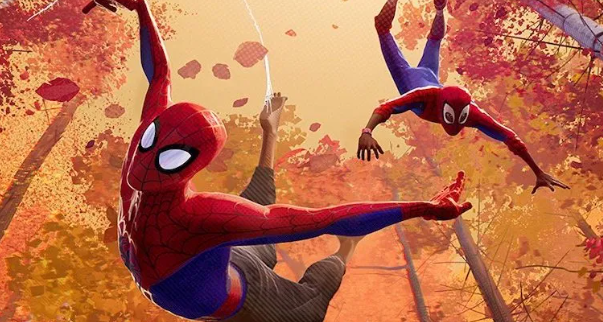
Released in December 2018, Spider-Man: Into the Spider-Verse didn’t just add another entry into the crowded superhero genre; it fundamentally redefined the possibilities of feature-length animation. Directed by Bob Persichetti, Peter Ramsey, and Rodney Rothman, with a script by Phil Lord and Rothman, the film introduced the world to Miles Morales while weaving a complex, multiversal narrative that felt both intimate and cosmic. This deep dive explores the intricate plot of this masterpiece and ten expansive facts about its groundbreaking production.
Plot Synopsis: A New Hero for a Infinite Multiverse
The story begins in Brooklyn, where Miles Morales, a bright teenager of African-American and Puerto Rican descent, struggles to find his place at Visions Academy, an elite boarding school. Miles feels disconnected from the academic pressure and the expectations of his father, Jefferson Davis, a police officer who views Spider-Man as a dangerous vigilante. To escape his stress, Miles seeks out his uncle, Aaron Davis, who encourages Miles’ artistic side by taking him to an abandoned subway station to paint graffiti. While finishing a mural, Miles is bitten by a glowing, glitchy radioactive spider.
The following day, Miles begins to experience physical changes: his clothes feel too small, his hands stick to everything, and he develops a “Spider-Sense” that warns him of danger. Confused and terrified, he returns to the subway station to find the spider, only to stumble upon a massive underground facility housing a “Super-Collider.” The machine is the work of Wilson Fisk, also known as Kingpin, who is desperate to open a portal to parallel universes to find versions of his late wife, Vanessa, and son, Richard, who died in a car crash.
The original Spider-Man, Peter Parker (voiced by Chris Pine), arrives to stop Kingpin. During the ensuing battle with Kingpin’s enforcers—Green Goblin and the Prowler—the collider malfunctions. Peter realizes Miles has powers just like him and promises to train the boy. However, the explosion from the malfunction mortally wounds Peter. Before dying, Peter gives Miles a “Goober” (a USB override key) to shut down the collider, warning that its reactivation could destroy the city. Miles watches in horror from the shadows as Kingpin executes the wounded Peter.
The city mourns the loss of their hero, and Miles, feeling the weight of his promise, attempts to honor Peter’s legacy. While visiting Peter’s grave, Miles is confronted by a disheveled, middle-aged man who also possesses spider-powers. This is Peter B. Parker (voiced by Jake Johnson), an older, jaded version of the hero from a different dimension who was pulled into Miles’ world by the collider. Peter B. is reluctant to help, but after Miles accidentally damages the USB drive, the duo realizes they must work together to steal data from Kingpin’s Alchemax research facility to build a new one.
At Alchemax, they encounter Dr. Olivia Octavius (Doc Ock), Kingpin’s lead scientist. During a frantic escape, they are rescued by Gwen Stacy, a Spider-Woman from yet another dimension who had been undercover at Miles’ school. The trio travels to the home of Aunt May, who is revealed to be far more tech-savvy and prepared for the “Spider-Verse” than expected. There, they meet three more dimension-displaced heroes: Spider-Man Noir, a monochromatic detective from the 1930s; Peni Parker, a girl from a futuristic Tokyo who pilots a mech; and Peter Porker (Spider-Ham), a cartoon pig.
The Spider-team learns that their bodies are deteriorating due to being in the wrong dimension; they will die if they don’t return home soon. However, Miles is unable to control his powers—specifically his invisibility and bio-electric “venom strike”—on command. The other Spider-people, though sympathetic, tell Miles he isn’t ready for the final mission and leave him behind.
Heartbroken, Miles goes to find Uncle Aaron for guidance, only to discover that Aaron is the Prowler, Kingpin’s top assassin. When the Spider-team is ambushed at Aunt May’s house by Kingpin’s crew, Miles is cornered by the Prowler. Miles unmasks himself, shocking Aaron into hesitation. Kingpin, seeing Aaron refuse to kill his nephew, shoots Aaron. Miles carries his dying uncle to an alleyway where Aaron tells him to “keep going” before passing away. Jefferson Davis arrives on the scene, seeing the “new” Spider-Man over his brother’s body and assuming he is a murderer.
Returning to his dorm, Miles is tied up by Peter B. Parker, who intends to sacrifice himself to stay behind and shut down the collider so the others can live. But Miles receives a visit from his father through the door; Jefferson apologizes for his rigidity and tells Miles he sees a “spark” in him. This emotional breakthrough allows Miles to finally master his powers. He breaks free, visits Aunt May to get a new suit, and performs a “Leap of Faith” off a skyscraper, fully embracing his identity as Spider-Man.
Miles arrives at the collider during the final battle. He proves his worth by rescuing his friends and using his venom strike to disable Kingpin’s enforcers. One by one, Miles sends the other Spider-people back to their home dimensions, including a now-inspired Peter B. Parker. Miles then faces Kingpin in a brutal showdown. With his father watching and finally cheering for him, Miles uses a devastating venom blast to throw Kingpin into the collider’s kill switch, destroying the machine and saving the multiverse.
In the aftermath, Kingpin and his associates are arrested. Jefferson recognizes the new Spider-Man as a hero. Miles balances his life as a student and Brooklyn’s one and only Spider-Man, knowing that while he is unique in his world, he is part of a much larger family across the multiverse.
10 Interesting Facts: Behind the Scenes of a Masterpiece
1. The Revolutionary Animation “On Twos”
One of the most distinct technical choices in Into the Spider-Verse involves the frame rate of the characters. Most modern CGI films are animated “on ones,” meaning there are 24 unique frames per second. However, the creators of Spider-Verse wanted to mimic the feel of traditional hand-drawn animation and comic book pacing. To achieve this, they often animated “on twos,” showing the same image for two frames, resulting in 12 unique images per second.
Critically, this was used as a storytelling device: at the start of the film, Miles is animated on twos to show his clumsiness and lack of experience, while the veteran Peter B. Parker is animated on ones to show his fluidity. Only when Miles masters his powers during the “Leap of Faith” sequence does he begin to be animated on ones, visually signaling his evolution into a hero.
2. The Development of “Non-Photorealistic Rendering”
Sony Pictures Imageworks had to invent entirely new technology to achieve the film’s “living comic book” aesthetic. They moved away from the standard computer-generated “perfect” look, instead developing Non-Photorealistic Rendering (NPR). This involved a combination of 3D modeling and 2D hand-drawn techniques. Artists would render a 3D scene and then hand-draw lines on top of the characters’ faces and environments to emphasize expressions and depth. This was so labor-intensive that it took a team of 180 animators—the largest crew Sony had ever used—approximately one week to complete just one second of footage.
3. The Influence of the “Kirby Krackle” and Ben-Day Dots
To ground the film in comic book history, the visual team integrated “Kirby Krackle” (or Kirby Dots), a stylistic convention created by legendary artist Jack Kirby to represent energy and cosmic power. These black dots appear during the collider sequences and explosions. Additionally, the film uses Ben-Day dots, a printing process from the 1950s and 60s that used small colored dots to create shading and secondary colors. In the film, you can see these dots in the shadows and skin tones of the characters, especially when the camera is close, making the movie feel like it was printed on newsprint.
4. The Invention of “Chromatic Aberration” as Depth of Field
In traditional filmmaking, “depth of field” is achieved by blurring the background to focus on the foreground. The directors of Spider-Verse felt that blur was too “digital” and didn’t fit the comic book look. Instead, they used a technique called Chromatic Aberration, which mimics a printing error where the color plates are misaligned. When something is out of focus in the movie, you will see red and blue outlines around the objects (similar to looking at a 3D image without glasses). This creates a sense of depth while maintaining the sharp, graphic integrity of the “illustration.”
5. The Stan Lee Cameo and Legacy
The film features one of the most poignant cameos by the late Stan Lee, who passed away shortly before the film’s release. He plays the shopkeeper who sells Miles his first Spider-Man costume. His line—”It always fits… eventually”—serves as a core theme of the film. Beyond this speaking role, the animators paid further tribute to Lee by hiding his likeness in dozens of frames throughout the movie. He can be spotted in the background of almost every subway scene, and a version of him even walks over Miles and Peter B. Parker while they are lying on a sidewalk.
6. Nicolas Cage and the Inspiration for Spider-Man Noir
Nicolas Cage provided the voice for Spider-Man Noir, a version of the character from a 1933 Great Depression-era universe. Cage, a massive comic book enthusiast, based his performance on the vocal stylings of classic Hollywood stars like Humphrey Bogart and James Cagney. He specifically wanted to evoke the “hard-boiled” detective archetype. To maintain the character’s “out of place” feel, the animators ensured that Spider-Man Noir was always rendered in grayscale, even when interacting with the vibrant, neon-colored world of Miles’ Brooklyn.
7. Reimagining Doc Ock as “Liv”
One of the film’s biggest surprises was the reveal of Dr. Olivia Octavius. Traditionally depicted as Otto Octavius, the filmmakers chose to gender-swap the character to keep the audience off-balance. Kathryn Hahn provided the voice, bringing a manic, polite, yet terrifying energy to the role. Her mechanical tentacles were also redesigned; instead of the traditional heavy metallic arms, they were made of a translucent, “soft robotics” material that could telescope and move with more organic, fluid grace, making her combat style unique compared to previous iterations of the character.
8. The Soundtrack as a Cultural Pillar
The music of Into the Spider-Verse was designed to reflect Miles Morales’ world and his heritage. The soundtrack, featuring the massive hit “Sunflower” by Post Malone and Swae Lee, was curated to feel like a playlist Miles himself would listen to. Composer Daniel Pemberton combined traditional orchestral scores with hip-hop elements, including record scratching and heavy bass. The use of “The Prowler’s Theme”—a terrifying, siren-like screech—was actually created by distorting an elephant’s trumpeting sound, giving the villain an otherworldly and predatory presence.
9. A Masterclass in Easter Eggs
The film is densely packed with references for eagle-eyed fans. In the beginning, the Peter Parker from Miles’ universe performs a dance that mirrors Tobey Maguire’s infamous “emo” dance from Spider-Man 3. The “Spider-Cave” under Aunt May’s house features several suits from the comics and video games, including the “Advanced Suit” from the 2018 Marvel’s Spider-Man PS4 game. Even the billboards in Times Square are altered to reflect the “multiverse” theme, showing alternate-reality versions of real-world brands and movies (such as a poster for a film starring Seth Rogen as a cowboy).
10. Breaking the Disney/Pixar Streak
Before 2018, the Academy Award for Best Animated Feature was largely dominated by Disney and Pixar for over a decade. Spider-Man: Into the Spider-Verse broke this streak by winning the Oscar in 2019. Its win was seen as a victory for “experimental” animation, proving that audiences and critics were hungry for styles that moved beyond the “photorealistic” CGI pioneered by Pixar. The film’s success directly influenced the industry, leading to the stylized animation seen in subsequent films like The Mitchells vs. the Machines, Puss in Boots: The Last Wish, and Teenage Mutant Ninja Turtles: Mutant Mayhem.


Leave a Reply