
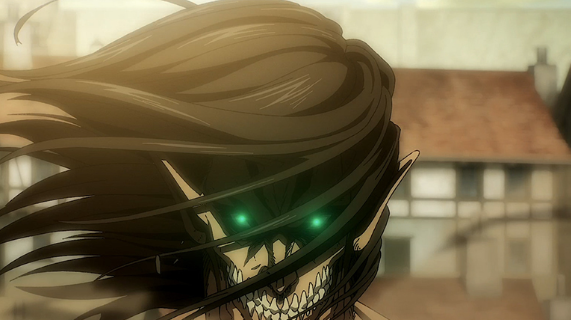
For decades, the anime landscape has been defined by heroes chasing dreams of becoming king or finding legendary treasures. Then came Attack on Titan (known in Japan as Shingeki no Kyojin), a series that didn’t just break the mold—it crushed it under the heel of a sixty-meter skinless giant. This isn’t just a story about monsters eating people; it is a profound exploration of freedom, the cycles of hatred, and the crushing weight of ancestral trauma. It begins as a simple “survival horror” tale but evolves into a complex political thriller that asks uncomfortable questions about morality and perspective.
Created by Hajime Isayama, Attack on Titan is a masterclass in “long-form storytelling.” It is a world where every minor detail in the first chapter serves as a massive plot point hundreds of chapters later. Whether you are a newcomer curious about the “Titan-sized” hype or a veteran looking to revisit the lore of the Survey Corps, understanding the nuances of this universe is essential. This guide pulls back the curtain on the mysteries of Paradis Island, the tragic history of the Titans, and the man who saw the future and decided to change it.
1. The Terrifying Encounter that Sparked a Global Phenomenon
Every legend has a beginning, and for Attack on Titan, it wasn’t born in a dream, but in a confrontation with a drunk customer. Creator Hajime Isayama has often cited an incident at an internet cafe where he encountered a person who was completely unable to communicate due to their level of intoxication. This experience unsettled Isayama profoundly. He realized that the most terrifying thing in the world isn’t necessarily a monster, but a being that looks human but is impossible to reason with or understand.
This lack of communication became the blueprint for the “Pure Titans.” Unlike many movie monsters that have complex motivations or voices, the Titans are uncanny, smiling, and mindless. They don’t eat humans because they are hungry—they don’t even have digestive tracts. They simply exist to consume, acting on a primal instinct that makes them feel more like a natural disaster than an enemy army. This “uncanny valley” effect, where something looks almost human but is fundamentally “off,” is what gives the series its unique flavor of psychological horror. It taps into the primal fear of being hunted by something that cannot be talked down, bargained with, or understood.
2. The Tragedy of Ymir Fritz and the “Coordinate”
The origin of the Titans is a dark fairytale that stretches back thousands of years to a young girl named Ymir Fritz. Far from being a powerful goddess by choice, Ymir was a slave who stumbled upon a mysterious biological entity (often referred to as the “Source of All Organic Matter”) while fleeing from her masters. This entity bonded with her, granting her the power of the first Titan. However, this gift was a curse; she was used as a weapon of war and a tool for building empires by the very people who enslaved her.
When Ymir died, her soul was split into nine distinct Titan powers, and her consciousness was trapped in a metaphysical dimension known as “The Paths.” This realm is a vast, sandy desert where time is non-existent, and every Eldian (the people of Ymir) is connected by invisible, glowing threads. The “Coordinate”—the point where all these paths meet—is the Founding Titan. This connection allows the Founder to manipulate the memories, biology, and physical forms of all Eldians. Understanding Ymir is key to understanding the series’ themes: she is a “god” who is actually just a lonely child waiting for someone to set her free.
3. The Structural Secrets of the Three Great Walls
For over a century, humanity believed that Walls Maria, Rose, and Sheena were miraculous structures built by their ancestors to protect them from the Titan threat. Standing fifty meters high, these concentric circles provided a sense of security that eventually led to a dangerous complacency. However, the most chilling “Titan fact” is that the walls were not built for humanity—they were built out of Titans.
The walls are composed of millions of “Wall Titans,” massive beings similar in appearance to the Colossal Titan, who used their hardening abilities to link together and form the structures. They were created by King Karl Fritz, who sought to create a temporary paradise for his people by isolating them on Paradis Island. The king used the power of the Founding Titan to erase the memories of the populace, making them believe they were the last remnants of humanity. This revelation changes the entire context of the setting; the very thing protecting the people is the very thing they should fear most. The walls were never meant to be permanent; they were a “doomsday device” waiting to be triggered.
4. The Evolutionary Arc of Eren Yeager
Few protagonists in anime history undergo a transformation as radical as Eren Yeager. He begins the story as a typical “shonen” lead—loud, angry, and driven by a singular, vengeful desire to “kill every last Titan” after witnessing his mother’s death. He is the ultimate victim of a cruel world. However, as the series progresses and Eren gains the powers of the Attack Titan and the Founding Titan, he shifts from a hero fighting for survival to a catalyst for global destruction.
Eren’s power, specifically the Attack Titan’s ability to see the memories of future inheritors, creates a “closed-loop” paradox. He isn’t just reacting to history; he is actively manipulating it across time to ensure his own birth and development. This makes him a tragic figure who is both the master of his fate and a slave to it. By the time the series reaches its climax, Eren has become the very “monster” he once swore to destroy, forcing the audience to grapple with whether his pursuit of freedom justifies the horrific cost. He represents the danger of absolute conviction in a world of moral gray.
5. Levi Ackerman’s Real-World and Literary DNA
Captain Levi Ackerman is widely considered humanity’s strongest soldier, a whirlwind of blades and tactical precision. While he may seem like a standard “cool, brooding mentor” character, his inspirations are surprisingly eclectic. Hajime Isayama has stated that Levi’s physical appearance and stoic demeanor were partially inspired by the character Rorschach from the graphic novel Watchmen. This influence is seen in Levi’s harsh worldview and his tendency to operate outside of social norms.
Furthermore, Levi’s obsession with cleanliness isn’t just a quirky character trait; it is a psychological coping mechanism. Growing up in the “Underground,” a squalid and sunless slum beneath the capital, Levi developed a deep-seated revulsion for filth and disorder. This trauma manifests as an extreme need for control and hygiene. Despite his abrasive personality, Levi is one of the most empathetic characters in the series, often carrying the burden of his fallen comrades’ dreams. His height (or lack thereof) is also a point of irony; he is the smallest man on the battlefield but possesses the power to take down the largest of enemies.
6. The Biology and Nightmare of the Pure Titans
The Pure Titans are the most common and terrifying threat in the series. While they appear to be giant humans, their biology is entirely unnatural. They have no reproductive organs, they do not require food or water, and they seem to gain energy directly from sunlight, similar to plants. They are also incredibly light for their size, a detail that often surprises the soldiers who fight them. This suggests that their bodies are not made of traditional matter, but are “constructed” from the sand of the Paths whenever a human is transformed.
The true horror of a Pure Titan lies in the “person” inside. Every Pure Titan was once a human who was injected with Titan spinal fluid. This transformation is described as a “never-ending nightmare” where the human consciousness is trapped in a dream-like state, unable to control the giant body’s actions. The only way for a Pure Titan to become human again is to consume a “Titan Shifter” (one of the Nine), thereby inheriting their power and memories. This cycle of consumption is the central tragedy of the Eldian race; they are literally eating their own kind in a desperate, mindless attempt to regain their humanity.
7. The Hierarchy of the Nine Power Titans
The “Nine Titans” are the specific, intelligent Titan forms that carry unique abilities and are passed down through the Eldian line. Unlike the mindless Pure Titans, these shifters retain their intelligence and can transform at will. The hierarchy includes:
- The Founding Titan: The “Coordinate” that controls all other Titans and Eldian minds.
- The Attack Titan: Driven by a desire for freedom; can see the memories of future inheritors.
- The Colossal Titan: The “God of Destruction,” capable of causing a nuclear-level explosion upon transformation.
- The Armored Titan: Covered in hardened, plate-like skin for defense and battering.
- The Female Titan: Highly versatile; can call Pure Titans with a scream and has localized hardening.
- The Beast Titan: Takes on animalistic traits (like a giant ape) and can throw objects with devastating precision.
- The Jaw Titan: Small, extremely fast, and possesses teeth/claws that can crush even Titan hardening.
- The Cart Titan: Known for its immense endurance; can stay transformed for months at a time.
- The War Hammer Titan: Can create weapons and structures from its own hardened flesh.
Each power is limited by the “Curse of Ymir,” which dictates that any shifter will die exactly 13 years after inheriting their power, as no one can surpass the lifespan of the original Ymir.
8. The Survey Corps and the Physics of ODM Gear
The Survey Corps, or the Scout Regiment, is the military branch tasked with reclaiming territory from the Titans. Their symbol, the “Wings of Freedom,” represents humanity’s hope to escape their walled cage. To fight giants that are ten times their size, they developed the Omni-Directional Mobility (ODM) Gear. This complex system of gas-powered wires, pulleys, and replaceable steel blades allows soldiers to move in three dimensions, mimicking the movement of a spider or a bird.
The training for ODM gear is notoriously difficult, requiring a level of core strength and spatial awareness that most humans simply do not possess. It is a high-risk, high-reward fighting style; one wrong move or a mechanical failure usually results in a messy death. The blades themselves are made of “ultrahard steel,” designed to be flexible and sharp enough to slice through the tough skin at the nape of a Titan’s neck—the only vulnerable spot where the human pilot’s spine is located. The Survey Corps doesn’t just represent military might; they represent the indomitable human spirit’s refusal to be silenced by fear.
9. The Basement Reveal: A Shift in Scale and Genre
For the first half of the series, the “basement” in Eren’s childhood home was the ultimate MacGuffin—the secret that held the truth of the world. When the characters finally reach it, the reveal doesn’t just answer questions; it fundamentally changes the genre of the story. They discover that they are not the last of humanity. Instead, they are on a small island called Paradis, while the rest of the world has reached a level of technology equivalent to the early 20th century.
The “Titans” were not an ancient curse, but a biological weapon used by the global superpower, Marley, to keep the Eldians on the island imprisoned. This revelation turns the “monsters” into victims and the “heroes” into a persecuted ethnic minority. The conflict shifts from “Humans vs. Monsters” to “Nation vs. Nation,” as the history of Eldia’s ancient conquests and Marley’s modern-day retaliation comes to light. This shift is one of the most daring narrative choices in anime, forcing the audience to re-evaluate every character’s actions through a geopolitical and historical lens.
10. The Symbolism of the Scarf and the Red String of Fate
Throughout the chaos and blood, a simple red scarf remains one of the most powerful symbols in the series. It was given to Mikasa Ackerman by Eren Yeager after he saved her from human traffickers when they were children. At that moment, Eren told her to “wrap this around you to stay warm,” an act of kindness that defined Mikasa’s entire life and her fierce devotion to him.
The scarf is a visual representation of the “red string of fate,” a traditional East Asian belief that two people are destined to be connected regardless of time or place. However, in the world of Attack on Titan, this connection is both a source of strength and a source of pain. It symbolizes the burden of love in a world of war. By the end of the story, the scarf becomes a focal point for the resolution of the conflict, representing the choice to hold onto humanity and love even when the person you love has become the world’s greatest threat. It is a reminder that even in a world of giants, the smallest human connections are what truly endure.
Further Reading
- Attack on Titan (Manga Volumes 1-34) by Hajime Isayama
- Attack on Titan: Before the Fall by Ryō Suzukaze
- Attack on Titan: No Regrets by Gun Snark and Hikaru Suruga
- The Science of Attack on Titan by Rikao Yanagita




Leave a Reply