
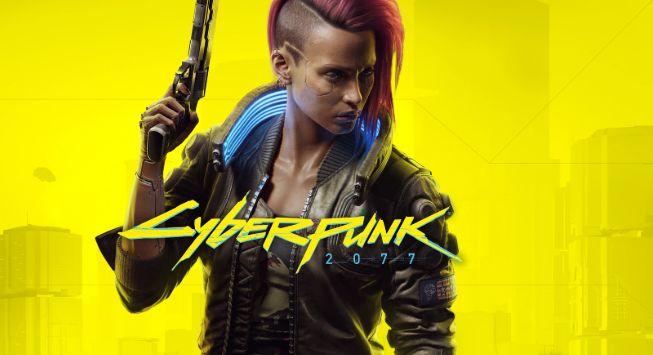
The sky above Night City is the color of a television, tuned to a dead channel—or perhaps, in this case, a vibrant, glitching neon sign promising dreams it has no intention of fulfilling. Cyberpunk 2077 is more than just a video game; it is a sprawling, immersive dive into a “high tech, low life” future where the line between humanity and machinery has been blurred into oblivion. It is a story about the cost of ambition, the nature of identity, and the desperate struggle to become a legend in a city designed to grind you into dust.
To step into the boots of V, the game’s customizable protagonist, is to enter a world of dense urban canyons, chrome-plated mercenaries, and digital ghosts. Whether you are navigating the corporate boardrooms of Arasaka or the gang-controlled alleys of Pacifica, the game offers a level of atmospheric depth that is rarely matched in the medium. For newcomers, however, the sheer scale of the mechanics and the lore can be as overwhelming as a sudden neuro-glitch. This guide serves as your comprehensive neural link to the core pillars of Cyberpunk 2077, ensuring you have the “street cred” necessary to survive the most dangerous city in the world.
1. The Three Origins: Choosing Your Lifepath
Before you ever set foot in Night City, you must decide where you came from. Cyberpunk 2077 offers three distinct “Lifepaths”—Nomad, Streetkid, and Corpo—each of which fundamentally alters the opening of the game and your perspective on the world. The Nomad begins in the Badlands, a dusty wasteland outside the city limits, emphasizing family and freedom. The Streetkid is a product of the city’s heart, possessing an intimate knowledge of gangs and street slang. The Corpo begins at the top of the food chain, navigating the lethal politics of the Arasaka Corporation.
These aren’t just cosmetic choices or different starting locations; they provide unique dialogue options throughout the entire game. A Corpo V might spot a corporate trap that a Nomad would miss, while a Streetkid can talk their way out of a confrontation with a local gang by referencing shared history. This system encourages roleplaying from the very first minute, asking the player to decide not just how they fight, but how they perceive the social hierarchy of the future. It ensures that your version of V feels grounded in a specific history, making the climb to the top feel personal.
2. Night City: A Masterclass in Verticality and Atmosphere
Night City is widely regarded as one of the most meticulously detailed open worlds ever created. Divided into six major districts—from the neon-drenched luxury of Westbrook to the industrial decay of Santo Domingo—the city is a character in its own right. Unlike many open worlds that focus on horizontal breadth, Night City focuses on verticality. Multistory mega-buildings house thousands of residents, interconnected by elevated walkways, sprawling highways, and hidden basement bars.
The architecture tells the story of a society obsessed with status. The “Brutalist” towers of the corporate center loom over the “Kitsch” and “Entropism” styles of the lower classes. Every corner of the city feels intentional, filled with environmental storytelling that rewards players who slow down to explore. Whether you are riding a motorcycle through the rain-slicked streets at midnight or standing on a skyscraper balcony overlooking the smog-choked horizon, the atmosphere is suffocatingly dense. It is a world that feels lived-in, dangerous, and strangely beautiful, capturing the “Neon Noir” aesthetic perfectly.
3. The Digital Ghost: Living with Johnny Silverhand
The emotional and narrative core of the game revolves around the “Relic,” a piece of experimental technology embedded in V’s head that contains the digital construct of Johnny Silverhand. Portrayed by Keanu Reeves, Silverhand is a legendary “Rockerboy” and anarchist who famously bombed Arasaka Tower decades prior. Because the biochip is malfunctioning, Johnny begins to merge with V’s consciousness, leading to a complex, antagonistic, and eventually symbiotic relationship.
Johnny serves as a constant companion, appearing as a hologram to comment on your choices, mock your allies, or share his cynical worldview. This dynamic is brilliant because it provides a constant sounding board for the player’s actions. Johnny isn’t just a sidekick; he is a voice in your head that represents a specific ideological extreme. Your interactions with him determine the “synergy” between you, which can lead to vastly different narrative outcomes. The performance brings a rugged, world-weary energy to the story, turning a standard “ticking clock” plot into a profound exploration of what it means to have a soul in a digital age.
4. Cyberware: The High Price of Human Augmentation
In the world of Cyberpunk, your body is just another piece of hardware waiting to be upgraded. “Cyberware” refers to the biological and mechanical augmentations that can turn a human into a walking weapon. At a “Ripperdoc”—the futuristic equivalent of a surgeon and a back-alley mechanic—players can swap out their eyes for thermal scanners, replace their skin with sub-dermal armor, or install “Mantis Blades” that retract from their forearms.
However, the game emphasizes that this power comes with a cost. The concept of “Humanity” or “Cyberpsychosis” lingers in the lore; the more you replace your natural self with chrome, the further you drift from your human emotions. While the game allows for incredible power fantasies—like jumping double-story heights or slowing down time during a gunfight—it always reminds you that you are becoming something “other.” Managing your Cyberware isn’t just about maximizing stats; it’s about defining the threshold of your own humanity. The visual design of these implants is visceral and “crunchy,” making every visit to the Ripperdoc feel like a significant, life-altering surgery.
5. Netrunning and the Art of Quickhacking
Combat in Cyberpunk 2077 isn’t limited to traditional firearms. One of the most unique aspects of the gameplay is “Netrunning,” the ability to hack into the digital infrastructure of the world and the bodies of your enemies. Through “Quickhacks,” a player can remotely overheat an enemy’s cyberware, blind them by resetting their optics, or even force their weapon to jam—all from the safety of cover.
This system turns the environment into a weapon. You can hack security cameras to scout ahead, take control of automated turrets, or cause vending machines to explode as a distraction. For players who prefer a “stealth-hacker” build, it is possible to clear entire buildings without ever firing a single bullet. The Netrunning mechanic feels like a digital magic system, rewarding cleverness and tactical observation. It emphasizes the “cyber” in Cyberpunk, reminding the player that in a world where everyone is connected to the network, no one is truly safe from a skilled coder with a grudge.
6. Braindance: The Ultimate Voyeuristic Technology
“Braindance” (or BD) is a core cultural phenomenon in Night City, functioning as the ultimate form of entertainment and a vital investigative tool. A BD is a digital recording of a person’s experiences, including their sights, sounds, and even their physical sensations and emotions. As V, you utilize a specialized headset to enter these recordings in “Edit Mode,” allowing you to freeze time, fly through the scene, and scan for clues that the original recorder might have missed.
The Braindance sequences are highlights of the game’s detective work. They force the player to look at the world from different perspectives—sometimes as a victim, sometimes as a perpetrator. The mechanics of switching between the visual, audio, and thermal layers of a recording make for an engaging puzzle-solving experience. Culturally, the BD represents the ultimate loss of privacy; it is a technology that allows the masses to “live” the lives of celebrities or criminals, highlighting the voyeuristic and consumerist decay of the 2077 society.
7. A Fluid Class System: Building Your Own Legend
Unlike many role-playing games that lock you into a specific class (like Warrior or Mage) at the beginning, Cyberpunk 2077 utilizes a fluid progression system. As you gain experience, you earn points to spend in five core Attributes: Body, Reflexes, Technical Ability, Intelligence, and Cool. Each of these attributes has multiple “Perk Trees” that allow you to fine-tune your playstyle. You can be a “Solo” (a heavy-hitting combatant), a “Techie” (a master of gadgets and engineering), or a “Netrunner” (a master hacker), or any hybrid in between.
This flexibility means your V can evolve alongside your interests. You might start the game as a stealthy assassin but later decide to invest in “Body” to handle heavy machine guns and smash through doors. The “Technical Ability” tree is particularly important, as it governs your ability to craft and upgrade “Iconic” weapons—unique items with special properties found throughout the world. This system ensures that no two playthroughs feel the same, as the combination of attributes, perks, and cyberware allows for nearly infinite customization.
8. The Weight of Choice: A Story of Consequence
The narrative of Cyberpunk 2077 is built on a foundation of branching paths and moral ambiguity. While there is a main questline involving the Relic, the game’s “Side Jobs” are often just as substantial, featuring their own complex characters and multi-hour storylines. Your decisions in these missions—who you spare, who you betray, and who you romance—can have ripple effects that change the political landscape of the city or determine which of the game’s multiple endings you receive.
Characters like Panam Palmer, Judy Alvarez, and Goro Takemura aren’t just quest-givers; they are deeply realized individuals with their own agendas. Building relationships with them is vital, as they can become powerful allies in the game’s final hours. The game avoids easy “good or bad” moral binary choices. Instead, it presents you with difficult trade-offs where every victory feels like it costs something. This creates a sense of agency, making the player feel like a true participant in the fate of Night City rather than just a passenger on a scripted ride.
9. Style Over Substance: Fashion and Vehicles
In Night City, how you look is often considered as important as what you can do. The “Style Over Substance” mantra is a literal part of the culture. The game features a massive array of clothing items, categorized into four distinct styles: Kitsch (bright, flashy), Entropism (cheap, functional), Neomilitarism (sleek, corporate), and Neokitsch (extreme luxury). This allows players to fully express their version of V, whether they want to look like a high-fashion model or a grimy street mercenary.
This attention to style extends to the vehicles. From roar-heavy muscle cars and sleek hyper-cars to agile motorcycles, the vehicles in Cyberpunk 2077 are masterpieces of industrial design. Each vehicle has a unique interior, handling model, and engine sound. Driving through the city is one of the game’s greatest pleasures, especially as the radio stations blast a curated selection of original music that spans industrial metal, synthwave, and futuristic hip-hop. The act of customizing your look and your ride is a key part of the “fantasy” of being a high-end mercenary in the future.
10. The Tabletop Legacy: Mike Pondsmith’s Vision
It is essential to know that the world of Cyberpunk 2077 did not originate in a video game studio. It is based on the legendary tabletop role-playing game Cyberpunk, created by Mike Pondsmith. The video game is a direct continuation of the lore established in the books Cyberpunk 2013, Cyberpunk 2020, and Cyberpunk Red. This deep history is why the world feels so coherent and rich; the gangs, the corporations, and even characters like Johnny Silverhand and Adam Smasher have decades of established backstory.
Pondsmith himself worked closely with the developers to ensure that the transition from paper to pixels remained true to the “punk” in Cyberpunk. This means the game maintains a focus on social commentary, anti-authoritarianism, and the warning that unchecked technological advancement and corporate greed can lead to a dystopian nightmare. Knowing the tabletop roots helps players appreciate the “Easter eggs” and deep-lore references scattered throughout Night City, connecting the modern experience to the foundational texts of the cyberpunk genre.
Further Reading
To dive deeper into the gritty philosophy and neon-soaked aesthetics of the cyberpunk genre, these books are essential reading:
- Neuromancer by William Gibson
- Snow Crash by Neal Stephenson
- Do Androids Dream of Electric Sheep? by Philip K. Dick
- Hardwired by Walter Jon Williams
- Cyberpunk Red (Core Rulebook) by Mike Pondsmith




Leave a Reply