
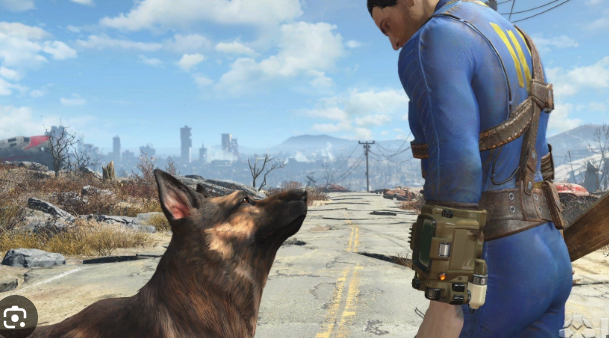
The scorched earth, the haunting crackle of a Geiger counter, and the iron-clad silhouette of Power Armor—these are the hallmarks of the Fallout video game franchise. Since its inception in the late 1990s, this series has transformed from a niche isometric role-playing game into a global cultural phenomenon. It isn’t just a game about shooting mutants; it is a masterclass in world-building, satire, and the exploration of human nature after the collapse of civilization. While millions have wandered the Mojave or the Capital Wasteland, the history behind the screen is as layered and radioactive as the games themselves.
Exploring the Fallout lore timeline reveals a development history filled with near-cancellations, legal battles, and creative leaps that shouldn’t have worked but did. From the “spiritual successor” roots to the modern Bethesda Game Studios era, the franchise has maintained a unique “Atompunk” aesthetic that blends 1950s optimism with a grim, dystopian reality. Whether you are a “Vault Dweller” who has played every entry or a newcomer brought in by the Fallout TV show canon, these ten facts will peel back the lead-lined curtain on the most iconic post-apocalyptic RPG series in gaming history.
1. The Legally Required Spiritual Successor
Many fans believe Fallout started with a blank slate, but it actually began as a desperate attempt to recapture the magic of a 1988 game called Wasteland. Developed by Interplay, Wasteland was a hit, but the rights to the name were held by Electronic Arts (EA). When Interplay wanted to create a follow-up, EA refused to license the name back. Forced to pivot, the developers decided to create an entirely new universe that felt like the original but stood on its own two feet.
This “spiritual successor” approach gave the team the freedom to lean harder into the 1950s retro-futurism that defines the series today. If Interplay had secured the Wasteland rights, we might never have seen the iconic Vaults or the Pip-Boy origins as we know them. Instead of a direct sequel, we got a world where the cultural stagnation of the mid-20th century became the backdrop for the end of the world. This legal hurdle essentially forced the birth of one of the most distinct visual styles in media, proving that sometimes, being denied what you want leads to something much better.
2. The “Thumb Rule” Myth of Vault Boy
If you look at Vault Boy, the cheerful mascot of the series, he is often seen winking and holding his thumb up toward the viewer. For years, a popular internet theory suggested that he wasn’t just giving a “good job” sign. The theory claims he is performing a “rule of thumb” test: if a nuclear mushroom cloud is smaller than your thumb at arm’s length, you are in the “safe” zone; if it’s bigger, you are in the radiation zone.
While this makes for a fascinating piece of Fallout trivia, the creators of the original games have explicitly stated that this was never the intention. Tim Cain and Leonard Boyarsky, the minds behind the aesthetic, intended the gesture to simply reflect the “everything is fine” propaganda of the 1950s. However, the myth became so widespread and beloved by the community that the 2024 television series actually incorporated it into the script, with the character Cooper Howard explaining the rule to his daughter. It is a rare case where fan-made Fallout lore was eventually adopted into the official canon due to its sheer narrative power.
3. The Emergency Birth of the S.P.E.C.I.A.L. System
The S.P.E.C.I.A.L. system explained today as Strength, Perception, Endurance, Charisma, Intelligence, Agility, and Luck was almost a total disaster. Originally, the first Fallout was built using a tabletop role-playing system called GURPS (Generic Universal Role Playing System). However, just weeks before the game was set to finalize, the owners of GURPS took one look at the game’s extreme violence and gore and pulled the license.
Faced with the possibility of the entire project being scrapped, the developers had to invent a brand-new mechanical system from scratch in a matter of days. They scrambled to create S.P.E.C.I.A.L., ensuring that the core of the RPG character building remained intact. This “hail Mary” play resulted in one of the most flexible and recognizable character systems in gaming history. It allows players to be anything from a smooth-talking diplomat to a “dumb-as-rocks” bruiser, a level of freedom that defined the isometric RPG era and continues to influence modern entries like Fallout 4.
4. One Man Built the Engine in Secret
In the early 1990s, Interplay was focused on big-budget titles like Stonekeep. Fallout was considered a “B-project” that few people at the company believed in. For the first six months of development, the game’s creator, Tim Cain, worked on the engine almost entirely by himself. He would complete his daily tasks for other games and then stay late at the office, coding the foundations of the wasteland in his spare time.
This solitary beginning is why the first game feels so personal and cohesive. As other developers saw what Tim was building, they began to volunteer their time to help him, forming a “skunkworks” team of passionate creators. This underdog origin story is baked into the DNA of the series—it’s a game made by people who loved the genre and weren’t afraid to take risks. Without Tim Cain’s initial solo grind, the Fallout video game franchise would likely have been just another canceled concept in a dusty filing cabinet.
5. The “Van Buren” Ghost of Fallout 3
Long before Bethesda released their version of Fallout 3 in 2008, the original developers at Black Isle Studios were working on a very different sequel codenamed “Van Buren.” This game was intended to be an isometric, 3D evolution of the first two titles, featuring a sprawling story about an escaped prisoner and a massive orbital weapon. Unfortunately, Interplay faced severe financial troubles, leading to the cancellation of the project and the eventual sale of the rights to Bethesda.
While “Van Buren” was never finished, its ghost lives on. When many of the original developers formed Obsidian Entertainment, they were hired by Bethesda to create Fallout: New Vegas. They took many of the ideas, characters, and factions from the canceled Van Buren project—such as Caesar’s Legion and the Hover Dam conflict—and integrated them into the Mojave. This is why New Vegas is often cited by fans as the “truest” successor to the original games; it is literally built on the foundations of a lost masterpiece.
6. Harold: The Man Who Became a Forest
The wasteland is full of mutants, but few are as beloved as Harold. First appearing in the original Fallout, Harold was a “ghoul-like” mutant who had a small tree sprout growing out of his head. He named the tree “Bob” (though Bob occasionally claimed his name was Herbert). Over the course of several games, players could track Harold’s bizarre transformation as the tree slowly began to consume him.
By the time of Fallout 3, Harold had migrated from California to the East Coast, where Bob had grown so large that Harold was now permanently rooted in place, forming the center of a lush, green oasis in the middle of a dead world. Harold’s journey is one of the most consistent threads in Fallout character history, serving as a bridge between the West Coast and East Coast games. His story touches on themes of immortality, sacrifice, and the strange way nature adapts to the nuclear fallout effects, making him more than just a joke character—he is a living symbol of the world’s persistence.
7. V.A.T.S. Was Inspired by Car Crashes
One of the most iconic mechanics in the modern series is the Vault-Tec Assisted Targeting System, or V.A.T.S. This feature allows players to slow down time and target specific limbs of an enemy with cinematic precision. It was the solution to a major problem: how do you take a turn-based isometric RPG and turn it into a first-person shooter without losing the tactical feel?
Interestingly, the developers at Bethesda Game Studios took inspiration from an unlikely source: the Burnout racing series. In Burnout, when you crash, the game enters a slow-motion “Impact Time” mode that allows you to see the destruction in detail. The team realized that by slowing down the action in Fallout, they could give players a “strategic pause” that felt like the turn-based combat of the past while maintaining the intensity of a modern action game. It turned a potential weakness into the series’ most recognizable gameplay feature.
8. The Voice of the Apocalypse
Since the very first cinematic in 1997, the phrase “War. War never changes” has been the mission statement of the franchise. That iconic line is delivered by actor Ron Perlman, who has served as the narrator for almost every major entry in the series. Perlman’s gravelly, weary voice sets the tone for the games, reminding the player that despite the advancements in technology and the passage of centuries, humanity’s penchant for conflict remains the same.
In Fallout: New Vegas, Perlman even makes a “physical” appearance of sorts. While he still narrates the ending, there is a hidden character in the game files simply named “The Narrator” who uses Perlman’s model and sits in a black void, speaking the lines as the slides play. Perlman’s involvement is a rare constant in a franchise that has changed hands and styles multiple times. His voice serves as the “anchor” for the Fallout atmosphere, bridging the gap between the 90s classics and the modern blockbusters.
9. The Sensitive History of the “Fat Man”
The Fallout weapons list includes many creative tools of destruction, but none are as infamous as the “Fat Man”—a shoulder-mounted catapult that launches miniature nuclear warheads. While the weapon is a fan favorite for its sheer power and the satisfying “ding” of the reload, its name is a direct reference to the “Fat Man” atomic bomb dropped on Nagasaki in 1945.
This connection created a significant cultural challenge when releasing the game in Japan. Out of respect for the survivors and the history of the event, Bethesda chose to rename the weapon the “Nuka Launcher” in the Japanese versions of the games. Additionally, certain quests involving the detonation of nuclear devices (such as the “Power of the Atom” quest in Megaton) were heavily modified or removed in the Japanese release. This fact highlights the delicate balance the franchise must strike when using nuclear warfare history as a backdrop for entertainment.
10. The TV Show is Canon—and Expands the Map
Unlike many video game adaptations that exist in their own “alternate universe,” the Fallout TV show is officially part of the game’s main timeline. It takes place in the year 2296, which is further in the future than any of the games released so far. This means that the events of the show—such as the fate of the New California Republic or the origins of Vault-Tec—are now the definitive “present day” of the Fallout universe.
This decision by Todd Howard and the Bethesda team was a bold move that essentially makes the show “Fallout 5” in terms of story progression. It allows the franchise to answer long-standing questions, such as who actually dropped the first bombs, while introducing new locations like the ruins of Los Angeles. For players, this means that the choices made in previous games (like the endings of New Vegas or Fallout 4) are now being reflected in the show’s world, creating a massive, interconnected narrative that spans multiple mediums and decades of storytelling.
Further Reading
To learn more about the development of the games, the science of the era, and the history that inspired the wasteland, consider these resources:
- The Art of Fallout 4 by Bethesda Softworks – A deep dive into the visual design and “Atompunk” aesthetics of the series.
- The Making of the Atomic Bomb by Richard Rhodes – For an understanding of the real-world history and science that the “Great War” of 2077 parodies.
- A Canticle for Leibowitz by Walter M. Miller Jr. – A classic post-apocalyptic novel that heavily influenced the themes of the original Fallout.
- Fallout: The Vault Dweller’s Official Survival Guide by Barney Yee – A look back at the mechanics and lore of the first game that started it all.
Keep the Discovery Going!
Here at Zentara, our mission is to take tricky subjects and unlock them, making knowledge exciting and easy to grasp. But the adventure doesn’t stop at the bottom of this page. We are constantly creating new ways for you to learn, watch, and listen every single day.
📺 Watch & Learn on YouTube
Visual learner? We publish 4 new videos every day, plus breaking news shorts to keep you smarter than the headlines. From deep dives to quick facts, our channel is your daily visual dose of wonder.
Click here to Subscribe to Zentara on YouTube
🎧 Listen on the Go on Spotify
Prefer to learn while you move? Tune into the Zentara Podcast! We drop a new episode daily, perfect for your commute, workout, or coffee break. Pop on your headphones and fill your day with fascinating facts.
Click here to Listen on Spotify
Every click, view, and listen helps us keep bringing honest knowledge to everyone. Thanks for exploring with us today—see you out there in the world of discovery!




Leave a Reply