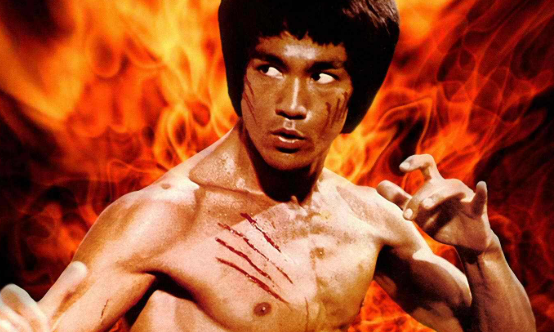
Bruce Lee is a name that transcends the boundaries of cinema and sport. He is more than a movie star; he is a philosophical force and a cultural phenomenon whose influence ripples through time, unaffected by the passage of decades. To many, he is the shirtless warrior with lightning-fast strikes and a piercing kiai, but the man behind the legend was a complex individual of profound intellect, relentless discipline, and a revolutionary spirit.
Born in the hour and the year of the dragon, Lee’s life was a masterclass in self-actualization. He didn’t just practice martial arts; he deconstructed them, rebuilt them, and eventually transcended them. From the rain-slicked streets of Hong Kong to the bright lights of Hollywood, his journey was defined by a refusal to be categorized or limited by tradition. He was a bridge between the East and the West, a philosopher who used his body as a canvas to express the deepest truths of the human condition.
Whether you are a martial artist seeking technical inspiration or a dreamer looking for a blueprint for success, understanding the layers of Bruce Lee is essential. His story is one of overcoming “the classical mess,” as he called it—shedding the unnecessary to find the core of one’s own truth. This article explores the ten fundamental aspects of Bruce Lee’s life that every enthusiast and beginner should know to truly understand the “Way of the Intercepting Fist.”
1. Born in the Hour of the Dragon: A Global Origin
Bruce Lee’s life began with a celestial alignment that felt almost prophetic. Born Lee Jun-fan in San Francisco’s Chinatown, his arrival coincided with the Year of the Dragon and the Hour of the Dragon (between 6:00 AM and 8:00 AM). Though he would spend his formative years in Hong Kong, this American birth provided him with United States citizenship—a technicality that would later play a pivotal role in his ability to flee trouble and seek a new life in the West.
Despite the “martial arts master” persona he later cultivated, his early exposure to the spotlight was through the lens of a camera, not a pair of boxing gloves. His father was a prominent Cantonese opera star, and Bruce appeared in his first film as a mere infant. By the time he reached his teens, he had appeared in nearly twenty films as a child actor. This early comfort in front of the camera gave him a unique advantage; he understood the “language of the screen,” allowing him to eventually translate the raw power of martial arts into a cinematic experience that felt visceral and real to audiences worldwide.
2. The Street Fighter Who Found the Wing of Ip Man
The transition from a child actor to a fierce martial artist was born out of necessity. In the 1950s, Hong Kong was a bustling, often dangerous metropolis where street fighting was a common pastime for young men seeking to prove their status. Bruce was no exception. After finding himself on the losing end of several brawls, he realized that his natural athleticism wasn’t enough; he needed a system.
At the age of 13, he was introduced to the legendary Grandmaster Ip Man, the primary proponent of Wing Chun Gung Fu. Under Ip Man’s tutelage, Lee learned the importance of “centerline theory,” economy of motion, and sensitivity drills known as Chi Sao (Sticky Hands). However, Bruce’s training was often interrupted by the racial prejudices of the time; some students refused to train with him because he was not “pure” Chinese (his mother was of Eurasian descent). This early experience of exclusion likely planted the seeds for his later philosophy: that martial arts should be open to everyone, regardless of race or background, and that effectiveness should always trump tradition.
3. The Cha-Cha Champion: Rhythm in Combat
It is a little-known but fascinating fact that before Bruce Lee dominated the martial arts world, he dominated the dance floor. In 1958, he won the Crown Colony Cha-Cha Championship in Hong Kong. While this might seem like a trivial hobby, Lee viewed dance and combat as two sides of the same coin. Both required impeccable timing, balance, footwork, and a deep connection to one’s own rhythm.
He famously kept a notebook with over 100 distinct dance steps, practicing them with the same intensity he applied to his punches. This rhythmic background is what gave his fighting style its characteristic fluidity. In his later writings, he often emphasized that a fighter without rhythm was a fighter without a soul. His ability to switch from a state of total relaxation to explosive movement—a hallmark of his screen presence—was a direct evolution of the grace he learned as a dancer. It served as a reminder that the “Master of Kung Fu” was an artist in every sense of the word, finding beauty and utility in the synchronization of the human body.
4. The 1964 Long Beach Demonstration: A Legend is Born
When Bruce Lee moved back to the United States to study philosophy at the University of Washington, he began teaching martial arts to anyone willing to learn. However, his “big break” into the collective consciousness of the martial arts community didn’t happen in a school, but at the 1964 Long Beach International Karate Championships. It was here that he performed feats that have since become the stuff of legend.
Lee demonstrated his famous “One-Inch Punch,” a strike delivered from a mere inch away that sent a volunteer reeling into a chair. He also performed two-finger push-ups with ease and displayed speed that was so blinding the cameras of the era struggled to capture it. This demonstration was a watershed moment. It wasn’t just about the physical feats; it was Lee’s charisma and his vocal criticism of “dry” and “unrealistic” traditional kata that ruffled feathers. He challenged the status quo, arguing that traditional styles were too rigid for the chaos of a real fight. This public display of power and philosophy caught the eye of Hollywood hair stylist Jay Sebring, who eventually introduced Lee to television producers, leading to his role as Kato in The Green Hornet.
5. Jeet Kune Do: The Philosophy of the “Intercepting Fist”
Perhaps Bruce Lee’s most significant contribution to the world is the creation of Jeet Kune Do (JKD). After a controversial duel with another martial artist in 1964, Lee felt that despite winning, he had been too winded and restricted by the formalisms of Wing Chun. He realized that “styles” were essentially cages that prevented a fighter from reacting honestly to the moment.
Jeet Kune Do was his solution. Often described as “the style of no style,” JKD is a philosophy centered on “using no way as way, having no limitation as limitation.” He incorporated elements of Western boxing (footwork and head movement), fencing (the concept of the “stop-hit”), and various other disciplines. The goal was simple: to be as efficient as possible. If a strike could be delivered in one movement instead of two, it was superior. JKD encouraged the practitioner to “absorb what is useful, discard what is useless, and add what is specifically your own.” This revolutionary approach effectively predated modern Mixed Martial Arts (MMA) by decades, earning Bruce Lee the title of the “Father of MMA” from many modern practitioners.
6. The Body as a Machine: Revolutionary Fitness and Nutrition
In an era when most martial artists relied solely on their “internal energy” or traditional calisthenics, Bruce Lee approached fitness like a modern high-performance athlete. He was one of the first to recognize the importance of weight training for martial artists, a practice that was then wrongly believed to make a person “muscle-bound” and slow. Lee proved the opposite, building a physique that was incredibly lean, powerful, and explosive.
His training regimen was grueling and scientific. He utilized circuit training, heavy bag work, and core-specific exercises (like the famous “Dragon Flag”) to ensure every muscle served a functional purpose. Nutrition was equally important to him; he avoided “empty” calories, experimented with protein shakes and vitamins, and monitored his body fat percentage with obsessive detail. This dedication to physical perfection wasn’t driven by vanity, but by the belief that the body was the instrument of the soul. For Lee, a dull instrument could never play a beautiful song. His physical transformation served as a visual testament to the power of his willpower, inspiring millions to pursue physical excellence.
7. Breaking the “Bamboo Ceiling” in Hollywood
Bruce Lee’s journey in the American entertainment industry was a constant battle against systemic prejudice and typecasting. When he was cast as Kato in The Green Hornet, he was often given minimal dialogue and forced to wear a mask. Despite this, his screen presence was so magnetic that he frequently outshone the show’s lead. However, when the show was canceled, Lee found it nearly impossible to secure leading roles in Hollywood because executives believed an Asian man could not carry a film or television series.
One of his greatest heartbreaks was the development of a television project he titled The Warrior, which was eventually produced as Kung Fu starring a non-Asian lead. Instead of succumbing to bitterness, Lee pivoted. He returned to Hong Kong, where he discovered that The Green Hornet was a massive hit (re-titled The Kato Show). He signed a deal with Golden Harvest and made The Big Boss and Fist of Fury, films that shattered box office records and proved his bankability. His success forced Hollywood to finally pay attention, leading to the co-production of Enter the Dragon, a film that would cement him as a global superstar and break the “bamboo ceiling” for future generations of Asian actors.
8. Be Water, My Friend: The Mental Game
Beyond the physical strikes and the cinematic flair, Bruce Lee was a philosopher at heart. He was a prolific writer, filling volumes of journals with his thoughts on Zen, Taoism, and the nature of the self. His most famous metaphor—”Be water”—perfectly encapsulates his approach to both life and combat. Water is the softest substance, yet it can penetrate the hardest rock. It has no fixed shape; it becomes the cup, the bottle, or the teapot. It can flow, or it can crash.
This philosophy taught adaptability. To Lee, the greatest mistake a person could make was to become rigid in their thinking or their habits. Whether facing an opponent in a ring or a challenge in one’s career, the goal was to remain fluid and responsive. He believed in “self-actualization” over “self-image actualization,” urging people to be themselves rather than trying to fit into a mold created by society. This mental framework is what makes his teachings evergreen; they apply as much to business and personal growth as they do to the martial arts.
9. The Global Impact of “Enter the Dragon”
While Bruce Lee’s life was tragically cut short before he could see its release, Enter the Dragon changed the world forever. It was the first martial arts film produced by a major Hollywood studio (Warner Bros.) in association with a Hong Kong company. It wasn’t just a movie; it was a cultural explosion that triggered a global “Kung Fu craze.” Suddenly, martial arts schools were popping up on every corner, and the image of the lone warrior fighting against injustice became a universal symbol.
The film did more than just sell tickets; it humanized the Asian male on a global stage. Bruce Lee was presented as a hero who was intelligent, physically dominant, and morally upright. He wasn’t a caricature or a sidekick; he was the center of the universe. The film’s themes of discipline, honor, and fighting for a cause resonated across borders, making Lee a hero in the United States, Europe, Africa, and South America. Even today, the film remains the gold standard for martial arts cinema, a masterclass in pacing, choreography, and pure, unadulterated charisma.
10. A Legacy of Eternal Influence
The true measure of Bruce Lee’s greatness is found in the people he continues to inspire. Decades after his passing, his name is still synonymous with martial arts excellence. He has been cited as a primary influence by athletes like Kobe Bryant and Conor McGregor, filmmakers like Quentin Tarantino, and countless artists and thinkers. His life serves as a blueprint for anyone who feels like an outsider or who is told that their dreams are impossible.
Lee’s legacy is not just in the films he made or the style he created, but in the barriers he broke down. He proved that a single individual, through sheer force of will and intellectual rigor, could change the way the world thinks about race, physicality, and personal potential. He remains a symbol of the “unfinished journey.” Because he died at the height of his powers, he exists in the public imagination as a figure of perpetual vitality—a man who never aged, never slowed down, and never stopped seeking the truth. As long as people strive for self-improvement and seek to “express themselves honestly,” the spirit of the Dragon will live on.
Further Reading
To deepen your understanding of the man and his methods, consider these essential books:
- Tao of Jeet Kune Do by Bruce Lee
- A posthumous collection of Lee’s notes and sketches, providing the most direct look into his combat philosophy.
- Bruce Lee: A Life by Matthew Polly
- Widely considered the most comprehensive and well-researched biography of Lee, covering his life with unflinching detail.
- Striking Thoughts: Bruce Lee’s Wisdom for Daily Living edited by John Little
- A collection of over 800 aphorisms on everything from failure to spirituality, showcasing Lee’s philosophical depth.
- Be Water, My Friend: The Teachings of Bruce Lee by Shannon Lee
- Written by his daughter, this book applies her father’s philosophies to modern life and personal development.
- Beyond the Dragon: 10 Defining Secrets of Bruce Lee’s Journey to Martial Arts Mastery

- The Extra-Terrestrial Legacy: 10 Hidden Secrets Behind the Magic of E.T.

- The Bughuul’s Shadow: 10 Chilling Facts That Make “Sinister” the Most Terrifying Movie Ever Made

- The Coin Toss of Fate: 10 Chilling Facts About No Country for Old Men You Need to Know

- The Minds of Monsters: 10 Chilling Truths Behind The Silence of the Lambs That Will Haunt You